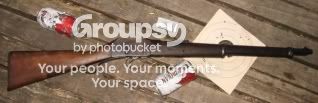
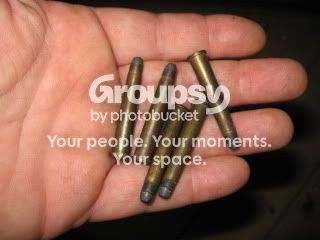
My father converted a Greener large frame Martini to a 225 cal because it has a flanged case for extraction, unlike the 223. The small frame, (you mentioned short lever???) was reputed to be made of soft steel not suitable for conversions more powerful than 22 Hornet.
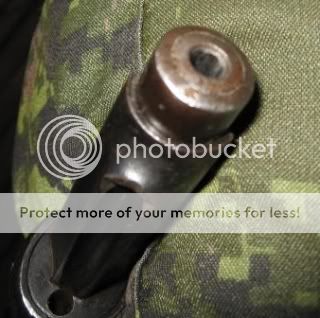
The short and long levers were variations of the large frame Martini action. The Greener your Father had, was a commercial variant of the large frame action, most likely, unless it started out as one of their less common, small framed, rook rifles, in which case, I have no info to add.
I do know, however, that the Small Frame Martini Cadet actions made by BSA, are being chambered in .223, and other cartridges of this pressure range, and I've read of guys chambering them in 30-30 variants as well.
I wouldn't chamber a small frame in as high a pressure round as the .223, but guys more knowledgeable than I, are willing to do so, and have enough faith to do so in the litigious US commercial environment. It is being done.
The large frame Martini's were built through the 1880's and were arsenal converted to .303 British through the times when that round was coming into service. They are solidly built, grossly over engineered pieces of work. Not that they cannot be blown up, just that it takes some dedicated effort...

Can't speak to the multitude of small and large Martini actions made by the Belgians over the years either, but they were adequate for their intended purposes.
If the registry tanks, it'll not be an issue. The rifle is an artifact of a time when small bore competitions and recreational shooting, were a part of life for the Commonwealth. Keep it as is.
To get the rifle un-registered, if not a rimfire, gotta break the 8.3mm bore size. If it were a handgun, simply converting it to a .22 Hornet, or any of the other rounds that are not listed on the "except if" list, would suffice. For practical purposes, as a rifle, it means a re-barrel, figure the better part of a grand, all told, in materials and work, if you are not able to do it yourself. Then you get to pick yer poison, whether it's a small (38 Special or similar handgun cartridge) or large (.577-.450, a common original chambering).
If looking at the 22 magnum, consider that the bore size of the conversion is likely at .223 or .222 inches, and the standard bore for the .22 Mag is the same .224" as commonly used on standard 22 center-fires now. For the most part, it won't make huge differences in the pressures, but can cause grief with chamber reamer pilots, when chasing down tooling to use. The steel used for the barrel or liner (if it was lined) would be pretty soft stuff, relatively, too, and may or may not hold up long shooting .22 Mag.
New barrel. Best bet, I think. All sorts of options.
Won't matter, if the registry tanks. (Happy thought!)
Cheers
Trev