













































When I started target rifle shooting in the 50’s, the rifle was the #4 with a good micrometer sight (Parker Hale or A.J. Parker). Real serious shooters bought their own rifles and had them tuned up. The rest of us signed one out from the military unit we were affiliated with and it was to use for the year. An armourer would tune the bedding for us. The deal was we had to return it in original condition. The only real mod we made was to replace the rear sight, which was easy to switch back.
When the FNC1 came along, we could sign one of those out, too. As a high school student (age 15) I recall having one at home. It was brand new in the box and plastic when I got it. Around 1959, as I recall.
We did not like the FN for target shooting. I used it to shoot the service rifle matches, but for target shooting I much preferred the #4 with the excellent trigger and sights. Those who owned their rifles had the option of having the DCRA organize a conversion to 7.62.
The 7.62 was thought to be worth a point per match, due to newer and better quality ammo.
The rules relaxed and we were allowed to use other bolt action rifles in 7.62. the most common rifles were the Swedish Mauser (we called it the Carl Gustav), the P14 with a Shultz Larsen or Ferlach barrel, The Parker hale 1200 and then the Sportco, which was an Australian purpose-built target rifle. It was sort of an economy model single shot Remington, with a very heavy receiver and a 3 lug bolt. It shot the best.
But we discovered that at long range (800 to 1000) the groups were vertical and we would tend to lose a shot or two out the top and/or the bottom. Military ball has its limitations. So each of had a short range rifle (a front locker) and a #4 for long range. The #4 was required for its compensation ability. It shot much smaller groups (in the vertical) than a front locker at long range.
Think of a foot ball-shaped group. The front locker would shoot a group shaped like football standing on end. The top and bottom would poke out of the bull. A #4 group at long range looked like football on its side, with the ends still in the bull. Just about every shooter had a #4 for the longs and something else for the shorts, but the #4 evolved into something a bit different than the re-barreled army rifle. The actions were fitted with heavy target barrels (Shulz Larsen, Ferlach or Enfield) and don’t forget these barrels were always tight. Bores were in the order of .3065 to better suit the mediocre military ball ammo.
The barrels in both front and rear lockers were floated. The front lockers were not all that different than the rifle of today, except they were usually only two locking lugs. The #4 action is quite flexible. The bolt compresses on firing because he locking lugs are at the rear. When this flex is coupled with a long floating barrel, there was a lot of barrel whip. Some of us referred to our #4s as “The Twanger”.
As has been explained so well, the barrel would be in the up cycle of whip as the bullet exited. A slow bullet would exit with the bullet aimed higher, so that at long range, the slow bullet did not hit as low as would have otherwise. The group was “flatter” than it would have been otherwise.
The funny thing, is that if we happened to shoot our #4 at short range, say 300 yards, the group would be very, very tall, because the hot rounds were pushed lower and the low rounds were aimed higher. Each rifle was a bit different and would tend to shoot flattest at a certain distance, somewhere between 800 and 1200 yards. Regardless of where it was best, it was always better than a front locker (except in the rain … but that is a different story).
The Envoy was the purpose built #4 of the 70’s and 80’s. I had one but seldom used it.
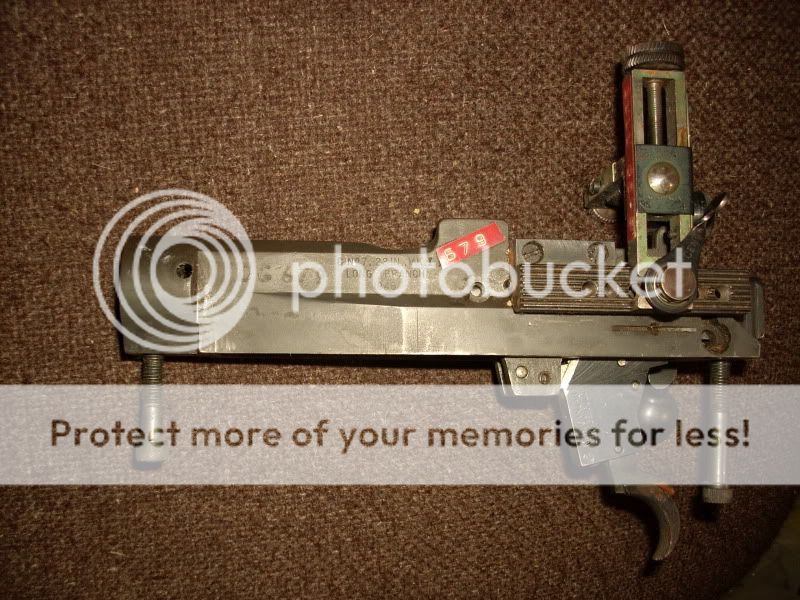
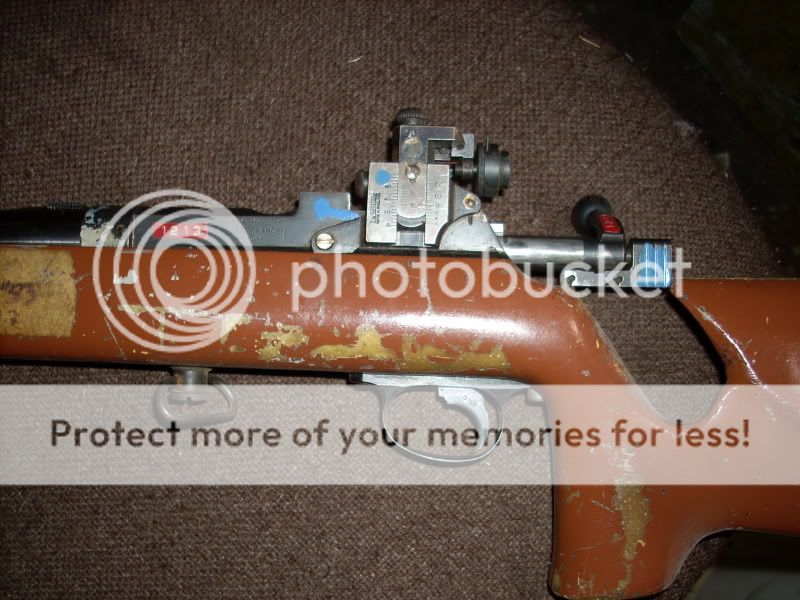
Instead I used a pair of #4s that had been converted to go into a conventional Robertson fiberglass target rifle stock. My front locker (a Grunig) and my #4s used the same kind of stock, so felt more similar. A conventional #4, as you know if you every shot one, has a unique stock that does not feel quite like anything else. Here is the action, complete with a Canjar trigger.
The Canadian ammo of the 80s was poor (IVI). The British would use select lots of RG ammo that some years was pretty good and some years was dismal. It gradually improved and the Brits discovered that a 30” barrel on a good front locker (they used the Swing almost exclusively) would shoot long range quite well if the ammo was good. Eventually the ammo was good enough we no longer needed a #4.
When Canada switched to commercial match ammo and then handloads, the #4s were quickly relegated to wall hanger status.
Pressures of business forced me to drop out of competition in the early 80’s. When I got back into it in 1983, I upgraded my equipment and settled on a Grunig for short range (to 600 yards) and a one piece #4 for long range. Since I had a ballistics background, was a handloader and tend to be a bit skeptical about old wives tales, I had to test my #4 for “compensation”.
I loaded ammo with 150 gr Sierra match bullets and weighed powder charges. Ammo was made in 3 lots, with a 0.7gr increment. I loaded 41.3gr, 42.0 gr and 42.7 gr (IMR4895). It was not Chronyed. I started shooting with the Grunig, a solid front locking match rifle. The 42 gr load would easily hold the bull at 1000 yards. Without touching the sights, I switched to the 42.7 load, and the group formed high in the bull, with some leaking out the top. Then I tried the 41.3 load. They missed the entire target. They shot over 3 feet lower.
Then I switched to my new one piece #4. I knew the old conventional #4 would compensate. I wanted to prove to myself that the one piece would still compensate. I repeated the test. Short story. They all shot into the bull and I could not see any difference in where the 3 lots of ammo shot.
I qualified for Bisley with those rifles and in Bisley I managed to win. I set a new record score, dropping only 11 points all week. At 800, 900 and 1000 I only missed the bull twice (with issue military ball ammo).
Yes, compensation is real. The OP asked "How can a rifle shoot 2 MOA at 200m but 1.5 MOA at 600m?" It compensates for velocity differences that would otherwise open the group.
A #4 can shoot a 3 minute group at 300 yards (9 inches) and a 1.5 minute group (15 inches) at 1000 yards.
When the FNC1 came along, we could sign one of those out, too. As a high school student (age 15) I recall having one at home. It was brand new in the box and plastic when I got it. Around 1959, as I recall.
We did not like the FN for target shooting. I used it to shoot the service rifle matches, but for target shooting I much preferred the #4 with the excellent trigger and sights. Those who owned their rifles had the option of having the DCRA organize a conversion to 7.62.
The 7.62 was thought to be worth a point per match, due to newer and better quality ammo.
The rules relaxed and we were allowed to use other bolt action rifles in 7.62. the most common rifles were the Swedish Mauser (we called it the Carl Gustav), the P14 with a Shultz Larsen or Ferlach barrel, The Parker hale 1200 and then the Sportco, which was an Australian purpose-built target rifle. It was sort of an economy model single shot Remington, with a very heavy receiver and a 3 lug bolt. It shot the best.
But we discovered that at long range (800 to 1000) the groups were vertical and we would tend to lose a shot or two out the top and/or the bottom. Military ball has its limitations. So each of had a short range rifle (a front locker) and a #4 for long range. The #4 was required for its compensation ability. It shot much smaller groups (in the vertical) than a front locker at long range.
Think of a foot ball-shaped group. The front locker would shoot a group shaped like football standing on end. The top and bottom would poke out of the bull. A #4 group at long range looked like football on its side, with the ends still in the bull. Just about every shooter had a #4 for the longs and something else for the shorts, but the #4 evolved into something a bit different than the re-barreled army rifle. The actions were fitted with heavy target barrels (Shulz Larsen, Ferlach or Enfield) and don’t forget these barrels were always tight. Bores were in the order of .3065 to better suit the mediocre military ball ammo.
The barrels in both front and rear lockers were floated. The front lockers were not all that different than the rifle of today, except they were usually only two locking lugs. The #4 action is quite flexible. The bolt compresses on firing because he locking lugs are at the rear. When this flex is coupled with a long floating barrel, there was a lot of barrel whip. Some of us referred to our #4s as “The Twanger”.
As has been explained so well, the barrel would be in the up cycle of whip as the bullet exited. A slow bullet would exit with the bullet aimed higher, so that at long range, the slow bullet did not hit as low as would have otherwise. The group was “flatter” than it would have been otherwise.
The funny thing, is that if we happened to shoot our #4 at short range, say 300 yards, the group would be very, very tall, because the hot rounds were pushed lower and the low rounds were aimed higher. Each rifle was a bit different and would tend to shoot flattest at a certain distance, somewhere between 800 and 1200 yards. Regardless of where it was best, it was always better than a front locker (except in the rain … but that is a different story).
The Envoy was the purpose built #4 of the 70’s and 80’s. I had one but seldom used it.
Instead I used a pair of #4s that had been converted to go into a conventional Robertson fiberglass target rifle stock. My front locker (a Grunig) and my #4s used the same kind of stock, so felt more similar. A conventional #4, as you know if you every shot one, has a unique stock that does not feel quite like anything else. Here is the action, complete with a Canjar trigger.
The Canadian ammo of the 80s was poor (IVI). The British would use select lots of RG ammo that some years was pretty good and some years was dismal. It gradually improved and the Brits discovered that a 30” barrel on a good front locker (they used the Swing almost exclusively) would shoot long range quite well if the ammo was good. Eventually the ammo was good enough we no longer needed a #4.
When Canada switched to commercial match ammo and then handloads, the #4s were quickly relegated to wall hanger status.
Pressures of business forced me to drop out of competition in the early 80’s. When I got back into it in 1983, I upgraded my equipment and settled on a Grunig for short range (to 600 yards) and a one piece #4 for long range. Since I had a ballistics background, was a handloader and tend to be a bit skeptical about old wives tales, I had to test my #4 for “compensation”.
I loaded ammo with 150 gr Sierra match bullets and weighed powder charges. Ammo was made in 3 lots, with a 0.7gr increment. I loaded 41.3gr, 42.0 gr and 42.7 gr (IMR4895). It was not Chronyed. I started shooting with the Grunig, a solid front locking match rifle. The 42 gr load would easily hold the bull at 1000 yards. Without touching the sights, I switched to the 42.7 load, and the group formed high in the bull, with some leaking out the top. Then I tried the 41.3 load. They missed the entire target. They shot over 3 feet lower.
Then I switched to my new one piece #4. I knew the old conventional #4 would compensate. I wanted to prove to myself that the one piece would still compensate. I repeated the test. Short story. They all shot into the bull and I could not see any difference in where the 3 lots of ammo shot.
I qualified for Bisley with those rifles and in Bisley I managed to win. I set a new record score, dropping only 11 points all week. At 800, 900 and 1000 I only missed the bull twice (with issue military ball ammo).
Yes, compensation is real. The OP asked "How can a rifle shoot 2 MOA at 200m but 1.5 MOA at 600m?" It compensates for velocity differences that would otherwise open the group.
A #4 can shoot a 3 minute group at 300 yards (9 inches) and a 1.5 minute group (15 inches) at 1000 yards.























