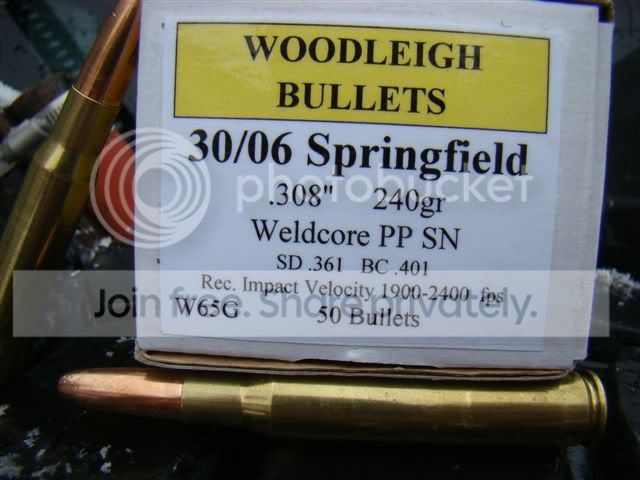
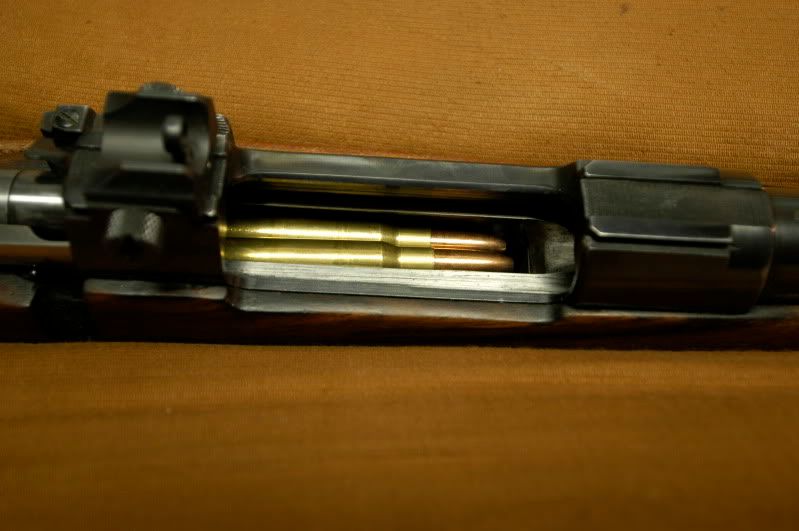
Boomer that's because there are some topnotch 210 grain .308 bullets made, but there are not (yet) similarly topnotch 220, 230 or 240 grain .308 match bullets made. It is only a matter of time before someone like Berger gets around to this, and when they do their 230 or 240 grain bullet will outperform the 210-class bullets.
There are always gonna be exceptions to the general rule, but heres the thing with heavy weight 30.06: Its not popular and technology and the market has not come up with much yet, however promising it may be. The longer bullets do have expansion qualities over shorter bullets, but they diminish when the velocity drops. I cannot stress enough, the difference of punching paper to dropping a large animal.
25 years ago, we didn't have ballistic calculators, internet, or modern bullets. Perhaps modern bullets existed, but I didn't have them, as a teenager or young adult. We used to shoot into wet bundles of newspapers. It wasn't rocket science, but we could poke a rod into the bullet hole and measure how far it went. The 220s and 240s made a bigger hole, but not any deeper than 180s. At 100 yards, the 220s hole got small with little expansion and less penetration, where the 180's still had a good hole and maintained depth. At 200 yards, the 220s were out of steam, had significant drop in trajectory, and substandard penetration, where the 180s were losing some penetration, but still pretty good.
Here is another point that I'll argue. Its not the actual ballistics of a 210 or heavier bullet that I dispute, its the method of comparison. When I make my comparisons, I'm using factory specs in relation to other factory specs. Here is my point: I can minimum load a 180 and max load a 220, and show you that ballistic-wise the 220 is better. Conversely, I can max load a 180gr and compare to a min load 220gr and extend my findings as originally posted to further support my argument. Further to this, I compared soft points to soft points, not one technology to another. Again stressing, modern technology bullets do not work well at lower velocities.
Having all that said; max loads, min loads, max weight, min weight, ect. says a lot about ballistics, yet speaks nothing of accuracy. Its great to preach speed and energy, but if it shoots a 40 inch group at 100 yards, what good is it? Further question: if you think you have a good hunting load, shoot it into a wet bundle of newspaper at 50 yards, 100, 200 and 300 yards, and see for yourself the difference of punching a paper target or having actual killing energy.