














































The abundance of posts on CGN asking about "what should I buy" or "which is the best 9mm" etc and the arrival of my new-to-me SIG P226R has prompted me to write another one of my comparative reviews.
While this is my first handgun review, I have written three similar articles on CGN; number one compared three black rifles ( a Swiss Arms Black Special, HK SL8 and a Norc M4 ), number two compared three M14-type rifles ( a M1A 'Loaded', a Norc/USGI hybrid and a stock Norc ) and number four compared four sniper/tactical rifles ( a PGW Coyote, a Sako TRG, an AICS-stocked Remington 700 XCR and a Kimber Tactical ). Interested readers can easily find these earlier reviews in their respective forums.
This review compares three very popular nine-millimetre pistols. Each of these pistols has a distinct style, many ardent fans and some who are critical of them. In keeping with my theme from other reviews, I compare high-priced to lower-priced firearms though just like with the review of sniper rifles there is no low end firearm thrown into the mix in this review. One of the pistols is a top-of the line model while the others are the standard offerings from their respective manufacturers.
While I have been shooting for well over thirty years I don't consider myself any sort of expert and I am not even an amateur-level gunsmith. I am just a guy whose had a lifelong interest in firearms and now I'm at a point in my life where I can afford to spend both the time and money on my hobby.
Like lots of others, I have observed that gun writers in magazines - beholden as they are to advertisers - would have us believe that all they ever review are perfect pieces of gear. On-line reviews while generally better, are sometimes written by folk who either have a love affair with one brand over another or the writers are people who only own one type and feel compelled to criticize other types - one such online review actually went so far as to say that SIG's are for amateurs, a comment that generated many responses the best of which pointed out that the SAS and Navy Seals obviously don't appreciate their amateur status ! Obviously, we all have likes and dislikes and I am no different to anyone else but at least I actually own all the firearms I comment on and am responsible for all the purchasing decisions - good and bad.
Writing a review in this sub-forum is tough because many readers here are far more knowledgeable than I, but this review isn't written for experts - it is written for a newbie to handguns or the shooter wishing to either upgrade or who has some cash burning a hole in the pocket and wants a new toy. All feedback is welcome as are suggestions for future reviews.
In what follows, I offer up my comments on the three particular handguns under review. I subdivide my observations into categories:
Price and Standard Equipment;
Looks, Fit and Finish;
Handling, Ergonomics and Aftermarket Accessories;
Disassembly and Putting 'em Back Together
Triggers, Sights and Accuracy and, lastly,
Concluding Remarks.
Naturally all the opinions I express are exactly that - opinions- and therefore 100% subjective. All technical data is sourced from manufacturers websites. I recognise that there are "apples and oranges" issues here but hopefully it works.
Introducing the Handguns
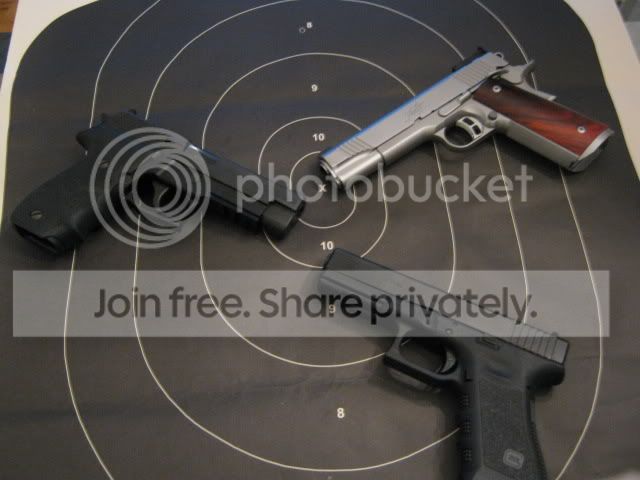
The three firearms being compared are:
1) A 1911-style Kimber Team Match II - This pistol, manufactured by Kimber, was taken in trade by me and was unfired when I received it. Finished in a satin look stainless steel, it is Kimber's classic full-size Government model 1911 in 9mm and was designed for the United States shooting team - hence the name. I have more experience with full size 1911's (albeit in .45ACP) than with other types of semi auto handguns and I mention this as later comments about handling etc. may reflect this familiarity. The firearm is made in the USA.
2) A Third Gen Glock G17 - This was bought brand new earlier this year from ArmCo in Prince George and is finished ..... well, let's just say it is a Glock and be done with it. Oh, I forgot, they do come in two tone now but this one ain't - its black and it isn't the rough texture one. Gaston Glock ushered in the modern era of polymer framed pistols with his storied Model 17 semi-automatic pistol and the same basic design has been morphed into an entire line of pistols built on various size frames. I had virtually no prior experience of Glocks before owning this one and it was my first 'plastic pistol' since about 1965 - just kiddin' even toys were made out of metal back then ! This Glock, like all others, is made in Austria.
3) A SIG P226R - A full sized service pistol that was recently acquired by me from a previous owner. I once spent a lot of time behind the trigger of a P226 but that was over twenty years ago and this is the first SIG I have spent time with in living memory. Made not in Germany, but by our friends in the USA.
Price and Standard Equipment
No need to take a deep breath and sit down as none of these are especially expensive but none are real cheapies either. ( If you are a tight budget consider a Norinco clone of the 226 or, my personal recommendation, a Walther P38/P1 as a good buy ). All prices are before tax.
Kimber Team Match II
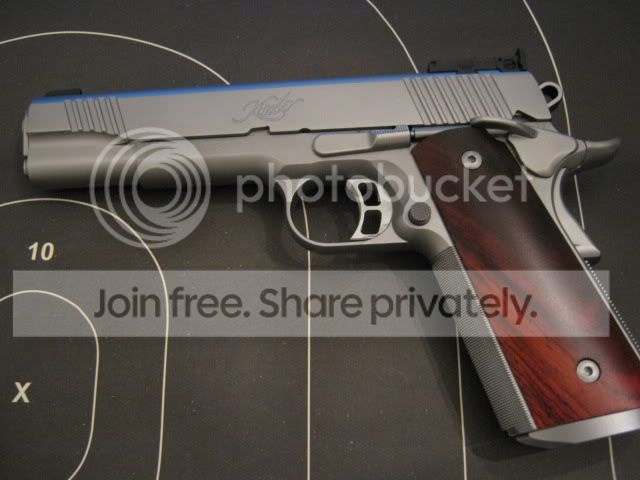
Easily the most expensive of the three, actually getting your hands on a new one of these isn't so easy. While Kimber's abound, many are in .45ACP and the Team Match II is a rare bird - especially in 9mm. While list in the US is around $1500, expect to pay about $2200 in Canada if you can find one. The pistol comes in a good size plastic (lockable) foam lined carry case and has two Kimber-brand eight round capacity magazines, a disassembly tool (yes, it's a 1911 so you need one of these) an owners' manual and the obligatory locking device. It also has some NRA and Kimber promotional stuff. To be honest, a couple of goodies would be nice considering the price - but what I've listed is what you get.
Glock G17
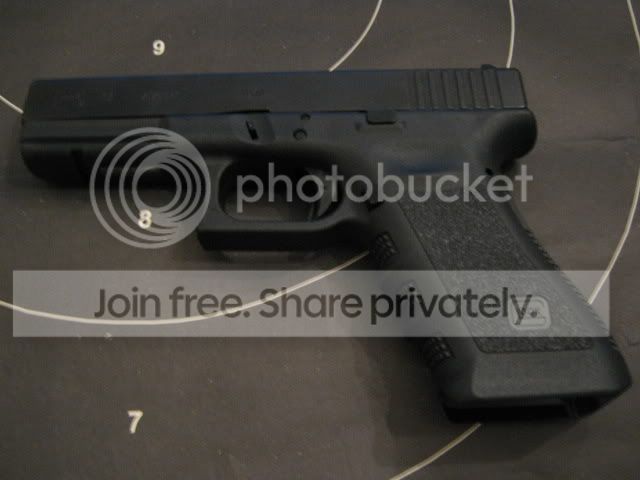
The least expensive of the three, a new Glock G17 will cost you about $650-700 or so in Canada and it comes packaged in a fairly small hard plastic case ( not lockable ) which is foam lined. The pistol comes equipped with two Glock-brand ten-round magazines, an owners' manual, lock and cleaning brush.
SIG P226R
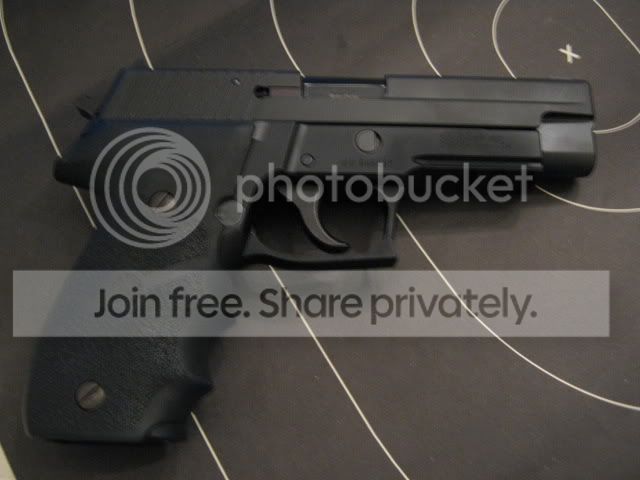
Priced between the two others this particular model (standard sights ) will cost just under $1000 new or about $75 more for the one with SIGLITE Night Sights. Packaged in a good sized (lockable) plastic case with foam-like inserts, the pistol comes equipped with two magazines ( pinned to 10 ) a locking device and some SIG-related literature and owners' manual.
Looks, Fit and Finish
The Kimber Team Match II - this is the classic, all steel, John Browning pattern, 1911 model, single action, semi-automatic pistol. It differs from the 100-year-old original in several minor, but no major, ways. Millions of words have been written about 1911's so I will be brief. To my eye THIS is the classic auto-loading handgun. Recognizable all over the world and, together with the AK47, possibly the best known firearm of all time. A beautiful design, if a guy don't like the look of a 1911 he needs serious help and probably wears lace panties.
Kimber has made it their business to include in their guns the so-called “custom” features commonly asked for by experienced shooters and the (primarily) American buying public made the business a success. These features include wide beavertail grip safeties, extended thumb safeties, ambi-safties, long aluminum triggers with overtravel stops and flat (chequered) mainspring housings. This particular pistol is full of 'match' features and the pricing reflects that. As one would expect from a top of the line offering from a major manufacturer there was not a flaw to be found on this pistol when it arrived. Taking it apart revealed no tool marks anywhere - the thing was a work of art except for .... the really ugly handgrips !! Yes folks this is the Team Match II and whose team are we talking about ? We are, of course, not talking the "Manikatoon Marksmen" or the "Torottawa Triggers", we are talking the good ole US of A Shooting Team so the grips were stars and stripes with the letters USA right bang slap in the middle of each grip ! This problem was promptly and easily sorted and the grips remain hidden away other than for this photo shoot.
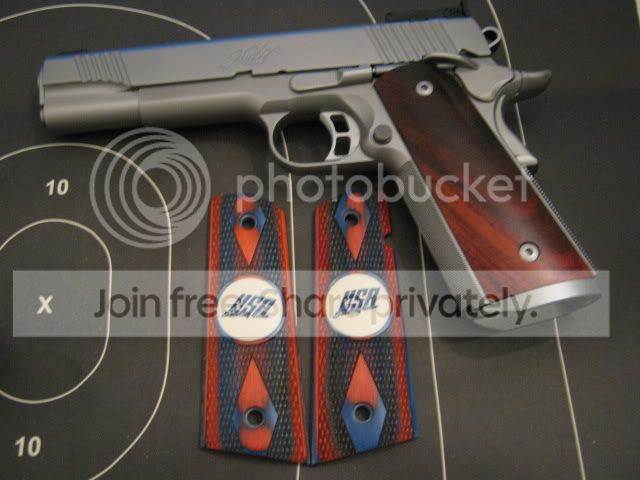
Kimber obviously took their time with this pistol - perfect slide to frame fit etc. nothing loose, no rattles or shakes, perfect 30 lpi checkering on the forestrap and backstrap etc. Just what one is entitled to expect of a pistol in this price range.
Glock G17 - As noted above the Glock was one of the fist polymer pistols ( it wasn't actually the first ) and it was Glocks that popularised the idea that pistols could actually be made ( and, more importantly, would sell ) out of something other than metal. A relatively inexpensive pistol, I was not expecting perfection and wouldn't have held the Glock to as high a standard as the Kimber BUT there was nothing in the finish that I could find to complain about. When I took it apart ditto - all the bits were there in the right place and no mark or anything that one could object to. Honestly, fit and finish were perfect - were it the case that I could say the same of all firearms I have owned. I guess I shouldn't be so surprised - over 2.5 million Glocks have been made in the last 20+ years and people really do like them.
As far as looks are concerned, well I would say that Glocks fall into that category of firearms that you either really like the look of or you consider 'fugly'. It took me a long time to decide that I could get past the looks and maybe I am at the stage now where I think it is so ugly it just has to be pretty ! No getting away from it, the Glock is boxy and just screams "utilitarian". Truly the antithesis of the classic good looks of the 1911 and it is to the other famed European pistols what a plastic picnic plate it to Wedgewood bone china. Sorry, if it offends but it be my gun and I calls it as I sees it.
SIG P226 R - Another pistol tracing roots back to a Browning design, I subjected the SIG to the same standard as I would a new pistol. Looking over the finish I was again impressed - no markings, discolorations etc to offend. Taking it apart, I was again pleased with the absence of any tooling marks or any sign of sub-par manufacture.
In the looks department, it is amazing what a few curves will do for a girl - err, I mean a pistol - as it takes away the boxy look and replaces it with a look that is in my opinion all business, but business with a certain style. 'Nuff said, I am a fan of the SIG in the looks department but, as with all subjective views, YMMV.
Handling, Ergonomics and Aftermarket Accessories
Kimber Team Match II - For all the modern handguns I have held, no semi-auto pistol feels as right to me as John Browning's design. It is heavier than the other two ( it weighs 38 ounces unloaded ) but not uncomfortably so. Designed with the .45ACP in mind, when used with 9mm the pistols' weight absorbs recoil and tames muzzle flip to such an extent that you can be easily fooled into thinking that you really are shooting a .22LR. With slide release, ambi-safety and grip safety it is a 'busy' pistol and newcomers to the handgun may find this a bit overwhelming but all the controls are placed logically and there is nothing awkward about handling this pistol. The longest of the pistols - a full-sized 1911 is 8.7 inches OAL and 5.5inches high - the length and the weight of the Kimber may be a demerit if the pistol had to be carried in a holster for daily use or if one was looking for a concealed carry pistol.
In the Brownells catalogue there are only two other firearms that take up anywhere near as many pages of accessories as a 1911 - the Remington Model 700 and the AR15 - so it is the case that you can buy every possible bit and piece for a 1911 and upgrade everything: springs, barrel, frame, slide, hammer, trigger etc etc... until you are finished and ready to start all over again! No handgun on the planet can be customised as extensively (or expensively) as a 1911. On the other hand, there is no need to do so as pretty much all 1911's work just great out of the box. That is certainly the case with this Kimber which is a top-of-the-line model from a major maker.
Glock G17 - While the G17 is the most commonly issued sidearm in US policing and has proven overwhelmingly popular, the angles of the Glock felt odd to me when I first picked one up. After a learning curve was overcome and some grip adjustment was made on my part I have to say that the Glock now feels quite natural. The grip is wider than the others and that may be a problem for those with smaller hands. Mine is not one of those with a rough texture finish and I find the polymer to be a little slick - it has been suggested that I add skateboard tape to the sides and having tried some Glocks with such tape attached I can attest to it helping but I haven't done it to this one yet. The lightest of the pistols - its weight a mere 22 ounces - and the shortest at an OAL of 7.32" I can see why this is a popular carry sidearm. It is also a very 'clean' gun as there are no external safeties or hammers to distract a first time user ( or snag on clothing in a CCW environment ).
As with any firearm that is as popular as the Glock has become, there are plenty of accessories available but just like the 1911, while you can customise if you wish it really isn't necessary to do so as it will work just fine out of the box.
For those inclined to do so or for those whose duty purpose so requires there is a front rail for the attachment of a light or laser. I attached a clone 'Surefire' for a while - it worked as intended and didn't unbalance the gun in any noticeable manner.
SIG P226R While some people feel the SIG points low and also seem to have a snap -like recoil because of the low bore axis I am not amongst them. For me the SIG handles very well and points naturally - not, though, as naturally as the 1911. Some people also complain that the SIG's grip is, like that of the Glock too wide.
There are three controls running down the left side of the gun - the slide release, decocking lever and take down lever - a busy pistol and some feel that the position of the slide release is also not good for promoting a high grip on the gun. While I agree that this can cause problems for first time users a short period of training / familiarity and the problem (if indeed that is the right word ) goes away.
Though not as widely issued as the Glock the SIG is standard issue for many police and military users ( it was narrowly beaten out by the Beretta 92 (M9) in trials some 20+ years ago to become the US forces standard-issue sidearm ) especially elite units like the Navy Seals and the SAS. Naturally in a gun so popular it is, like the 1911 and Glock, easily customisable and being the P226R (with R standing for rail), there is like the Glock a rail that would allow for the attachment of a light or laser.
Taking Them Apart and Putting 'em Back Together
Kimber Team Match II
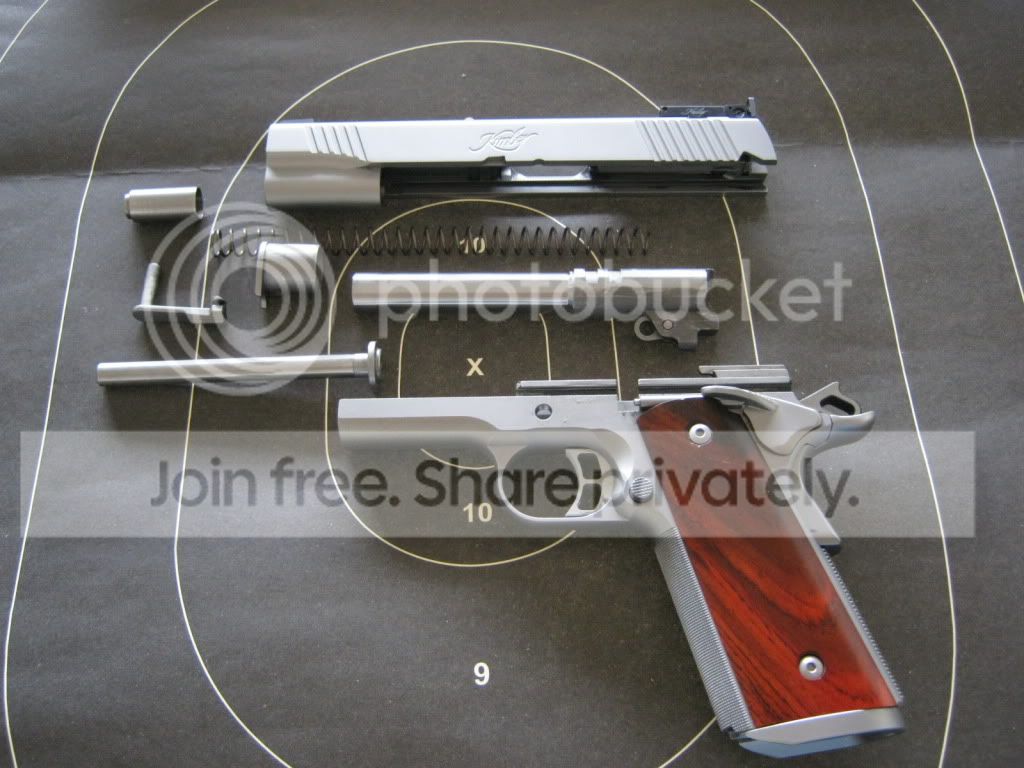
This is the one area where the 1911 falls down in the comparison. While many readers will be able to disassemble a 1911 blindfolded (literally) the Kimber requires more knowledge and takes more steps to correctly fieldstrip than either of the Glock or the SIG and, perhaps more importantly, requires the use of a tool - a bushing wrench. Once you know how to fieldstrip it is easy - just like many things in life: once you know how it ain't a problem no more - but the first few times may be a challenge , especially for persons new to firearms.
The Glock G17
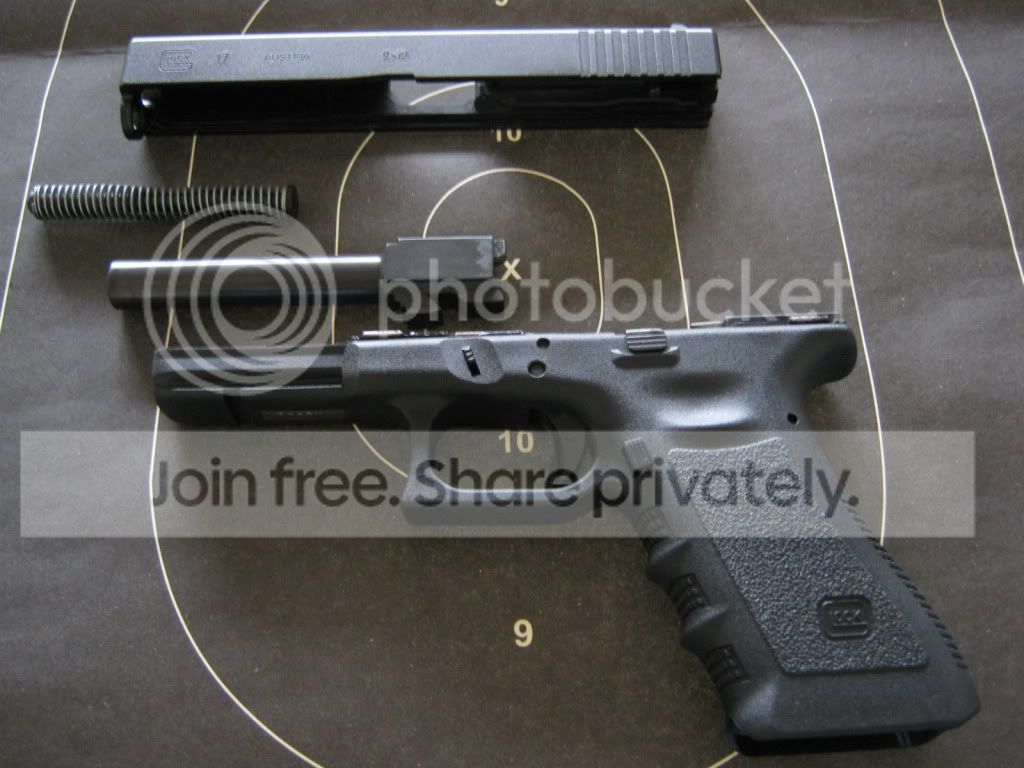
The unrivalled champ in this category. I don't know of a gun that is easier to fieldstrip - it literally is stripped in less than ten seconds. There are remarkably few pieces and no tools are required. Putting it back together is equally easy.
The SIG P226R
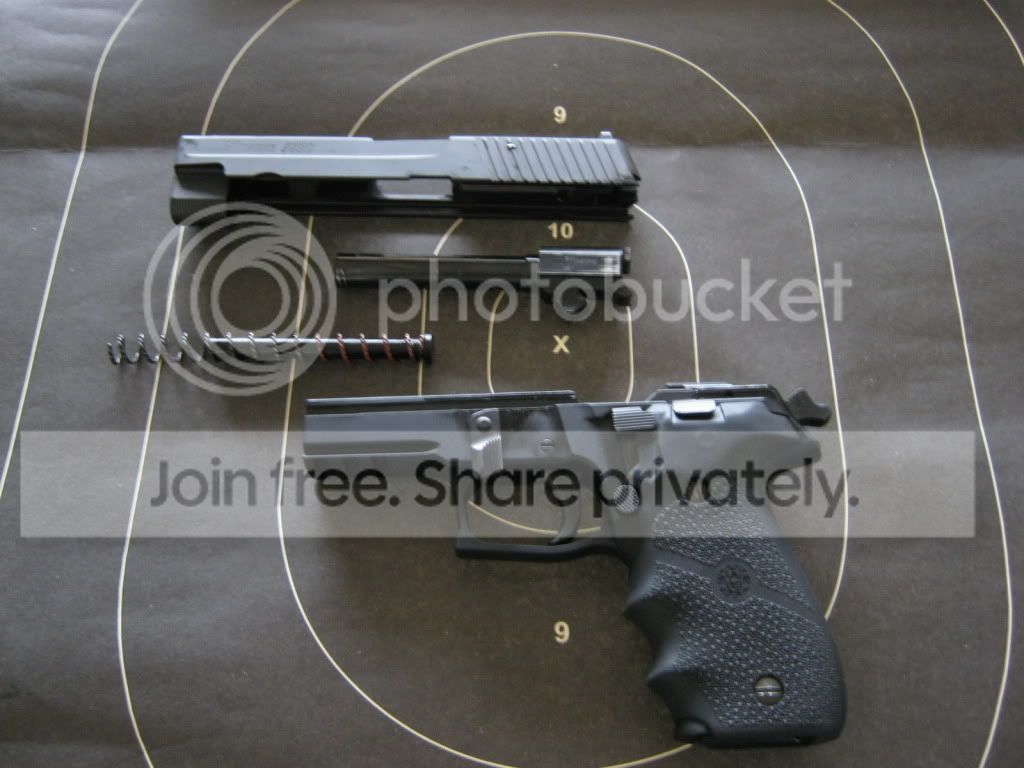
Two more steps than the Glock ( locking the slide back and pushing down on the take down lever ) but still requiring no tools and still easy to fieldstrip and put back together.
Triggers, Sights and Accuracy
I will sidestep the argument over single vs. double action and just comment on how the triggers work and which feels better to me.
Kimber Team Match II - This has a match grade single action 1911 trigger. In my opinion it is the finest trigger available on a semi-auto pistol. This particular model is a clean breaking, repeatable crisp trigger with no over-travel. This particular Kimber is equipped with match, adjustable sights ( non-illuminated ) that are black on black. The sights are accurate and the adjustments are precise and easy to make ( small screwdriver required ) but in a low light environment their configuration may make target acquisition a tad slower than contrast sights.

Glock G17 - This pistol has the standard Glock 'safe action' trigger which provides a consistent but heavy trigger and feels like a revolver trigger in DA mode. One of the reasons I shot the Glock poorly when I first got it was the trigger - not that there was anything wrong with it but because it was different to what I was used to. Once mastered, it is a reliable and solid trigger but one that I would choose to have lightened ( not a difficult job ) if the pistol was my main shooter. This Glock has the standard contrast sights with no illumination.
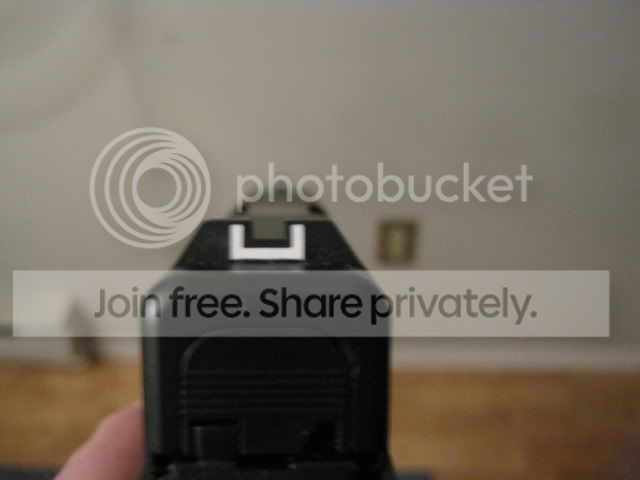
The sights are non-adjustable ( well, you can drift the rear sight using a tool but for practical purposes I will say they are non adjustable ) and many people complain their Glocks shoot low and to the left which was my case at first due to the old 'user error' problem but once a grip and trigger use adjustment was made my Glock shoots (mostly) where I point it.
SIG P226R - This pistol has the standard (fairly wide) trigger without the short reset. DA/SA operation means that the first pull of the trigger is heavier than subsequent pulls. It was a pleasant surprise how fast my memory of this trigger returned and having shot a friends SIG that is equipped with the SRT I think I prefer this version over the new SRT. Like the Glock this SIG has the standard contrast sights that are also non-adjustable and non-illuminated.
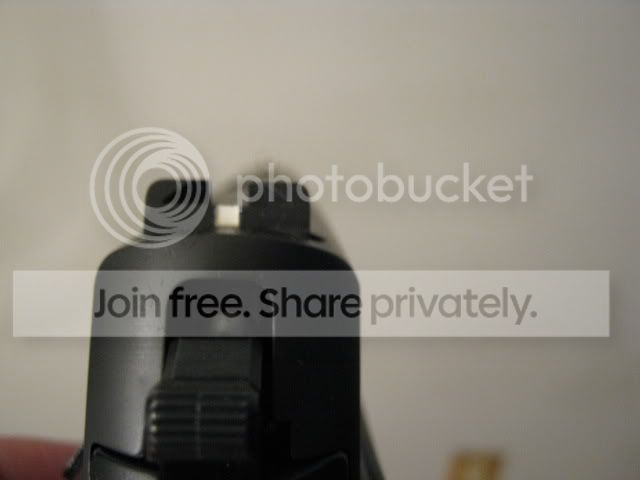
Oddly I note that simulating a fast deployment of the pistols the sights on the SIG line up a split second slower than the Glocks' - I am sure this is because of some way I hold both guns but it was nevertheless an interesting observation given the results of a range test ( see below ).
When discussing the accuracy of a pistol I find there is a gulf between theory and practice. From a Ransom Rest a pistol can achieve results that have little, if anything, to do with real world pistol use. Each of these pistols was designed as a combat handgun and while the Kimber Team Match II has been refined as more of a target pistol it is still a practical 1911.
I don't have access to specialised equipment to measure handgun accuracy so you will have to rely on my reported observations. I decided to do two tests - test one involved moderately slow aimed fire at a two inch circle at a distance of 7 meters. Ten shots per pistol would be expended and each pistol would be fired from a standing (modern isosceles) position. Arbitrarily I selected 8/10 as a pass mark. The same position would be used to shoot two shots quickly into each of 5 crosses - again at a distance of 7 meters - from each pistol.
Each of the pistols passed the 2" circle test - I shot the Kimber into one big hole not much more than a twoonie, with the SIG I put all 10 inside the circle and with the Glock I got 6 inside the circle with numbers seven and eight on the line, one close and one just waaaay wild and off to the left. I have seen others use my Glock to put all 10 inside the circles a number of times so I am giving the Glock a pass grade and admitting that while I have improved with the Glock I know I have more practice ahead of me.
The second test ( two shots fast into a cross ) speaks even less about the pistols than it does the shooter but was, nevertheless, interesting. The 9mm is a great cartridge for this practice as the recoil is negligible and for most shooters it is easier to traverse from target to target with a 9mm than it would be with a .45ACP. I found the SIG to perform best in this test with the Glock and Kimber running sort of a joint second - this surprised me because as noted above target acquisition seems fractionally slower with the SIG than with the Glock but I assume that fractional delay was made up for with the faster trigger.
Concluding Remarks.
Issues of self defence and concealed carry are more applicable to residents of the US as they are to us so, in the Canadian context, each of the Kimber, Glock or SIG would be an excellent choice to buy as range use only target guns. They are all well-established designs and known for their reliability. I would say the Glock is well nigh indestructible but the SIG also has a rep as a very solid and dependable piece of equipment and no one goes around saying 1911's don't last.
The SIG and Glock seem to eat everything I feed them ( whatever is the cheapest factory ammo - currently Ruag 124g ) but the Kimber seems a bit fussier. The 1911 is also not designed to shoot 9mm so it relies on having good mags to ensure reliable feeding ( I use Wilson Combat 10 rounders ) the Glock seems to work equally well with Glock or Korean knock-off mags and the SIG also shows no preference for either genuine SIG or MecGar.
If I was to offer advice to a new shooter I would say try as many different handguns as you can before making a purchase and buy what suits you and what you can shoot well. Also buy in a calibre you can afford to shoot because handgunning is a highly perishable skill that needs practice to maintain.
Which of my three do I like the most ? As a range gun for target practice I prefer the Kimber Team Match II. If 'social circumstances' were to ever dictate that I had to rely upon one, then I would go back to the 226.
Hope you like the comparison.
While this is my first handgun review, I have written three similar articles on CGN; number one compared three black rifles ( a Swiss Arms Black Special, HK SL8 and a Norc M4 ), number two compared three M14-type rifles ( a M1A 'Loaded', a Norc/USGI hybrid and a stock Norc ) and number four compared four sniper/tactical rifles ( a PGW Coyote, a Sako TRG, an AICS-stocked Remington 700 XCR and a Kimber Tactical ). Interested readers can easily find these earlier reviews in their respective forums.
This review compares three very popular nine-millimetre pistols. Each of these pistols has a distinct style, many ardent fans and some who are critical of them. In keeping with my theme from other reviews, I compare high-priced to lower-priced firearms though just like with the review of sniper rifles there is no low end firearm thrown into the mix in this review. One of the pistols is a top-of the line model while the others are the standard offerings from their respective manufacturers.
While I have been shooting for well over thirty years I don't consider myself any sort of expert and I am not even an amateur-level gunsmith. I am just a guy whose had a lifelong interest in firearms and now I'm at a point in my life where I can afford to spend both the time and money on my hobby.
Like lots of others, I have observed that gun writers in magazines - beholden as they are to advertisers - would have us believe that all they ever review are perfect pieces of gear. On-line reviews while generally better, are sometimes written by folk who either have a love affair with one brand over another or the writers are people who only own one type and feel compelled to criticize other types - one such online review actually went so far as to say that SIG's are for amateurs, a comment that generated many responses the best of which pointed out that the SAS and Navy Seals obviously don't appreciate their amateur status ! Obviously, we all have likes and dislikes and I am no different to anyone else but at least I actually own all the firearms I comment on and am responsible for all the purchasing decisions - good and bad.
Writing a review in this sub-forum is tough because many readers here are far more knowledgeable than I, but this review isn't written for experts - it is written for a newbie to handguns or the shooter wishing to either upgrade or who has some cash burning a hole in the pocket and wants a new toy. All feedback is welcome as are suggestions for future reviews.
In what follows, I offer up my comments on the three particular handguns under review. I subdivide my observations into categories:
Price and Standard Equipment;
Looks, Fit and Finish;
Handling, Ergonomics and Aftermarket Accessories;
Disassembly and Putting 'em Back Together
Triggers, Sights and Accuracy and, lastly,
Concluding Remarks.
Naturally all the opinions I express are exactly that - opinions- and therefore 100% subjective. All technical data is sourced from manufacturers websites. I recognise that there are "apples and oranges" issues here but hopefully it works.
Introducing the Handguns
The three firearms being compared are:
1) A 1911-style Kimber Team Match II - This pistol, manufactured by Kimber, was taken in trade by me and was unfired when I received it. Finished in a satin look stainless steel, it is Kimber's classic full-size Government model 1911 in 9mm and was designed for the United States shooting team - hence the name. I have more experience with full size 1911's (albeit in .45ACP) than with other types of semi auto handguns and I mention this as later comments about handling etc. may reflect this familiarity. The firearm is made in the USA.
2) A Third Gen Glock G17 - This was bought brand new earlier this year from ArmCo in Prince George and is finished ..... well, let's just say it is a Glock and be done with it. Oh, I forgot, they do come in two tone now but this one ain't - its black and it isn't the rough texture one. Gaston Glock ushered in the modern era of polymer framed pistols with his storied Model 17 semi-automatic pistol and the same basic design has been morphed into an entire line of pistols built on various size frames. I had virtually no prior experience of Glocks before owning this one and it was my first 'plastic pistol' since about 1965 - just kiddin' even toys were made out of metal back then ! This Glock, like all others, is made in Austria.
3) A SIG P226R - A full sized service pistol that was recently acquired by me from a previous owner. I once spent a lot of time behind the trigger of a P226 but that was over twenty years ago and this is the first SIG I have spent time with in living memory. Made not in Germany, but by our friends in the USA.
Price and Standard Equipment
No need to take a deep breath and sit down as none of these are especially expensive but none are real cheapies either. ( If you are a tight budget consider a Norinco clone of the 226 or, my personal recommendation, a Walther P38/P1 as a good buy ). All prices are before tax.
Kimber Team Match II
Easily the most expensive of the three, actually getting your hands on a new one of these isn't so easy. While Kimber's abound, many are in .45ACP and the Team Match II is a rare bird - especially in 9mm. While list in the US is around $1500, expect to pay about $2200 in Canada if you can find one. The pistol comes in a good size plastic (lockable) foam lined carry case and has two Kimber-brand eight round capacity magazines, a disassembly tool (yes, it's a 1911 so you need one of these) an owners' manual and the obligatory locking device. It also has some NRA and Kimber promotional stuff. To be honest, a couple of goodies would be nice considering the price - but what I've listed is what you get.
Glock G17
The least expensive of the three, a new Glock G17 will cost you about $650-700 or so in Canada and it comes packaged in a fairly small hard plastic case ( not lockable ) which is foam lined. The pistol comes equipped with two Glock-brand ten-round magazines, an owners' manual, lock and cleaning brush.
SIG P226R
Priced between the two others this particular model (standard sights ) will cost just under $1000 new or about $75 more for the one with SIGLITE Night Sights. Packaged in a good sized (lockable) plastic case with foam-like inserts, the pistol comes equipped with two magazines ( pinned to 10 ) a locking device and some SIG-related literature and owners' manual.
Looks, Fit and Finish
The Kimber Team Match II - this is the classic, all steel, John Browning pattern, 1911 model, single action, semi-automatic pistol. It differs from the 100-year-old original in several minor, but no major, ways. Millions of words have been written about 1911's so I will be brief. To my eye THIS is the classic auto-loading handgun. Recognizable all over the world and, together with the AK47, possibly the best known firearm of all time. A beautiful design, if a guy don't like the look of a 1911 he needs serious help and probably wears lace panties.
Kimber has made it their business to include in their guns the so-called “custom” features commonly asked for by experienced shooters and the (primarily) American buying public made the business a success. These features include wide beavertail grip safeties, extended thumb safeties, ambi-safties, long aluminum triggers with overtravel stops and flat (chequered) mainspring housings. This particular pistol is full of 'match' features and the pricing reflects that. As one would expect from a top of the line offering from a major manufacturer there was not a flaw to be found on this pistol when it arrived. Taking it apart revealed no tool marks anywhere - the thing was a work of art except for .... the really ugly handgrips !! Yes folks this is the Team Match II and whose team are we talking about ? We are, of course, not talking the "Manikatoon Marksmen" or the "Torottawa Triggers", we are talking the good ole US of A Shooting Team so the grips were stars and stripes with the letters USA right bang slap in the middle of each grip ! This problem was promptly and easily sorted and the grips remain hidden away other than for this photo shoot.
Kimber obviously took their time with this pistol - perfect slide to frame fit etc. nothing loose, no rattles or shakes, perfect 30 lpi checkering on the forestrap and backstrap etc. Just what one is entitled to expect of a pistol in this price range.
Glock G17 - As noted above the Glock was one of the fist polymer pistols ( it wasn't actually the first ) and it was Glocks that popularised the idea that pistols could actually be made ( and, more importantly, would sell ) out of something other than metal. A relatively inexpensive pistol, I was not expecting perfection and wouldn't have held the Glock to as high a standard as the Kimber BUT there was nothing in the finish that I could find to complain about. When I took it apart ditto - all the bits were there in the right place and no mark or anything that one could object to. Honestly, fit and finish were perfect - were it the case that I could say the same of all firearms I have owned. I guess I shouldn't be so surprised - over 2.5 million Glocks have been made in the last 20+ years and people really do like them.
As far as looks are concerned, well I would say that Glocks fall into that category of firearms that you either really like the look of or you consider 'fugly'. It took me a long time to decide that I could get past the looks and maybe I am at the stage now where I think it is so ugly it just has to be pretty ! No getting away from it, the Glock is boxy and just screams "utilitarian". Truly the antithesis of the classic good looks of the 1911 and it is to the other famed European pistols what a plastic picnic plate it to Wedgewood bone china. Sorry, if it offends but it be my gun and I calls it as I sees it.
SIG P226 R - Another pistol tracing roots back to a Browning design, I subjected the SIG to the same standard as I would a new pistol. Looking over the finish I was again impressed - no markings, discolorations etc to offend. Taking it apart, I was again pleased with the absence of any tooling marks or any sign of sub-par manufacture.
In the looks department, it is amazing what a few curves will do for a girl - err, I mean a pistol - as it takes away the boxy look and replaces it with a look that is in my opinion all business, but business with a certain style. 'Nuff said, I am a fan of the SIG in the looks department but, as with all subjective views, YMMV.
Handling, Ergonomics and Aftermarket Accessories
Kimber Team Match II - For all the modern handguns I have held, no semi-auto pistol feels as right to me as John Browning's design. It is heavier than the other two ( it weighs 38 ounces unloaded ) but not uncomfortably so. Designed with the .45ACP in mind, when used with 9mm the pistols' weight absorbs recoil and tames muzzle flip to such an extent that you can be easily fooled into thinking that you really are shooting a .22LR. With slide release, ambi-safety and grip safety it is a 'busy' pistol and newcomers to the handgun may find this a bit overwhelming but all the controls are placed logically and there is nothing awkward about handling this pistol. The longest of the pistols - a full-sized 1911 is 8.7 inches OAL and 5.5inches high - the length and the weight of the Kimber may be a demerit if the pistol had to be carried in a holster for daily use or if one was looking for a concealed carry pistol.
In the Brownells catalogue there are only two other firearms that take up anywhere near as many pages of accessories as a 1911 - the Remington Model 700 and the AR15 - so it is the case that you can buy every possible bit and piece for a 1911 and upgrade everything: springs, barrel, frame, slide, hammer, trigger etc etc... until you are finished and ready to start all over again! No handgun on the planet can be customised as extensively (or expensively) as a 1911. On the other hand, there is no need to do so as pretty much all 1911's work just great out of the box. That is certainly the case with this Kimber which is a top-of-the-line model from a major maker.
Glock G17 - While the G17 is the most commonly issued sidearm in US policing and has proven overwhelmingly popular, the angles of the Glock felt odd to me when I first picked one up. After a learning curve was overcome and some grip adjustment was made on my part I have to say that the Glock now feels quite natural. The grip is wider than the others and that may be a problem for those with smaller hands. Mine is not one of those with a rough texture finish and I find the polymer to be a little slick - it has been suggested that I add skateboard tape to the sides and having tried some Glocks with such tape attached I can attest to it helping but I haven't done it to this one yet. The lightest of the pistols - its weight a mere 22 ounces - and the shortest at an OAL of 7.32" I can see why this is a popular carry sidearm. It is also a very 'clean' gun as there are no external safeties or hammers to distract a first time user ( or snag on clothing in a CCW environment ).
As with any firearm that is as popular as the Glock has become, there are plenty of accessories available but just like the 1911, while you can customise if you wish it really isn't necessary to do so as it will work just fine out of the box.
For those inclined to do so or for those whose duty purpose so requires there is a front rail for the attachment of a light or laser. I attached a clone 'Surefire' for a while - it worked as intended and didn't unbalance the gun in any noticeable manner.
SIG P226R While some people feel the SIG points low and also seem to have a snap -like recoil because of the low bore axis I am not amongst them. For me the SIG handles very well and points naturally - not, though, as naturally as the 1911. Some people also complain that the SIG's grip is, like that of the Glock too wide.
There are three controls running down the left side of the gun - the slide release, decocking lever and take down lever - a busy pistol and some feel that the position of the slide release is also not good for promoting a high grip on the gun. While I agree that this can cause problems for first time users a short period of training / familiarity and the problem (if indeed that is the right word ) goes away.
Though not as widely issued as the Glock the SIG is standard issue for many police and military users ( it was narrowly beaten out by the Beretta 92 (M9) in trials some 20+ years ago to become the US forces standard-issue sidearm ) especially elite units like the Navy Seals and the SAS. Naturally in a gun so popular it is, like the 1911 and Glock, easily customisable and being the P226R (with R standing for rail), there is like the Glock a rail that would allow for the attachment of a light or laser.
Taking Them Apart and Putting 'em Back Together
Kimber Team Match II
This is the one area where the 1911 falls down in the comparison. While many readers will be able to disassemble a 1911 blindfolded (literally) the Kimber requires more knowledge and takes more steps to correctly fieldstrip than either of the Glock or the SIG and, perhaps more importantly, requires the use of a tool - a bushing wrench. Once you know how to fieldstrip it is easy - just like many things in life: once you know how it ain't a problem no more - but the first few times may be a challenge , especially for persons new to firearms.
The Glock G17
The unrivalled champ in this category. I don't know of a gun that is easier to fieldstrip - it literally is stripped in less than ten seconds. There are remarkably few pieces and no tools are required. Putting it back together is equally easy.
The SIG P226R
Two more steps than the Glock ( locking the slide back and pushing down on the take down lever ) but still requiring no tools and still easy to fieldstrip and put back together.
Triggers, Sights and Accuracy
I will sidestep the argument over single vs. double action and just comment on how the triggers work and which feels better to me.
Kimber Team Match II - This has a match grade single action 1911 trigger. In my opinion it is the finest trigger available on a semi-auto pistol. This particular model is a clean breaking, repeatable crisp trigger with no over-travel. This particular Kimber is equipped with match, adjustable sights ( non-illuminated ) that are black on black. The sights are accurate and the adjustments are precise and easy to make ( small screwdriver required ) but in a low light environment their configuration may make target acquisition a tad slower than contrast sights.
Glock G17 - This pistol has the standard Glock 'safe action' trigger which provides a consistent but heavy trigger and feels like a revolver trigger in DA mode. One of the reasons I shot the Glock poorly when I first got it was the trigger - not that there was anything wrong with it but because it was different to what I was used to. Once mastered, it is a reliable and solid trigger but one that I would choose to have lightened ( not a difficult job ) if the pistol was my main shooter. This Glock has the standard contrast sights with no illumination.
The sights are non-adjustable ( well, you can drift the rear sight using a tool but for practical purposes I will say they are non adjustable ) and many people complain their Glocks shoot low and to the left which was my case at first due to the old 'user error' problem but once a grip and trigger use adjustment was made my Glock shoots (mostly) where I point it.
SIG P226R - This pistol has the standard (fairly wide) trigger without the short reset. DA/SA operation means that the first pull of the trigger is heavier than subsequent pulls. It was a pleasant surprise how fast my memory of this trigger returned and having shot a friends SIG that is equipped with the SRT I think I prefer this version over the new SRT. Like the Glock this SIG has the standard contrast sights that are also non-adjustable and non-illuminated.
Oddly I note that simulating a fast deployment of the pistols the sights on the SIG line up a split second slower than the Glocks' - I am sure this is because of some way I hold both guns but it was nevertheless an interesting observation given the results of a range test ( see below ).
When discussing the accuracy of a pistol I find there is a gulf between theory and practice. From a Ransom Rest a pistol can achieve results that have little, if anything, to do with real world pistol use. Each of these pistols was designed as a combat handgun and while the Kimber Team Match II has been refined as more of a target pistol it is still a practical 1911.
I don't have access to specialised equipment to measure handgun accuracy so you will have to rely on my reported observations. I decided to do two tests - test one involved moderately slow aimed fire at a two inch circle at a distance of 7 meters. Ten shots per pistol would be expended and each pistol would be fired from a standing (modern isosceles) position. Arbitrarily I selected 8/10 as a pass mark. The same position would be used to shoot two shots quickly into each of 5 crosses - again at a distance of 7 meters - from each pistol.
Each of the pistols passed the 2" circle test - I shot the Kimber into one big hole not much more than a twoonie, with the SIG I put all 10 inside the circle and with the Glock I got 6 inside the circle with numbers seven and eight on the line, one close and one just waaaay wild and off to the left. I have seen others use my Glock to put all 10 inside the circles a number of times so I am giving the Glock a pass grade and admitting that while I have improved with the Glock I know I have more practice ahead of me.
The second test ( two shots fast into a cross ) speaks even less about the pistols than it does the shooter but was, nevertheless, interesting. The 9mm is a great cartridge for this practice as the recoil is negligible and for most shooters it is easier to traverse from target to target with a 9mm than it would be with a .45ACP. I found the SIG to perform best in this test with the Glock and Kimber running sort of a joint second - this surprised me because as noted above target acquisition seems fractionally slower with the SIG than with the Glock but I assume that fractional delay was made up for with the faster trigger.
Concluding Remarks.
Issues of self defence and concealed carry are more applicable to residents of the US as they are to us so, in the Canadian context, each of the Kimber, Glock or SIG would be an excellent choice to buy as range use only target guns. They are all well-established designs and known for their reliability. I would say the Glock is well nigh indestructible but the SIG also has a rep as a very solid and dependable piece of equipment and no one goes around saying 1911's don't last.
The SIG and Glock seem to eat everything I feed them ( whatever is the cheapest factory ammo - currently Ruag 124g ) but the Kimber seems a bit fussier. The 1911 is also not designed to shoot 9mm so it relies on having good mags to ensure reliable feeding ( I use Wilson Combat 10 rounders ) the Glock seems to work equally well with Glock or Korean knock-off mags and the SIG also shows no preference for either genuine SIG or MecGar.
If I was to offer advice to a new shooter I would say try as many different handguns as you can before making a purchase and buy what suits you and what you can shoot well. Also buy in a calibre you can afford to shoot because handgunning is a highly perishable skill that needs practice to maintain.
Which of my three do I like the most ? As a range gun for target practice I prefer the Kimber Team Match II. If 'social circumstances' were to ever dictate that I had to rely upon one, then I would go back to the 226.
Hope you like the comparison.
Last edited:
























