












































Improving accuracy

Easyrider

Regular
Rating - 100%
5   0   0
During deer season, I had knocked down a nice buck, and he thrashed around for a while, then got up and ran off. I asked this forum for advice to prevent repeats. The recurring theme in the responses was shot placement. Consequently, after season ended, I hit the backyard range, and was alarmed at what I saw. My groupings were pretty sad. I spent some time on this site, and others, looking for answers again. Once again, what I learned was pretty basic stuff, but it worked! Here's my initial effort at 30 yards, 90 grains of powder, 100% cotton tee shirt patch, and a dirty bore. By dirty, I mean likely 25 or 30 shots, and 3 weeks without cleaning.
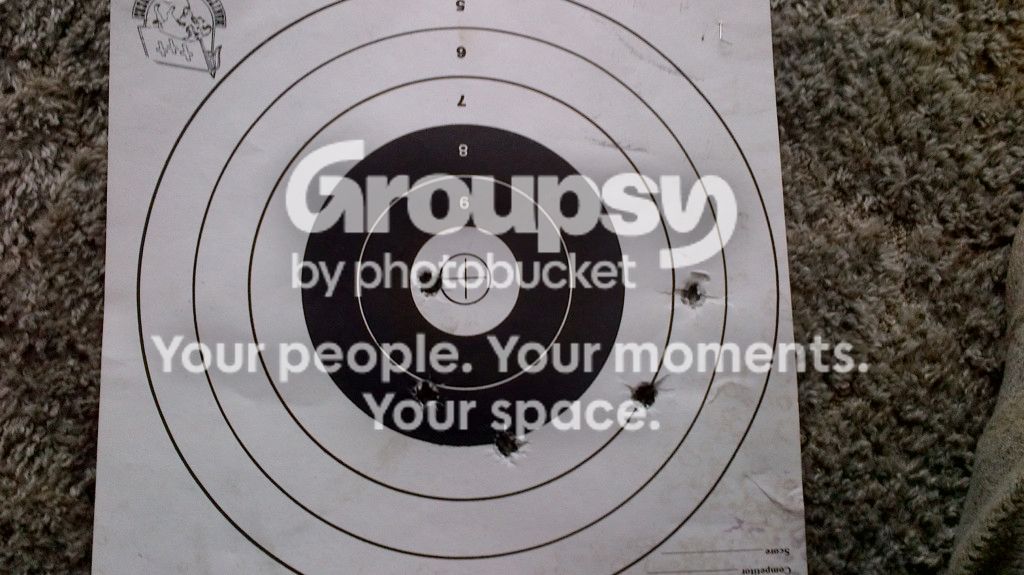
IMG_00000107.jpg

Not too good...but I gave the rifle a good cleaning, and here's the result...
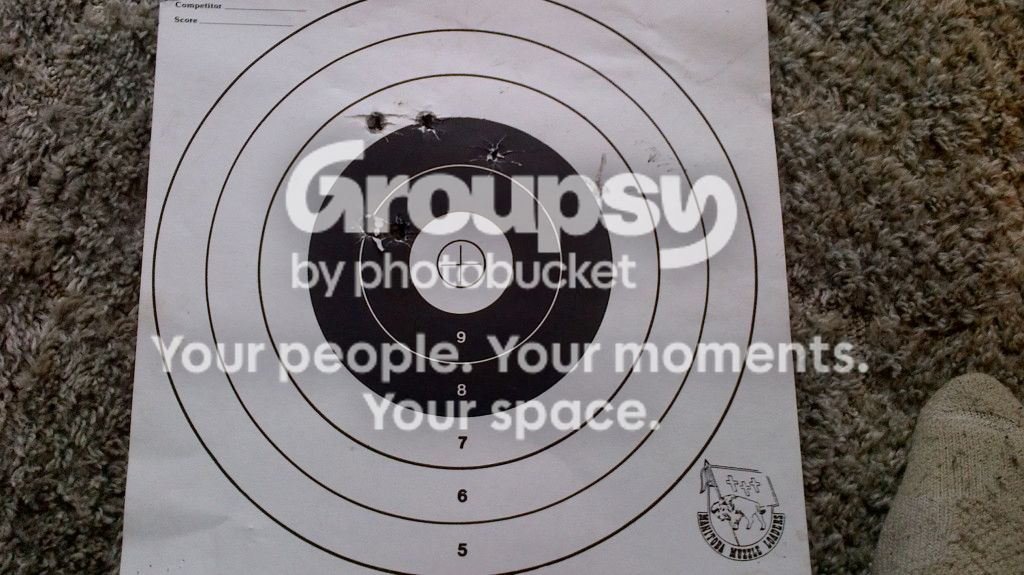
IMG_00000111.jpg

Better, right? So then I found a different shirt to tear into strips for patching. It was 100% cotton denim, not as heavy as jeans, heavier than a tee shirt. Also, I reduced the charge to 60 grains, and cleaned with oily patch, then dry patch Better again...

IMG_00000109.jpg

The last effort was with a reduced charge of 45 grains. The 'flyer" is the first shot, forgot to reduce the charge...duhhh. Still swabbing between shots.
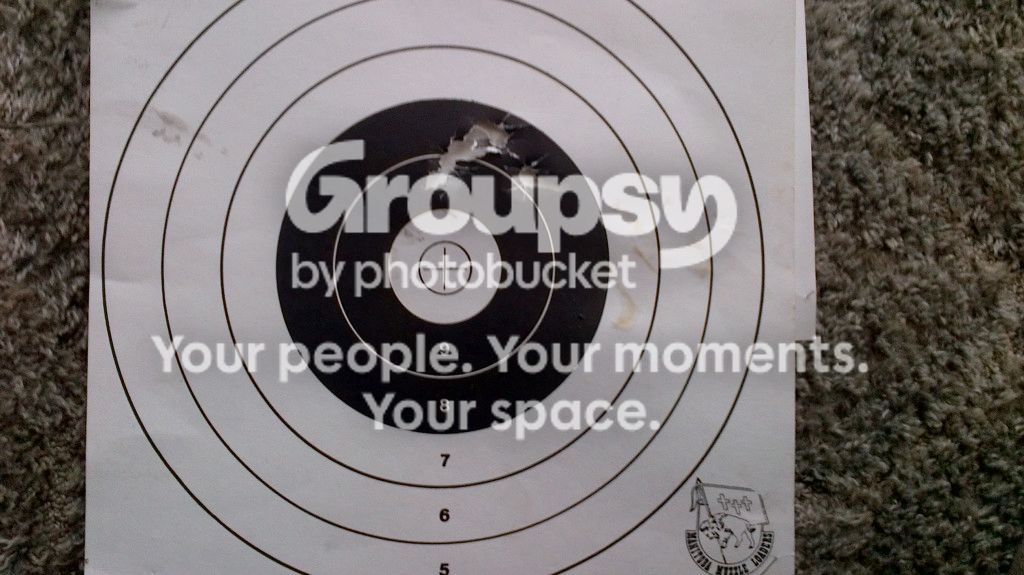
IMG_00000110.jpg

Here's the difference between recovered patches.

IMG_00000115.jpg

The thinner patches were burning through, almost disintigrating. Also, with a clean bore, they were not tight enough in a .50 barrel and .495 balls. The thicker cotton was much better. As I mentioned above, this is sort of muzzleloading 101, but I have been away from it for 25 years, and needed a refresher. I thought that it might be interesting to some of the newer shooters on this forum.
I know that we all tended to use much heavier charges back in the day. Big bang=fun. Now, small bang=cheap, accurate, comfortable to shoot. Win, win, win. The down side will come next deer season. 45 grains sure has less muzzle energy than 90. That's it till I can get to Jo Brook for some more caps. OBTW, here's my old Great Plains from my perspective. The old Lyman tang mounted peep sight works great. Peep sights are awsome!

IMG_00000105.jpg

Thanks for checking this out.

 
I have had a Lyman Trade rifle and a Lyman Deerstalker and they both liked a tight fitting pillow ticking patched ball, and a felt wad under the ball. I found that moose milk or Hoppe's black powder solvent worked best for patch lube. I used the Hoppe's for hunting, because I never liked leaving a water based lube sitting in my barrel too long. The felt wads I used were made from old felt laying around and punches I got from Princess auto.
 
The patches certainly tell a large part of the story there don't they.

I would be pretty hesitant to use the light 45gr load for hunting but it makes a great target load. What is the rifling twist in your gun? Based on the targets it looks like you must have a compromise twist such as 1-48 or maybe even faster which would shoot longer bullets (maxi's or mini's) with a heavy charge better than it will with round balls. Might be something else to experiment with.

Nice sight too btw.
 
That's interesting. What make and model is the gun? I just tested out my Safari Arms Hawken today and ran about 1" groups at 20 yards with 90 gr Goex FFG and a 495 round ball with prelubed .005" patches. Broke the wood ramrod though. :(
 
I practiced weekly with my muzzle loader, for three months. I then took it deer hunting. I took a deer 4 years ago. It took one shot , but a follow up shot was needed after. The range was (measured) 75 yards... I used my 50 cal Pennsylvania rifle with a 41 inch barrel. It was loaded with 100 grns , using a mag Cap. When I cleaned it and then butchered it I noticed that there was not enough damage done to the ribs.It was a good solid hit however well placed.The conclusion was I bought a 54 cal. The fifty four delivers just the right amount of punch. Just my two cents worth ....
 
The rifle is a Lyman Great Plains .50 with 1/66 twist, definitely a round ball shooter. I haven't tried anything other than spit patching, although I do use canola oil for hunting, to prevent the patch from drying out. My next experiment will be with some sort of lube, and a little bit thicker patch. I have given some serious thought to shopping for a new rifle, tho, one with rapid twist for bullets. I am intreagued by English sporting rifle repros, like the Pedersoli Gibbs, or Doc White's excellent looking custom rifles. For the time being, tho, I'm really interested in seeing how much further I can take the old Lyman. Also, I can use the time to save up for one others. They are sort of pricey...
 
a couple of thoughts about your choice of patching. One is that the torn up T shirts were presumably old and worn ones. They probably vary in thickness (from wear) which can give you poor accuracy although the blown patches are obviously the biggest culprit. I remember a loss of accuracy when I used pieces of a worn out bed sheet; the edges are dramatically thicker than the center. Also I would suspect cotton T shirts probably have a significant amount of nylon in them which can be a problem for your barrel over lots of shooting.

If you find that the thicker patches are still blowing when you go to your hunting load, I would suggest dropping down to a 490 ball which would allow you to use a good thick patch or at least be easier loading.

cheers mooncoon
 
Your Lyman rifle should group 5 shots into one ragged hole at 25 or 30 yds using anywhere from a target load of 45 grains or so up to twice that with comparable accuracy. Your experiments are showing what the important variables are. Try some .490 balls and get some good patch material: invest in 1/2 yd of new "8 oz." denim from a fabric shop. It must be regular cotton denim, not the stretchy stuff which has synthetic fibres. Wash it to get out the sizing then try it for patch material with a liquid patch lube like any of the Moose Milk recipes. Non-liquid greasy stuff will serve for hunting - I use Bore Butter but there are lots of choices. As time permits, compare results using FFg and FFFg powders. My 50 cal likes 50 gr FFFg for targets and 80 gr FFFg for hunting loads. Concentrate on accuracy - muzzle velocity will take care of itself. Google a website called "Dutch Shoultz Accuracy System": he is almost anal about small loading and cleaning details but his results speak for themselves.
 
I buy my patching using a micrometer so that I can be somewhat consistent in the thickness of material that I am buying. Some years ago I had a rifle with a fast twist (1:48) that was very fussy about the most accurate powder charge. It was 55 gr of 3F or 80 gr of 2F (.530 ball). My assumption was that fast twist muzzle loaders had a most accurate velocity but that was not true with this gun. Instead of chronographing it, I shot it through 2 x 6 fir. The 3F load would go through 2 and dent the third while the 2F load would go through 3 and dent the 4th.
I have read Dutch's system but it is basically a bench rest system. It would be very difficult to use on a trail walk. Of course in hunting you are normally only concerned with the first shot so a group arrived at with his system would be applicable. The other problem with his system is that he uses a fairly dry patch; lubes the patch then allows the solvent carrier to evaporate and through experiment arrives at the best concentration of lube. I would expect a significant number of smouldering patches using his system. On a range that is usually not a problem but in the bush it can start a fire in the early part of the season when the brush is still dry

cheers mooncoon
 
Moonconon is correct as far as Dutch's system being more applicable to range shooting than hunting but I was suggesting that Easyrider should read his info to gain an appreciation of all the factors that can contribute to gilt-edge accuracy or detract from it. That's all. I tried the dry patch system and found I had to wipe with a wet patch between shots anyway to keep fouling under control and for ease of loading - useless on a trail walk. Never did have any smouldering patches, though.
 
I did read as much of Dutch's system as I could find online. It looks really interesting, and I'm going to buy the book, but I might wait till we get down south for the winter before I order it, just to simplify delivery. I enjoyed reading his stuff, and I especially appreciate the advice from you guys on CGN. I dug out the old micrometer, and bought some cotton yesterday, and bought a jug of water soluble cutting oil at Princess Auto, looking forward to some more experiments tomorrow. Weighed a few balls last night, and the range is 181-184 grains, mostly 183. Ya know, I sorta knew some of this stuff, or at least the concepts of consistency and precision from back in the day when I did lots of reloading. It just never occurred to me that those principles were applicable to muzzleloading. DUH! Now that I have come to that revelation, I am pretty excited about the possibilities. I guess I just always assumed that black powder=low tech. I like this paradigm much better.
 
The problem I have with commercial patches is they state the un-compressed thickness and what I need to know is the thickness compressed -as when being squeezed between the ball and the barrel. That's why we take a micrometer to the fabric shop when we buy patch material. Secondly, I never found a pre-lubed patch that I could use for 40 or 50 shots on a long trail walk without having to stop and clean the bore every few shots; whereas with my liquid patch lube (one of the dozens of Moose Milk recipes) I can go that many shots even on a hot, dry day, without having to clean the bore. I use "greased" patches when keeping the gun loaded for a while as in hunting or when temperatures are really sub-zero and my liquid lube will freeze. If I could ever find a commercial patch of the proper compressed thickness, I would probably buy some for convenience even though a bit more expensive than cutting my own. As an example, I have had very good luck with my 45, 50 and 54 cal RB rifles using a ball .010" under bore size with a patch cut from new, washed "8 oz." weight denim. It measures about .022" un-compressed and .006" compressed.
 
I just never liked having to go buy patches. Rip a strip off an old shirt or sheet, and ur good to go. Lube it how you like, set the ball on it over the muzzle, set it flush, and cut it off. With a knife. Perfect patch every time, perfectly centered. For hunting I always used to put the strip in a pill bottle, pour in a little canola oil, feed the end through a slit you cut in the lid, and Bob's your uncle. Of course now I'm learning about thickness, and lube recipes and consistency, etc, but I think the principle still applies.
 
I dug out the old micrometer, and bought some cotton yesterday, and bought a jug of water soluble cutting oil at Princess Auto, .

I would suggest adding 4 oz or so of isopropyl alcohol per quart of moosemilk. My impression is that water soluable cutting oil is a vegetable oil because it develops a layer of mold on the surface with time. The mold forms much faster with the moose milk than with the full strength cutting oil. The alcohol seems to slow or stop the mold forming

cheers mooncoon
 
For heavier loads I like to use a Irish linen patch with a wad of hornets nest underneath.Wash the linen to remove all the sizing and make sure you tightly compress the load down on the hornet nest wad or you will get patch burn through.
 
During deer season, I had knocked down a nice buck, and he thrashed around for a while, then got up and ran off. I asked this forum for advice to prevent repeats. The recurring theme in the responses was shot placement. Consequently, after season ended, I hit the backyard range, and was alarmed at what I saw. My groupings were pretty sad. I spent some time on this site, and others, looking for answers again. Once again, what I learned was pretty basic stuff, but it worked! Here's my initial effort at 30 yards, 90 grains of powder, 100% cotton tee shirt patch, and a dirty bore. By dirty, I mean likely 25 or 30 shots, and 3 weeks without cleaning.
IMG_00000107.jpg

Not too good...but I gave the rifle a good cleaning, and here's the result...
IMG_00000111.jpg

Better, right? So then I found a different shirt to tear into strips for patching. It was 100% cotton denim, not as heavy as jeans, heavier than a tee shirt. Also, I reduced the charge to 60 grains, and cleaned with oily patch, then dry patch Better again...
IMG_00000109.jpg

The last effort was with a reduced charge of 45 grains. The 'flyer" is the first shot, forgot to reduce the charge...duhhh. Still swabbing between shots.
IMG_00000110.jpg

Here's the difference between recovered patches.
IMG_00000115.jpg

The thinner patches were burning through, almost disintigrating. Also, with a clean bore, they were not tight enough in a .50 barrel and .495 balls. The thicker cotton was much better. As I mentioned above, this is sort of muzzleloading 101, but I have been away from it for 25 years, and needed a refresher. I thought that it might be interesting to some of the newer shooters on this forum.
I know that we all tended to use much heavier charges back in the day. Big bang=fun. Now, small bang=cheap, accurate, comfortable to shoot. Win, win, win. The down side will come next deer season. 45 grains sure has less muzzle energy than 90. That's it till I can get to Jo Brook for some more caps. OBTW, here's my old Great Plains from my perspective. The old Lyman tang mounted peep sight works great. Peep sights are awsome!
IMG_00000105.jpg

Thanks for checking this out.

you should take that open sight off of there, it defeats the purpose of the peep sight.
 
Wad over powder,then patched ball.As long as you compress the wad it wont burn and it will prevent your patch from burning also.I soak my patch in moosemilk and the wad also keeps my powder dry.
 
Back
Top Bottom




















