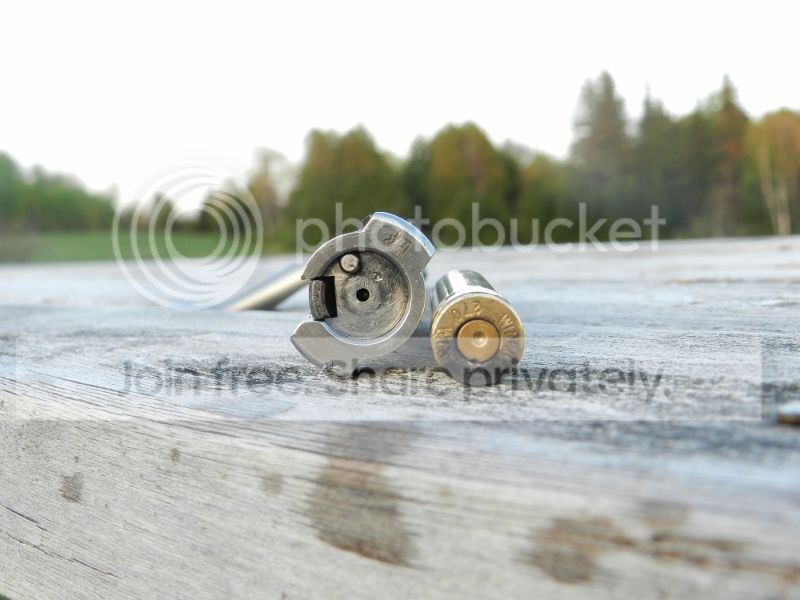
Bolt face damage - primer pocket leak?

deerfarmer

CGN Regular
Rating - 100%
196   0   1
Location
Foothills
Words can't describe how upset I was when this happened. 4th shot of my first batch of hand-loads in my new to me tikka m695 .270win .... 90gr sierra hp's, with 51gr of varget behind it (winchester brass and primer). I'm relatively new to reloading with only about 3 months and 150 or so rounds under my belt for my .222 and .308. Things looked normal during prep but perhaps I overlooked something???

Couple of questions - what can I expect from rifle going forward. Is it safe and will it affect operation or accuracy?
Also, I'd like to not have this happen again - what could I have overlooked or look for in future to prevent this? :confused::

I cleaned up the black from the bolt face before taking the pics
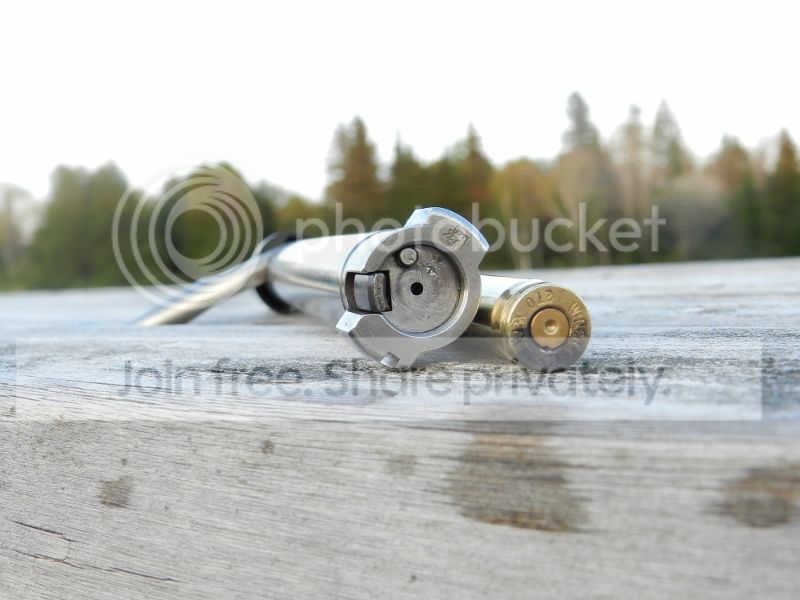
DSCN3732800x600_zps317bd70c.jpg


DSCN3731800x600_zpse70b8418.jpg
 
Last edited:

I have had this happen before - most likely a loose primer pocket. Make sure that when you prime there is a tight fit, this is why I prefer hand priming so you can "feel" fit. As for the bolt face, I didn't have what your picture shows. I would call a local gunsmith to confirm that no accuracy or operational issues going forward, I suspect there won't be.
 
was the primer seated correctly?

also, are you sure that the bolt face didn't look like that before?

edit: ok, looking at the mark and the brass it looks like it did come from this failure.
 
I looked at the primed cases as I hand-primed and they appeared OK. There was one case (I only had 4 pieces of brass) that did feel a tad easier to push in than the others but it didn't seem that unusual at the time. This was a bit of eye opener for sure - and a terribly expensive one as well. Bolt face WAS mint before
 
Your problem has nothing to do with seating primers. Adjust your resizing die to your rifle chamber. If the brass shoulder is pushed to far it allawes chambered round to go forward when is strike by firing pin and allows gasses to go by primer pocket. I also learned the hard way.
Vic
 
I'm with Vic1 on that; sounds like you somewhat created a headspace problem by resizing too far. When doing so, the strike of the firing pin pushes the case forward and before the pressure is fully expanding the chambered case it pushes the primer out and permits gas leaking, until the case fully expands - it's often worse with starting loads, as the pressure does not expands the case as fast and strong as it "should".
When you resize, screw the die in until it contacts the shell holder (upward position) and back it off 1 1/2 turn. Resize one case and try it in the rifle, screw down your die 1/8 of a turn and retry sizing the case. Reapeat until it chambers freely in the rifle. - with no resistance closing the bolt
If you resize for multiple rifles, do the same thing but wil all the rifles at the same time.
It's sad but you've learn something.
 
Your problem has nothing to do with seating primers. Adjust your resizing die to your rifle chamber. If the brass shoulder is pushed to far it allawes chambered round to go forward when is strike by firing pin and allows gasses to go by primer pocket. I also learned the hard way.
Vic

I full length sized the cases according to instructions with dies (RCBS). Are you suggesting neck sizing only? On another note I de-capped the culprit case and the primer had a pin hole through it on the seam at top. I guess it could have been blown off by gas escaping on the side but is it also possible I had a crappy primer?
 
I'm with Vic1 on that; sounds like you somewhat created a headspace problem by resizing too far. When doing so, the strike of the firing pin pushes the case forward and before the pressure is fully expanding the chambered case it pushes the primer out and permits gas leaking, until the case fully expands - it's often worse with starting loads, as the pressure does not expands the case as fast and strong as it "should".
When you resize, screw the die in until it contacts the shell holder (upward position) and back it off 1 1/2 turn. Resize one case and try it in the rifle, screw down your die 1/8 of a turn and retry sizing the case. Reapeat until it chambers freely in the rifle. - with no resistance closing the bolt
If you resize for multiple rifles, do the same thing but wil all the rifles at the same time.
It's sad but you've learn something.

Thanks for the explanation - you posted while I was typing .... it was starting load for that round.

Just so I'm clear ... chamber the case without a bullet seated right?
 
Last edited:

Contact Winchester via their website or phone. Make sure you have the lot number off the back of the package. Mine were lot #DKL787G. I've been using only Winchester primers since I started reloading (mostly because that's what is available locally) and in the last batch I've had two primers blow out like that on two different rifles/calibres on loads that are mid range and I've used before without problem and the brass was once fired. Seems like there is something wrong with the primer cup and Winchester is taking them back. I'm being told that I will be given vouchers for replacements.
 
Thanks for all the replies and feedback folks. I have read a thread on here specifically about the win primers failing and it sounds and looks the same. I'm hesitant to put sole blame on the primer however. I am wondering if it's a combination of other problem(s) combined with the poorer primer? Winchester does make a pile of factory ammunition and I can't imagine it would be terribly common??? That aside, I'm not one for taking chances, and I certainly won't be using them again!
 
I had the same problem with a bad batch of Remington primers years ago, the primer cups were too hard and let go at the edges. There was a primer recall published in gun magazines, Remington paid to repair the bolt and replaced the brick of primers.

Below is what happens as the cartridge is fired, the firing pin pushes the case forward until the shoulder of the case contacts the shoulder of the chamber. As pressure builds it causes the thinner sides of the case to grip the chamber walls and forces the primer out of the primer pocket until it contacts the bolt face. As chamber pressure increases the the brass stretches under pressure to meet the bolt face. Now watch the primer edges as the radius decreases, if the primer cup is too hard it will cause the primer to rupture at the weakest point.


The red and yellow areas of the cartridge case below are under the greatest stress when fired. As you can see the red areas at the radius edge of the primer cup are under the greatest stress.


If excess headspace caused primers to rupture half the ammunition you shoot in a Enfield rifle would rupture the primers. Normally with really excessive headspace the firing pin can act like a cookie cutter and punch the center of the firing pin hit out of the primer. This is because the primer is forced back over the firing pin and punches the hole in the primer as it meets the bolt face.


The photo below is from Google images, but this is what happens with hot reloads and loose primer pockets on over gassed AR15 rifles. This is nothing more than careless reloading and over used brass and isn't very smart.

 
Last edited:

I've had this problem with a few W-W brass of late and have found it to be over sized flash holes. It is not a loose primer pocket because that shows all the way around the primer, nor is it a headspace issue, it is a flaw with either the side of the primer pocket or the flash hole, guaranteed. Headspace will give badly flattened primers and false signs of high pressure but I've never seen a primer blow out one side due to headspace.
 
I full length sized the cases according to instructions with dies (RCBS). Are you suggesting neck sizing only? On another note I de-capped the culprit case and the primer had a pin hole through it on the seam at top. I guess it could have been blown off by gas escaping on the side but is it also possible I had a crappy primer?

If there is no high pressure gas erosion in the primer pocket and only the hole in the edge of the primer, it is a primer failure and not caused by a loose primer pocket. Again if the primer is too hard and can not bend and flex when fired the edge of the primer will fail.

Was there any gas erosion along the entire length of the seated primer? (from the bottom of the primer pocket to the base of the case)
 
If there is no high pressure gas erosion in the primer pocket and only the hole in the edge of the primer, it is a primer failure and not caused by a loose primer pocket. Again if the primer is too hard and can not bend and flex when fired the edge of the primer will fail.

Was there any gas erosion along the entire length of the seated primer? (from the bottom of the primer pocket to the base of the case)

Thanks for taking the time to reply with such great information! If I'm following you correctly, the pocket was blacker than normal fired cases but no damage to brass other than right at surface edge where hole in primer was.
 
Deerfarmer,
Yes, just the case, no bullet. It's the standard fitting procedure for any caliber / rifle.

Hard primer cup with too much headspace and low pressure not permiiting enough primer / case expansion can produce that.
Crushed or bent primer cup wall can also produce this result and so does a defective primer cup or oversized primer pocket.... You have many options. When something goes wrong with hanloading, better check more possibilities than not enough.
 
Back
Top Bottom