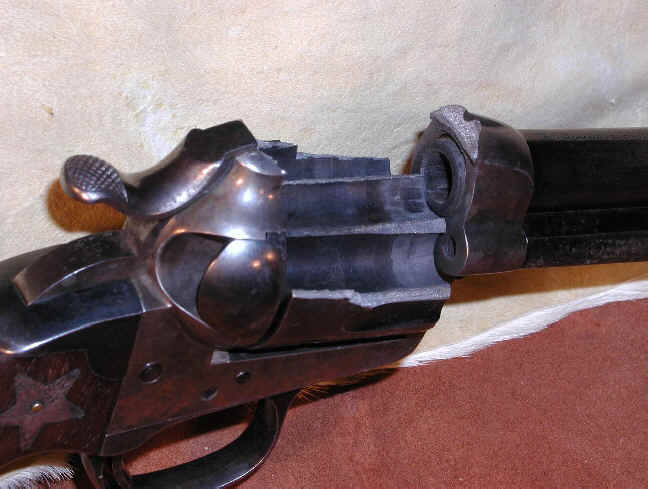
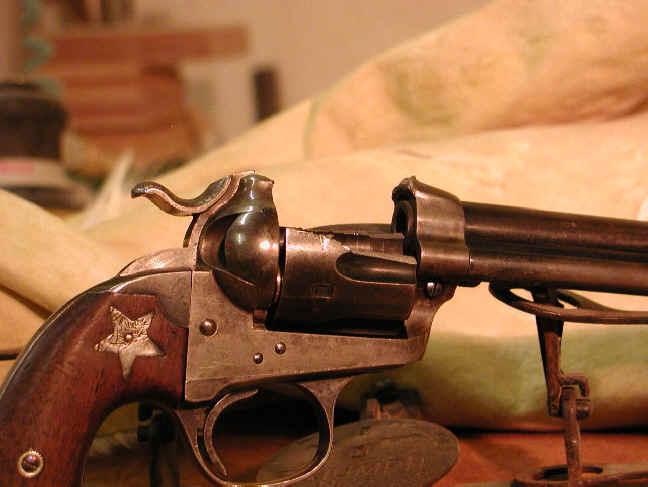
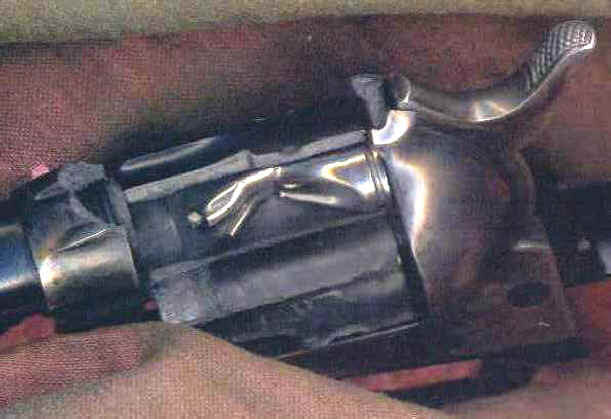
Colt SAA Smokeless powder approved frame start serial number

mkrnel

CGN Ultra frequent flyer
Rating - 100%
255   0   0
Location
Canada
There seems to be some misconceptions in the CGN community about Antique status Colt Single Action Army revolvers having frames that are okay for regular smokeless ammo use because they have the transverse cylinder pin latch instead of the previous retaining screw, this is an incorrect assumption as this pin latch was added in 1892 at serial number 144,000 and according to eminent Colt historians, Colt lists number 192,000 the earliest gun built in 1900 as when "revolvers built to handle smokeless powder".

Renown Colt Historian and Author John A. Kopec's ( http://www.johnakopec.com/ ) information on this subject in Kopec's book, states that there is a notation in Colt's shipping records, specifically stating that guns numbered between 175,000 and 180,000 (1898) "are NOT guaranteed for smokeless powder". I take that to mean guns numbered beyond 180,000 ARE safe with smokeless powder. Kopec further states that there is a misconception among collectors, that guns from serial number 165,000 (1896) on are safe with smokeless powder and then concludes by advising extreme care in using handloads in pre-1898 guns.

So as we can safely see, that NO Canadian Antique status Colt SAA frames are built to handle regular smokeless powder loads on a regular basis!

They further state that these pre smokeless frames were made from iron until 1896 when they then started to then bring in steel in their gun manufacture, but they still had lots of un-assembled SAA iron frames that did not get used up until 1900.

Shooters can still get away with mild smokeless loads if they have antique SAA's with new modern steel cylinders and barrels but shold be aware that it is easy to stretch the frame on these old iron frames with only a few cylinders of regular factory SAAMI smokeless loads.

Colt Flat Top Target SAA made in June 1892, serial number 144729
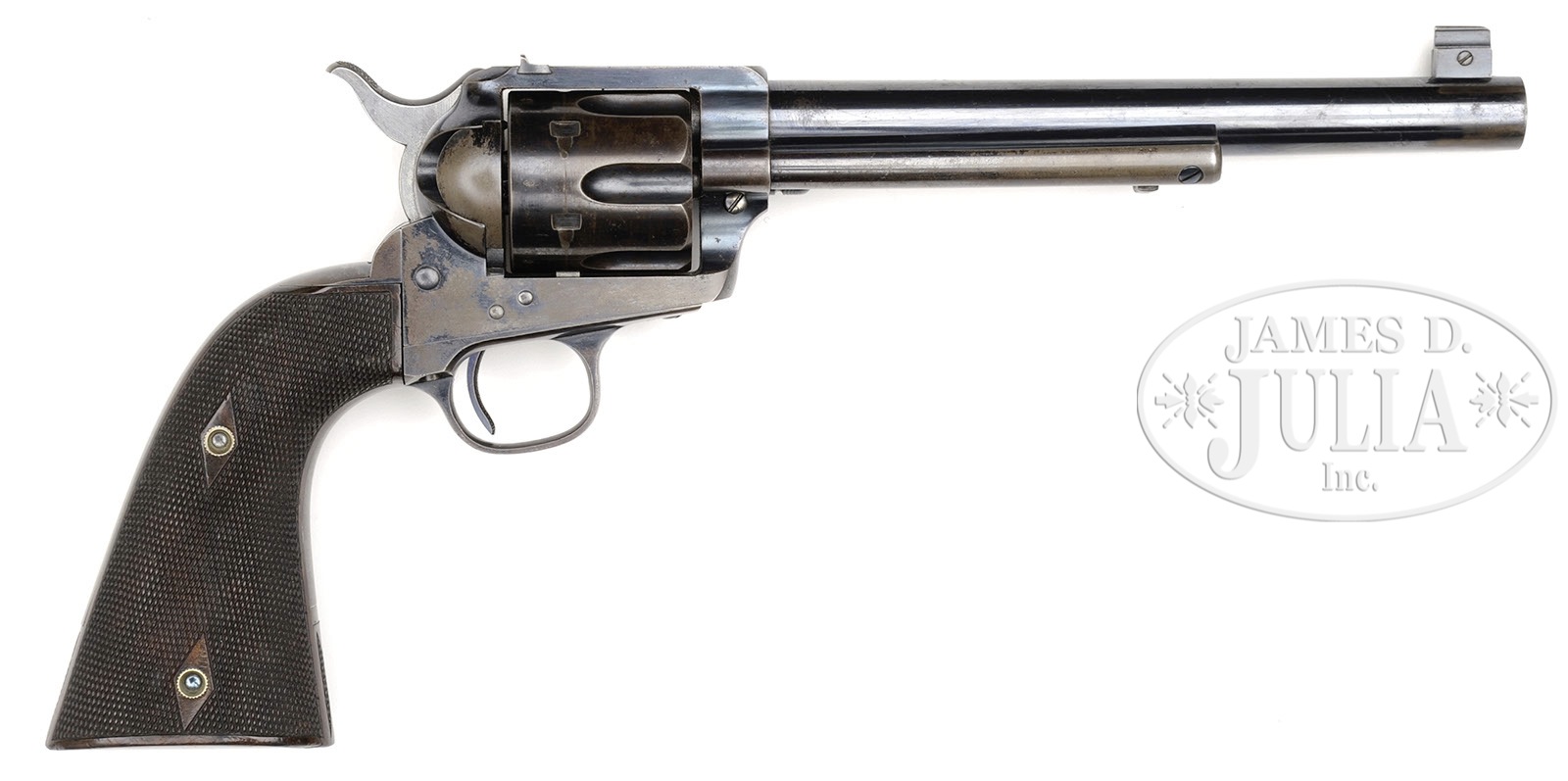
50756x4.jpg
 
Last edited:

... unless it was sent back to the factory where colt stamped the trigger guard with the correct stamp after the fact. I can post pics later if anyone wishes to see them
 
Why would Colt stamp the trigger guard instead of the frame if you are inferring some sort of post manufacture proofing?
 
Shooters can still get away with mild smokeless loads if they have antique SAA's with new modern steel cylinders and barrels but shold be aware that it is easy to stretch the frame on these old iron frames with only a few cylinders of regular factory SAAMI smokeless loads.

My reply is not just to the OPs post but a in general repy about smokeless in antique handguns..

There are so many diffrent writeings on the SAA colts like Wilson and mike venturino Kopec all talking about Colt smokeless frames and when they really started useing the better steel its hard to say who has it right when colt themselves cant nail it down by saying they cant garentee when the frames started exactly.
Its intresting that i have read the cross pin bisley models that were pre 175000 ser# used the better steel if they were made at the same time as the SAA colts why would they only use the better steel on the Bisleys made no sence to me.

Anyway its always best to be carefull when loading smokeless in any pre 1898 gun or to check what the loads are in your ammo you buy.
I know a fellow who shoots 45 caliber loads + 900 Fps outa his cross bolt frame pre 175000 gun has put 100s of rounds thru the gun and its as tight as when he got it.
I also have a BP SAA colt with a arsenal grade steel cylinder i have put over 500 rds of smokeless powder thru it and so far the head space has stayed the same in the cylinder no end shake at all from start to now.

Its all about the loads you use like 2400 powder that has a simlar presure curve to BP.
or mild unique loads its another great powder for antiques.
If a person has any antique there shooting smokeless powder in i recomend they read six guns by elmer keith that way you will find a safe load for your guns.
Keith didint just write about it he did it :)
If you push it like he does sometimes then of course you might blow up the odd gun but theres no reason if your carefull to not use smokeless.
Id rather use a mild smokeless load anyday than BP that stuff just makes a mess and if you get airspace in a case it to can blow up any gun. so can to light a smokeless loads its called detenation read up on that.
The trick is to use the correct smokeless load, for theses so called profesionals to just with the stroke of there pen say that all smokeless is no good in the older guns is just not true.
Thats why i stoped reading Kopec and venturinos stuff they dont take into account presures of certin smokeless reloads.
If they were right there would be dozens of guys on CGN posting pictures and info how there SAA colts were shooting loose.
If there useing the right reloads thats just not the case.
I do know some guys who shoot webleys loose but there useing modern 45 acp coper jacketed ammo in them. 900 FPS ammo tho the frames dont strech the barrel hinge pins get worn and the latch screws are bending.
If they put in a new latch screw and barrel to frame pin the guns would again tighten up.

Its always best to reload if your useing smokeless powders and to load to the right specs.
But im not stoping useing smokeless in any of my pre 1898 guns because Kopec says you shouldnt do it. He has been saying that for the 10 years ive been doing this and i still have not shot a gun loose from so called frame streching.
 
Last edited:

Dingus I correct. I have and continue to do this in my converted .44 and .38 SAA's. I shoot lightly loaded cowboy ammo with non jacketed soft lead bullets and have yet to see any increased wear or damage to any of my Colts, even pre 1896,1897 non crosspin frames.
 
... The trick is to use the correct smokeless load, for theses so called profesionals to just with the stroke of there pen say that all smokeless is no good in the older guns is just not true.
That pretty much sums it up. The main thing to remember is that for the same muzzle velocity, brass, primers and bullets, There will be a range of pressure curves and peak pressures with smokeless. The faster smokeless powders will give you a peak pressure that is higher than BP and the smokeless powders with a slower burn rate will give you peak pressures that are lower than BP. I think some gun writers assume that the majority of reloaders don't really understand the effect of burn rates on peak pressures, so they recommend BP only. (I also think that some, like Venturino, don't even understand burn rates vs. peak pressure so that is why they write the things they do). I think it is true that the majority of reloaders reload from charts (nothing wrong with that) and do not have a good knowledge of burn rates vs. peak pressures (all other things being equal), so it doesn't hurt to recommend BP only sometimes. Nevertheless, I much prefer to use smokeless in all my antiques for clean up purposes, but there are BP fellows here who rightly say that clean up is not that big a deal once you know what you are doing and get a system going. In my opinion, using hard cast bullets in antique revolvers is far more harmful than using smokeless. My reproduction copy of the 1896 Winchester catalogue lists all the popular ammo of the day and what alloys each used. Their pistol ammo used pure lead, so that is what I use. Works beautifully and doesn't hammer the bejeebers out of the forcing cone when it slams into it during firing.
 
A great wealth of good information in just a few posts. Thank you sirs.

I think most of us would agree that reloading allows for the greatest degree of control and therefore safety.

Dingus I correct. I have and continue to do this in my converted .44 and .38 SAA's. I shoot lightly loaded cowboy ammo with non jacketed soft lead bullets and have yet to see any increased wear or damage to any of my Colts, even pre 1896,1897 non crosspin frames.

When you say lightly loaded cowboy ammo do you mean commercial ammo or your own reloads? I agree with the soft lead projectiles.


For myself, part of the fun is in creating a cartridge that shoots as close to original as possible. Most antiques are BP so I have enjoyed shooting BP. If you have an outdoor range then BP can be a great deal of fun. The experience includes all of your senses. There's usually muzzle flash. There is smoke, there is a recoil senssation that feels more like a push than a body check. There is a boom. Later as you drive from the range you might notice a salty scent from the nitrites. Always reminds me of steak...

Not everyone has an appropriate range so I understand the attraction of smokeless as well. For those applications my go-to powder has been Trail Boss. Mostly due to the fact that it has similar properties as Black Powder. An uncompressed full case is your maximum load. As it is a high volume powder it is impossible to create a double charge. Brilliant stuff.

I remember being dissapointed at how different the BP pressure curve was from Trail Boss however.

Its all about the loads you use like 2400 powder that has a simlar presure curve to BP.

Was 2400 one of the first smokeless powders? The first was: Poudre B apparently. I wonder what the pressure curve was like on all the early nitrocellulose ones.

That pretty much sums it up. The main thing to remember is that for the same muzzle velocity, brass, primers and bullets, There will be a range of pressure curves and peak pressures with smokeless. The faster smokeless powders will give you a peak pressure that is higher than BP and the smokeless powders with a slower burn rate will give you peak pressures that are lower than BP.
-If I am not mistaken the majority of modern smokeless powders fall into the faster category and only a few fall into the desireable slower one. I think one of those is 2400. How about H110? IMR 4227?

I think some gun writers assume that the majority of reloaders don't really understand the effect of burn rates on peak pressures, so they recommend BP only. (I also think that some, like Venturino, don't even understand burn rates vs. peak pressure so that is why they write the things they do). I think it is true that the majority of reloaders reload from charts (nothing wrong with that) and do not have a good knowledge of burn rates vs. peak pressures (all other things being equal), so it doesn't hurt to recommend BP only sometimes. Nevertheless, I much prefer to use smokeless in all my antiques for clean up purposes, but there are BP fellows here who rightly say that clean up is not that big a deal once you know what you are doing and get a system going. In my opinion, using hard cast bullets in antique revolvers is far more harmful than using smokeless.
-I agree that proper sized projectiles of the appropriate material. (Soft Lead) is probably the first thing to focus on when reloading for antiques.

My reproduction copy of the 1896 Winchester catalogue lists all the popular ammo of the day and what alloys each used. Their pistol ammo used pure lead, so that is what I use. Works beautifully and doesn't hammer the bejeebers out of the forcing cone when it slams into it during firing.

And is more forgiving, better suited to sealing / obturating.
 
Last edited:

-If I am not mistaken the majority of modern smokeless powders fall into the faster category and only a few fall into the desireable slower one. I think one of those is 2400. How about H110? IMR 4227?

No. Not at all. The burn rate of 2400 is about the middle of the pack. There are many powders that have a slower burn rate. Every reloader needs to carefully study the information here ht*****tp://www.chuckhawks.com/powder_burning_speed.htm 2400 gives you a pressure curve that is about the same as FFg. Blue Dot gives one that is closer to FFFg. For my reloading of BP cartridges, my favourites are IMR SR4759 (which is being discontinued and I bought the last can from Shooters Choice yesterday . sob!) and 5744. Both fill the case reasonably well and burn pretty consistently, especially 5744. Unfortunately, they have a lower peak pressure than BP (all other things being equal) so may not obturate the bullet as well as 2400. The main problem with 2400 is that it usually gives pretty large extreme spreads. For my reloading, I always strive to reload to original BP ballistics using, usually, 5744 or IMR SR4759. For larger cases, a lot of fellows like IMR 4198, but it also gives a lower peak pressure than FFg (all other things being equal), so you need to have a tight fitting bullet that does not need obturating, or a jacketed one. The most heinous powder I have every used for position sensitivity is IMR 4227. Don't use this in large capacity cartridges. Depending upon whether you tilt your rifle up or down before shooting, you can get a couple hundred fps difference in velocity. I do not use it, even though it has almost the identical burn rate as 5744.
 
Thank you for the link.

I was aware that the pressure curve of Trail Boss was different than BP but everything seemed fine as long as I kept the max pressure lower than the original cartridge. This worked well until I started reloading for 450 Adams. The original load I worked up should have been very safe but I noticed a minute increase in play in the top latch. (it was a Belgian Warnant style revolver) The load also seemed a bit strong for the piece. My conclusion was that the pressure curve of the Trail Boss wasn't sitting well with it so I worked up BP loads for it instead. I will revisit this cartridge with a different powder based on your suggestion.
 
Good call, Clotho. Trail Boss is a very fast powder with a very spiky peak pressure. Below is actual data showing a comparison between Trail Boss pressure curves and FFg for the same weight bullet in a 45-70. As you can see, FFg will put the 500 grain bullet out the barrel at 1,100 fps with a peak pressure of about 20,000 psi. Trail Boss puts the bullet out the barrel at a slower 1,000 fps but at a whopping 34,000 psi. I would never use Trail Boss in an antique unless I used very moderate published loads.
45_70_pressure3.jpg
 
I do use Trail boss but never exceed recomended loads.
I think the max for 45 colt is like 6 grs so i load 5 in my schofield rounds the guns like it with no signs of looseness.
What no one is talking about is how accurate some of theses podwers are or can be.
Some of them shoot like a shotgun patern. I like my guns accurate.
I agree TB is not good if exceeding recomened listed loads , go over them and the presure spikes like a SOB.
I like it because i cant throw a double charge as my case would over fill. like if the dogs have a big fight while im reloading or i get distracted by the phone.
I think TB is OK if your carefull just dont ever exceed recomended loads go under them abit.
I like 2400 to because its accurate but it only works good in the longer cases like 44 sp or 45 sch it dont work good in the 450 or 455 cases .
Unique is another good powder and the one most guys use like a 5 gr load in a 455 webley case with the correct webley bullet alot of guys are useing unique.
Win 38 55 has had some great sucess with 44 Russian smokeless loads and some of his powders he likes to use.
theres going to be new better powders that come along so its good theres guys like us willing to try them so we can show Kopec and others the sky is not falling :)
 
I used TB in my #3 Russian...twice...first time, and the last!
I used a recommended load,(can't remember offhand where I got it), and was totally blown away by the fireball, and very loud, SHARP crack.
Did not like it all.
Got a Colt 44 Special coming, and will use 2400 and lead bullets in it.
Thanks for all your great posts and threads on this issue!

Later!
 
One of the advantages of a faster powder like Trail Boss or Unique is that the sharper pressure spike obturates a soft cast bullet very nicely, giving improved accuracy, as Dingus mentioned. I find for a lot of my old Winchesters, slower powder gives me lower pressure, but at the expense of obturating the bullet. What I try to do is find the balance between a high enough peak pressure to give good accuracy, without going too high, coupled with a bulky enough load so that if I accidentally double charged the case, it would be very obvious or overflowing. The powders that seem to fit the bill are usually Blue Dot, 2400, 5744 and IMR SR4795 but Trail Boss in moderate loads would fit the bill as well. If I have a beauty of a bore and properly sized bullets, I don't have to worry so much about obturation and can go with a slower powder like IMR 4198, IMR 3031, RL-7 or IMR 4895. Too slow, however, and I start to get a lot of unburnt powder strewn down my bore.
 
I haven't reloaded in a few years but a powder I grew to like was Ramshot True Blue, with a pressure curve very similar to blackpowder. I used it very successfully in .41 Colt. It's not a well known powder so you would have to completely make up your own loads.
 
blown_bisley2.jpg
2306222.jpg
colt_2.jpg
http://3.bp.########.com/-7n9qBn40H7s/UOSLIKBPynI/AAAAAAAAATw/rOrTPvqdGc0/s1600/kaboom+revolver.jpg
2306294.jpg


Be careful guys! once this happens you will be very sad!
 
I'm sure everyone understands your concern and where you are coming from but the reason guys pay $5000+ for one of these guns is so they have an unregistered handgun to shoot modern ammo in.
 
Back
Top Bottom