1942 Longbranch, what is correct- All Finished, Pics Pg 4.

greyman441

CGN Regular
Rating - 100%
271   0   0
Location
Wasaga Beach, ON
So I am looking at restoring a 1942 Longbranch and am wondering what is correct and what isnt.
What is mean is,
Would 1942 mean milled bands or stamped?
Brass or steel buttplate? Pretty sure brass but want to be 100%
Also what type of rear sight. Right now it just has the 2 select, the 300 and 600 but I do have a Mk III rear sight if that would be better.
Any idea what would be best? I have all the parts so either way is good.
 
Last edited:
If the wood is original, I wouldn't worry about what was right or wrong. I keep it as is because that is how it was in service. But if your de-sporting a longbranch then I can see you wanting it too appear unissued.
 
Ya its a sporter. Im not sure about the rear sight and i think the bands were milled for that year but not 100%. I do have a wallhanger 1942 longbranch with milled bands that is why im not sure.
 
really, just about anything is correct on these, they could have changed national hands a dozen times in their service life with repairs and changes made each time.
 
Your 42 Enfield was issued with a milled mid band and a heavy forged front band both "LB" marked. Butt plate would be blued steel...."Zamak" or alloy was later issue sometime seen on 1943-45 and refurbished Enfields. wood should be walnut or stained dark birch and will not have the low cut out. Should be a nice rifle put back in its original condition. Ron
 
Last edited:

I'll throw my 2 cents worth. Brass or Zamac butt plates would be correct but lean to brass. Rear sight should be Mk3. Steel butt plates are later dates.
As mentioned above, almost anything is correct after it had been in service
 
My thoughts on the rear sight would be a mk1 milled sight on lower serial numbers, and mk2 "L" style sight on the later 42 production. Not sure if the mk3 sight made it onto 42 production rifles. Always kind of pegged the stamped Cmk3 sights as more of a 44/45 production item.

Problem with trying to figure this stuff out for sure is that there was so much interchangeability, long service life, upgrades, and plain swapping of parts. Also, production changes were not all made on Jan1 of any given year, so the cutoffs, if they could be determined, woudl have to be by serial number range, rather than by year. 1942 and 1943 were very high production years, and likely had the majority of the changes. Changes had certainly stabilised by 44 and 45, with a lot of the fabricated vs milled parts being the norm.
 
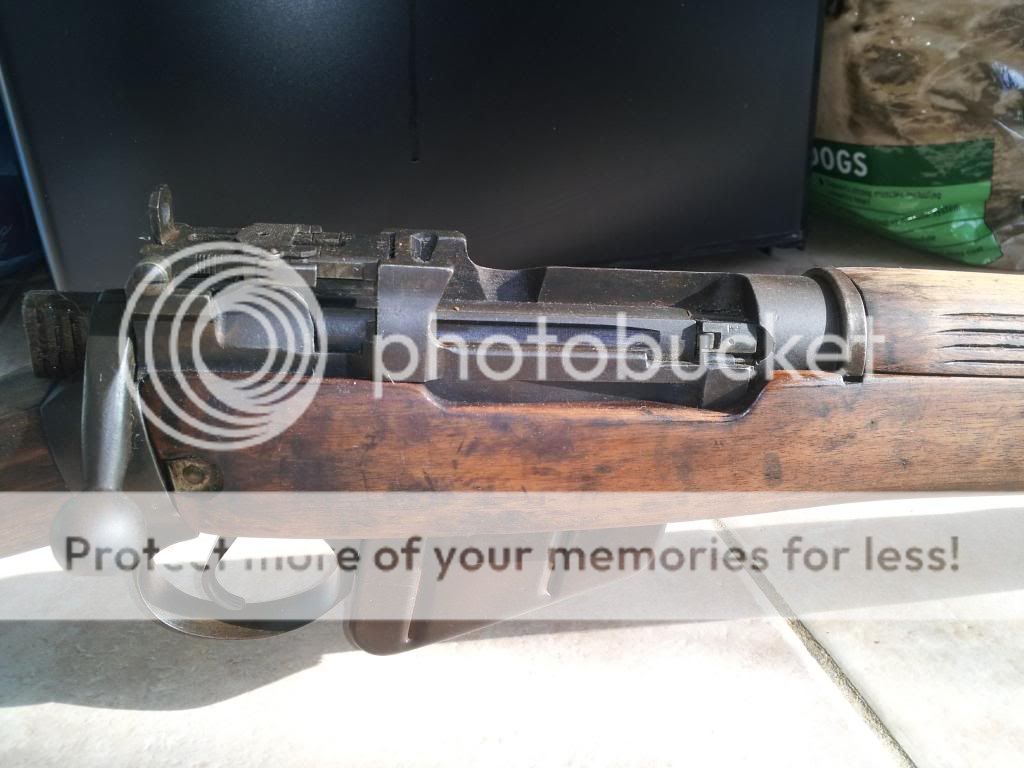
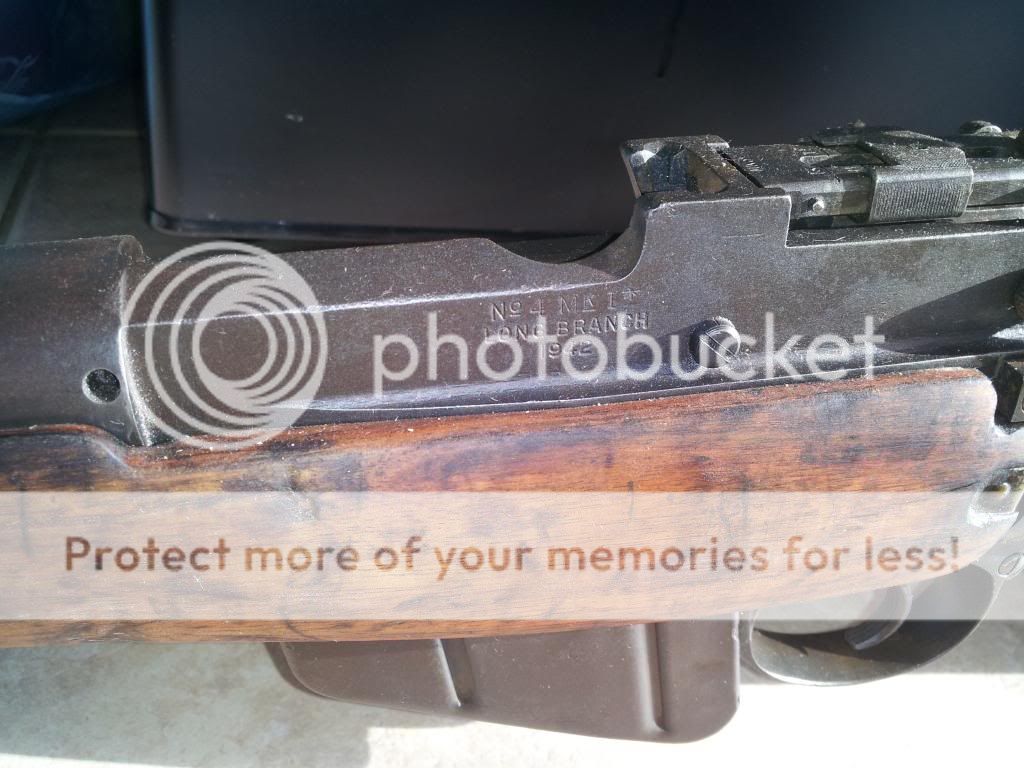
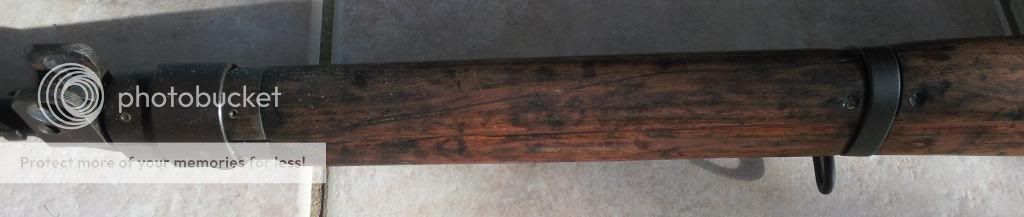
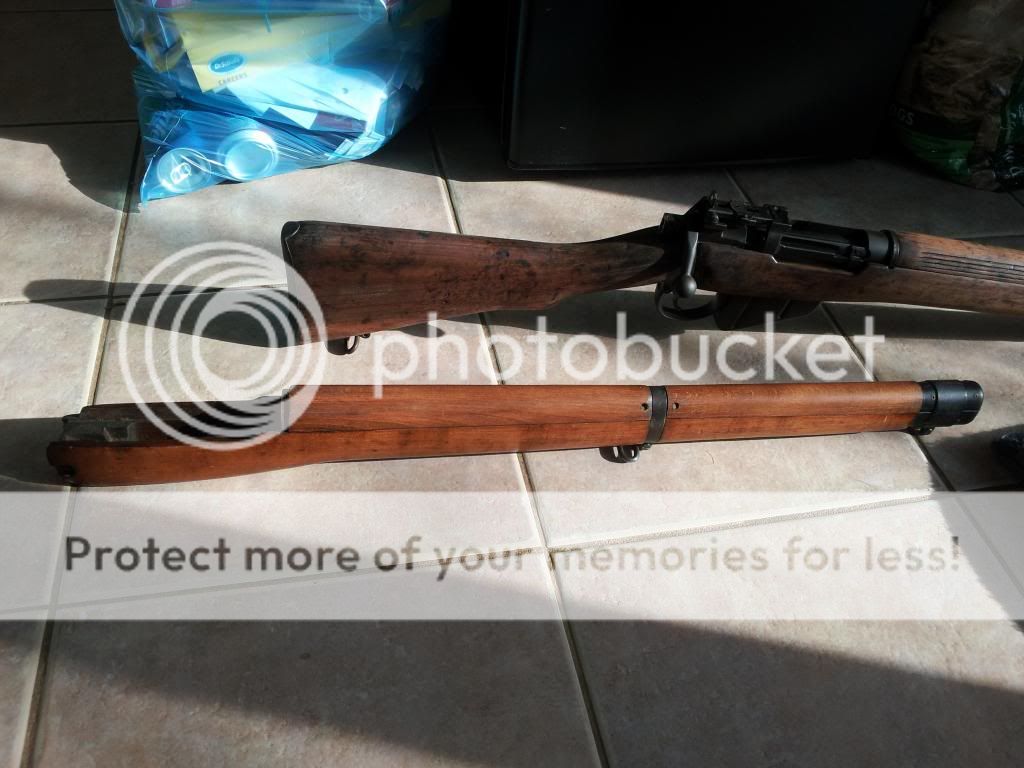
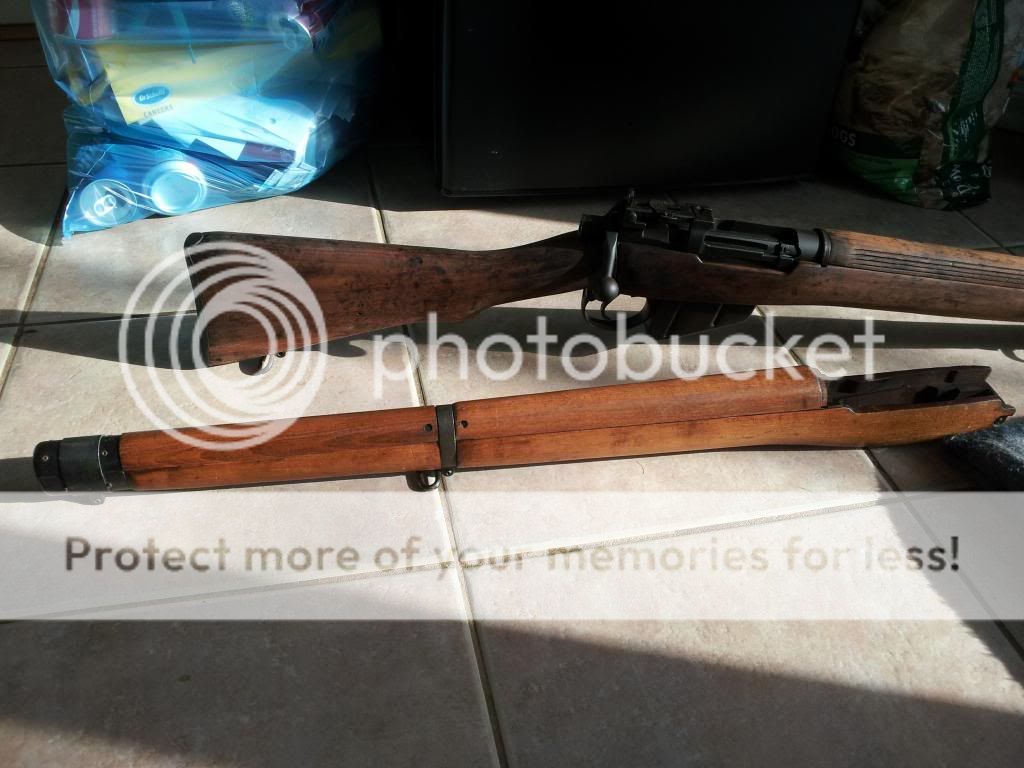
The reason why I was asking these questions is because I have a 1942 longbranch paperweight here that I believe to be pretty correct. It has the milled bands, low cut forstock and the mrk 3 rear sight. I was basically using it as a "template". I have not restored a earlyish no4 yet so I wanted to get it correct as possible. Here is a few pics of the paperweight and a few pics of the stockset that is going on the 1942 Longbranch. The stockset looks to be a orange in the pics because im using my phone but it is a very nice light brown which I believe to be the stained birch.

2013-01-20110606_zps3e3a4ee9.jpg

2013-01-20110443_zps96a9ff5f.jpg

2013-01-20110513_zpsddd085d9.jpg

2013-01-20110726_zps9a509f55.jpg

2013-01-20110658_zpsb11a49fd.jpg
 
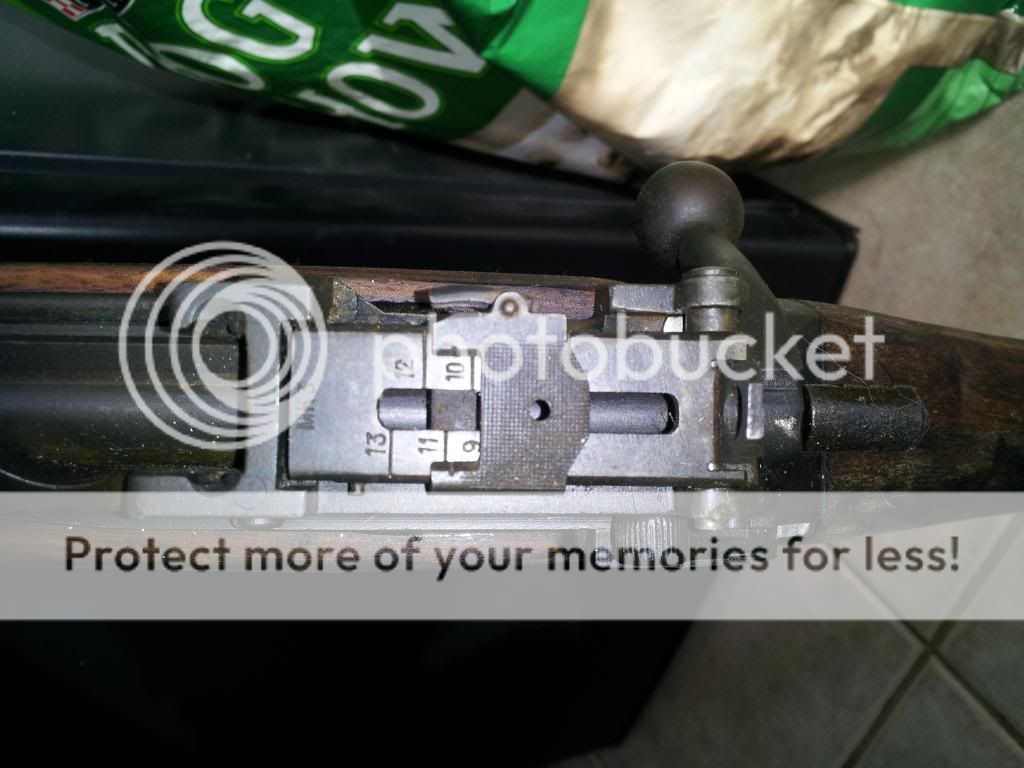
I have to agree with Stencollector on his comment about mixed parts and repairs of any enfield that's been in service. can you show us a picture of the MK3 sight from the top? does it have a spacer? You should be aware that the MK11 was introduced prior to the MK111. The stock set on the 1942 LB is stained birch....they bruise typically like yours from handling. The forend set your showing is maple. Would look great on an Enfield with matching butt. Ron
 
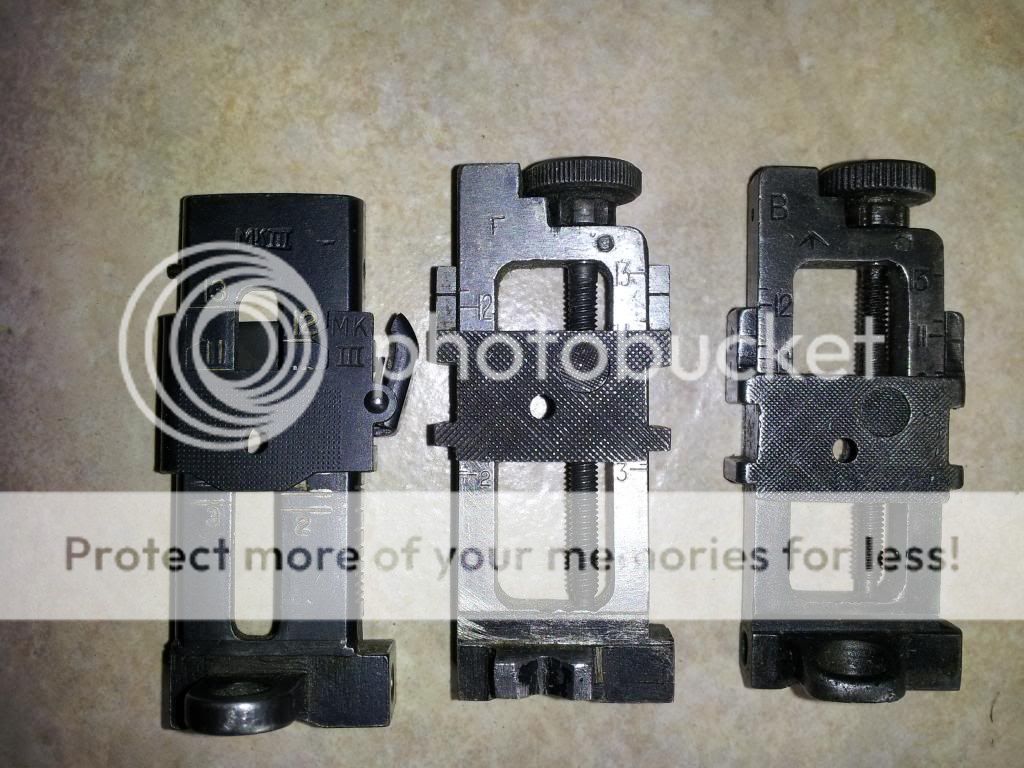
Ya I dont have a butt yet but I believe the one that is comming on the other 42 may match. Ill have to see. Here is the pic of the rear sight and some pics of some that I have kicking around. I have a box of misc enfield parts comming in the next couple weeks that should have some more sights are bands so I am going to wait and see.

The rear sight on the 1942 LB PW does have the spacer. So the best sight for the 42 should be the one of the far right?


2013-01-20124735_zps308b187c.jpg

2013-01-20124851_zpsb639c6d2.jpg
 
The mkIII sight was introduced to
production at Long Brancj in@ may 1944.

It was available for retrofit to existing rifles in july of 1944.

Dimac/zamac were trade names for zinc alloys. It is correct from 1941 to 43/44 for all long branch rifles.

Except for possibly the earliest 1941 manufactured lb rifles, Long Branch NEVER used brass butt plates.
 
Sight on your 42LB is a Brit MK3...hence incorrect....the Brits were the only ones to use the stamped sight with the washer spacer. The MK111 in the pic is shown is correct Canadian...used 1944-45 as well as repair/replacement. MK11 would be more correct as would a MK1 or battle aperature. The 2 others in your picture are Brits so use one on left. Ron
 
Last edited:

Okay so the battle aperature that is on the restore one is most likely original so ill leave it as is. The 42 paperweight i may swap the mrk III sight over maybe. Like I mentioned it is just a paperweight, the barrel is plugged, bolt welded etc. Im gonna hold onto the mrkIII sight for something useful someday.
 
One of the difficult things about finding out what is or isn't correct on these rifles is different publications will state different combinations.
On the brass butt plate, Charles Stratton states that, "Second Variation: this butt plate is identical in configuration to the first variation but is made of cast alloy material, gray in colour, with the trade name "Zamac". This butt plate is found on some Mk1* rifles both of Savage and Long Branch manufacture."
Note the word "some".
On the seventh variation C Mk3 back sight, "It was found on 1942 and 1943 dated Long Branch rifles"
The Mk3 he states was found on the British rifles.
I have seen so many mixed bagged combinations on so called correct rifles I really have no idea.
 
One of the difficult things about finding out what is or isn't correct on these rifles is different publications will state different combinations.
On the brass butt plate, Charles Stratton states that, "Second Variation: this butt plate is identical in configuration to the first variation but is made of cast alloy material, gray in colour, with the trade name "Zamac". This butt plate is found on some Mk1* rifles both of Savage and Long Branch manufacture."
Note the word "some".
On the seventh variation C Mk3 back sight, "It was found on 1942 and 1943 dated Long Branch rifles"
The Mk3 he states was found on the British rifles.
I have seen so many mixed bagged combinations on so called correct rifles I really have no idea.

Charles Stratton's book has been criticized as inaccurate on several levels. I've seen comments that he was an amateur, and the book was poorly researched.
I have a copy myself and have come across some things wrong or lacking in detail, and I am no expert on No 4 Enfields. For $15, it's a basic intro to No 4 Mk 1 Enfields, but don't rely on it for accuracy.
Now when I can spare an extra hundred I'll get Ian Skennerton's book on Enfields, it is much better regarded and Ian Skenneton is well respected, he is a a former Armourer and an acknowledged expert on Enfields.
 
Back
Top Bottom