1951 303 British ammo?

tadam05

Regular
Rating - 100%
61   0   0
Location
Alberta
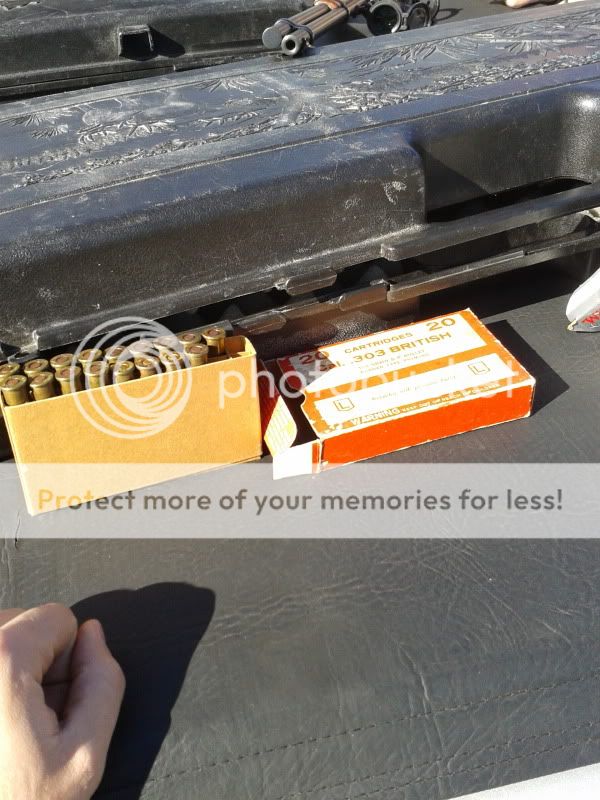
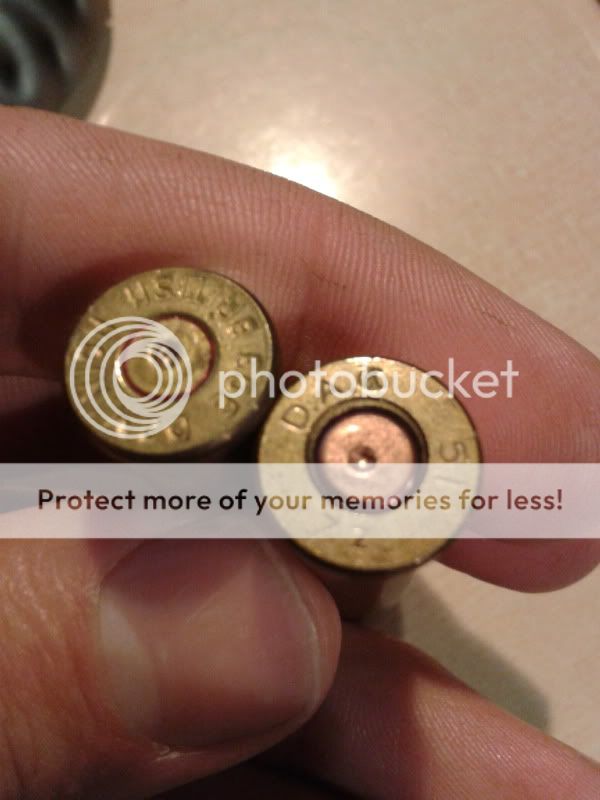
I just arrived home from a local gun auction in which I purchased some .303 surplus. It is headstamped 51 7z D.A.? . The question mark almost appears to look like a C/|\ broadarrow or maybe a backwards D. Have a look at the pictures, my biggest concern is whether or not it is corrosive but would be nice to know what it is? Also, can the brass be reloaded as the primers look larger than the new factory stuff?

P1020128-1.jpg

P1020133.jpg

P1020134.jpg

P1020130.jpg


Any help is appreciated.

-Tim
 
some of the nicest brass you can lay hands on for a LE, made by dominion arsenals for the canadian army in 1951, Mk 7 ball with nitro powder rather than the earlier cordite, regular large rifle primers
 
If it is berdan it likely could be reloaded but would it be worth the effort you would need to find berdan primers and then remove them which can be quite tricky and it couldn't hurt to treat it like it is corrosive better safe then sorry
 
If you shoot one, take a spent piece of brass with a flashlight and have a look down into the brass. I believe if you see one flash hole, it is boxer, if it is more than once, it is berdan primed.
 
Looks like the 1/4" Berdan primers. "z" = nitrocellulose. Primers are probably corrosive. It was the DI ammuntion that was Boxer non-corrosive.
 
Friend of mine had a box like this a couple weeks ago.. his dad had held onto it for years. We dutifully blasted it out of our ww1 and 2 enfields for kicks. I hung onto all the spent brass myself.

2012-10-13113810.jpg


Here's a clearer image of the markings on your rounds! lol

2012-10-27233105.jpg
 
That is the kind of ammo I keep under my pillow. Although people will tell you to shoot it off, be sure to keep some for the next generation to drool over. One place I was stationed at, a little old lady brought in a box full of old ammo of various kinds. The dumbbutt corporal was going to destroy it. He never got the chance. He did manage to send in a nice old Enfield revolver of some kind, for destruction. He slid a way, way down my list after that.
 
some of the nicest brass you can lay hands on for a LE, made by dominion arsenals for the canadian army in 1951, Mk 7 ball with nitro powder rather than the earlier cordite, regular large rifle primers

I wholeheartedly agree with you on that.I had a couple hundred or so empties of this stuff that I used to make up loads for use in a P14,all gone long ago but I got very good life out of that brass.Nice to work with.
 
Looks like the 1/4" Berdan primers. "z" = nitrocellulose. Primers are probably corrosive. It was the DI ammuntion that was Boxer non-corrosive.

Just now dug out my last few remaining empties and one lonely loaded round,you are correct.All of my cases were headstamped DI with dates of 1942.In the close up picture in Skaal-tel's post the round on the right with the DAC headstamp is definitely Berdan primed.
 
010-2.jpg
Here is a photo of a couple of Cdn. 303 cartridges. Note that the DA is a 7, not a 7z, but I don't think that affects the case/primer type, only the propellant.
The cartridge on the left is a .210" Boxer primed Defence Industries round, the one on the right is a DA with .250" Berdan primer.
 

Attachments

  • 010-2.jpg
    010-2.jpg
    30.7 KB · Views: 17
Have you looked down into the cases yet to see how many flash holes are there?

I haven't had a chance to shoot any of this stuff yet, I guess I could just pull a bullet on one to check, but that seems like such a waste. I'll wait for some time off and nicer weather to shoot off a few rounds, winter has sure come early here in eastern Alberta!
 
In 1951 the Dominion Arsenal in Quebec (the Government ammunition plant) was changing over from Cordie to cut nitrocellulose power, but they still were using the big, old CORROSIVE Berdan primer.

A few years later, they converted to the Boxer primer; I don't know what year they started this, but they were using Boxers by 1956 and they WERE standard size.

The Government-issue ammo headstamped DI was made during World War 2 by Defence Industries, a Crown Corporation in which they key staff all were from the Dominion Cartridge Company, which supplied the primers. The primers used in the DI ammunition were non-corrosive, non-mercuric and of standard Boxer Large Rifle size. This is some of the finest brass for reloading ever made.

By sticking with the large size Berdan primer corrosive and mercuric, for so many years, Canadian shooters were denied the benefit of over a BILLION rounds of what otherwise was fine brass.

Hope this helps.
 
I've been out of the loop for a long time and have no idea of current values. I happen to have several hundred rounds of DI .303 ball ammunition with boxer primers, made in 1943 and 1944. It has been stored in my cool, dry basement for at least 30 years (I can't even remember where or when I bought it) and looks like new. I don't plan to get rid of any of in the immediate future but how much value should I assign to it?
 
The last few years I have heard several guys complaining about the lack of surplus ammo for the .303 British. It was once everywhere and cheap and now guys are shooting sporting ammo which isn't cheap. I would think you could get a pretty good pric eout of yours if it really is boxer primed and easily reloadable.
 
ALL of the DI ammunition was Boxer-primed, noncorrosive and nonmercuric. Headstamps are only 1941 (not much made) through 1945.

For reloading, it is about the nicest brass ever made; it might have been wartime production but it was GOOD.

Size, remove the primer crimp and you are ready to go. Its age is starting to get n top of it, so annealing is a good idea after 1 or 2 firings, then it's good for another 7, then you anneal again. Keep your loads on the MILD side and it will last. In an extremely solid action (such as a Ross), with fire-forming, I have no idea how long it will last; I have some here on 15th firing and STILL not stretched enough to trim!

Bullets are all over the place: some have cupronickel, some have nickel on mild steel, a lot have gilding-metal-on-mild-steel jackets.

BTW, DI ammo was coded as American practice, lacquer on the bullet tips, but the code was our own. DA coded as in British practice, on the case-heads. DI brass, no matter what it might be loaded with, ALL was "run of production": no special batches for anything.

During World War Two, Canadian Inspectors inspected and passed on more than 4,200,000,000 rounds of .303 ammo.

There has to be a bit out there SOMEWHERE.

Personally, I have a bit stashed but if I can get more at half a buck a pop in those nice 48-round flats...... I'll take it home.

 
Thanks Mike Webb and smellie. I don't shoot much anymore but I have sons and grandsons coming along and I now know not to waste it.


This stuff really is boxer primed. I used to reload it for deer and moose hunting and used some of the casings several times. It seems to have thicker brass than one finds on commercial cartidges. I have been told they did that for military contracts because the feed mechanisms of machine guns beat up the cartidges so badly.
 
Back
Top Bottom