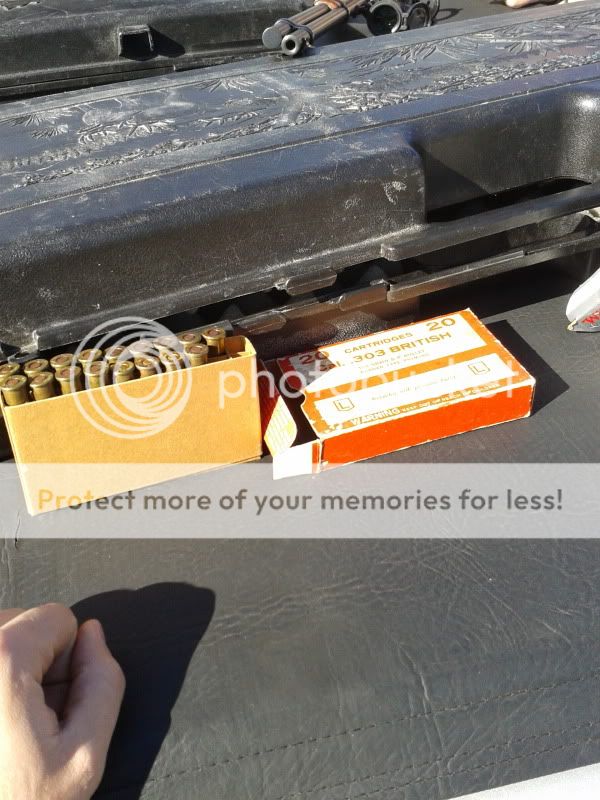
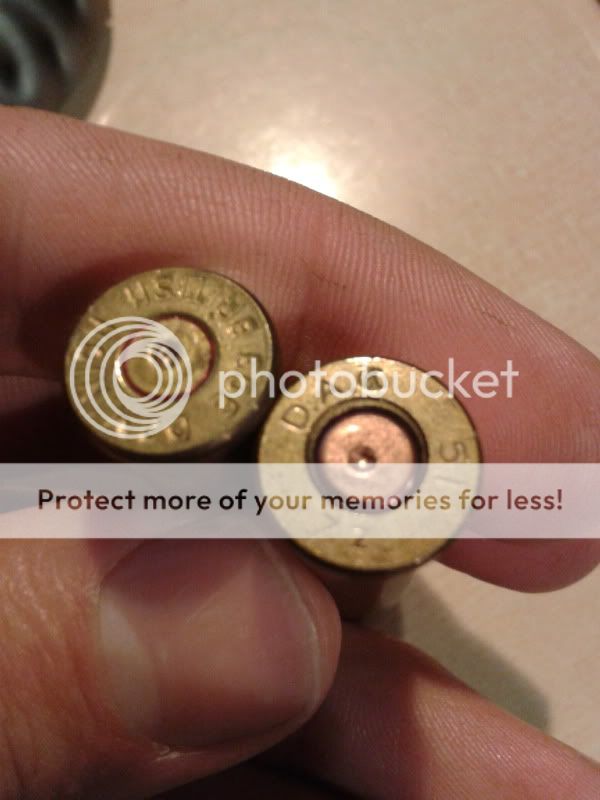
ALL of the DI ammunition was Boxer-primed, noncorrosive and nonmercuric. Headstamps are only 1941 (not much made) through 1945.
For reloading, it is about the nicest brass ever made; it might have been wartime production but it was GOOD.
Size, remove the primer crimp and you are ready to go. Its age is starting to get n top of it, so annealing is a good idea after 1 or 2 firings, then it's good for another 7, then you anneal again. Keep your loads on the MILD side and it will last. In an extremely solid action (such as a Ross), with fire-forming, I have no idea how long it will last; I have some here on 15th firing and STILL not stretched enough to trim!
Bullets are all over the place: some have cupronickel, some have nickel on mild steel, a lot have gilding-metal-on-mild-steel jackets.
BTW, DI ammo was coded as American practice, lacquer on the bullet tips, but the code was our own. DA coded as in British practice, on the case-heads. DI brass, no matter what it might be loaded with, ALL was "run of production": no special batches for anything.
During World War Two, Canadian Inspectors inspected and passed on more than 4,200,000,000 rounds of .303 ammo.
There has to be a bit out there SOMEWHERE.
Personally, I have a bit stashed but if I can get more at half a buck a pop in those nice 48-round flats...... I'll take it home.