.303 British Brass

IMG_0849.gifIMG_0850.jpeg
My friend in the US likes to poke fun at the fact that this is a necessity in the lee enfield. Like I always say the military wasn’t concerned about reloading they were more concerned about dirt and all kind of nasty things making it so that you can’t chamber a round.
These guns had loose tolerance from the factory mainly to make up for dirt and sand.
I always tell my buddy that the lee enfield is a gun that held empires it wasn’t some Mattel wonder weapon that barely works. The fact that the lee worked in any area in the empire from the mud of Europe to the desert sand to the frozen arctic shows me that I’m willing to put up with some loose tolerance.
 
Last edited:
Rick:

Your work is educational and beneficial. I will file and disseminate to those interested.

Thanks and Regards,
Peter
Well, I've had almost 60 years of making mistakes and overlooking things to help me figure what I was doing wrong and figure out how to do it the right/better way.

Where the subject is Lee Enfields and wanting the best grouping possible, addressing all the little things in hopes they add up to significant improvements in grouping is worth it. And sometimes a minor thing turns out to be a major thing where grouping is concerned.

With the generous chambers and barrels of the Lee Enfield rifles, I believe (but have not experimented to test) that bullet designs with an open base are likely to obdurate to seal the bore upon firing versus closed bases like the Sierra Matchking.

Another piece of secondhand information related to that is Bill Leeper recently told me that when he was still competing in Service Rifle, Sierra changed the diameter of their bullet by .0005", and that minor amount changed the grouping of his rifle. I would not have expected that in the Lee Enfield rifles whose figure of merit translates into about 4 MOA, but there it is.

I have never considered for a moment attempting the woodworking voodoo that is fitting the draws of the receiver to the stock and all the rest of what goes into stocking up a Lee Enfield. The manner in which I selected my Lee Enfield for competition eliminated any need for me to have to do that. For Lee Enfields with mediocre/poor grouping, proper stocking up can yield pretty dramatic results.

One thing somewhat related to that, is the condition of the stocks your group is using for these vintage style matches you're doing. Rifles that have sat stored away somewhere untouched for years can have stocks that have dried up quite a bit over the years, changing the fit of the stocking either a little bit or even quite a lot. That change in stocking isn't going to make the rifle group better; the opposite is true.

I don't take my rifle apart and disturb the fit when the grouping meets expectations, but I do maintain the stock with regular treatments of extremely thin raw linseed oil. If you don't care about authenticity, Tru-oil is just fine. If you think your rifles groups could be better, disassemble it PROPERLY (i.e. no prying on the wood), taking care to observe any bedding materials in place in the forestock and then invest some time in getting the condition of the inside as well as outside surfaces of the stock up to being properly oiled as they should be.

James Sweet's book on fullbore competition with the Lee Enfield is apparently back in production, and a copy of that book will provide far, far more education than anything I can offer. Both on the rifle as used for competition and on actually shooting in competition. It is pretty dated in some ways as the version available in print again was written in the early 1950s. And the later edition where he finally included information for competitors using the No. 4 Mk. 1 I have never been able to lay my hands on.

Another superior source of information and education concerning the Lee Enfield rifle is over on the Milsurps forum which is where the universe's brain trust on these rifles lives and posts.
 
Rick:

Your work is educational and beneficial. I will file and disseminate to those interested.

Thanks and Regards,
Peter
I should have mentioned that if any of your group are reloading in attempts to replicate the original Mk VII round with the settings of the service sights... well, good luck with that. Many, many including myself have tried to do that, and so far there is not a bullet currently available that matches the ballistic profile of the Mk VII ball round.

With No. 4 rifles another confounding factor is the military data for zeroing the rifles. They were to be zeroed at 300 yards with FIXED bayonet. I doubt anybody is going to shoot with fixed bayonets at the range. Yes, if you served in the infantry, zeroing with bayonets fixed at 300 yards will jar what's left of your military mind.

Reading Reynold's book on the Lee Enfield, it would seem to have resulted from War Office testing of the new rifles finding that the rifles produced their best grouping at any range if the bayonet was fixed rather than not mounted. But that's another quirk outside of reloading that will mess up anyone attempting to replicate Mk VII ballistics with reloads and the original service sights.

To add further confusion, there's about a 2.5 MOA difference in height above point of aim between UK/Commonwealth zeroing specifications and the Canadian specifications in the last pam with zeroing instructions, the 1945 "Shoot To Live". (available for download as a .pdf online - entertaining war era reading, and definitely not politically correct).

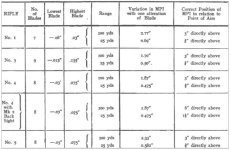
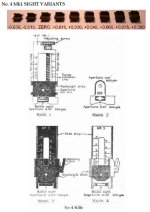
From memory, the POI differences between different height sight blades on the No. 4 Mk 1 is 1.8" at 100 yards and 2.7" with the SMLE.

One last thing on the sights themselves: the No. 4 sights cannot be trusted to be correctly manufactured as far as the two different apertures being correctly in the same vertical and horizontal axis. The majority are, but there are a few who aren't. While doing SAI/RSO taskings to support some of the Ranger groups, I had several point this out to me that they had discovered by themselves. Generally, it is a windage error, but it can be quite significant.

Most competing with the rifle in matches are not going to be using the battle aperture anyways; they will be zeroing and competing with the smaller aperture. But it is a potential wartime manufacturing flaw that can really mess you up if you do use both.

(I imagine it was a lot more problematic to the boys using the rifle in WWII and Korea, with such a defective sight being used in battle... I haven't read anything from any of the pams and other material during the war years that indicates they confirmed the zero was correct with both sight apertures before the troops took the rifles into battle)

The ballistic differences between Mk VII military ball and commercial bullets today will not be all that much of a consideration unless you get into shooting at longer ranges. Range comparisons between zeroed Mk VII ball to Hornady and Sierra reloads at the same muzzle velocities, significant differences in POA=POI don't show up until you're out around 500 - 600 yards.

If you're not engaged in shooting at distances like that, simply find the load combination that produces the best grouping and then pick your sight setting you will use with it. Then adjust elevation by changing and dressing down the front sight until you have the POA=POI at the range you desire.

The vintage matches you are setting up are pretty cool for those with Lee Enfields who want to do some competitive shooting with them. There's a few Brits/Australians/New Zealanders over on the Milsurp forum that are still doing that who could be a good resource. I don't check in here much anymore, so if you have other thoughts or questions you think I might be able to help your group with, just drop me a line:

OldAirborneDog@ProtonMail.ch
5______ Recipe1d.JPG

5-2.7....jpg
 
View attachment 1078520View attachment 1078521
...These guns had loose tolerance from the factory mainly to make up for dirt and sand. I always tell my buddy that the lee enfield is a gun that held empires it wasn’t some Mattel wonder weapon that barely works. The fact that the lee worked in any area in the empire from the mud of Europe to the desert sand to the frozen arctic shows me that I’m willing to put up with some loose tolerance.

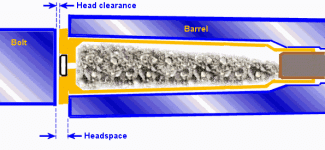
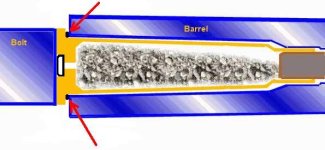
That's Parashooter's original graphic from over on Milsurps back about 20 years ago showing the O-ring method of case prep - which still allows stretching on first firing. There's a lot of additional information in that post by Parashooter concerning case stretching, case fit and how it leads to unnecessary case failure.

Anyone searching there on his and others like Peter Laidler's posts on headspace, will end up knowing as much about Lee Enfield headspace as the original Brit armourers knew. Multiple variations of that graphic are used in explanations over the years by Parashooter and others.

https://www.milsurps.com/threads/what-to-do-about-headspace-after-4-bolthead.9026/post-43793

If you want to mess with your mind on what loose chamber tolerances are, compare the distance between Go and No-Go headspace gauges for the .303 British and US's 30/06 caliber also used in, also used by the Brits (at least in WWII and Korea in some automatic weapons). And with the Mattel wonder weapon 5.56. No significant +/- differences in allowable headspace variation.

From: REME Inspection Standards, Part 3, Application of Gauges And Examination Of Small Arms And Machine Guns:
.303 British headspace gauges are :
"Accept" = 0.064"
"Reject" = 0.074"

30 cal headspace gauges are :
"Accept" = 1.940"
"Reject" = 1.950"

For fun and giggles, from NATO's data for 5.56:
GO: Spec: 1.4646+0.0002" Size Range: 1.4646" - 1.4648"
NOGO: Spec: 1.4706" -0.0002" Size Range: 1.4704" - 1.4706"

Looks like similar +/- headspace distances between all three: about 0.01"

Did well over 20 years with my Canadian Mattel wonder weapon C7 and then C7A1 after we switched from the C1 A1. Didn't have any reliability issues with it... maybe the loose tolerances in our Canadian Mattels helped there as well.
 
That's Parashooter's original graphic from over on Milsurps back about 20 years ago showing the O-ring method of case prep - which still allows stretching on first firing. There's a lot of additional information in that post by Parashooter concerning case stretching, case fit and how it leads to unnecessary case failure.

Anyone searching there on his and others like Peter Laidler's posts on headspace, will end up knowing as much about Lee Enfield headspace as the original Brit armourers knew. Multiple variations of that graphic are used in explanations over the years by Parashooter and others.

https://www.milsurps.com/threads/what-to-do-about-headspace-after-4-bolthead.9026/post-43793

If you want to mess with your mind on what loose chamber tolerances are, compare the distance between Go and No-Go headspace gauges for the .303 British and US's 30/06 caliber also used in, also used by the Brits (at least in WWII and Korea in some automatic weapons). And with the Mattel wonder weapon 5.56. No significant +/- differences in allowable headspace variation.

From: REME Inspection Standards, Part 3, Application of Gauges And Examination Of Small Arms And Machine Guns:
.303 British headspace gauges are :
"Accept" = 0.064"
"Reject" = 0.074"

30 cal headspace gauges are :
"Accept" = 1.940"
"Reject" = 1.950"

For fun and giggles, from NATO's data for 5.56:
GO: Spec: 1.4646+0.0002" Size Range: 1.4646" - 1.4648"
NOGO: Spec: 1.4706" -0.0002" Size Range: 1.4704" - 1.4706"

Looks like similar +/- headspace distances between all three: about 0.01"

Did well over 20 years with my Canadian Mattel wonder weapon C7 and then C7A1 after we switched from the C1 A1. Didn't have any reliability issues with it... maybe the loose tolerances in our Canadian Mattels helped there as well.
I know where the pic/gif come from I have been a member on there for over a decade at this point. Look at the chamber specs as a whole theirs room for dirt and grit to an extent in the lee good luck with a AR/c7/c8.
 
I know where the pic/gif come from I have been a member on there for over a decade at this point. Look at the chamber specs as a whole theirs room for dirt and grit to an extent in the lee good luck with a AR/c7/c8.
Only ten years? Well you'll find it gets even more valuable after you hit the 20 year mark. Anyways, I just assigned the attribution to the originator of the graphic and the location that you forgot to include - along with the valuable link to the additional information he gave in the post pertaining to cartridge cases and headspace.

I had enough good luck with one of those C7's overseas - as did many thousands of others. Pity your experiences were apparently different to the point you felt you needed to wish me luck.
 
View attachment 1078520View attachment 1078521
My friend in the US likes to poke fun at the fact that this is a necessity in the lee enfield. Like I always say the military wasn’t concerned about reloading they were more concerned about dirt and all kind of nasty things making it so that you can’t chamber a round.
These guns had loose tolerance from the factory mainly to make up for dirt and sand.
I always tell my buddy that the lee enfield is a gun that held empires it wasn’t some Mattel wonder weapon that barely works. The fact that the lee worked in any area in the empire from the mud of Europe to the desert sand to the frozen arctic shows me that I’m willing to put up with some loose tolerance.
You saved me the time to put together similar diagrams. Very nice illustrations. My old SMLE has to have 2 dental elastics around the base of a new piece of brass in order to hold it in place (take up the headspace slack as shown in your illustration) when I fire form it on its first firing. After that I simply neck size and the brass lasts a good long while. Without using this method, I was getting complete head separation on about one in 5 cases, with extreme stretching in every case. I did not invent this method, but I am sure glad another reloader brought it to my attention.
 
You saved me the time to put together similar diagrams. Very nice illustrations. My old SMLE has to have 2 dental elastics around the base of a new piece of brass in order to hold it in place (take up the headspace slack as shown in your illustration) when I fire form it on its first firing. After that I simply neck size and the brass lasts a good long while. Without using this method, I was getting complete head separation on about one in 5 cases, with extreme stretching in every case. I did not invent this method, but I am sure glad another reloader brought it to my attention.
I use mini hair elastics or orings whatever is within reach. My old MLE I have been tempted to silver solder on a shim on the bolt face.
 
I use mini hair elastics or orings whatever is within reach. My old MLE I have been tempted to silver solder on a shim on the bolt face.
That would give the firing pin a longer reach, but would probably work. I prefer to fire-forming the brass, as I don't fire that many rounds per year (just at the club's annual military rifle shoot). 40 fire-formed cases are a lifetime supply of brass.:cool:
 
good information in this thread.

I prefer PPU to S&B as I have had issues with rim thickness and flasholes in S&B brass. PPU I've never had a problem with and it is not that difficult to get.

I would also like to add that there are Mk4 Canadian rear sights that are different then the British Mk4 stamped rear sight. The base on the Canadian Mk4 is machined, similar to the Mk2, and the ramp is a stamped part welded to the machined base.
 
Back
Top Bottom