.338 Ladder test-Scope checks out post #72

Tonight I loaded for loads @ 91grains.

I will be shooting 5 of each , 0.012" ,0.018" , 0.024" and 0.030" off the lands.

I will also chronograph the loads as to see what reductions in velocity/pressure can be seen.

If weather permits I will do these tests tomorrow morning and have the results posted later in the day.
 
Ok, here are this mornings results.

Definitely piss poor IMO.

Target 1 0.012" Jump velocity average 2741 ft/sec


Target 2 0.018" Jump velocity average 2743 ft/sec


Target 3 0.024" Jump velocity average 2770 ft/sec


Target 4 0.030" Jump velocity average 2778 ft/sec Remeasured @ 0.948" disregard target measurement.


Distance was again 200 yards , temperature at the start was 12 C with a slight cross wind.

As it got warmer out velocities seems to increase.There was no correlation to seating depth and group size that made any sense to me.

After the first three targets I was wondering what was wrong with my head!!!Figured maybe it was time for a cleaning as there was about 40 round through since I cleaned last but not enough to make 3.5" groups!!

So I am still not finished! :mad:

But I do think I need to have a velocity of about 2800 ft/sec, that does seem where an accuracy node is.
 
Last edited:
That is best answered with a where is Waldo game.....................................

sry, it's 200 yards, wrote it on the target. :)

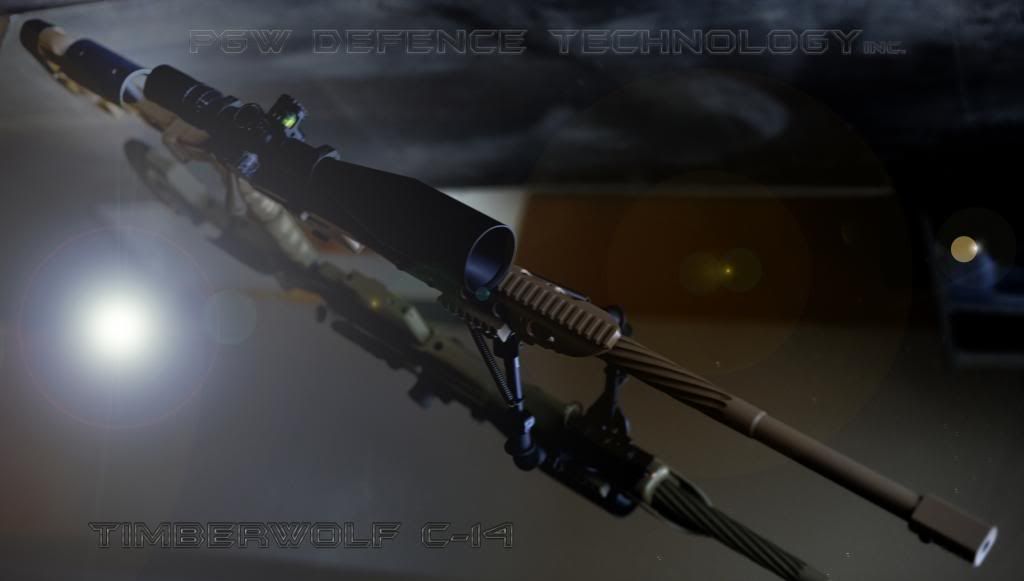
Here is a 200 meter target 300 gr Scenars touching the lands 88.5 gr of Retumbo, Lapua brass Fed Gold Match large rifle magnum primers trim length about .004" over min trim length, double annealed. The group was 6 shots out of a PGW Timberwolf!


DF0F0967-0672-44EA-B5F2-62890BF97F18-2722-000002FF1980C6C6_zps1fd67cc0.jpg


Here is my rifle.
pgwtwcopycopy.jpg
 
So it looks as if the Scenars will work in just the right spot and not work at all in the bad spot.

I honestly didn't expect the big groups to be as big and the smalls to be as small.I was hoping for more consistency.

I certainly don't plan to achieve PGW accuracy with a factory Savage barrel!Although I haven't gone through the typical prep work for this rifle/loads for gaining maximum accuracy.

DG , no pressure signs ? Velocities?
 
Kelly, in your 22-Sept posting, all but one of your groups had very good vertical.

You described the shooting conditions as 200 yards.... with a slight cross wind. That doesn't sound like it would explain the excess horizontal size of your groups. When I've been doing group testing, too much horizontal usually ends up being caused by:
- me flinching, or otherwise firing the shots poorly
- or, a scope problem (I had a brand new Leupold 8.5-25X with a *very* slightly loose front lens, that cost me three months of very wasted time effort and money)
- only very rarely is it an ammo or rifle problem. Either of these is a possibility, obviously, but they seem to be the least common

Do you have another scope you could put on this rifle and try? Or, do you have another known-good rifle-ammo combo (3/4MOA or better, ideally 1/2 MOA or better) that you could put this scope on and see if you can shoot some nice round small groups?

You really shouldn't have to go through much in the way of prep work. If you're using a good bullet, seated in some sensible manner w.r.t. the rifling, with some reasonably sensible powder charge, you ought to be able to get pretty close to 1/2MOA pretty quickly. If you're not getting there, it is something else, something bigger, that you need to look for (e.g. a bad barrel, or a bedding problem, or a scope internals or mounting problem, or a shooter problem)

 
Well I have eliminated scope mounting, you can see my initial ladder test for the mess I had there:

http://www.canadiangunnutz.com/foru...38LM-H1000-300gr-ladder-test-thoughts-Updates

This wound up being a shake rattle and roll that I couldn't tighten down enough so I went with a new ring, that solved that issue.Then the following tests.

http://www.canadiangunnutz.com/foru...M-post-ladder-test-Group-shot-BERGER-BULLETIN!!

I try to be extreme conscientious about my form, pull, cheek weld , breathing ,etc.............. and I do know and feel when I have flubbed a shot and will note it, but yeah the part that has me bewildered is the very good group to the very bad group differences.I have a Kreiger barreled 7-08 that shoots very consistently which I can try the scope on.

Bedding, shouldn't be as it is a chassis system , mounting problem I have worked out with stronger components, bad barrel - haven't considered that yet , scope internals - hoping not but always possible, shooter problem - possible but not to the extent of the groups, the best group was the last of the day( :confused: )

I think and this is just thinking.I am going to clean the hell out of the rifle again.I will load some 91 grain loads at the seating depths that I have already produced good groups with and try to replicate and then move out to 500 or so to see what is what.


Kelly, in your 22-Sept posting, all but one of your groups had very good vertical.

You described the shooting conditions as 200 yards.... with a slight cross wind. That doesn't sound like it would explain the excess horizontal size of your groups. When I've been doing group testing, too much horizontal usually ends up being caused by:
- me flinching, or otherwise firing the shots poorly
- or, a scope problem (I had a brand new Leupold 8.5-25X with a *very* slightly loose front lens, that cost me three months of very wasted time effort and money)
- only very rarely is it an ammo or rifle problem. Either of these is a possibility, obviously, but they seem to be the least common

Do you have another scope you could put on this rifle and try? Or, do you have another known-good rifle-ammo combo (3/4MOA or better, ideally 1/2 MOA or better) that you could put this scope on and see if you can shoot some nice round small groups?

You really shouldn't have to go through much in the way of prep work. If you're using a good bullet, seated in some sensible manner w.r.t. the rifling, with some reasonably sensible powder charge, you ought to be able to get pretty close to 1/2MOA pretty quickly. If you're not getting there, it is something else, something bigger, that you need to look for (e.g. a bad barrel, or a bedding problem, or a scope internals or mounting problem, or a shooter problem)

 
My loads with Retumbo and 300 gr Scenars shows no pressure signs.
Velocity is 2740! Another thing to take into consideration is fouling the barrel in after cleaning.
You should have known zero and shoot back to the zero until you se consistancy. Depending how much copper you removed some
.338s will take up to ten rounds in some case 12 rounds to foul in average is 7-8 rounds to fully settle.
 
Well last night I did a very thorough cleaning, I will load some more @ 91gr and see if I can get some magic happening.

Your loads aside from seating depth seem fairly parallel to mine.

My loads with Retumbo and 300 gr Scenars shows no pressure signs.
Velocity is 2740! Another thing to take into consideration is fouling the barrel in after cleaning.
You should have known zero and shoot back to the zero until you se consistancy. Depending how much copper you removed some
.338s will take up to ten rounds in some case 12 rounds to foul in average is 7-8 rounds to fully settle.

If you follow my targets I can actually see this a bit in the grouping, a tad higher on the last target but the group did close up.
 
What is your bullett run out should be under .0025" also seating should feel consistant on your press.

Annealing done right can help! .338 LM also like long trim lengths, just know your limits though. Also size
2/3 down with .365" bushing neck sizer. If you size too far down the neck your concentricity could end up ruined due to the dreaded
donut that forms at neck shoulder junction. Properly annealed brass sized dwell time 5 seconds 1/4 turn size 5 second dwell time counts are 1 1000 2 1000 ect. This will ensure more consistant neck tensions.
 
The brass was factory annealed and I will like anneal again after 3 or 4 uses.

What is your bullett run out should be under .0025" also seating should feel consistant on your press.


Annealing done right can help! .338 LM also like long trim lengths, just know your limits though. Also size
2/3 down with .365" bushing neck sizer. If you size too far down the neck your concentricity could end up ruined due to the dreaded
donut that forms at neck shoulder junction. Properly annealed brass sized dwell time 5 seconds 1/4 turn size 5 second dwell time counts are 1 1000 2 1000 ect. This will ensure more consistant neck tensions.

I am in the process of getting some neck sizers(bushing and collet style), having one hell of a time getting one though. I use the collet sizers on a few other calibers and do like how they work, however Lee isn't really focused on their custom shop this year and the retailers don't seem to have or able to get bushing style.

I will also likely turn my necks as well, but I may be putting lip stick on a pig since I am using a factory barrel for now.

Even my once fired brass is only .002 or .003 over minimum right now so the lengths aren't really increasing at this point, just gonna chamfer and load.

I will have to invest in a measuring tool for run out as I cannot gather this information right now.
 
Excessive run out can cause larger velocity spreads it will show on the chrony. Especially when you start getting in the .004" -.005" plus
Is your barrel floated still when forward pressure on the bipod is applied? How is the bedding ? Even chassis systems can be aided by bedding done correctly. Is your recoil lug making full contact any stress points seen on the chassis surface where the action makes contact? Another possibility is dirt,oil, Debris stuck under action or scope rail base blue loctite is famous for this, all it takes is under a few thou of stress to mess things up. Are your action screws floated and centred properly torqued?
 
Last edited:
Ok, here is a new one that your post clicked something in my brain:

The front cover/cap butler creek style but the Sightron factory unit actually touches the shroud , if it is removed there is about 1/8" clearance.

Just a thought.


Excessive run out can cause larger velocity spreads it will show on the chrony. Especially when you start getting in the .004" -.005" plus
Is your barrel floated still when forward pressure on the bipod is applied? How is the bedding ? Even chassis systems can be aided by bedding done correctly. Is your recoil lug making full contact any stress points seen on the chassis surface where the action makes contact? Another possibility is dirt,oil, Debris stuck under action or scope rail base blue loctite is famous for this, all it takes is under a few thou of stress to mess things up. Are your action screws floated and centred properly torqued?
 
Ok, here is a new one that your post clicked something in my brain:

The front cover/cap butler creek style but the Sightron factory unit actually touches the shroud , if it is removed there is about 1/8" clearance.

Just a thought.

You should be okay with an 1/8 but Leave the cap off when shooting you definately do not want it touching!
Also check your scop base for stress! I can explain it to to you step by step when I get home from work.
 
Ok first you want to take your scope off! Loosen your scope ring nuts and remove taking note of the slot location for later.

Now take your base off with a torx or Allen key!

Flip the base and make sure it is perfectly clean wipe all debris and oil off off base use solvent if needed clean the top of the action in the same manner. Make sure there is no dried on loctite on the action or base this will cause stress!

Now you want to snug one side down and then check the other side with a .0015" preferably a .001" feeler gauge if the feeler gauge fits between the base and action you have stress. Now do this to the other side as well if the feeler gauge fits the other side has stress.

The best way to remedy this is to bed the base! That's for another day my big fingers are tired of typing on the communist iphone
 
Ok, tonight I removed the base, there was a small amount of oil that looked like it wicked it's way up out of the front mounting hole.

Didn't have a feeler gauge but the base does appear and feel to be machined properly, however it got bedded anyways as it only takes a few minutes.

Cleaned the hell outa the barrel, checked all fasteners and re-checked.

Didn't remove the action to bed as I do not want to do too many things at once.I will make some more loads and go re-check accuracy again on the weekend.

I also spoke to a fellow at Hodgdon about my higher velocities.At first it was looking like an issue but after some digging deeper we found another companies test data and what he told me is the published loads they have are done in a 24" test barrel(mine is 26") I guess you could say and the other data from Sierra was done with an actual rifle barrel apparently and almost mirrored my load and performance. Told him what my performance and load was doing, he agreed if there are no pressure sign then there are no pressure signs , however we talked about using another chronograph or known test ammunition and figured out gains/loses with velocity differences of that day and adjust velocities accordingly.

 
Not to bang on about it, but I don't trust scopes (including new, expensive, good-reputation scopes). IMHO the most productive thing you could do is to mount that scope on your 7-08 and shoot some groups with it at 100y (and as a bonus you'll probably enjoy taking a break from a rifle that is currently giving you troubles!) Warm up and get comfortable with your rifle; if you can then shoot four or five consecutive 5-shot groups that are good, you can then be pretty confident that there's nothing wrong with your scope's internals (and you will have also restored your faith in your abilities as a shooter to deliver 20 or 25 good shots in a row from the bench).

The problem you are having with your 338 is a large-ish problem, which in a way is good news because it means you are looking for a large fault not a small fault in your system - and when you find and fix the fault, it ought to show up pretty definitively. It's not likely to be a small or minor problem causing it; things like a 30fps difference in muzzle velocity, or case-to-case inconsistencies in neck tension, or primer X vs. primer Y, don't usually turn a half-MOA group at 200y into a 1-MOA group at 200y.
 
I likely will try switching scopes also.

If I cannot see any consistency with my next test I will do that , however and it may not be a concern, what if the larger recoiling rifle is causing a scope issue but the lighter recoiling rifle doesn't have the jam to re-create the problem?

I also do not believe anymore that it is a load issue as I am pretty damn careful and consistent when I load , I haven't even got into the once fired brass at this point , still have a few left of new, which will likely be used up now as I think I only have a handful left.

I honestly don't mind doing these little seek and destroy on issues as I enjoy problem solving and especially on rifles and loading but sometimes it makes you scratch your head.


Not to bang on about it, but I don't trust scopes (including new, expensive, good-reputation scopes). IMHO the most productive thing you could do is to mount that scope on your 7-08 and shoot some groups with it at 100y (and as a bonus you'll probably enjoy taking a break from a rifle that is currently giving you troubles!) Warm up and get comfortable with your rifle; if you can then shoot four or five consecutive 5-shot groups that are good, you can then be pretty confident that there's nothing wrong with your scope's internals (and you will have also restored your faith in your abilities as a shooter to deliver 20 or 25 good shots in a row from the bench).

The problem you are having with your 338 is a large-ish problem, which in a way is good news because it means you are looking for a large fault not a small fault in your system - and when you find and fix the fault, it ought to show up pretty definitively. It's not likely to be a small or minor problem causing it; things like a 30fps difference in muzzle velocity, or case-to-case inconsistencies in neck tension, or primer X vs. primer Y, don't usually turn a half-MOA group at 200y into a 1-MOA group at 200y.
 
Back
Top Bottom