7.62x25mm from .223 loads

Yeah they're probably the best bet when you don't have a vise.
tried a hacksaw with a plastic mitre box- didn't work very well. :(

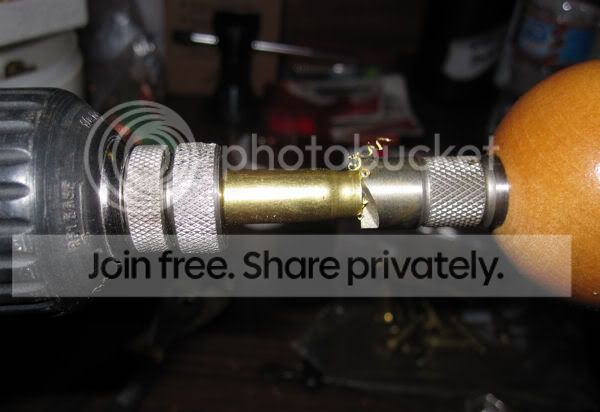
Tube cutter works great in combination with Lee Lock Stud/ .223 Shell Holder... forget the drill! :) Shell holder comes with .223 case length gage.

BTW, I have a vise and lathe but this ^^^^^ was the easiest way to cut them down.

csetools.jpg
 
volume test

saltvolumetest.jpg


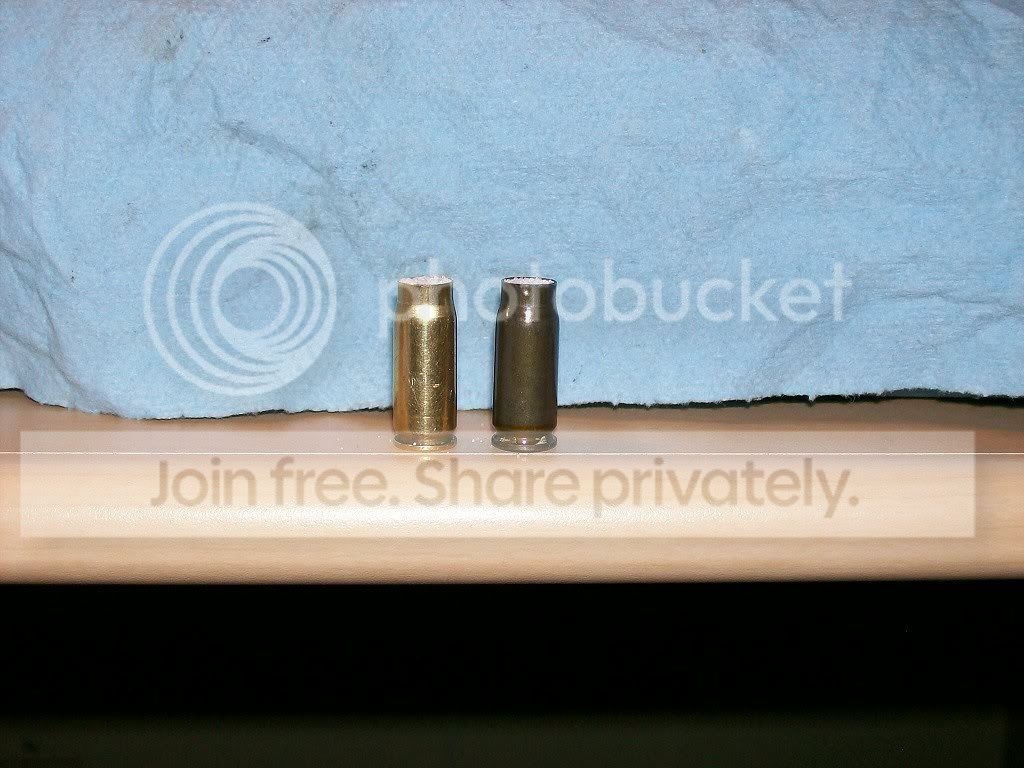
Filled both cases with regular table salt.

cutdown223volume.jpg


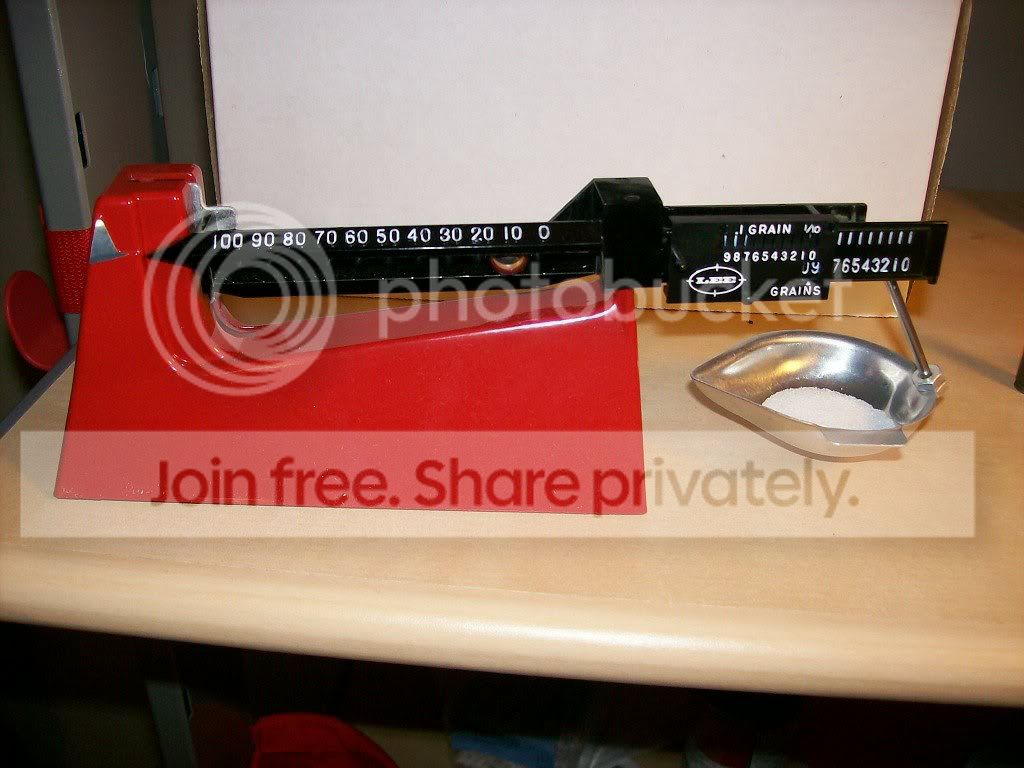
First up was the cutdown .223 case... my digital scale is still being shipped.
Looks like around 19.875 grains.

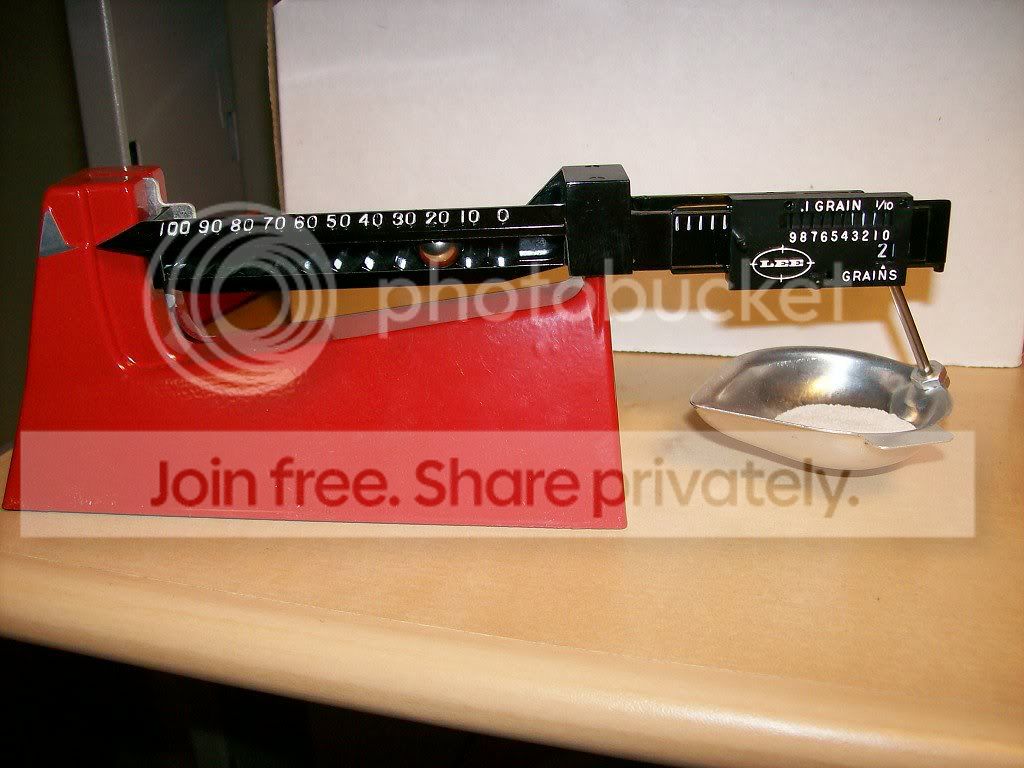
(These pics are deceiving. The flash seems to reflect off the white graduations
quite well and make them appear larger than they actually are.
Hence the want of a digital scale- no messing around with trying to
guesstimate small numbers.)

milsurplusvolume.jpg


Last up is the fireformed Czech military surplus case.
Once again, the pic is deceiving as it looks like 22.315 grains.

I know this isn't 100% scientifically accurate but looks like a difference of
around 2.44 grains. The Czech surplus case is 1.123 times the volume,
but keep in mind it's been fired in my pistol and the .223 hasn't.
 
I know this isn't 100% scientifically accurate but looks like a difference of
around 2.44 grains. The Czech surplus case is 1.123 times the volume,
but keep in mind it's been fired in my pistol and the .223 hasn't.


Interesting!

Since I have a few pieces of brass, both fireformed and re-sized, here is the averaged figures (just a 2 case average each, not very scientific too ;))

Cases from the same batch (WCC'00) filled with surplus rifle powder WC-735

Unfired - 16.35 gr
Fired - 17.2 gr

~5.2% increase in volume.

s>
 
1450fps with the xtp's in 556 brass. Impressive. Had you used the ready made casings what might have been the velocity of the xtp's do you think?

I'd expect to have lower velocity with Starline brass, never had a chance to check it out. And *may be* shorter case life. I had a few pieces and by look and feel it's not very strong compared to military 556.

I'd suggest to check the thickness of the neck for ANY brass intended for TT and neck turn if needed. Why? One of my TTs tends to jam the neck if the wall is thicker than .010". Another one takes 0.011" but no more. Jammed neck/bullet may and will spike the pressure, especially if playing with high-velocity loads. In my case it was no more than weird velocities and recoil, but...

From reading on the internet and pushing the load a bit myself, 6.2 gr Unique is far from the max load... 6.5 gr was slightly hotter but tolerable ~ 1490 - 1550 fps. Post-1946 Russian TTs are less sensitive to hot loads from what I've heard so I did try going higher. People report 1700 fps/86gr loads for CZ52 which IMHO is not really any stronger than TT.

Considering the price of the XTPs I'm planning to develop a nice cast load just for fun and plinking. Somewhere around 1270 fps/100gr.

In any case... Start low and play it safe! :)

s>
 
Interesting!

Since I have a few pieces of brass, both fireformed and re-sized, here is the averaged figures (just a 2 case average each, not very scientific too ;))

Cases from the same batch (WCC'00) filled with surplus rifle powder WC-735

Unfired - 16.35 gr
Fired - 17.2 gr

~5.2% increase in volume.

s>

Yeah- nice to know. I was thinking about using powder for the volume test
but the only open stuff I have here is IMR H4895, and I wasn't going to use
rifle powder in a pistol case. Not a realistic media in this instance either.

Loving those turned cases though. Does anybody make a low-rent neck turning setup for us broke reloaders?


-zip
 
update

I need to be getting some reloading equipment. The TT is stronger than the cz-52. The latter is actually weak with a design flaw; the barrel has a cutout in it.


"WARNING!! KNOW YOUR AMMO. There is some controversy surrounding 7.62x25 military ammo and arms !! The U.S. Army, and others, because of several reasons including the massive bulk of the CZ-52 compared to the old trusty Tokarev had "assumed" without experimentation that the CZ-52 was a much stronger pistol than the Tokarev. Clark Magnuson did experiments with hot loads for the CZ-52 and Tokarev pistols. In his experiments he determined the CZ-52, despite it's tremdous bulk, to be less capable than the Tokarev pistol to withstand hot loads. Publishers of reloading manuals have reduced the maximum safe pressures for 7.62x25 handloads in order to protect shooters.

According to Clark, the significant spot in the barrel is the underside of the chamber which is .125" thick on the Tokarev but only .058" in the CZ52 because of the extra milling needed to accomidate the roller mechanism in the CZ."

from this page... h t t p://www.bobtuley.com/tokarev/#warning


update:
---------
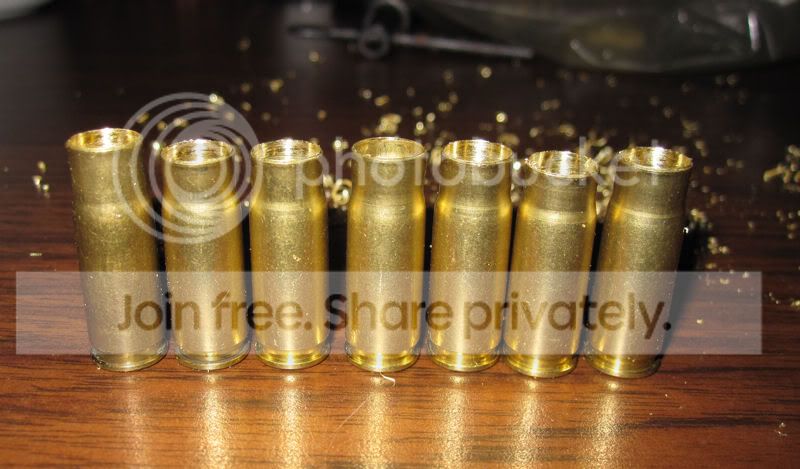
prepared 50 of the .223/7.62x25mm brass and am waiting to get a Lee case length guage so I can trim the cases efficiently. Trimming 50 by hand=
not my idea of a good time!
 
range update

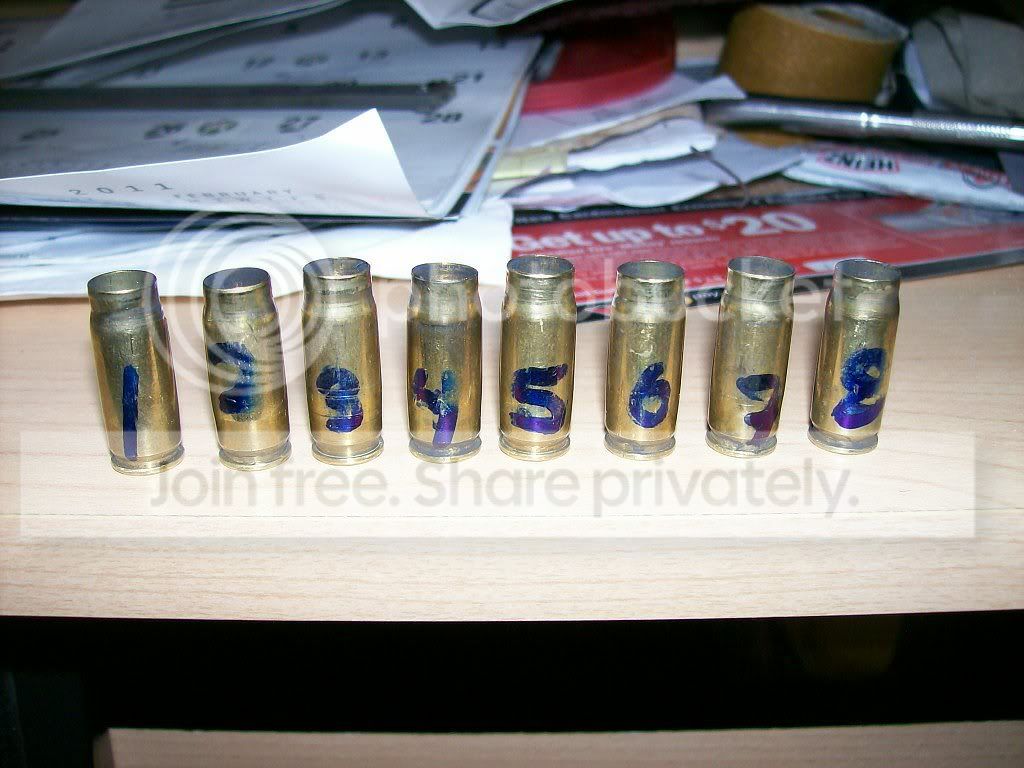
223brassbeforefiringJPG.jpg

223brassafterfiringJPG.jpg

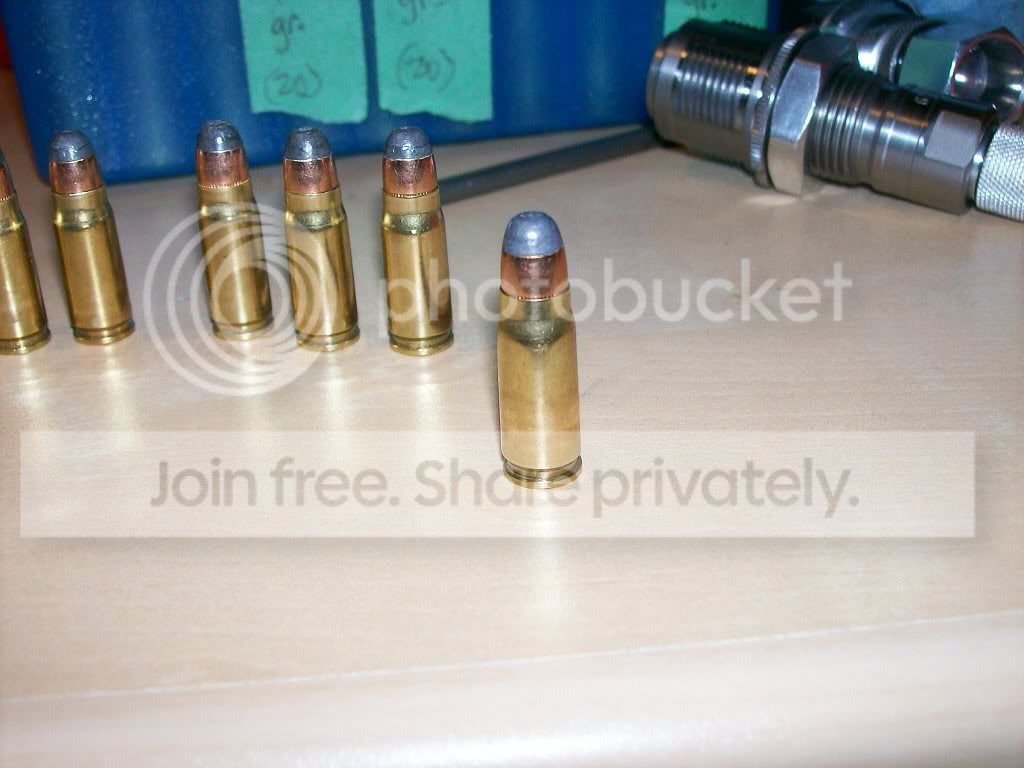
Starlinebrass_seatedtoodeep.jpg


.223 to 7.62x25mm ammo update:
-------------------------------------------------------------------------------------
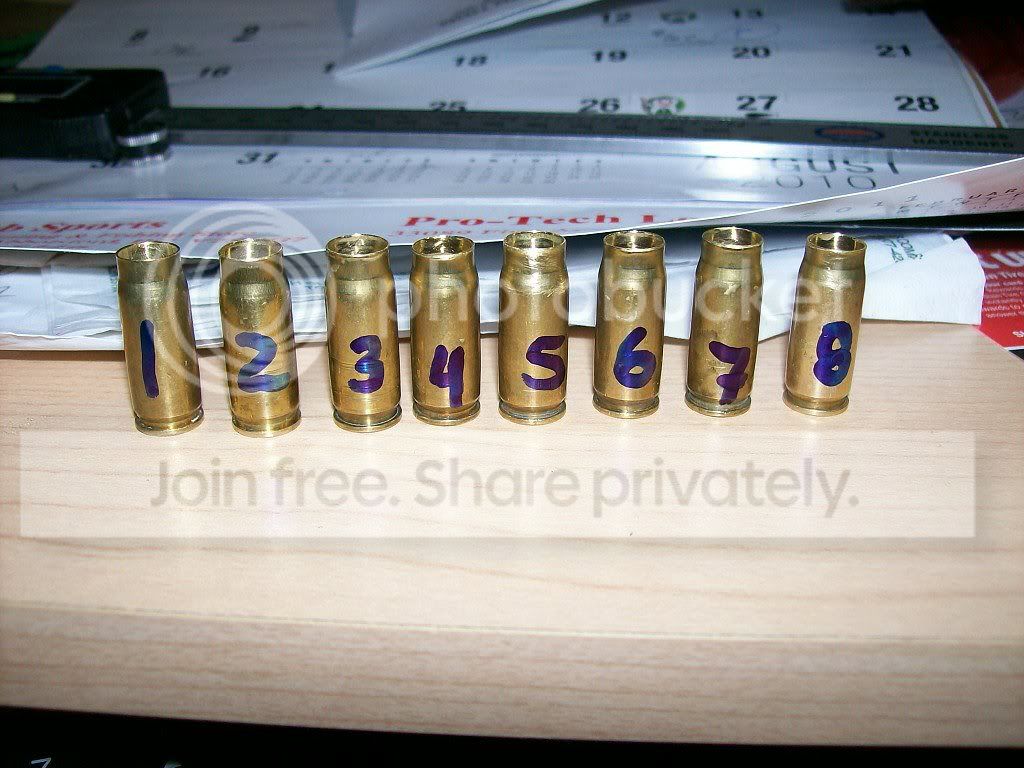
Finally made up 8 rounds and range tested them today.
Loads started at 4.2 grains of Unique working up to 4.9 grains
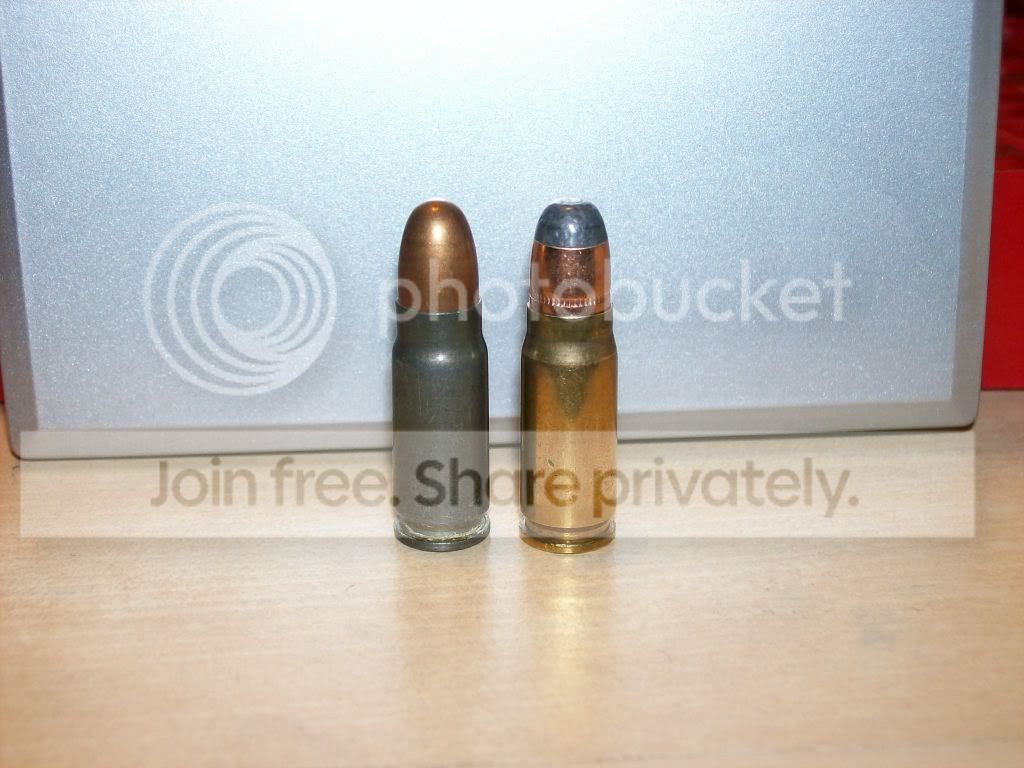
in .1 grain increments. I alternated a Czech surplus round with a
.223 handload to see the difference- 4.2 was too light to cycle the action
but all the others did with no problems. Even 4.9 was defintely lighter
than the standard Czech surplus. I was concerned about pressures in the
thinner .223 cases but thankfully these low loads weren't an issue.
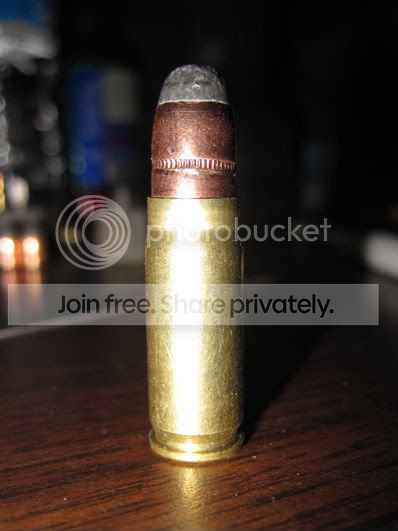
Bullets were 86 grain Hornady SPRN's (see Starline brass picture)
and primers were CCI small rifle.

Nice to know this setup can work if you need it to.
Ironically- I now have real Starline 7.62x25mm brass. :)
 
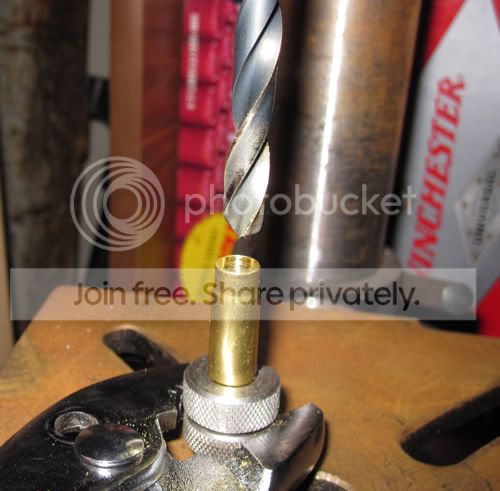
Hi. I just drilled them out with an N size drill (.302) as I have no
lathe or neck turning equipment here. As long as you're careful with
your expanding die they seem to feed ok for the most part.
Overall length is probably more critical than a slightly thinner case
as far as feeding is concerned.


-zip
 
Hey everyone!
Time for me to toss in my few cents worth concerning the .223 cases for the 7.62x25.
I think I've finally got it down to a fairly smooth process, so I'll share with everyone.
First off, a HUGE tip of the hat to Zippy, for letting me in on a few of his tips and tricks, and thanks to Henry Nierychlo for giving me the first few cases to cut down, bringing in all the little bits to make this project go smoothly, and lastly, custom turning a case length gauge for use in the new brass.


First off, as already mentioned, take the .223 brass and cut it just over 1 inch in length with a small tubing cutter. these are available at any hardware shop, CT or Princess Auto.
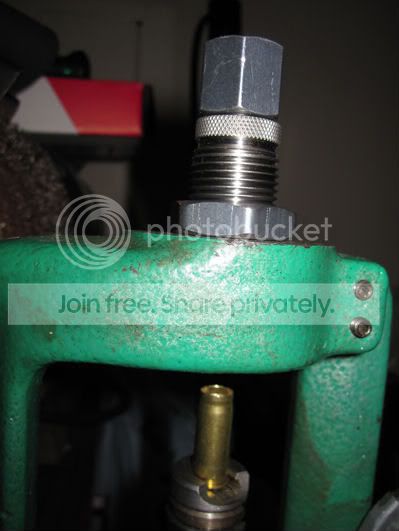
Next, using a .223 shellholder and the case sizing die from the Lee 7.62x25 die set, form the raw brass blanks.
1010.jpg


Here are a few of the untrimmed blanks.
1001.jpg


Next, using a .302, or N gauge drill bit, ream the inside of the raw case neck. take a bit of time here to allow enough material to be removed.
1002.jpg


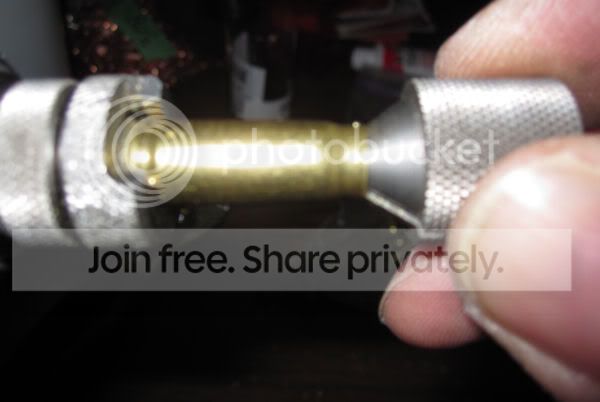
Now, using a shell cutter, lockstud with a threaded .223 shellholder and a custom built 7.62x25 trim length gauge and a variable speed cordless drill, slowly trim the excess neck material. Cases should measure .98 inches when done.
1003.jpg


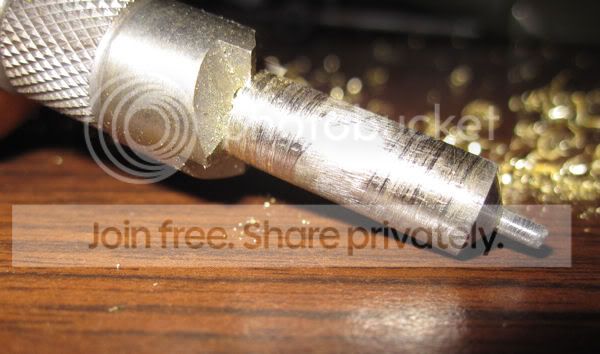
Here is a good picture of the custom case length gauge made by Henry Nierychlo. It started life as a .38 Special length gauge. A proper length gauge is not commercially available, so he will have these available shortly, if not already. Contact him directly through his ammo and reloading sales page.
1006.jpg


Once the cases are trimmed to length, a chamfer inside and out will smooth the edges off.
1004.jpg

I've found that the freshly made cases need to be belled just a bit to help in seating the bullet. Trial and error will find what works best for you....the slightest bit work for me.
1001-1.jpg


Here is a belled case with a Hornady 86gr SPRN test fitted.If I cn get the bullet base to sit as such, I'm good to continue.
1002-1.jpg


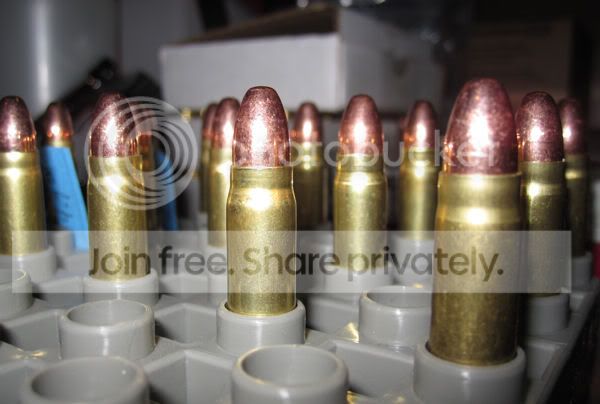
These finished cartridges are now loaded with varying power loads. I have to get to the range to see how the development has gone so far. The finished overall length is just a hair under 35mm as per the Lee guide.
1012.jpg


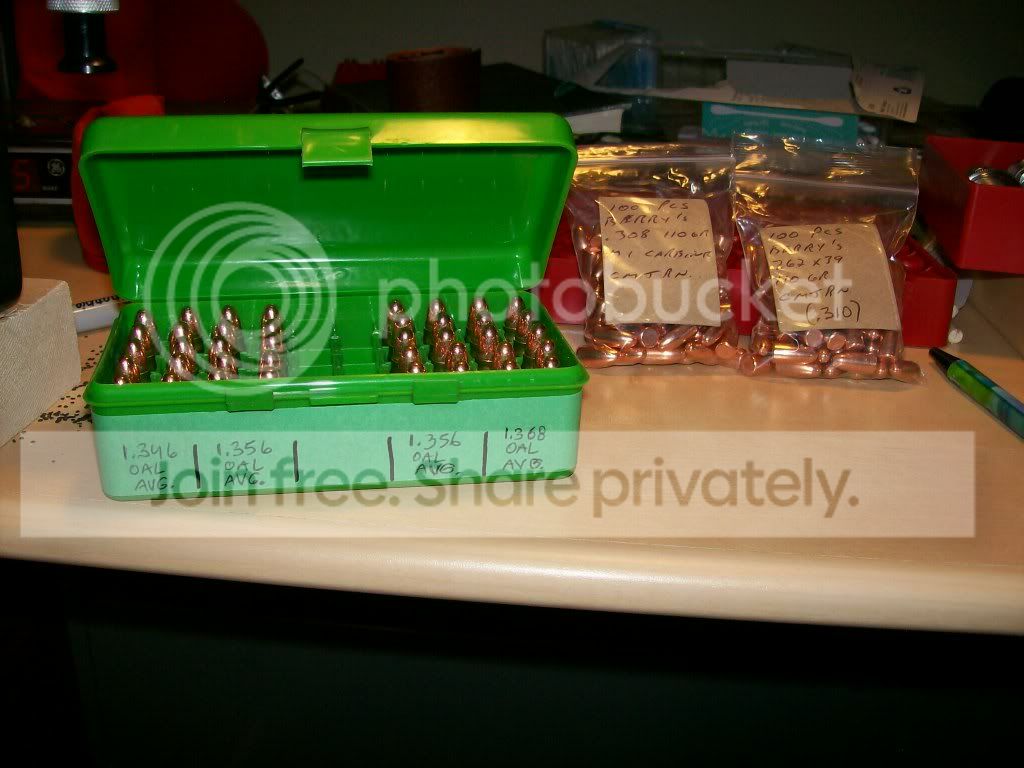
A few weeks ago, I test loaded a few of the .223 cases with the 86 Gr Hornady SPRNs and 4gr of Winchester 231. There were 2 issues that came from these. First was the soft tipped bullets would not load at all. They dug deeply into the feed ramp of the barrel, so each cartridge had to be hand loaded. Second was the light powder load would not operate the action. The new loads ready for the range will be 4.5, 4.7 and 4.9 with the 110gr Berry M1 CMJRN carbine bullet . Zippy gave me a few of his custom cartridges with these bullets installed and they performed flawlessly!

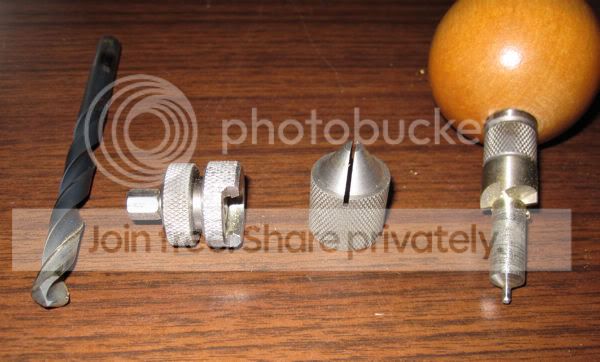
Lastly is a pic of the specialty tools needed to customize the brass.

1011.jpg
 
Last edited:
sweet!

moreammo.jpg

Great pics Mobular. Can you explain this "belling" of the brass?
I haven't heard too much about that.

Also, those plated Berry bullets seem to have way less feed issues in most cases than the Hornady SPRN bullets. Once I use up all my stock of the

SPRN bullets I'll be loading up on the plated Berry's from Henry.


-zip
 
One other thing that you might have to consider when using the .223 cases is the depth of the extractor goove in the case--back in the "old days" when we had to make .30 mauser brass this way you sometimes had to dress down the extractor hook or it would lead to premature failure of the extractor--caused by too much flexing because the extractor groove in the case was too shallow. This may or may not be an issue with these pistols but it was a pain in the ass with the c-96 Mauser.
 
@ Zippy:
The belling step is actually flaring the open end of the neck using the expander die. Ignoring the die set instructions, I put a case in the shellholder, bring it all the way up, then screw in the expander die until it just touches the case. From there it's all touch and go. I'll screw in the expander a 1/4 turn or so, press the case and test fit a bullet by hand. I'll keep going until I am happy with the initial seating...usually just enough to let the bullet sit squarely inside the neck. I've edited my post and added a couple more pictures to reflect this step.

I'm pretty sure I'll be using the Berry's too...sadly I have about 300 of the Hornady SPRN bullets to use up somehow....
 
Back
Top Bottom