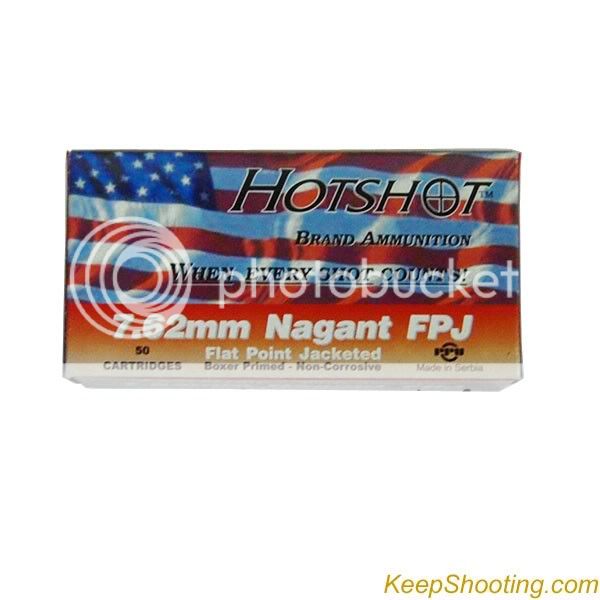
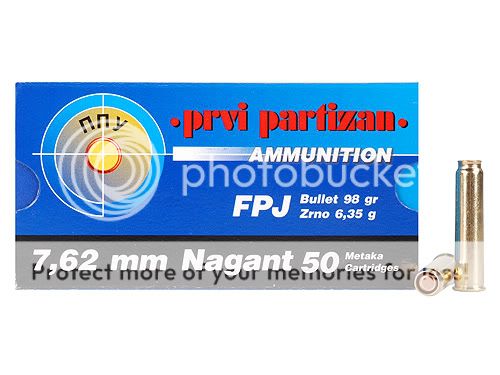
First of all if this could be a sticky that would be great, I'v searched and read all topics whithin the last 36 months for people having trouble reloading this calibre. There are many threads of people asking the same question, Another reason for a sticky!
So if everyone who reloads for the 7.62x38 could put their experiences and their .02$ in that would be great! Even if its going back and copying your old posts.

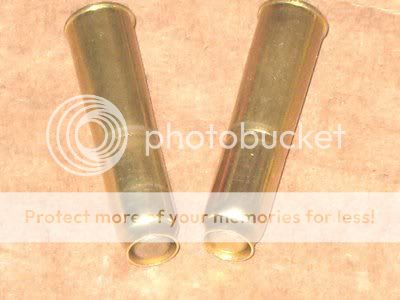
Type: Double Action
Chamber: 7.62mm Nagant
Weight unloaded: 750 g
Length: 230 mm
Barrel length: 114 mm
Capacity: 7 rounds
This revolver was designed in Belgium by Nagant brothers (Emile and Leon) in the late 1880s - early 1890s, and was adopted by numerous countries, including Sweden and Poland, but the major user and manufacturer was undoubtfully Russia (and later Soviet Union). Russian government adopted Nagant revolver in 1895, and local production began in 1898 (first shipments were from Belgium). It was a standard russian sidearm until 1930, when M1895 Nagant was declared obsolete, but it was widely used and manufactured during World War 2, and manufacture was finally ceased circa 1950.
Later, some sporting revolvers, both in 7.62mm and in .22LR were developed on Nagant platform. Intertestingly enough, the M1895 revolvers still can be seen carried by some security personnel in Russia, especially by Railroad Security and by some armed guards. Usually, those revolvers are 2 to 4 times older than men who carry these guns.
From technical point of view, Nagant revolvers were already almost outdated at the moment of its adoption in 1895, since newest revolvers like S&W Hand Ejectors or Colts with side-opened cylinders were much faster to reload. On the other hand, M1895 had some unusual and interesting features, one of which was gas sealed cylinder, which made the Nagant a rare example of revolver suitable for mounting a silencer. Such a practice was known by NKVD and some Red Army special forces (recon and scouts) during WW2. Special silencer, called "Bramit device" was designed by Mitin brothers and could be mounted on the barrel.
M1895 Nagand was a solid frame, seven shot revolver with non-removable cylinder. The loading and unloading was committed wia the loading gate at the right side of the frame, one cartridge by one. Spent cases were ejected by the ejector rod, which, when not in use, was concealed within the cylinder axis and swung to the side on the ejector rod link to be used. Original guns were double action ones, but Tsarists government ordered that some of M1895 should be retrofitted with Single Action triggers and issued to enlisted men, and DA guns should be issued only to the Officers and Police. In Red (Soviet) army only Double Action Nagants were issued.
The gas sealed cylinder, mentioned above, was made to use all of powder gases to propel the bullet (in most revolvers some gases escape from the gap between the cylinder face and barrel breech). To achieve that, the cylinder moves ahead a bit when hammer is cocked, enclosing a barrel breech area with recess in the front of each chamber. The cartridge, unique to that design, had long case with tapered mouth and a bullet totally enclosed inside the case. When cylinder moves forward, the cartridge case mouth entered the barrel breech and was used as additional seal. This was a complicated mechanism, useful mostly when guns were used with silencer.
Being somewhat complicated and relatively slow to reload, with ammunition of marginal power, Nagants were otherwise good guns, reliable, acurate and quite popular among the troops.
MY LOADING INFO
Alright, Heres what I did to make ammo for this revolver,
You Will Need The Following
Dremel/ Or similar air tool
Bench grinder
Lee 7.62x38 Dies(Actually 32-20)
7.62x38 brass
Small pistol primer
Bullseye Pistol Powder(or whatever you prefer)
.32 caliber bullets.
Step#1.
First off I had to do some slight work to the shell holder in order for the brass to fit(This was more tricky than the other steps in the process) I used a dremel with a small grinding bit until I achieved the perfect fit.
Step#2.
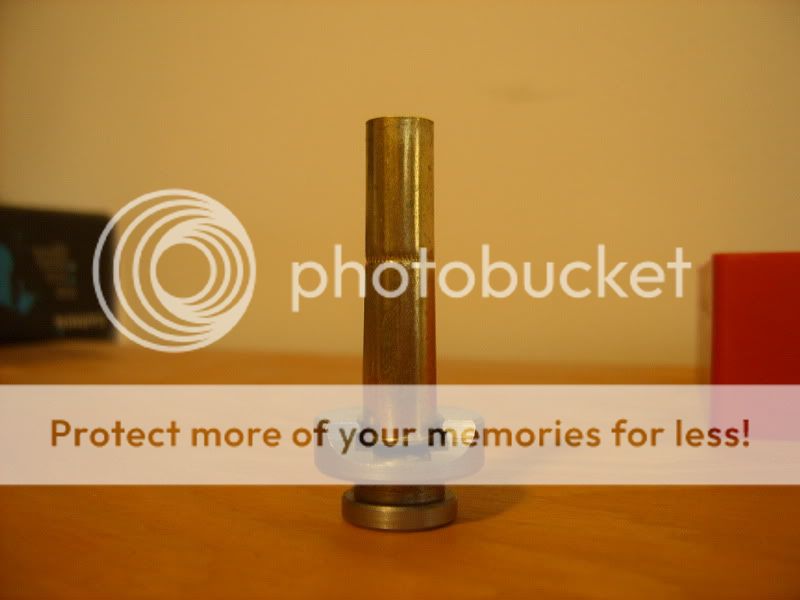
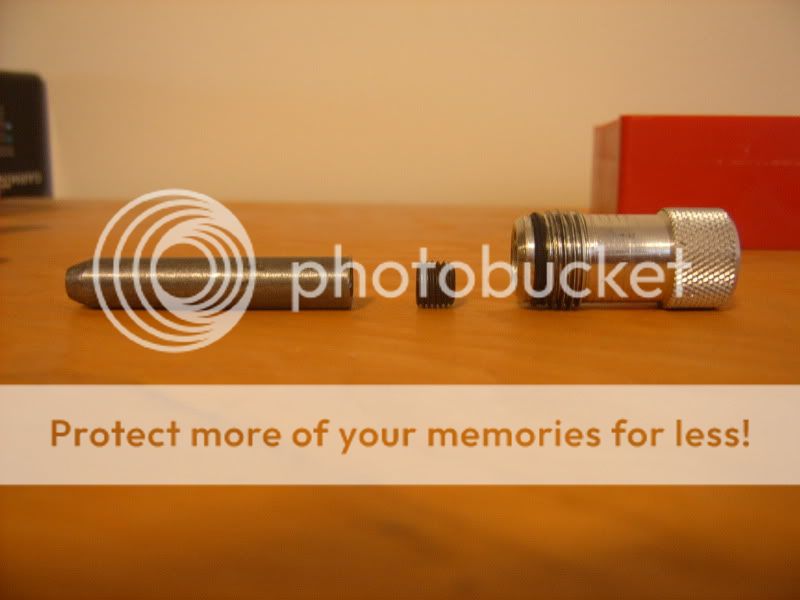
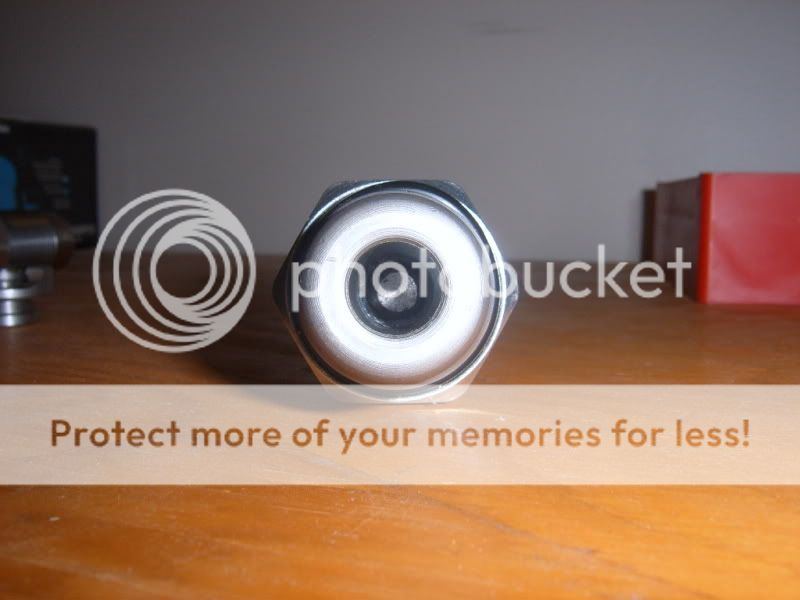
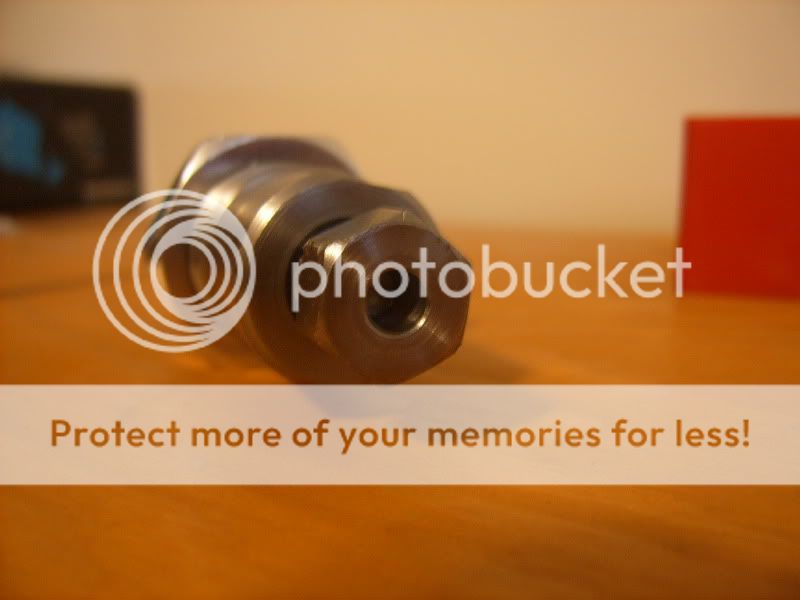
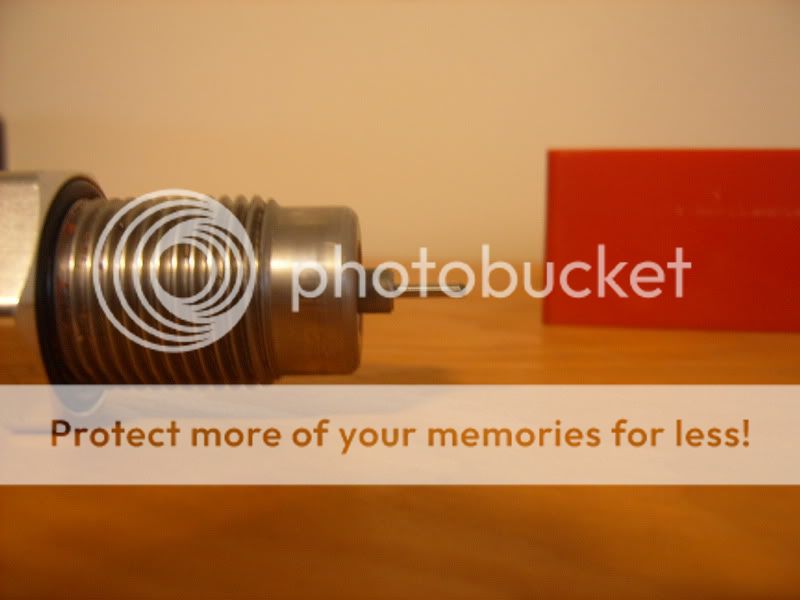
I needed a way to seat the bullet completely inside the case, The original seater would just stop at the top of the case rim and not seat the bullet completely level or inside, I took apart the seating die, Flipped the seating pin around and used a grinder to make a cone shaped bevel on the pin. The only problem I encountered was I had to clean the excess lead left by my bullets out of the die with a small flat head screwdriver, I was using 100gr RN bullets and seating them in upsidedown.
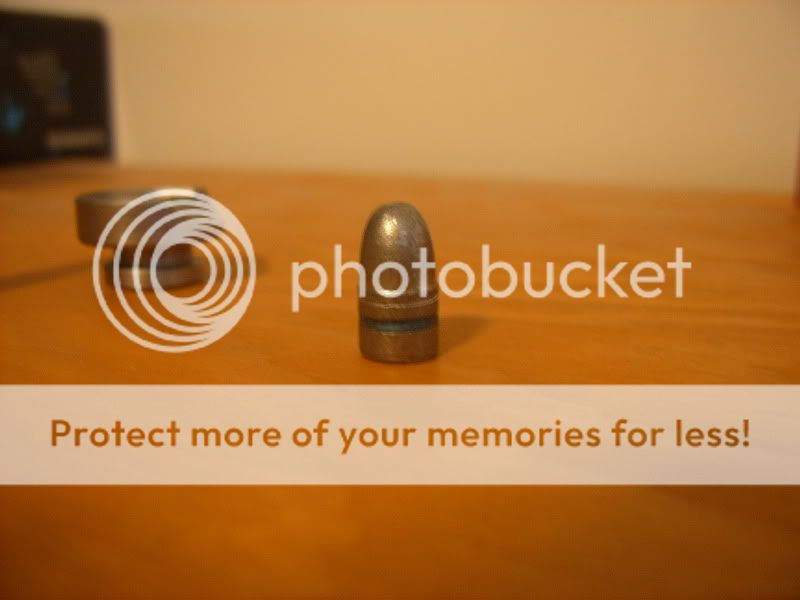
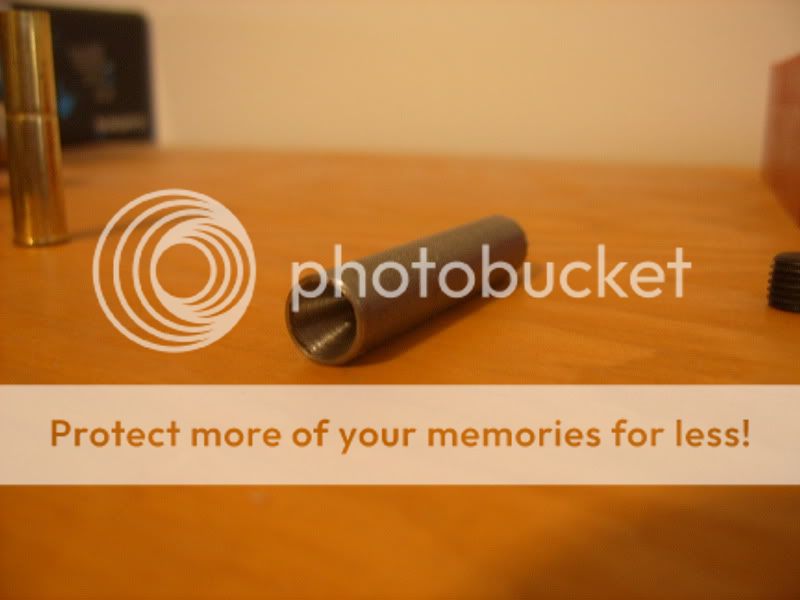
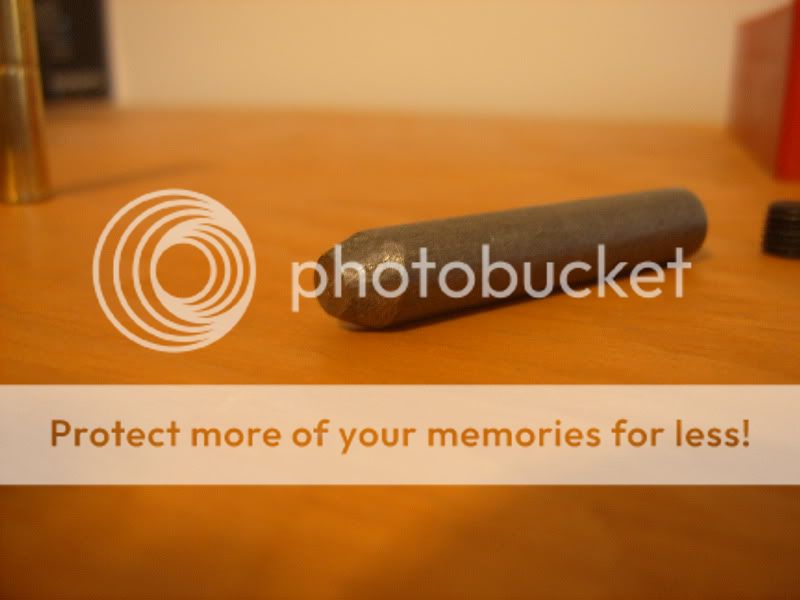
Now the pin sits slightly below the collar in the die and a spacer is needed at the top in order to keep it tight. I justed used what I could find in the garage, And it turned out to be a Hex plug. As for seating depth I manipulated how far I threaded the die into the press, I didnt have the shell holder touching the bottom of the die or anywhere close for that matter.

Step 3.
The Sizing/Decapping die does not have a long enough pin to deprime the brass properly and resize it, Since they cartrides are low pressure there isnt a need to do a full length size, I moved the pin half way down the collar so it only resizes the top half of the brass and deprimes it. The press handle just comes to a stop.
After shooting my brand new loads the once fired brass fell free from the revolver without any issues.
My load was 3gr of Bullseye powder(as suggested by Panzer, Thank you)
.32 caliber 100gr lead RN bullets
Small pistol primers(whatever I could find)
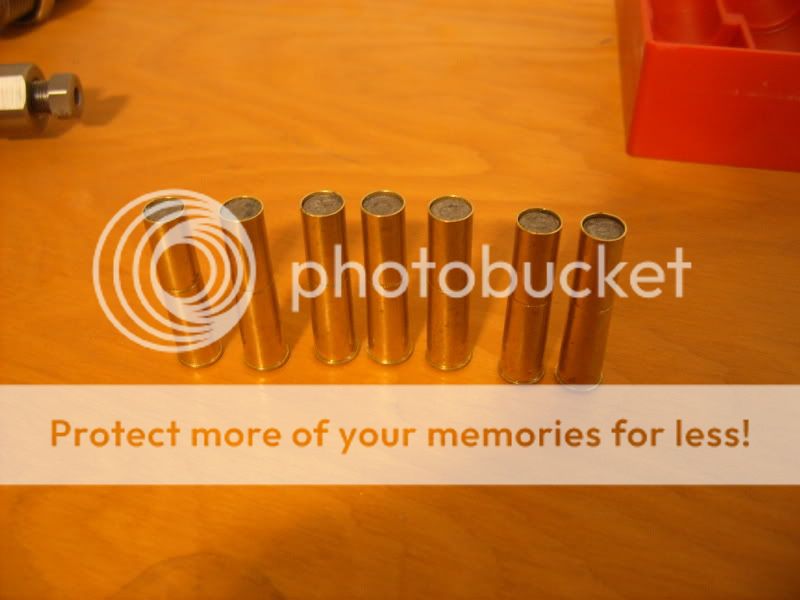
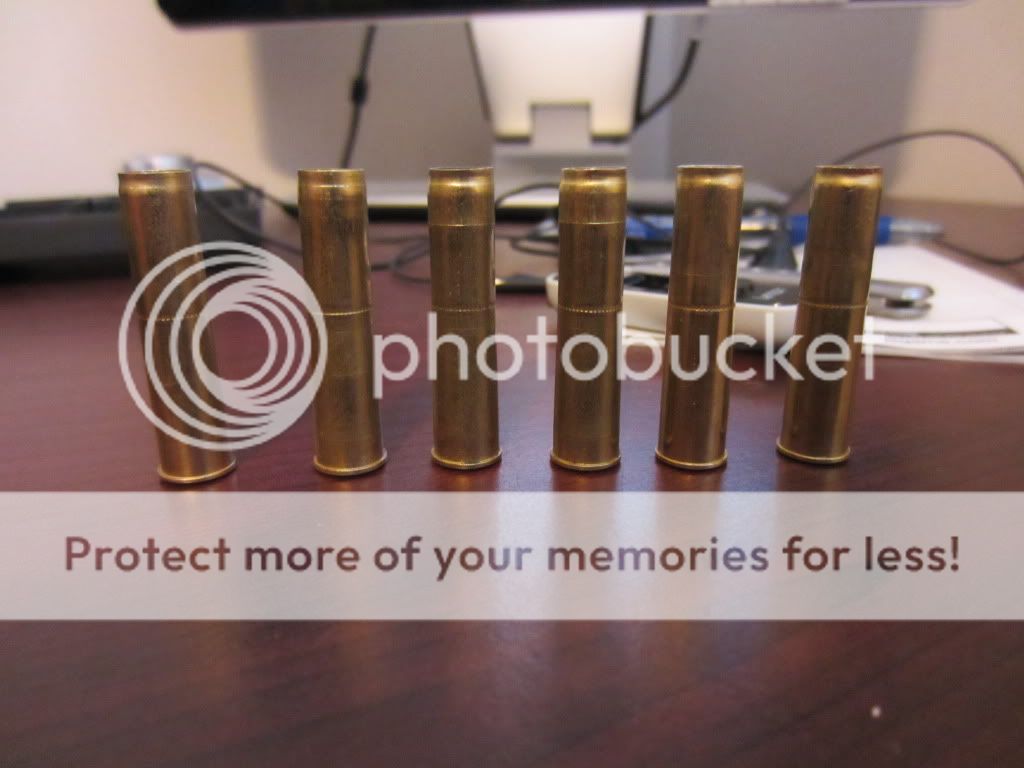
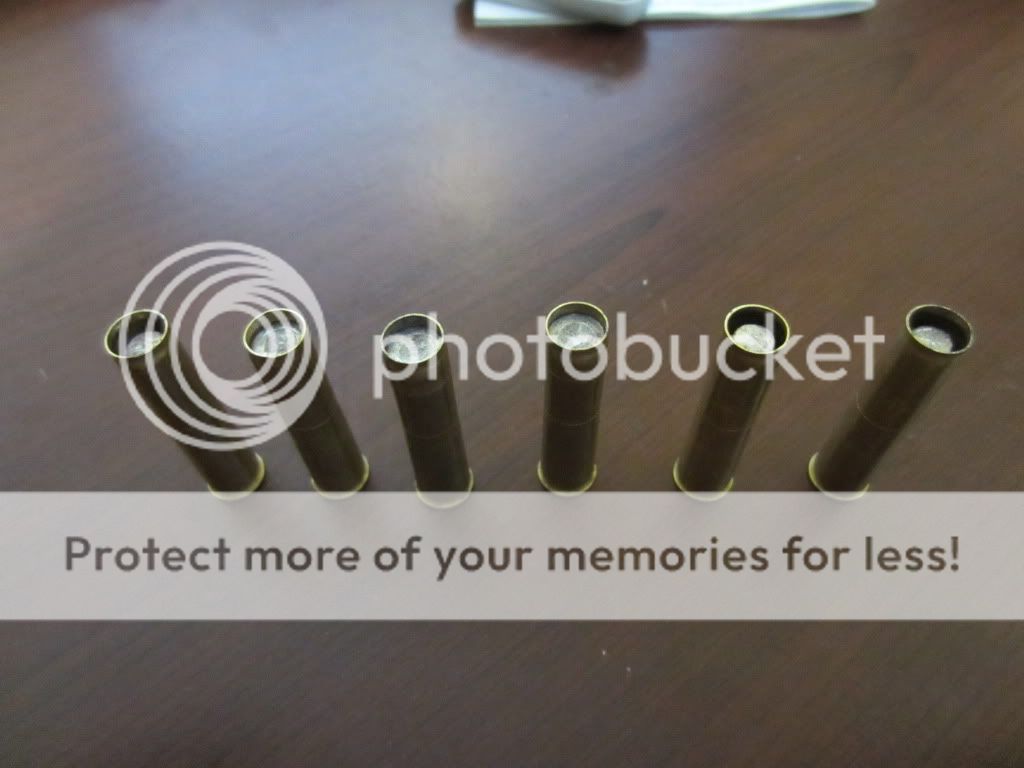
My loads ended up looking like this. Some people may need to put a crimp on their brass in order for it to work in their revolver, Mine works fine without it.
UPDATE #1
Well I encountered a problem, too much lead was being scraped off the bullets, And they werent grabbing the rifling in the barrel and were tumbling, So I had to expand the case mouth, I expanded too far for the first few cases and when I seated and crimped the bullet I couldnt get the round into the chamber.
My solution
I expanded the case mouth but not very much, maybe a cm or two, just enough the bullet would sit in the case mouth. I did this by only threading the expander die a little ways into the press. I tryed seating some bullets the proper way up but still ran into some lead scraping, So I continued to seat the bullets upside down, Doing it this way not much lead is scraped off the bullet. With jacketed bullets you could seat the bullet either way you want, I'll post some pictures after I charge my camera
UPDATE #2
Another Issue I've run into was that after I had expanded the case mouth and seated the bullet, The crimping die was not enough to remove all bell from the case mouth and my rounds would not chamber in the cylinder. So what I then did was removed the decapping pin from the resizing die and ran my finished rounds through the resizing die about 1/4 way down the brass. My finished loads now look like this, You will Notice I faced some bullets right side up and some upside down.
So if everyone who reloads for the 7.62x38 could put their experiences and their .02$ in that would be great! Even if its going back and copying your old posts.
Type: Double Action
Chamber: 7.62mm Nagant
Weight unloaded: 750 g
Length: 230 mm
Barrel length: 114 mm
Capacity: 7 rounds
This revolver was designed in Belgium by Nagant brothers (Emile and Leon) in the late 1880s - early 1890s, and was adopted by numerous countries, including Sweden and Poland, but the major user and manufacturer was undoubtfully Russia (and later Soviet Union). Russian government adopted Nagant revolver in 1895, and local production began in 1898 (first shipments were from Belgium). It was a standard russian sidearm until 1930, when M1895 Nagant was declared obsolete, but it was widely used and manufactured during World War 2, and manufacture was finally ceased circa 1950.
Later, some sporting revolvers, both in 7.62mm and in .22LR were developed on Nagant platform. Intertestingly enough, the M1895 revolvers still can be seen carried by some security personnel in Russia, especially by Railroad Security and by some armed guards. Usually, those revolvers are 2 to 4 times older than men who carry these guns.
From technical point of view, Nagant revolvers were already almost outdated at the moment of its adoption in 1895, since newest revolvers like S&W Hand Ejectors or Colts with side-opened cylinders were much faster to reload. On the other hand, M1895 had some unusual and interesting features, one of which was gas sealed cylinder, which made the Nagant a rare example of revolver suitable for mounting a silencer. Such a practice was known by NKVD and some Red Army special forces (recon and scouts) during WW2. Special silencer, called "Bramit device" was designed by Mitin brothers and could be mounted on the barrel.
M1895 Nagand was a solid frame, seven shot revolver with non-removable cylinder. The loading and unloading was committed wia the loading gate at the right side of the frame, one cartridge by one. Spent cases were ejected by the ejector rod, which, when not in use, was concealed within the cylinder axis and swung to the side on the ejector rod link to be used. Original guns were double action ones, but Tsarists government ordered that some of M1895 should be retrofitted with Single Action triggers and issued to enlisted men, and DA guns should be issued only to the Officers and Police. In Red (Soviet) army only Double Action Nagants were issued.
The gas sealed cylinder, mentioned above, was made to use all of powder gases to propel the bullet (in most revolvers some gases escape from the gap between the cylinder face and barrel breech). To achieve that, the cylinder moves ahead a bit when hammer is cocked, enclosing a barrel breech area with recess in the front of each chamber. The cartridge, unique to that design, had long case with tapered mouth and a bullet totally enclosed inside the case. When cylinder moves forward, the cartridge case mouth entered the barrel breech and was used as additional seal. This was a complicated mechanism, useful mostly when guns were used with silencer.
Being somewhat complicated and relatively slow to reload, with ammunition of marginal power, Nagants were otherwise good guns, reliable, acurate and quite popular among the troops.
MY LOADING INFO
Alright, Heres what I did to make ammo for this revolver,
You Will Need The Following
Dremel/ Or similar air tool
Bench grinder
Lee 7.62x38 Dies(Actually 32-20)
7.62x38 brass
Small pistol primer
Bullseye Pistol Powder(or whatever you prefer)
.32 caliber bullets.
Step#1.
First off I had to do some slight work to the shell holder in order for the brass to fit(This was more tricky than the other steps in the process) I used a dremel with a small grinding bit until I achieved the perfect fit.
Step#2.
I needed a way to seat the bullet completely inside the case, The original seater would just stop at the top of the case rim and not seat the bullet completely level or inside, I took apart the seating die, Flipped the seating pin around and used a grinder to make a cone shaped bevel on the pin. The only problem I encountered was I had to clean the excess lead left by my bullets out of the die with a small flat head screwdriver, I was using 100gr RN bullets and seating them in upsidedown.
Now the pin sits slightly below the collar in the die and a spacer is needed at the top in order to keep it tight. I justed used what I could find in the garage, And it turned out to be a Hex plug. As for seating depth I manipulated how far I threaded the die into the press, I didnt have the shell holder touching the bottom of the die or anywhere close for that matter.
Step 3.
The Sizing/Decapping die does not have a long enough pin to deprime the brass properly and resize it, Since they cartrides are low pressure there isnt a need to do a full length size, I moved the pin half way down the collar so it only resizes the top half of the brass and deprimes it. The press handle just comes to a stop.
After shooting my brand new loads the once fired brass fell free from the revolver without any issues.
My load was 3gr of Bullseye powder(as suggested by Panzer, Thank you)
.32 caliber 100gr lead RN bullets
Small pistol primers(whatever I could find)
My loads ended up looking like this. Some people may need to put a crimp on their brass in order for it to work in their revolver, Mine works fine without it.
UPDATE #1
Well I encountered a problem, too much lead was being scraped off the bullets, And they werent grabbing the rifling in the barrel and were tumbling, So I had to expand the case mouth, I expanded too far for the first few cases and when I seated and crimped the bullet I couldnt get the round into the chamber.
My solution
I expanded the case mouth but not very much, maybe a cm or two, just enough the bullet would sit in the case mouth. I did this by only threading the expander die a little ways into the press. I tryed seating some bullets the proper way up but still ran into some lead scraping, So I continued to seat the bullets upside down, Doing it this way not much lead is scraped off the bullet. With jacketed bullets you could seat the bullet either way you want, I'll post some pictures after I charge my camera
UPDATE #2
Another Issue I've run into was that after I had expanded the case mouth and seated the bullet, The crimping die was not enough to remove all bell from the case mouth and my rounds would not chamber in the cylinder. So what I then did was removed the decapping pin from the resizing die and ran my finished rounds through the resizing die about 1/4 way down the brass. My finished loads now look like this, You will Notice I faced some bullets right side up and some upside down.
Last edited:


 I decided that I must reload for this caliber. I ordered new Fiocchi brass from Tradex & the 98gr TMJ's he sells too. Now I just need to get the right dies to start reloading the new cases. I have shied away from the Lee Nagant dies as they are NOT really made to work with the real Nagant brass. I noticed CH4D lists the dies. Not sure if they are for the original brass or for forming 32-20. I'm very interested to see what everyone is using to handload these cases. Anthony seems to be out of stock on them at the moment. I wish I had bought more than one bag