Accurizing a milsurp

JustBen

CGN Regular
Rating - 100%
67   0   0
I'm thinking about buying a milsurp to turn into a hunting/target/all-purpose plinker. Ideally, a bolt action in something like 6.5x55, 30-06, or .303 Brit. No matter the calibre, I plan to reload. I'm looking for something that I can play with a little bit and turn into a fairly decent kind of shooter (1 or 2 MOA). This may mean MODIFICATIONS, whether DIY or the gunsmith.

I don't mean to offend anyone who thinks that it is a bad thing to modify a milsurp. I'm just looking to be different because I don't need another Weatherby.

My questions are:

1. What model & calibre should I be looking for?
2. What is the going rate for the above gun?
3. What would be reasonable to assume for accuracy that I can squeeze out of it? What sort of accuracy should I expect in stock form?

Thanks guys!
 
The Swedish mausers in 6.5x55 are generally great shooters. Please start with one that has already been modified from full military dress. It will probably be cheaper anyways.
 
I would contact Trade Ex Canada.

They have a lot of already sporterized former military rifles in the calibers you are searching for. Many for a very decent price! :)

I use a Tikka T3 in 6.5x55 Swedish Mauser. It is a very nice cartridge for hunting medium and big game. But you may want to consider .308 or 30-06 if you need something a bit cheaper to shoot.

Check out what they have to offer in sporterized rifles here: http://www.tradeexcanada.com/index.php?option=com_paxgallery&task=table&gid=5

You can do whatever you want to your own rifle, sporterize a full wood milsurp if you want, but expect to lose money on it when you sell it. (ie: To sporterize an original $450 Swedish M38, even installing a scope, etc on it, will only bring you about $250 when you go to sell it...) FYI...

That said, I love my Bubba'd M10 Ross. Shoots MOA at 200 yards.

Enjoy! Also, expect to get some flak from other members on the board here for your views, just remember: "Water off a ducks back". ;)
 
I don't expect to ever sell whatever gun I get.
I also think its a fair compromise to start with something that has already been sporterized; save the real collectable ones for the collectors.
 
You may not have to modify anything at all.
A good M38 swede will do less than 2" all day long as is.
I have an Israeli 98k that shoots 1" bone stock when fed M118 (it is however in exc + condition).
 
It isn't that difficult to get many stock MILSURPs to shoot 2MOA without modifications and I've done this with many rifles. First, start with one with a sound, unworn barrel and use good quality ammo. This means commercial ammo or handloads tailored to the piece as it is very tough to find MILSURP ammo that is capable of 2 MOA accuracy. Many MILSURPs benefit from a good bore cleaning with copper solvents and/or JB paste to remove accumulated crud and metal fouling.

2 good choices for accuracy are a Model 1917 Enfield and a M1903 Springfield. Both feature good sights and the .30-06 ctg , which is a good choice for accuracy. Sights must be tight and not slip in their settings. Beyond that, it is a matter of verifying the correct stock bedding. Both of these rifles share the same bedding requirements. These are solid contact of the recoil lug in the stock, some clearance behind the upper tang of the action, and a barrel which is free of stock contact, except at the forend tip where about 5-7 lbs of pressure is required to lift the barrel out of contact with the stock. These rifles can also shoot very well if the barrel is free floating with no stock contact at all-provided that the top surface of the barrel is not in contact is not in contact with the upper band. Both guard screws must be tight and there must not be any metal-to-metal contact between the action and trigger guard. The bushing for the rear guard screw must also be in place to prevent distorting the action from excessive torque. In some cases proper recoil lug seating can be established by simply using pop can shims on the face of the recoil lug recess in the stock.

Both of these rifles are essentially Mauser types and the same considerations apply to selecting and bedding a Mauser rifle. Alla same for the Pattern14 Enfield in .303 which was the sire of the Model 1917. Some folks wring excellent accuracy out of the No4 Lee Enfields with due attention to the unique bedding requirements of the rifle. Again, high quality ammo is essential. Once you take care of setting up the rifle and the ammo, the rest is up to the shooter.

The M1 Garand can also an excellent shooter in a stock condition, but the fitting/bedding requirements are a bit tougher to establish than for the bolt rifles. I expect 2MOA accuracy with handloads from all three of these rifles when properly set up. As far as prices are concerned, you can bird-dog the EE forum for an idea. Like most good things in life, this all takes some money and focus to get it right.
 
I own and shoot most of the bolt milsurps. Assuming you want a reasonably accurate hunting rifle, the barrel can be cut and crowned at 20 to 22". This makes it a handy hunting rifle and probably makes it slightly more accurate.

I have made them using the original stock and have also put them in new stocks. I prefer the look of the rifle using the original stock. i will look for some pictues.

If a scope is wanted, the bolt should be cut off and a new one welded, or the old one bent. A new one looks better.

The action should be bedded by someone who knows what they are doing. A small pressure pad at the front will aid accuracy and zero stability.

I think the nicest rifle are made on small ring Mausers. I have them in 358, 7x57, 7-08 and 6.5x55. I leave the triggers as -is because they have very nice 2 stage triggers.

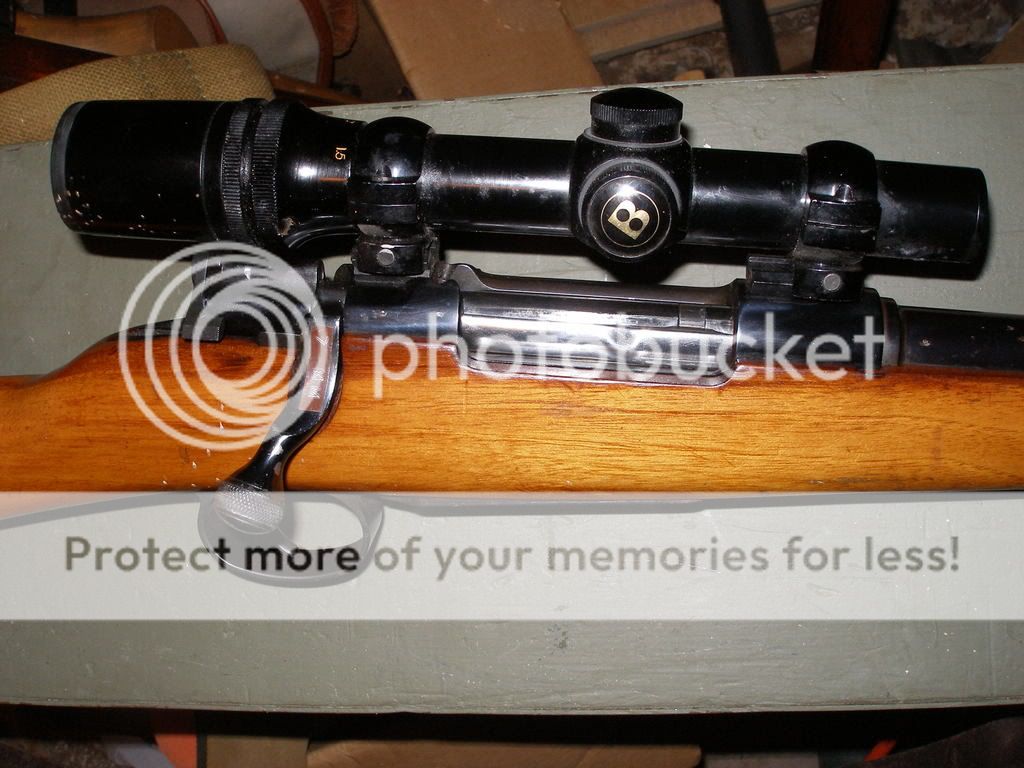
This is a 7x57 using the original wood to make a manilcher syle stock. the bayo lug was ground off on the endcap and the loopfor the top wood was cut and folded over the edge of the forestock. Looks real neat and a very handy rifle. 20" barrel.

P9130238.jpg
 
Pick up a sporterized milsurp and have at it. Nobody's really going to cry a river over you modding a rifle that has already been bubba'd into a sporter.
 
You are already halfway there when you mention handloading.

CONSISTENCY of your load seems to be more important than the precise load, especially if you are happy with 2 MOA: just about any Milsurp will give you that if it is in good trim, even with original full-military woodwork. Changing the load, with many rifles, just means a change in POA and a small alteration in group size.

FWIW, I do not class glass-bedding a military surplus rifle as a crime meriting exposure in the stocks or something, just so long as all you are doing is using the epoxy to restore the original bedding where it has been altered by wood shrink, twist, et cetera, over time.

When I test a military surplus rifle for accuracy, I do so generally with a called 2-round group from a dead-cold barrel. Some people call this a "sniper's zero", others call it a "hunter's zero". In fact they are the same thing, for no quarry, man or beast, is going to hang around for you to warm your barrel so you can make that perfect shot. The animal runs away, the man shoots back. You need to know where your FIRST bullet is going and how close to it your SECOND one will strike. This much said, my recently deceased range partner and I played with old army guns for the past 20-odd years with a view to seeing just how good they can be made... consistently, from a dead-cold barrel, for 2 rounds. Of my partner, Gavin Tait, it must be said that he was a phenomenal shot and the most exacting handloader you could ask to meet. He did not even own a powder measure: every single charge was weighed precisely, with the last kernels of powder being added from a cat-food tin, using a tiny scrap of folded paper, one kernel at a time. Needless to say, I am NOT that exacting but I did learn from him a bit of PATIENCE and PRECISION. A few of our 25 years of results follow. These are full-military rifles with, at most, the bedding touched up a bit to bring them back to what they were when they were built. In most cases, they were shot with issue sights, although rifles would be scoped when it appeared that they were good enough that they NEEDED glass to determine how accurate they actually could be.

Short Magazine Lee-Enfield Mark III*, National Rifle Factory 1918: 1 inch at 100 yds.

Short Magazine Lee-Enfield Mark III*, Lithgow, 1918: 9/16 inch at 100 yds.

Number 4 Rifle, Long Branch, 15/16 inch at 100 yds. Still being worked on.

Ross Mark III, Quebec, 1914, Chilean Navy: 5/16 to 7/16 inch, OR bullets touch, 100 yds.

Mauser, Brazilian 1908, DWM Oberndorf a/N: 1/2 inch at 100 yds.

Mauser, Brazilian 1908 (second rifle, worn bore) DWM Oberndorf a/N: 1 inch, 100 yds.

Mauser, Swedish, 1899 Oberndorf (worn bore): 1-1/8 inch, 100 yds.

Mauser, Swedish, 1899 Carl Gustav (good bore): 3/4 inch, 100 yds.

Mauser, Portuguese, M937: 3/4 inch, 100 yds.

Mauser, Norwegian, .30-06: 1/2 MOA, consistent to 400 yds.

Arisaka Type 38: 3/4 inch, 100 yds.

Carcano Model 1941: 15/16 inch, 100 yds.

Ishapore 1A1 FAL, 1972: 1-1/8 inch at 100 yds.

US Rifle M-14: 3/4 inch, 100 yds.

Tests with six second-hand US M-1917 rifles which had been sportered and scoped showed that this rifle may be depended upon to turn in 1 MOA OR BETTER if properly bedded and fed good, consistent ammunition. A couple were MUCH better than the 1 inch. One now wears a Kahles scope because it earned it; the rifle sold for $125.

A Winchester P.-'14 which was terribly Bubba'd was rescued and scoped and turns in 7/16 inch.

A Moisin-Nagant 91/30, built in 1939, turned in 1-1/8 inch regularly. It was bedded solid and the cleaning-rod glassed in solid and sent the next 4 years shooting 3-round groups onto a postcard at 325 yards, Summer or Winter, temperatures between +90F and -33F. Shot with .312"bullets; .308 are useless.

Note please that the second 1908 Brazilian Mauser (with the worn bore) was shot for sentimental reasons: it is Serial Number 25 and likely was inspected by Paul Mauser himself.

As stated, these all were 2-round "sniper's zero" groups, tested for group size. Shooting was off sandbags in each case. Ammunition was commercial casings for most rifles and regular hunting bullets. Rifles with Enfield rifling were shot with flat-base bullets. In each case the ammunition was as consistent as it could be made, using off-the-shelf components available in any well-stocked gun shop. Most of the components were in fact purchased from Site Supporters Jo-Brook Firearms in Brandon, Manitoba or Wolverine Supplies in Virden, Manitoba.

I hope this is of some help.
.

 
Last edited:
Try to find a good Finn Mosin or Swiss K-31. They usually are very accurate and you won't have to do any serious accurizing beyond losd development.

And if your eyes are good, you might put some scope-sighted magnum-type hunters to shame at the 100 yrds line... ;)
PP.
 
Back
Top Bottom