









































April Purchases............

BadgerDog

CGN Ultra frequent flyer
EE Expired
Rating - 100%
46   0   0
Location
Toronto, Canada
Ok, it's now April..... let's see those purchases folks ........ :D

I'll start it off with some gun show buys ...........


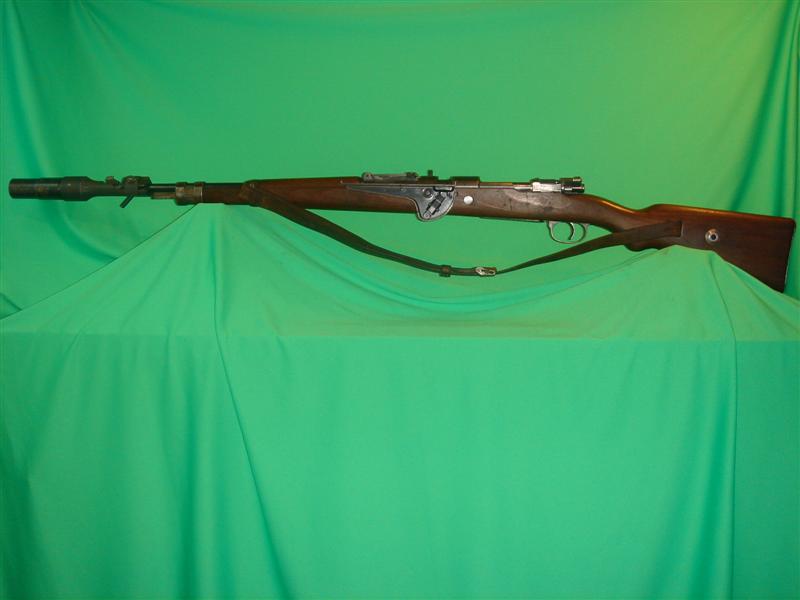
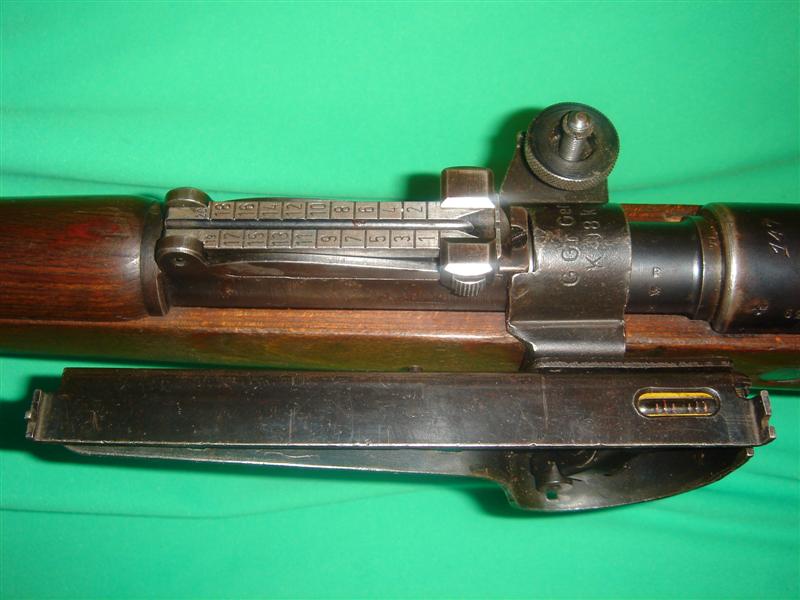
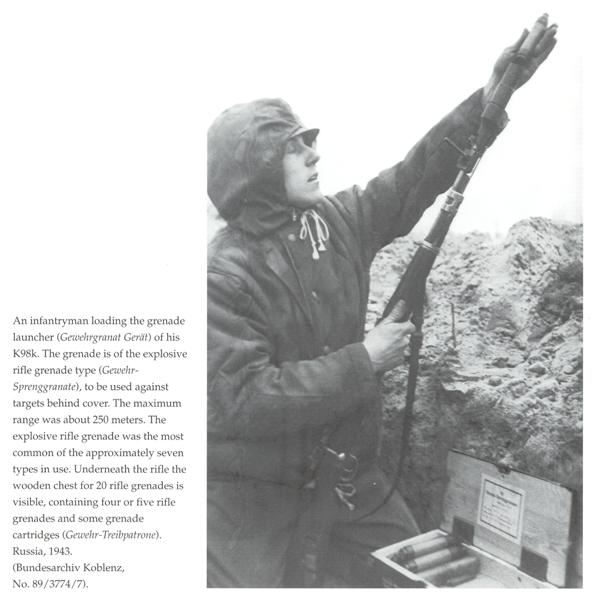
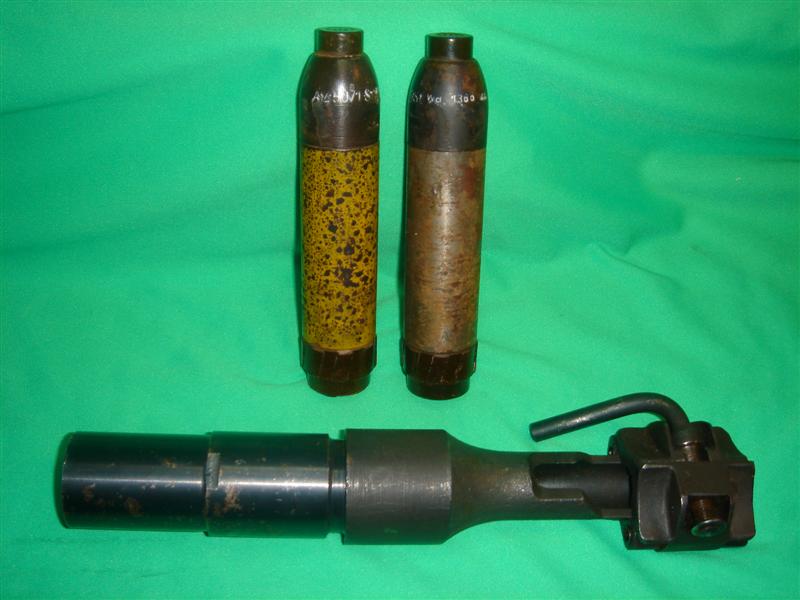
1942 Gewehr Granat Gerät (G Gr Ger K98k)
Mounted on 1939 Code 147 K98k (Rifle mfg by JP Sauer und Sohn Gewehrfabrik, Suhl)


(Click PIC to Enlarge)

1942 Gewehr Granat Gerät (G Gr Ger K98k) ...... (lots more detailed pics ... click here)http://imageevent.com/badgerdog/germanservicerifles/germanaccessories/k98kriflegrenadelauncher


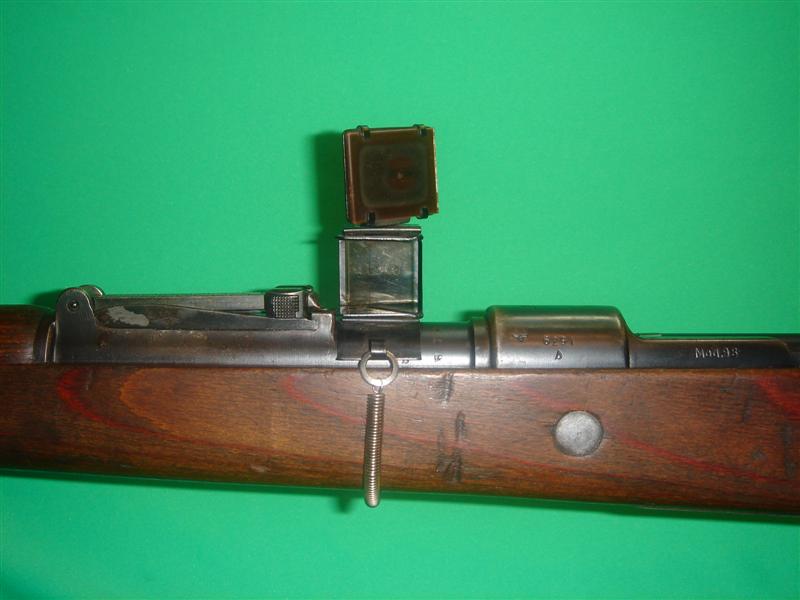
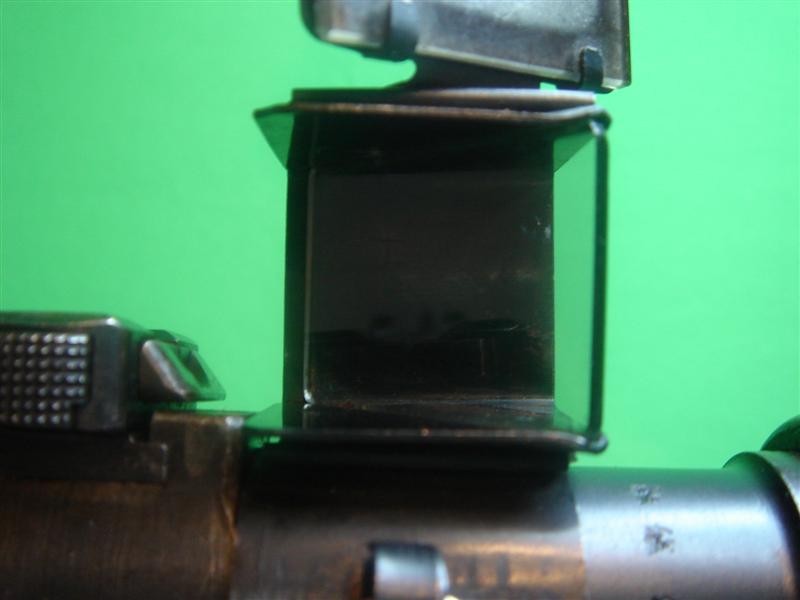
K98k Zielspiegel (Target Mirror) Training Sight
(Look closely into the mirror and you can see the front sight picture)


(Click PIC to Enlarge)

K98k Zielspiegel (Target Mirror) Training Sight (lots more detailed pics ... click here)http://imageevent.com/badgerdog/germanservicerifles/germanaccessories/mirrorsighttrainingaid

Regards,
Badger
 
Last edited:
Stevo said:
Badger,
Was there a special rifle grenade used or did it fire standard infantry grenades?

They used special grenades that had a threaded "rifling" at their bases. If you go to the web site link and see the entire montage of pics, note the one that shows reciprocal matching threads in the barrel of grenade launcher itself.

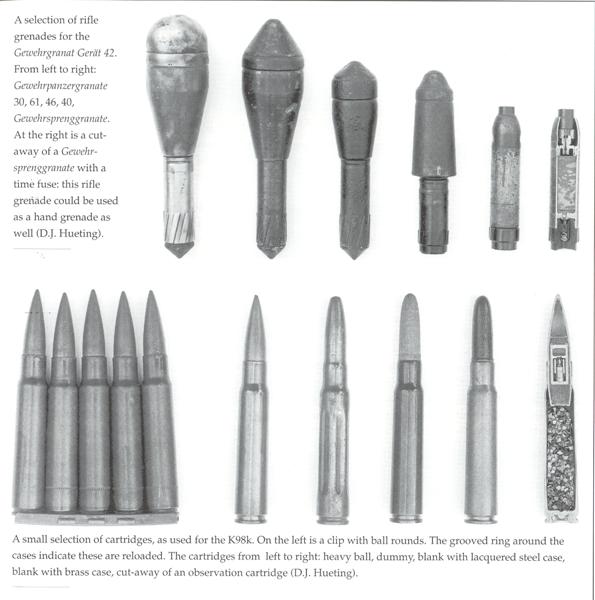
What's interesting is that Gewehr Granat Gerät anti-personnel rifle grenades could also be used as regular hand grenades. If you unscrew the base, a string falls out, then if the soldier pulled that, it was like pulling the pin on a standard hand grenade for throwing. In the pic below left, note the grenade on the top far right. It's one of the multi-purpose, throw or shoot types.

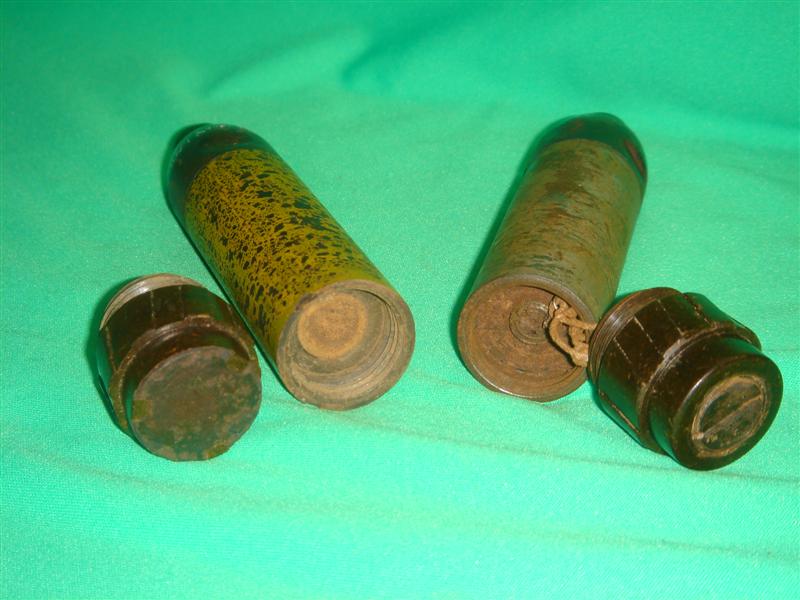
I also bought a couple of the grenades (inert), one of which dissembles and still has the "pull string" component. I'll post some close-up pics of those when they arrive.

(Click PIC to Enlarge)


1942 Gewehr Granat Gerät (G Gr Ger K98k) ...... (lots more detailed pics ... click here)http://imageevent.com/badgerdog/germanservicerifles/germanaccessories/k98kriflegrenadelauncher

Regards,
Badger
 
Riflechair said:
To quote the Joker... "Where does he get all those wonderful toys?"

I spend a lot of time going to all of the local shows and developing a network of relationships with other collectors..... :)

There's some very gracious folks in this hobby that I've learned a whole lot from, mixed with only a very few losers... ;)

Regards,
Badger
 
Stevo said:
Badger,
Was there a special rifle grenade used or did it fire standard infantry grenades?

The Gewehrsprenggranates arrived today........ can you pronounce that without spitting on yourself? :eek:

Here you go....... certainly are heavy suckers and that's with no charge in them. ....... :D

Left one in both pics -- Gewehrsprenggranate (Rifle Grenade only)
Right one in both pics -- (Gewehrsprenggranate with timed fuse so it could also be hand thrown)


(Click PIC to Enlarge)

For lots more close-ups and detailed pics, click on the link below and go to bottom of album.

1942 Gewehr Granat Gerät (G Gr Ger K98k) and Gewehrsprenggranates ...... (click here)http://imageevent.com/badgerdog/germanservicerifles/germanaccessories/k98kriflegrenadelauncher

Regards,
Badger
 
Last edited:
Klunk said:

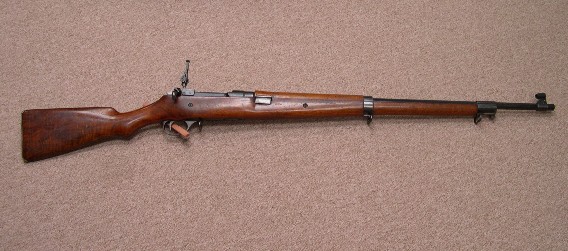
Im gonna make the comment that the Mark deux Ross looks a little teeny weeny bit REFINISHED

.....is it....?

Actually, when I bought it I thought so, although I didn't really care ........ :D

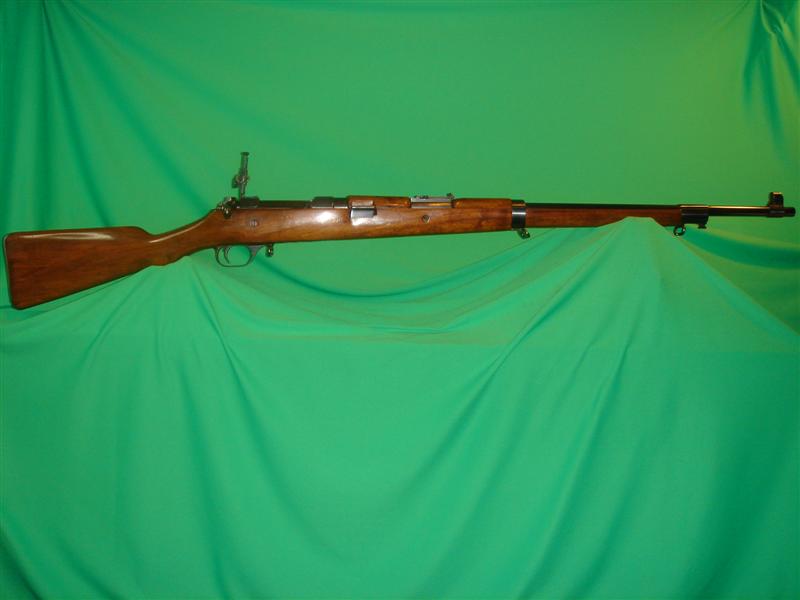
I've just wanted one of these for a long time as a shooter, since I understood they were real winners in their day when competing at Bisley.

After I got it home and checked it over including the metal work inside. I began to think it's all original and then I got a note from tiriaq, who's pretty sharp with these old Ross rifles. He thought she dates from about 1910 and is all original. As I now understand how he explained it, that's exactly they way they did the stocks and the two tone bluing in those days. Remember, it's supposed to be a civilian target rifle, not a grunt's service rifle, so they were dressed for sale and show more.

In any event, as I said, I still don't care one way or another. Simply a beautiful piece to hold and fondle (and I hope shoot), so I think this is one they can bury me with ....... :D

Regards,
Doug
 
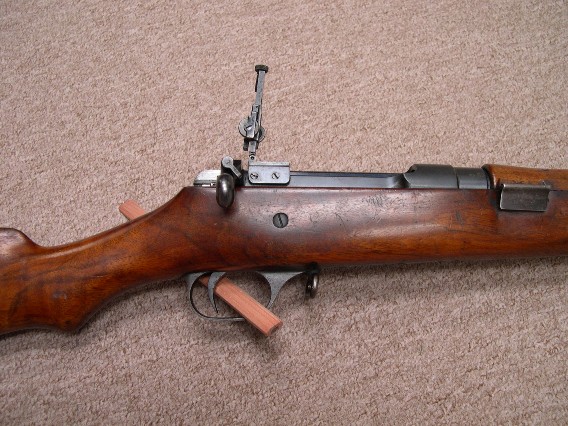
Klunk - at first glance the rifle, particularly the stock, looks a bit too shiney. I spent some time studying BadgerDog's photo portfolio of the rifle, some 75 pictures. I studied my II** at the same time. The bolt and the receiver are blue and white. Top and handle of the bolt are blue, bottom is clean steel. Receiver is blued, except for the boltways and internal surfaces which are steel. Look down into the receiver, into the action. Sure doesn't look like a reblue. The receiver has the same rust blue textured surface as mine. The sight and some other parts show colour fading. The colour of the metal parts is in harmony, and certainly do not look like hot caustic blue. The bore is in the same condition as the rest of the rifle. Now the stock. It IS shiney. These rifles had selected imported walnut stocks with a varnished finish. Look at the grain and colouration in this stock. They were not service rifles, but were rather expensive civilian target rifles. Cost the better part of a working man's monthly wages. They were finished for the commercial market, with the prospective buyer being quite well heeled, and knowledgable. A serious purchaser. Looking carefully at the closeups of the fit of the wood and metal, there is no indication that the original varnish was ever removed. There are minor handling dents, the dent happening through the varnish - the varnish wasn't applied over the dents. Look at the photo of the bottom of the stock, at the front of the magazine, where the three screws are. The wood finish is worn there. Now working from photographs isn't the same as actually handling the rifle in good light. My 1905R sporter's wood, at first impression, seems to have been revarnished. But it isn't. If this rifle has been redone, whoever did it was really good. But as BadgerDog has suggested, he doesn't really care. We are planning to get together, and shoot our II** rifles. I know mine is a real shooter, and I expect that his will be as well. Mine is a bit later than his, and does not have the Long lee sight on the barrel, only the BSA Martin on the bridge. That, plus the .303 bore makes mine a fairly late one, ca 1912. This one is a bit earlier, and has a fairly low serial in the commercial 1905 series, so I suggested 1910 or so. These rifles weren't made for all that many years. At any rate, its a grand old rifle, and it is just as well I didn't go to the show. My wallet is plumper for having missed it.
 
This look familiar.... ;) :D

2Ross1905Tar303.jpg


2Ross1905Tar303cu.jpg
 
NAA said:

This look familiar.... ;) :D

Very nice....... :D

A sister....... :p

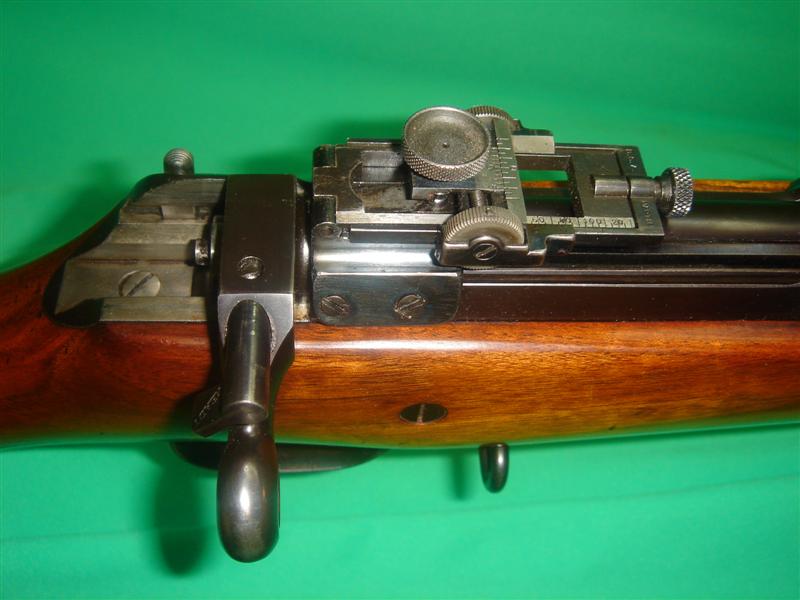
What's interesting is the angle of your sight. When I stand the BSA Martin rear sight up on the one I bought, it also sits at a slight forward angle (see pics). I thought it might not be installed right and perhaps needed some metal ######...... :D

I asked a Ross collector and he said, no they're supposed to be like that and he said the P14 and M1917 sit like that as well.

I have no idea why and what's the point as opposed to standing vertically?

Regards,
Badger
 
It's because as the sight is dialled up, the front of the rifle is tilted skyward, keeping the rear sight perfectly vertical in relation to your eye ;)
 
Thanks for posting that, NAA. Note that there is no rear sight on the barrel, and the front sight hood is different - it can be pivoted to expose the front sight. This rifle is slightly younger than BadgerDog's, but shows more signs of use. These rifles were intended for long range shooting, thus the sight orientation as Claven2 has stated. If someone has not seen one of the Martin sights, they are interesting, a bit different from the target sights used on Lees. Windage is in one minute clicks. For elevation, the outer frame can be shifted for gross changes, and then fine adjustment is via the top knob, using the fine scale - no clicks. BadgerDog and I will get these two rifles out to the range this spring. Who knows, they may have shot together 90 years ago.
 
Here are my end of March, early April gun finds

Here's a MAS 36/51 in very nice shape I picked up in Winnipeg
392611.jpg


Here's a VZ52/57 I got from the same seller. Ollie and I have cleaned him out of milsurps
392615.jpg


And I have wanted either and Enfield or Webley revolver for a long time, I found this one at TNT Gunworks in Regina. It's a Webley Mark 4, in 38 Smith and Wesson.
392617.jpg


I also have a M94/14 Swedish cavalry carbine and an 1891 Carcano carbine inbound, will post pics when they arrive.
 
Damnit those are nice Rosses...

Besides the 'target sights' what are the outstanding differences between MkII** and MkII***?

Is there a MkII or a MkII* or a MkII****?
 
The Mk.II through Mk.II*****, except for the II** are similar rifles, with numerous minor variations, primarily involving sights. There are detail differences in stocking, handguards, etc. The II** rifles had a much heavier and longer (30 1/2") barrel designed to enhance shooting properties. Ross originally referred to the II** as the Mk.III. That term was later formally applied to the service rifle with the 1910 action, which used the longer barrel. II** rifles, like most Rosses exhibit variations. There were gov't issue service rifles in addition to the commercial ones illustrated in this discussion. The issue rifles were stamped on the right face of their butts, like all service Rosses. Many, like the ones illustrated, were stocked up using stock blanks intended for the standard 28" length barrel, so the muzzle projects noticably. Later, some were manufactured with a longer forestock, so a bayonet could be fitted. There were different sights fitted. In addition to the .280 match rifles, it was the II** that was so effective in target competition. II** rifles were used repeatedly to win the King's Prize at Bisley in the years prior to 1914. After 1918, the Ross was no longer an official service rifle, so the rifles were not used in formal competition. Perhaps this is why commercial II** rifles are more often encountered in superior condition, compared to service issue rifles.
 
Back
Top Bottom