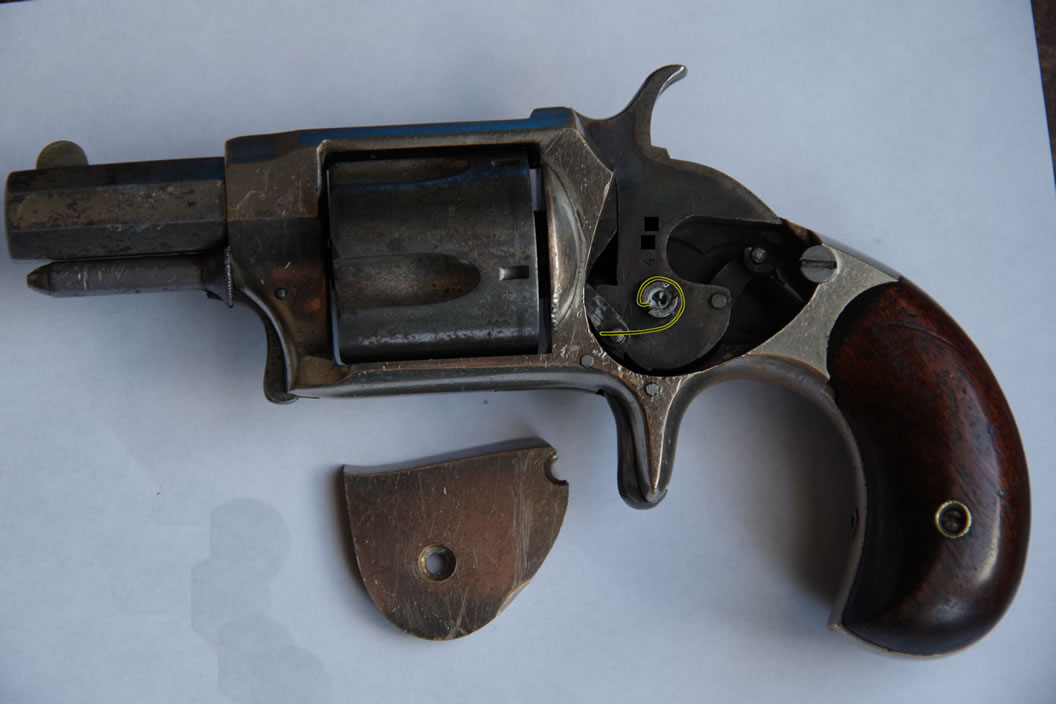
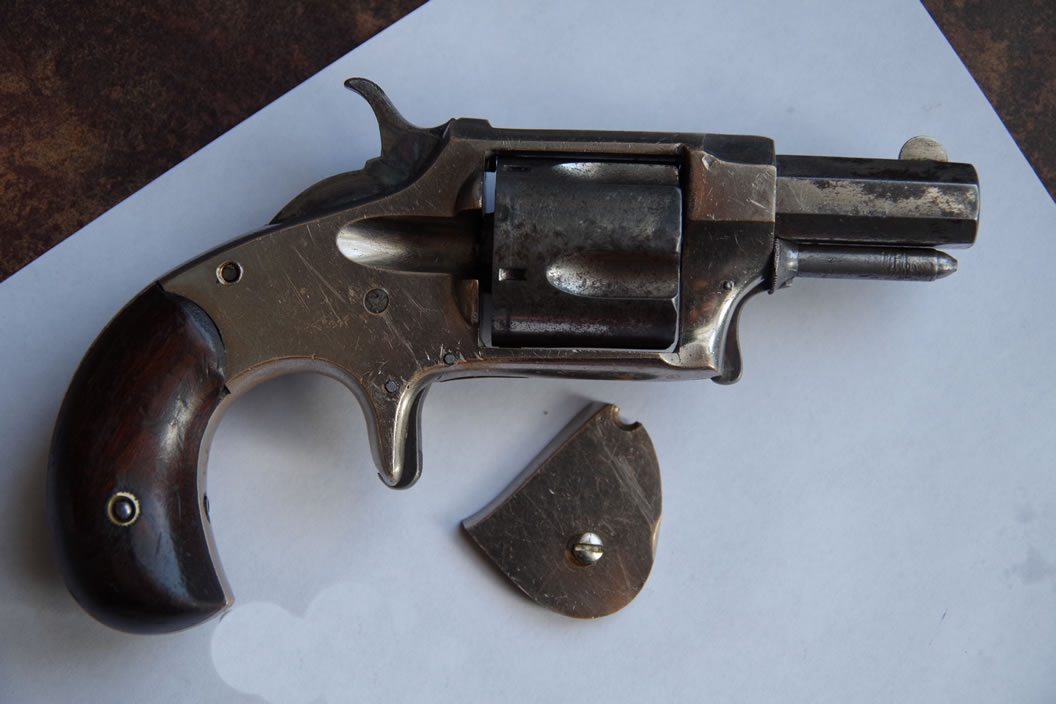
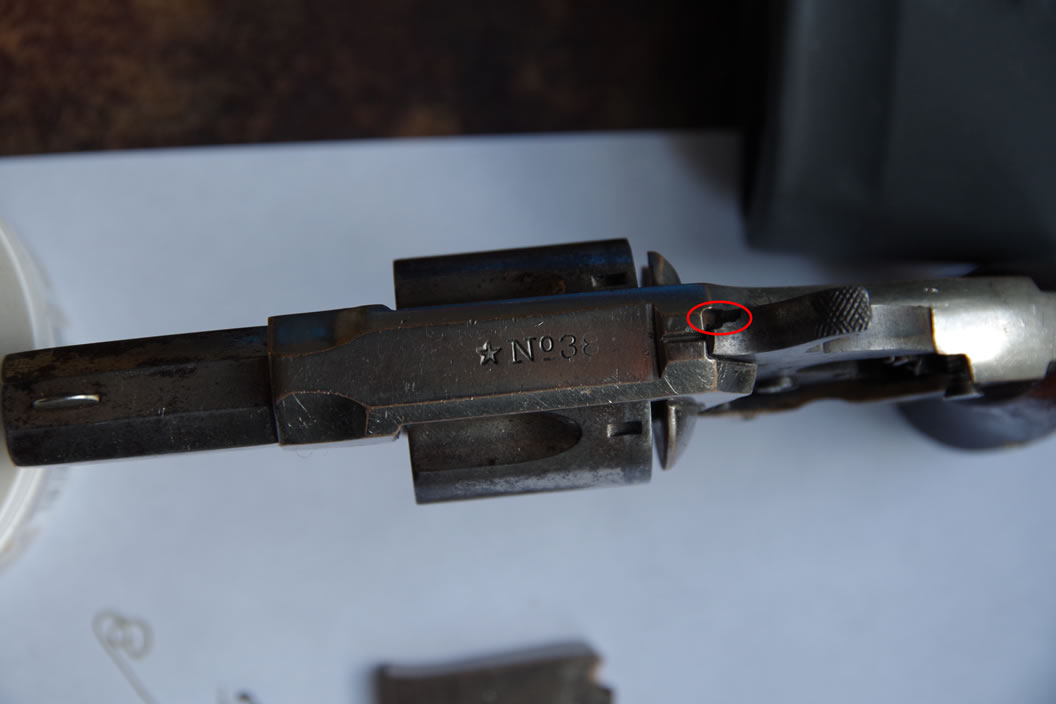
broken spring -- Identifying .38rf spur revolver. 2 inch barrel.

Status
Not open for further replies.

Kid

BANNED
BANNED
BANNED
Rating - 0%
0   0   0
It was getting loose, I tried to re-quench it by bringing it to red hot with an alcohol flame, then dropping it in ice water, then reheating until before it became red and air cooling. It worked, however, it was too soft after a 20 rounds of shooting. I tried again, but tried flexing it with my fingers before the final reheating, and it snapped.

In hindsight, it was not a good idea to try flexing it.

Any idea where I would get a replacement? Is this size of spring standard on any modern revolver?

Is there a name for this spring?

I'd try to make a new one, but I don't have high carbon spring steel on hand.:p

Image:
SPRING.jpg
 
Last edited:
For one thing your spring making method is wrong - it's the same theory but a lot more fiddly and exact than what you're doing. There are lots of resources through google on forging and annealing/hardening/tempering springs.

Secondly, if you provide info on the make/model of the gun as well as pictures of the spring and internals as clearly as possible it will help a lot.
 
I don't know the make of the gun. All that is labelled is the caliber. I'd like to know the make so I can get an FRT/letter.

Anyway, since I posted this thread, I have used a steel safety pin to create a new spring.

It isn't as "springy" as I need it to be, though, so I'm still working on the annealing/hardening/tempering. I'm aware that there is more to it than what I am doing - I don't have the ability to do exact temperatures, so it's trial and error.

I've got a couple other questions, and maybe someone will recognize the model, so I'll post pictures.

Give me a few minutes... by the way, thanks for the quick and helpful responses!
 
I may have killed the original spring not just by improper procedure, but I may have accidentally used the wrong zippo. One zippo has lighter fluid, the other has alcohol. It's possible that I mixed them up. In times like this, I wish I hadn't lost my alcohol lamp.

Regardless, pictures.
crack1.jpg

crack2.jpg

crack3.jpg

left_side.jpg

right_side.jpg

top.jpg


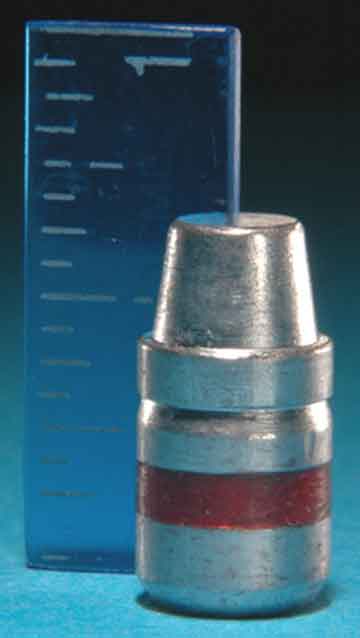
It's a brass frame spur trigger .38 rimfire. I've been shooting .376 lead bullets through it, reduced in size slightly (http://www.hc-collection.com/PBSCCatalog.asp?ActionID=67174912&PBCATID=1139537&PBCATName=38%20rimfire%20%20%20%2038RF), but that has put strain on the gun, since I now know that it was most likely intended to be shot with lead in the range of .357-.360. The brass from HC collection cracks after about 4 uses (it's thin and there is no rim where it cracks, but probably overpressure) and there is some frame cracking that may or may not have existed before I got the gun.

There is a serial number (4XX) on the underside of the octagonal barrel (hidden), on the top (hidden) of the pin that holds the cylinder on, on the front of the cylinder (4 X X between chambers), on the hammer (pictured), on the frame under the wood (hidden), and on the underside of the wood itself (hidden).

Please convey your opinions on this shooter of mine... who makes it, what it is worth considering the issues. The previous owner speculated that it may be Belgian.

Issues:
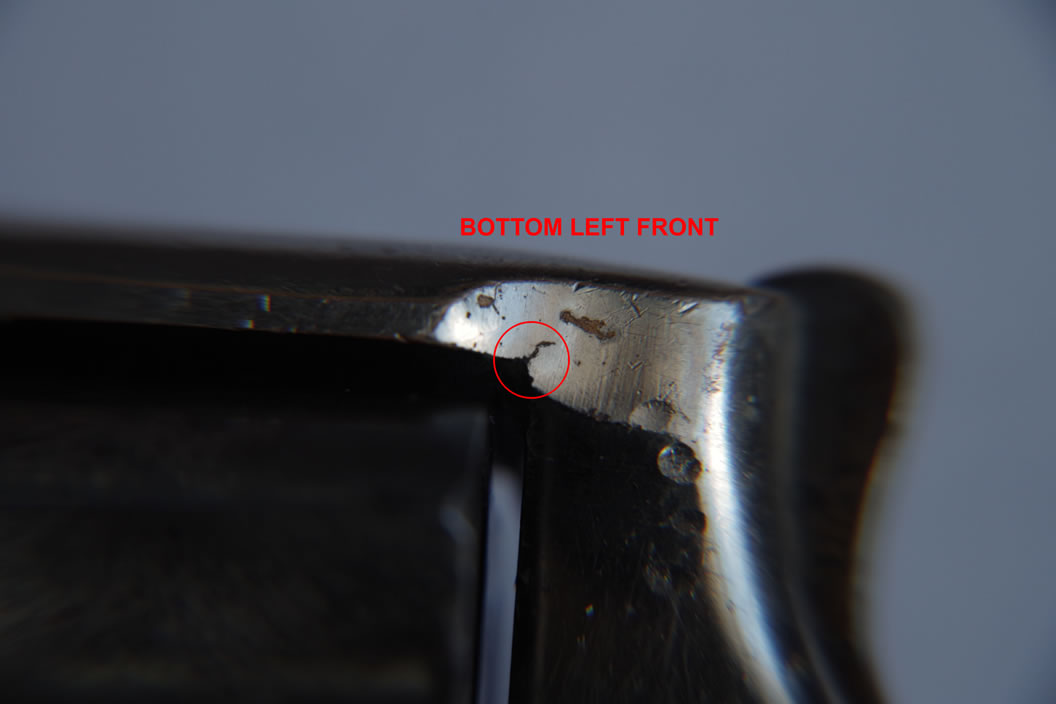
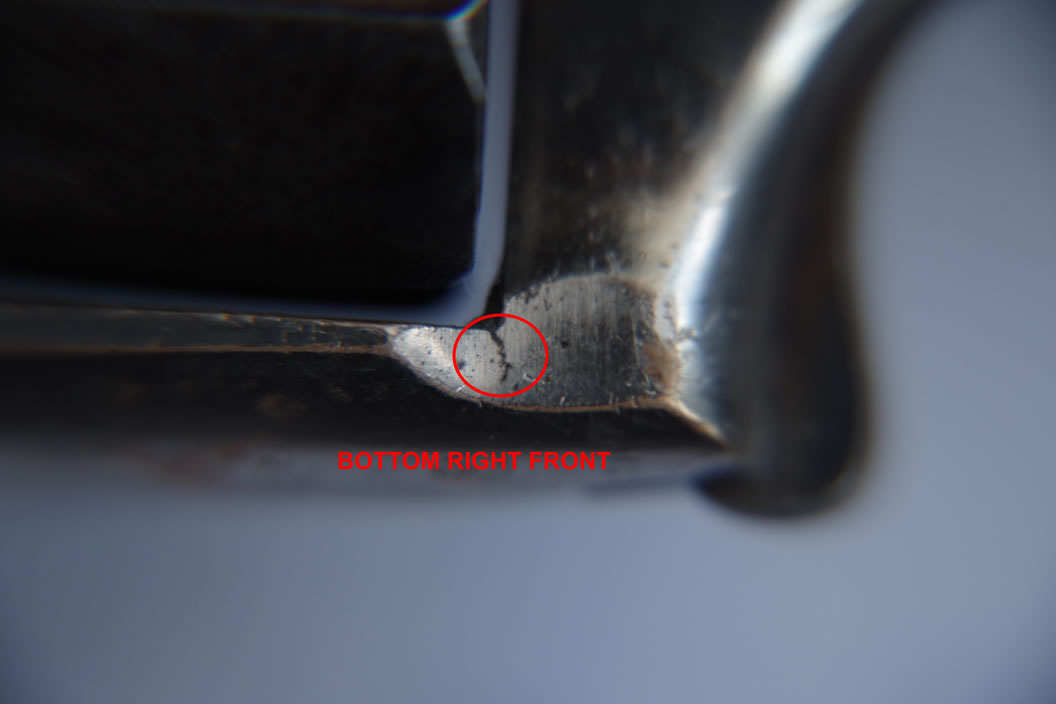
- 3 frame cracks, strengthened with epoxy (have shot 50 rounds through with no further cracking)
- hammer chunk missing (likely from dry firing... the hammer spring was adjusted waaaay too tight)
- minor cracking on the bend of the handle (likely very old, reinforced with epoxy on the inside of the frame. not pictured)
- the threads on holding the side plate on are shot (re-tapped with epoxy... plumbers tape protecting the screw from the epoxy).
- (new) broken spring
 
Thoughts on the cracking? Is it fatal? Are my oversized bullets definitely the cause?

I find it strange that it cracked at the front on the bottom, and not the top. I figure that means either the top has stretched, to allow the bottom to crack the way it did, or it's an old crack resulting from a manufacturing defect.
edit: I don't have calipers, but the top of the frame appears to be up to 0.3mm longer than the bottom. With that said, my measurements vary between 0.0 and 0.3mm difference, with most attempts being 0. (Wooden ruler)

On the spring note, I successfully got the spring I made to function the way I wanted it to. It now functions better than the original. Time will tell whether it stands up to repeated use.

Also, I'm putting in an order for .358 bullets.... I'm really upset about the possibility that I could have caused that cracking though.
http://www.thebulletbarn.com/pricelist-p.html
38 SWC BB - 158 gr. - .358
11-38-SWC-BB-158gr-lg.jpg

These lead alloy bullets... is there any concern about the increased hardness in antique guns? Or is it negligible?
 
Last edited:
don't know what to say ,never put epoxy on stress cracks on a revolver frame before .I wouldn't consider epoxy a repair and would relegate the old hand gun to an inert state and use it for a wall hanger .Then find a good example to shoot ,but the choice is yours on what you would like to do

Cheers Peter
 
Did you slug the barrel before you decided to shoot it?

I can't see your pictures but from your description of cracks in the frame it sounds like it is unsafe to fire.
 
Heyo - try switching to imgur for uploading your photos. I tried rehosting them for you to get them to work but half of them just won't work regardless.... I think your host is set up to avoid embedding images elsewhere to save on bandwidth.

Basically it could be the plating peeling if that's what I'm seeing, but I doubt it. Cracks look right for frame stress too. Fast way to get an idea would be dye testing - easy to do. Magnafluxing won't work if it's a brass frame. I can't speak to the benefits or weaknesses of working on a brass frame as I've never worked with brass on frames before.

Expoxy won't do anything for the cracks unfortunately. Even very low pressure guns and very strong malleable epoxies like JB weld would need to be gobbed on to make any difference in my opinion.

If there are no markings on the gun then you're pretty much SOL on getting an FRT letter unless you research and find exact manufacture dates for an identical gun and can prove yours is that. The CFC follows the route of requiring absolute proof of an antiques pre-1898 manufacture and won't take indirect evidence like following model dates etc.

So all this pans out to be pretty negative. There are a lot more knowledgeable board members on here so hopefully one will be along shortly to explain why I'm wrong.

On the plus side, if your spring works, then it's a good solution.
 
Can't see your images.
If there are frame cracks, the pistol should never be fired. Period. Epoxy is a waste of time.
 
I wear ballistic googles and dear skin gloves when firing. I'm careful where I keep my fingers. If I lost the front of the frame or the top of the cylinder, I expect that I would come out of it with minor injuries. I plan to shoot it until it dies, although that's not the ideal situation. Ideally, once I get some new bullets, I'd like to be able to do away with the gloves.

As for slugging the barrel... No, I have not. I purchased some bullets from HC Collection (108gr, weighed them yesterday) .376 diameter, and I received about a dozen bullets (130gr) and balls that came with the gun. The balls/bullets that came with the gun are noticeably smaller - they fit inside my brass, whereas my .376 essentially sit on top (can't think of the term for this off the top of my head). That, mixed with some research, led me to believe I'm firing bullets not intended for this bore size. Neither size of bullet would move freely through the barrel without engaging the rifling.
*Something to note, when firing the smaller diameter, assumed to be .357-.360, it takes a smaller powder charge, due to the bullet taking up more space in the brass, and at the same time, I find find grains of unburned black powder on the muzzle after firing.

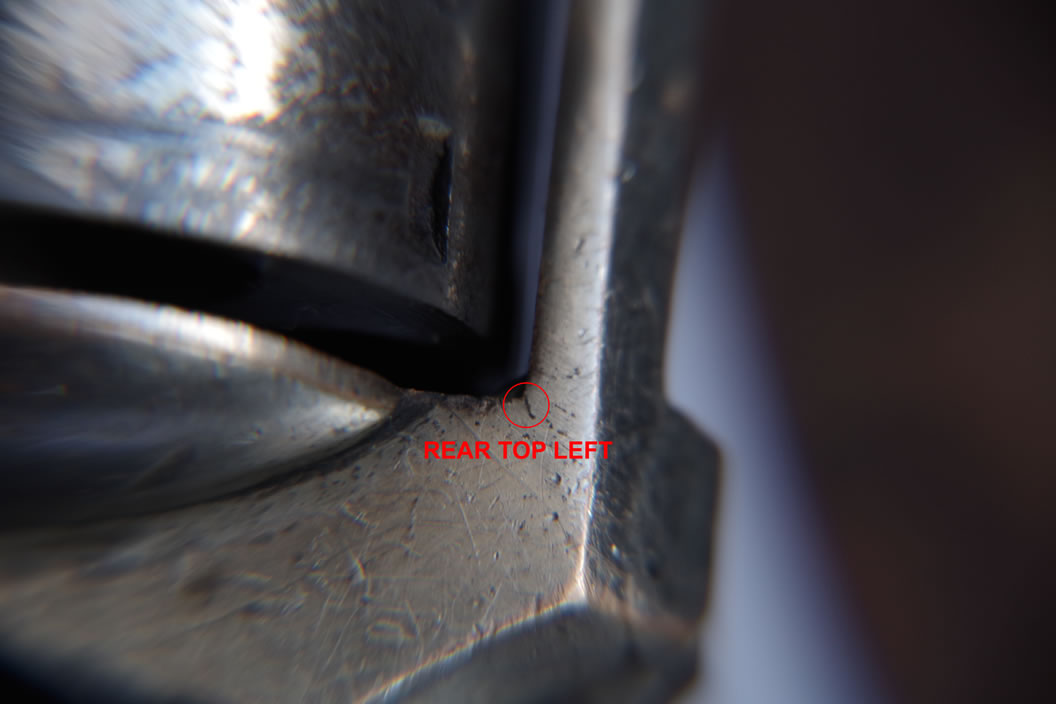
As for plating pealing vs cracks... I'd like that to be the case. On the top rear of the receiver, that one may be just plating pealing, but on the bottom at the front, I think it's most likely a true crack in the frame. It appears to go about 1/3 of the way through the brass.

DPgTlnb.jpg

FhlZmjU.jpg

k8a1JhE.jpg

C3AZBNn.jpg

cluz8Iy.jpg

1fKMzib.jpg


As for whether it is safe to shoot or not... my assumption on this is that the top of the receiver is the most important. If it starts cracking at the front on the top or more on the top at the back, then that concern me more significantly. The epoxy is not expected to fix the gun, in any sense. It's just intended be a temporary fix to distribute the stress over a larger area and prevent the crack from further expanding. (I know, I know... epoxy on an antique gun... the horror)

It's a fun gun, although it can't hit much or do much damage. It seems to be a lot more accurate at 50 meters than 5-10 meters.

Also... dye test?
I'm assuming that means adding dye to the inside of the receiver, to see if it appears on the edge in the crack? I can't really do that now, since the epoxy I applied would interfere with the die entering the potentially cracked area of the frame.

 
Last edited:
"If there are no markings on the gun then you're pretty much SOL on getting an FRT letter unless you research and find exact manufacture dates for an identical gun and can prove yours is that. The CFC follows the route of requiring absolute proof of an antiques pre-1898 manufacture and won't take indirect evidence like following model dates etc."

So how exactly do they treat the gun if they find it? I love the guilty until proven innocent aspect of this whole charade. They should be carbon dating my frame before they confiscate it.

I hope some CFO comes along when I'm out shooting some day and slaps me with a charge of unauthorized possession of a prohibited firearm. I'd be royally pissed off if it got confiscated and I didn't get charged.
 
In all probability it is antique. That flange on the cylinder pin is unusual. Might help identify maker.
 
That is a Whitneyville or affiliated production revolver, 100% antique status, model: Star Number 38.

I owned one almost identical. That frame I believe is solid brass, at least mine was and would explain those stress cracks. Someone ran some hot loads through it at one point. Check the back of the frame were the cylinder ratchets sit, is there ratchet indents?

It's a shame someone ran it hot like that, those guns are not that common. I don't think I'd trust even running BP through it anymore though, those cracks look like they are just iching to get worse or let go completely.
 
Last edited:
Knew smart cgn'ers would come along! (no sarcasm, I just don't have a clue about the gun specifically).

Anyways, Tyrockell and Tiriaq have put you a long way towards identifying the gun. If you can research it and gather enough info to prove production ended before 1898 you'll be able to get a letter for it. From there, since you want a shooter and this gun is relatively rare, you might try selling it to a collector that has no plans to shoot it but instead wants it to fill a spot in his collection. With that money you can buy a good condition shooter that is less rare. That way you come out of the situation with a good quality shooter, instead of shooting a collector's piece until it's destroyed and you end up with nothing. Just a thought.

Dye testing is basically penetrating dye that is allowed to soak into cracks then a white powder sprayed over to see where it reappears from. You can get cheap kits from automotive stores usually. Yep, the epoxy would have to be removed. A different method is wiping oil onto a piece then scrubbing it clean and hitting it with some heat - if there's a crack the oil will bubble out of the crack, but that's usually for stuff that isn't heat sensitive.

For failure, really it's more complex than the frame letting go at one crack. With brass and stress fracturing the brass gets rapidly more brittle as it passes its yield point and work hardens, so areas that undergo stress aren't just 1/3 weaker from the loss of 1/3 of the material, but rather significantly moreso since the remaining material has stretched and hardened, making it almost incapable of stretching again. In this case, the frame can let go in multiple places for multiple reasons, meaning the entire top strap could bend back towards you before coming loose, or if the stretching continues before letting go you could get a case head separation or blown out base from poor headspacing and blow parts of the case or receiver out the back around the hammer. Just be aware that for all it's a small cartridge it's also very contained, which is important in understanding the forces acting on the gun. Whatever you've got invested in it isn't worth a chunk of metal embedding in your cheek or eyebrow and swinging up underneath or behind your eye... or the superficial damage that could also occur.
 
It just came back in my memory, it's likely whitneyville Armouries affiliate Prescott Pistol Co. of Hatfield.

Again a pretty rare gun, not a whole lot of them produced, made during the 1870's sometime.
 
Last edited:
That is a Whitneyville or affiliated production revolver, 100% antique status, model Star Number 38..................... it's likely whitneyville Armouries affiliate Prescott Pistol Co. of Hatfield.
Looks right - will gather some evidence to get an print out/FRT.

Someone ran some hot loads through it at one point. Check the back of the frame were the cylinder ratchets sit, is there ratchet indents?

Are we talking smokeless powder or just large blackpowder loads? I can fit just 13gr of FFFg black powder in there, using my brass. Using longer ones, you couldn't fit much more.
And can you speculate on bore diameter - .376 or .357-.360? Could the .376 be responsible for those ratchet indents AND the cracking?
Not saying that one or both weren't there when I got it - I just didn't look that closely before I put the first 20 shots through.


you might try selling it to a collector that has no plans to shoot it but instead wants it to fill a spot in his collection. With that money you can buy a good condition shooter that is less rare. That way you come out of the situation with a good quality shooter, instead of shooting a collector's piece until it's destroyed and you end up with nothing. Just a thought.
I paid $650 for it and I likely overpaid. Although an antique letter would help, rarity alone doesn't equal value, especially given the issues. I'm also concerned that buying another short barrel antique (like a BullDog or http://antiquegunscanada.com/Forehand-Wadsworth-DA-38RF-20.htm) will have issues of its own, since most are sold for display rather than shooting, and then I'd be stuck with that. I assume antique guns often have issues often don't get disclosed prior to the sale.

Like I said, it's a cool gun, too! There aren't many revolvers small in .38rf floating around.
 
Looks right - will gather some evidence to get an print out/FRT.


Are we talking smokeless powder or just large blackpowder loads? I can fit just 13gr of FFFg black powder in there, using my brass. Using longer ones, you couldn't fit much more.
And can you speculate on bore diameter - .376 or .357-.360? Could the .376 be responsible for those ratchet indents AND the cracking?
Not saying that one or both weren't there when I got it - I just didn't look that closely before I put the first 20 shots through.


I paid $650 for it and I likely overpaid. Although an antique letter would help, rarity alone doesn't equal value, especially given the issues. I'm also concerned that buying another short barrel antique (like a BullDog or http://antiquegunscanada.com/Forehand-Wadsworth-DA-38RF-20.htm) will have issues of its own, since most are sold for display rather than shooting, and then I'd be stuck with that. I assume antique guns often have issues often don't get disclosed prior to the sale.

Like I said, it's a cool gun, too! There aren't many revolvers small in .38rf floating around.


By hot loads I mean someone ran smokeless reloads through it, probably with hilti caps as the primer and charge in one. The rachet indents would be from the stiff loads as well, the abrupt pressure curve slamming the cylinder into the back of the frame.

I don't figure you did those cracks when you fired it if you just ran BP through it unless the frame was already stressed from previous abuse and you just happened to make it appear.

$650 was a bit high for the gun considering the issues but don't let it discourage you. There are many nice shooters to be had in excellent condition and you will be paying around the same price if not a little less or more.

All of my guns function like new with no mechanical issues, you just gotta keep your eyes peeled and ask lots of questions. As for that Forehand and Wadsworth .38Rimfire he has on that site, I doubt it's still available.

Those F&W's are excellent guns, they are well built and are getting hard to find now. They are nice because even if the timing is out slightly, they will tend to correct themselves upon pulling the trigger.

The most common issue with them is sometimes the single action #### notch will get worn or snap off but I have only came across 1 like that and I have owned about a dozen of them.

If you have any questions about antique guns feel free to PM me I will try to help you out. I'm by no means an expert but do have an avid fascination with the rimfire pistols.
 
Last edited:
Status
Not open for further replies.
Back
Top Bottom