Canadian 1911s?

Pistols during the Great War generally were an Officer's personal property. Quite a number bought them, generally in the approved .455 Webley Automatic cartridge, also termed the .455 Eley Automatic.

Canadian Gummint also bought some 1911s in .455. I believe the RCN had some of these and I know that some were used in the RNAS.

Of course, the tiny 1918 NAA production run was for the US Gummint and all were .45ACP.

Hope this helps.
.
 
Actually, the Canadian government pistols were all in .45 ACP, not .455. 5000 commercial-production 1911s purchased in 1914 to arm the first contingent of the CEF before the switch to the Smith & Wesson Mk.II Hand Ejector .455 in 1915. Then in 1943 a further 4000 Colt-produced USGI M1911A1s, mainly to arm paratroopers and troops fighting in Italy (had to be supplied by US logistics).

Also, I may be wrong on this, but I'm fairly sure all the .455 1911s were produced directly for the British government, and they were never available commercially in that caliber and therefore would never have been purchased by Canadian officers.

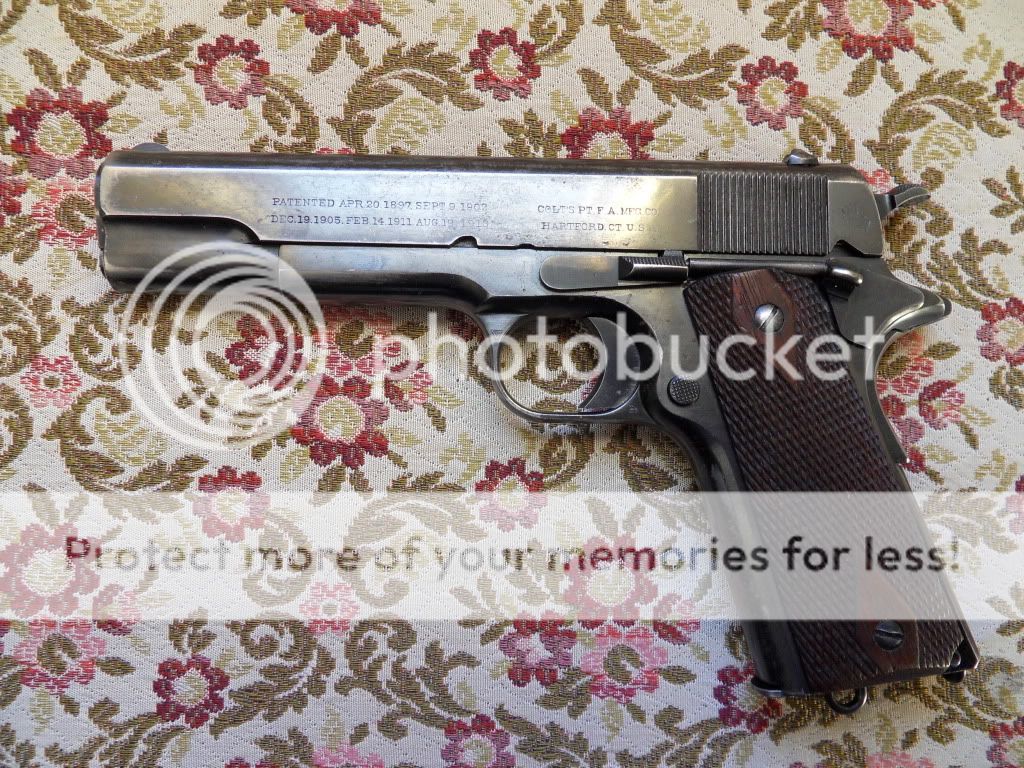
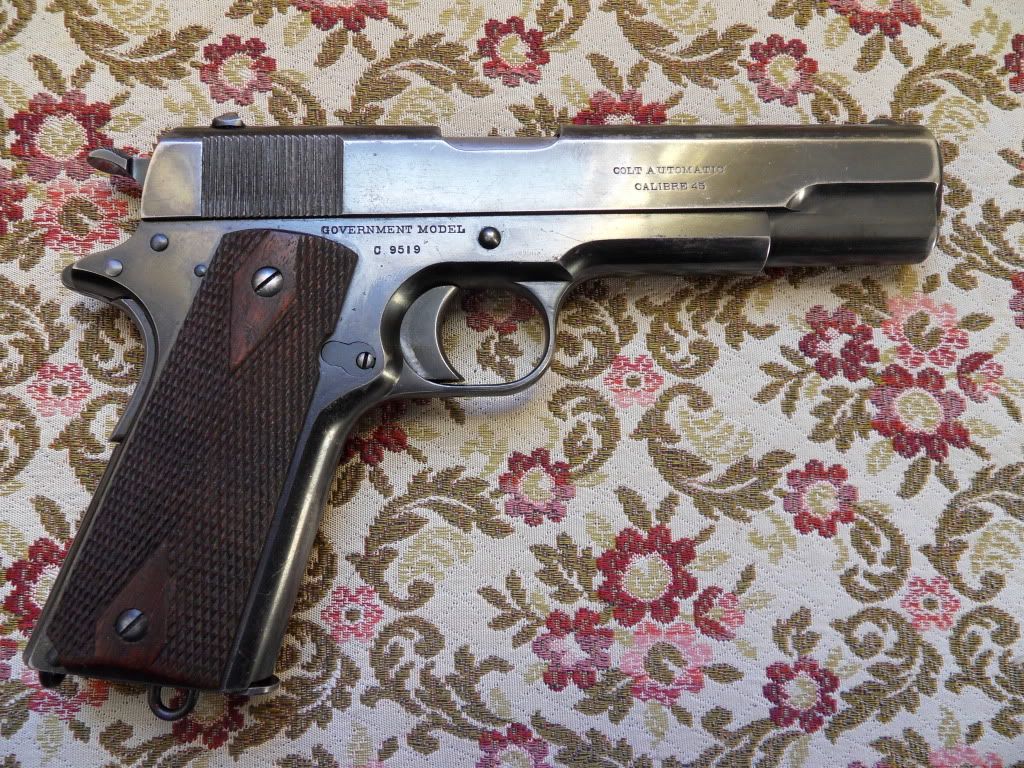
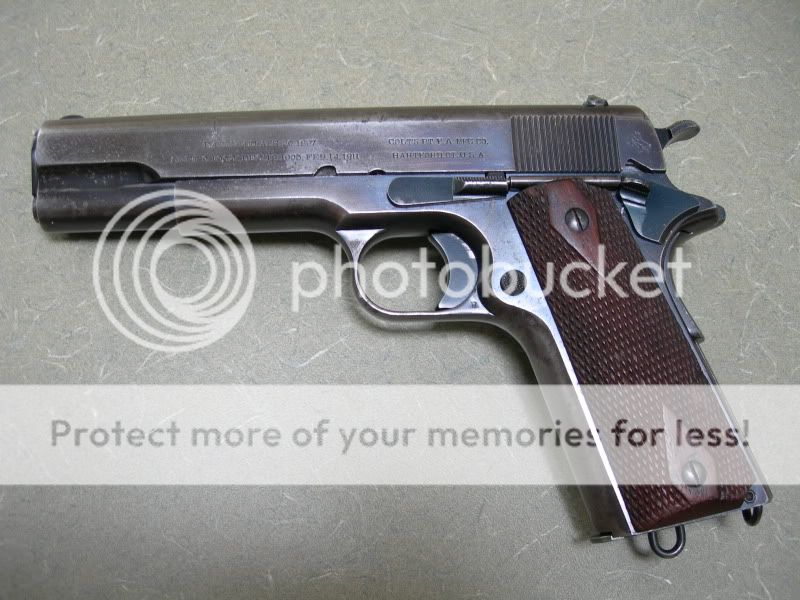
SDC10517.jpg

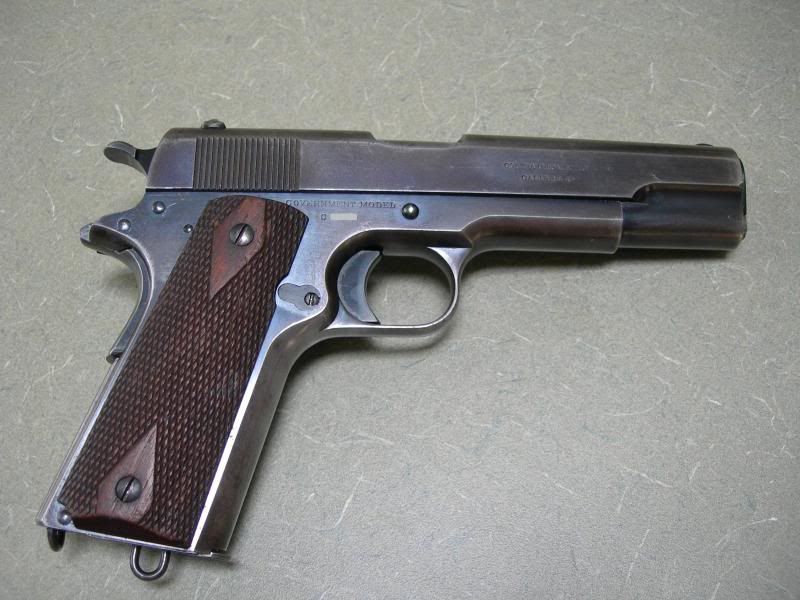
SDC10516.jpg

My Canadian contract range 1911 in .45.

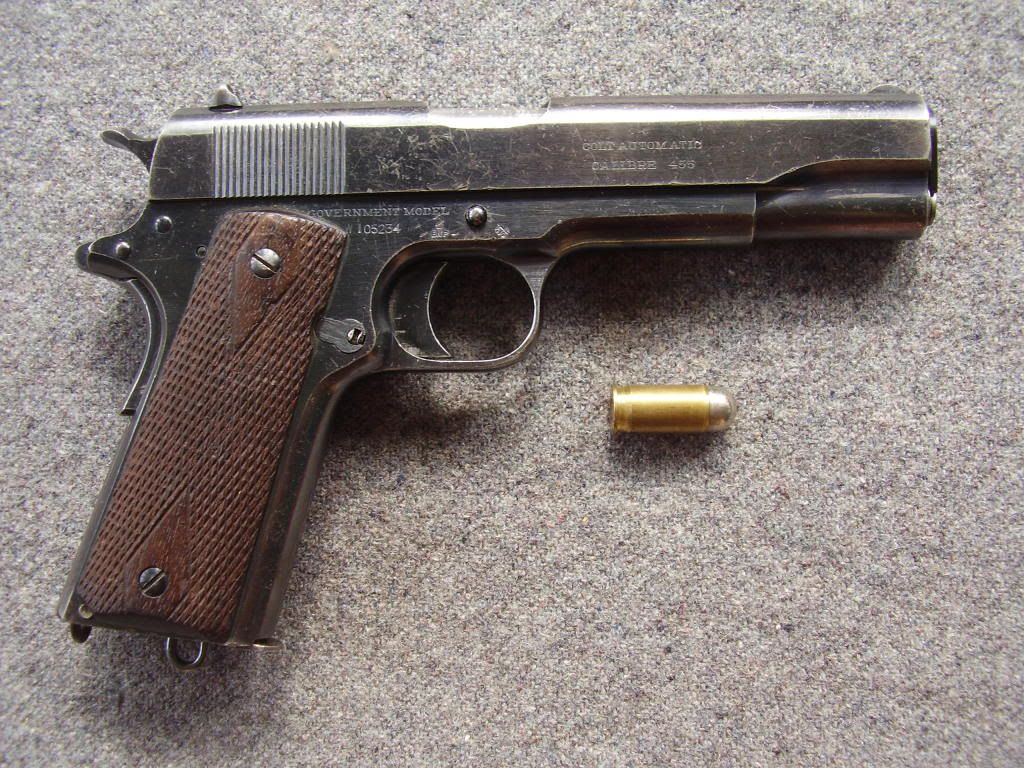
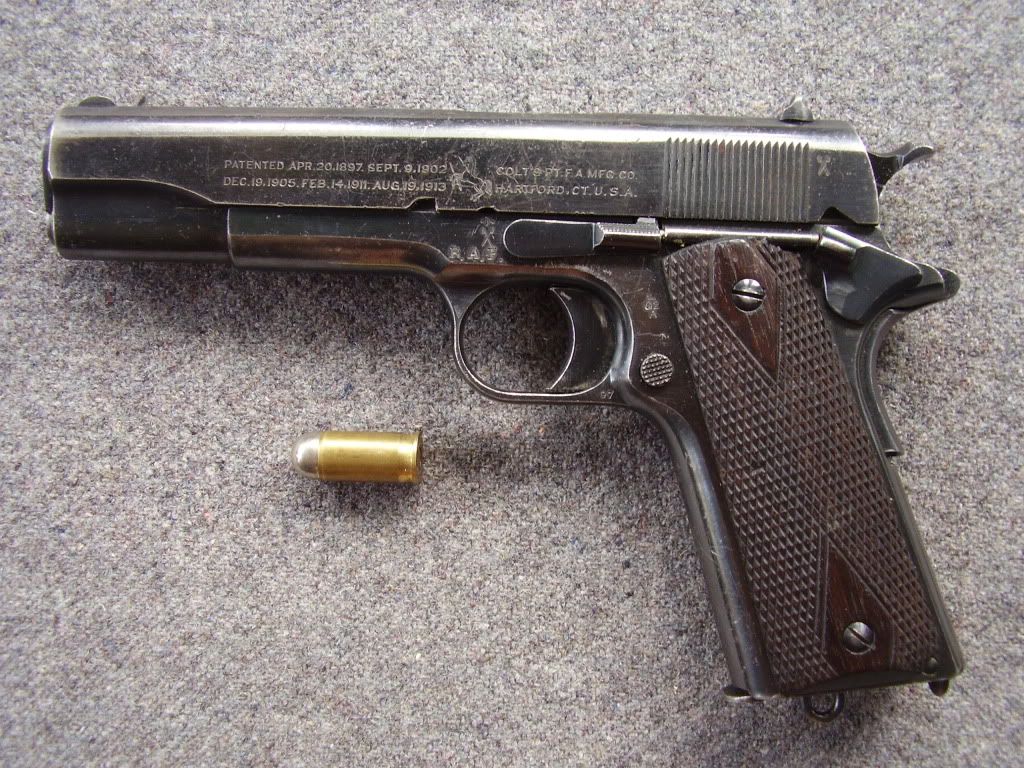
P7110763.jpg

P7110761.jpg

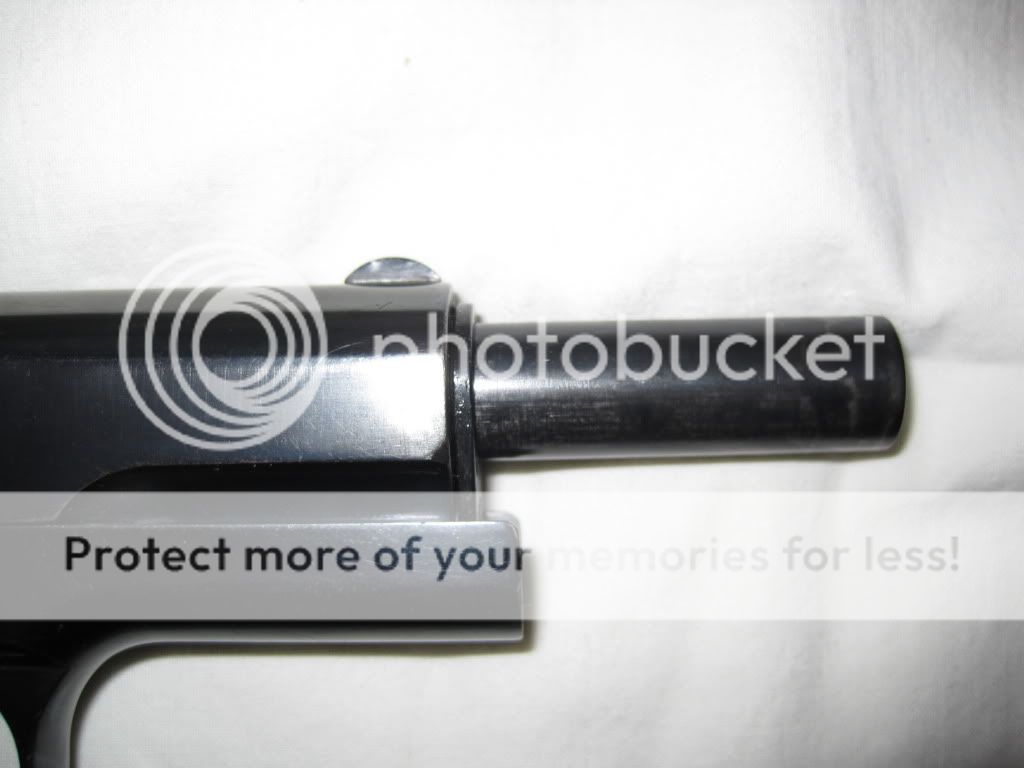
My RAF-contract .455 1911.
 
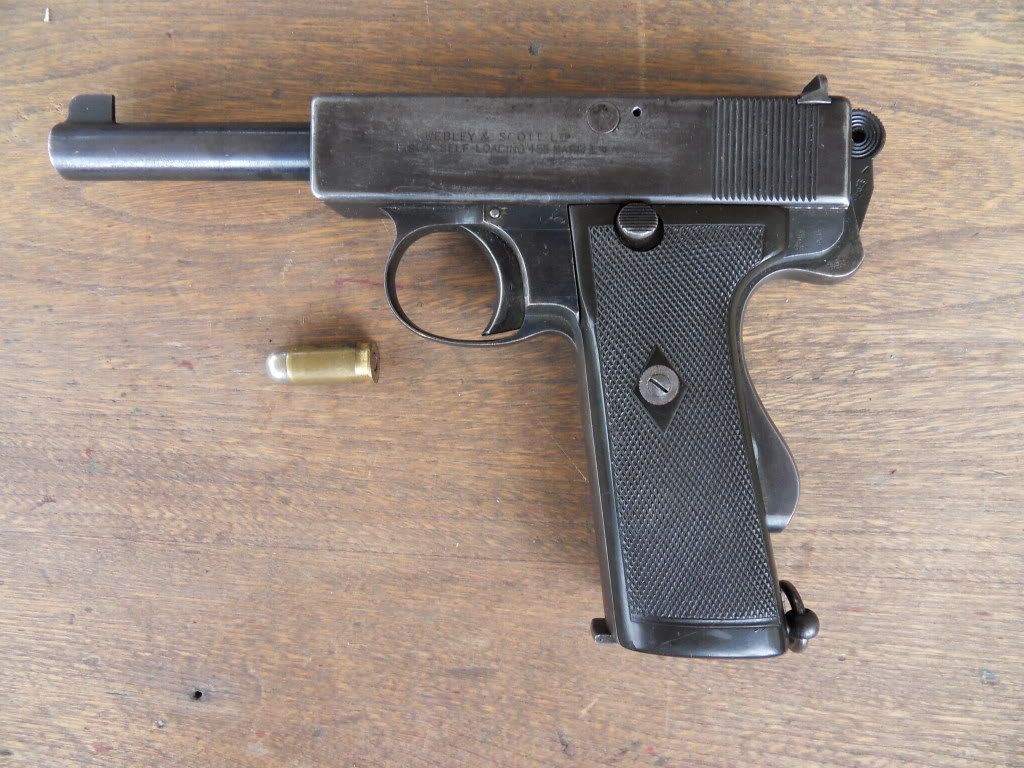
You sure we're not confusing it with this ? US didn't get into the war till 1918 and it's hard to believe 1911's would have been widespread enough to show up in British and Canadian forces before then.

http://cosmolineandrust.########.com/2006/11/webley-scott-pistol-self-loading-455.html


Grizz
 
Nope, not at all, Grizz!

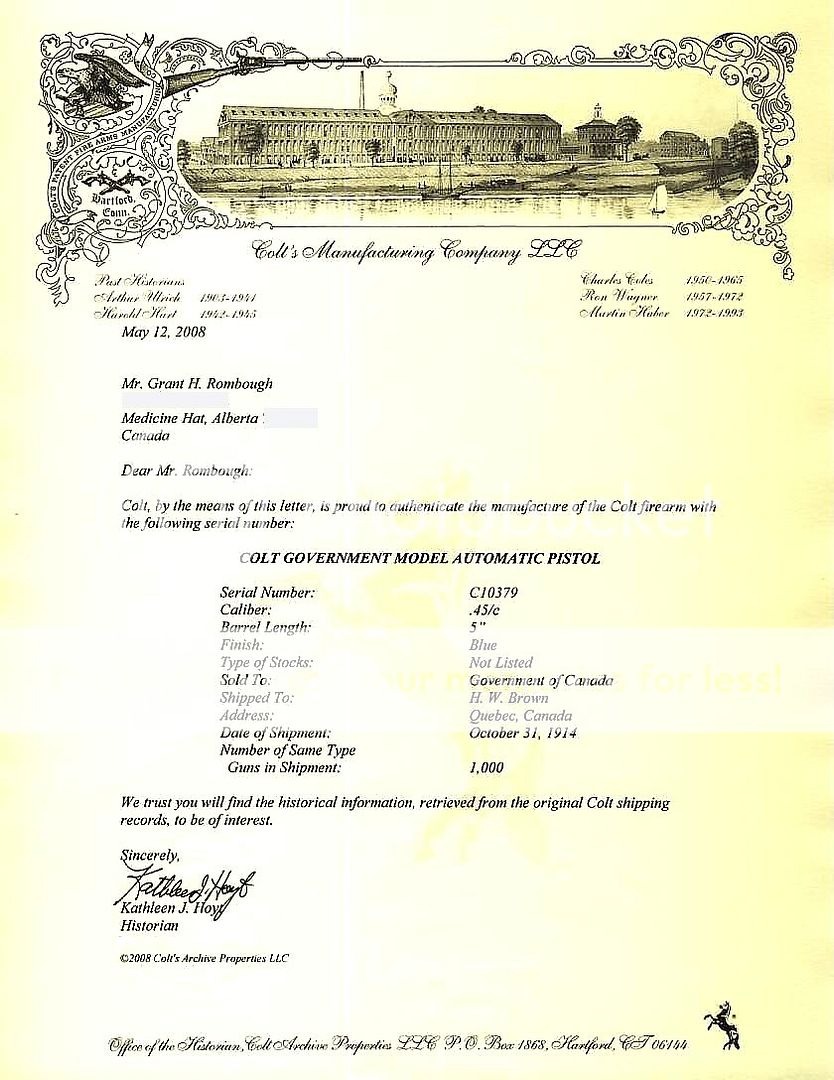
As stated, the Canadian Government purchased 5,000 Colt Government Model pistols in 1914, chambered in .45ACP. (That is the correct name for them by the way - "Model 1911" is the US military designation for this design as acquired and used by them. When you get a provenance letter from Colt for a commercial production pistol - i.e. not made for the U.S. Government - they are very careful not to call it a Model 1911. However, everyone does seem to want to call it the '1911', anyway .....)

The majority of the Canadian pistols were re-sold to officers, so they don't have Canadian Government marlins usually.

Britain purchased approximately 17,500 Colt Government Model pistols (from 1915 through 1917, which is the year the United States actually entered the war .... after which they couldn't keep up with their own needs.) The British-purchase pistols were chambered in .455 Webley Auto (already adopted by Britain as an official service cartridge in 1912, in case you are wondering why they too didn't go with .45ACP.)

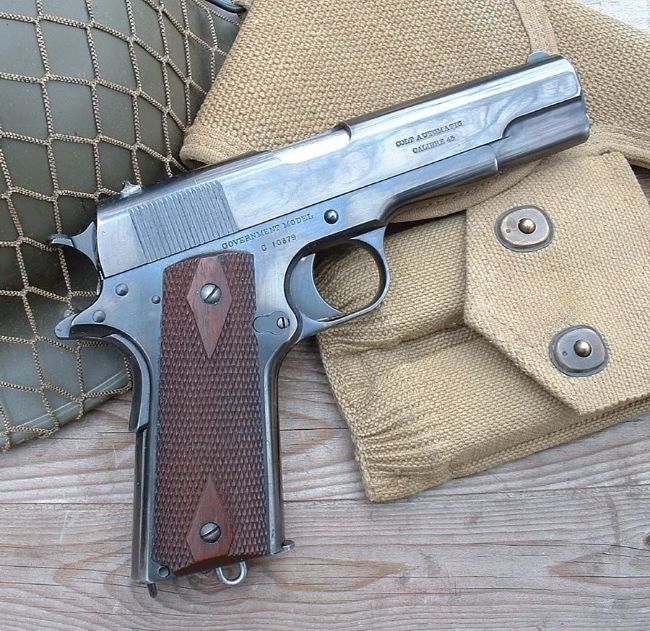
This is my Canadian Purchase Colt Government Model pistol, and Colt letter -

colt02e.jpg


M1911FactoryLetter2.jpg
 
Mr Rombaugh - that is the most beautiful Colt Model 1911 that I have ever seen in my life.

Better even than my long-lost Singer.

Are you older than I am? If so, I'll PM you with my address in Oregon.

Best wishes

tac
 
Grant i have been searching for a 1911 WW1 or WW2 for 2 years and still have not had any luck. That is the nicest 1911 military pistol i have ever seen and a real treasure for sure.

Once this has some questions answered, it'll be for sale.

http://www.canadiangunnutz.com/forum/showthread.php?t=706738
 
Gentlemen:

Thank you for the kind words ..... I am very cognizant of my great good fortune in having the custodianship of this pistol.

It is in very remarkable original condition .... the apparent streaks or "mottling" on the slide are in fact the reflection of tree branches! (The photograph was taken outside on a 'cloudy-bright' late fall day.)

The pistol was purchased from the Canadian Government by Major William Arthur Mitchell, who served in the Canadian Expeditionary Force as a Company commander in the Army Service Corps ..... assigned to the Divisional Train of the Canadian 2nd Division. (In my researches, I have learned that the term "Train" in this context denotes the use of horse-drawn transport, whereas if the unit had motorized transport it would have been referred to as a "Park" ....) Major Mitchell, whose civilian occupation was listed as "Hardware Merchant", volunteered for service with the C.E.F. in April of 1915 and served at the Front, but was invalided home due to ill health in November of 1917, at the age of 48.

In 1943, newly-commissioned Canadian Lieutenant Ken B. Knox (who had just volunteered for service following graduation from university) made up his mind that he did not want to be stuck with one of the standard issue .38 revolvers, which had already gained a reputation for being underpowered. Learning that Maj. Mitchell (a friend of his fiancée's parents) still had this Colt .45 Government Model, he arranged to purchase it and Major Mitchell's original leather holster .... as officers were still permitted (although no longer required) to provide their own handgun. Lieutenant Knox spent considerable time in training (being trained both for infantry command and then artillery), and was finally sent to England, but never went into combat. Rather, he ended up being transferred back home to the Canadian 6th Division, which had served in a Home Defence role but was then in the process of reorganization and training for anticipated service in the Pacific Theater once hostilities ended in Europe (the latter being Canada's primary Allied role.) As you likely know, it was expected that hostilities with Japan could last at least a year or two beyond the defeat of Germany, but subsequent events "cut things short".

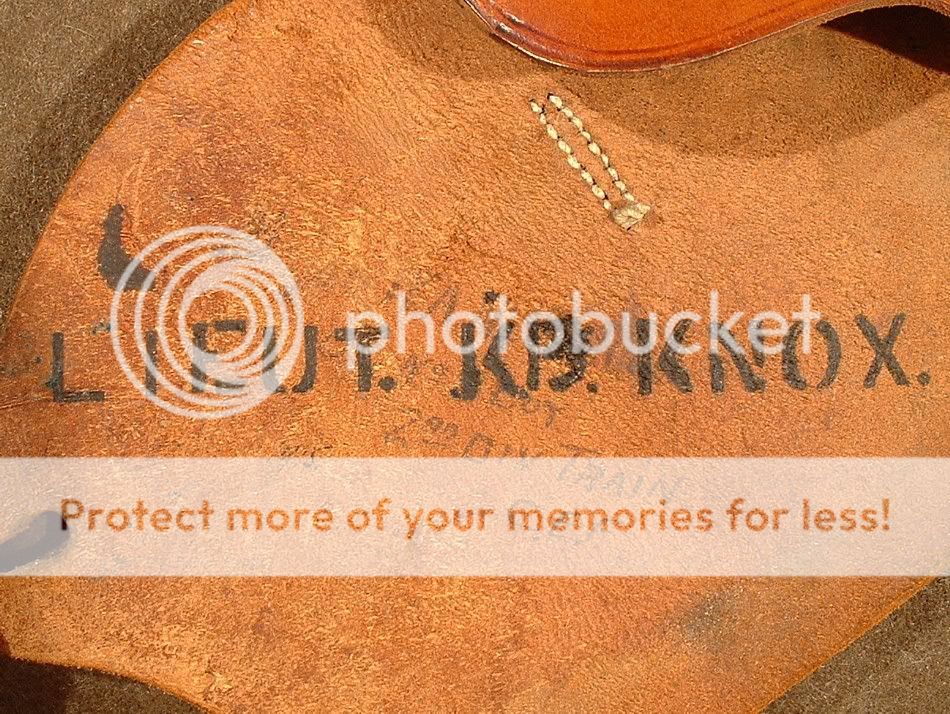
I acquired the pistol (and original leather holster) from Mr.Knox a few years ago. Here is a photo of the markings on the underside of the flap - the original pencil marking, partially obscured by the stencil of Lt. Knox's name, reads:
MAJ. W.A. MITCHELL
OC No. 5 COY.
2nd DIV TRAIN
C.E.F.
holster4a.jpg

Note, also, the date "1915' lightly marked in ink off to the left at the same level as "C.E.F."

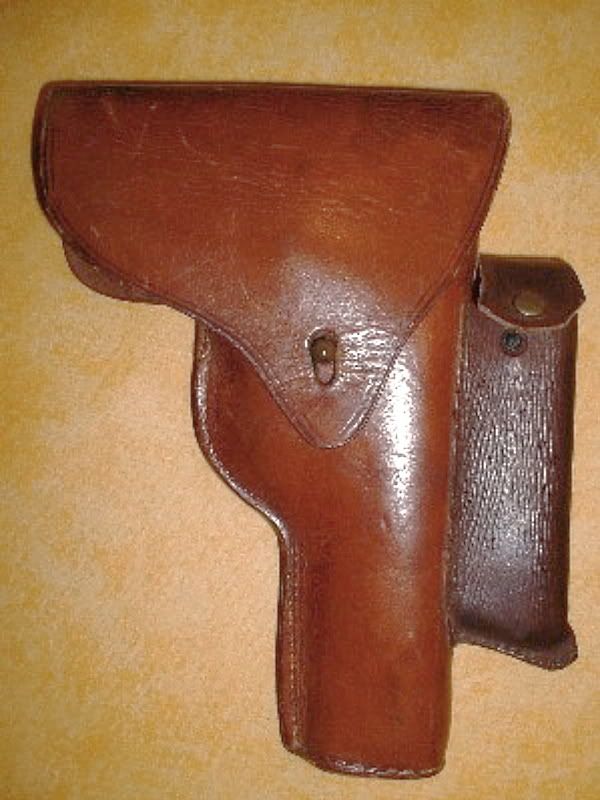
The holster also demonstrates this history in another way. Wanting a convenient means of carrying a spare magazine, Ken Knox had a shoemaker sew one - made of significantly different leather - onto the leading edge of the holster. Needless to say, that modification will remain in place!

1911hlst.jpg


I used this holster as the pattern to make one for a period-style rig for historical shooting (e.g. "Wild bunch" matches in Cowboy Action Shooting, and the like. Believe it or not, i actually shot this pistol in two such matches before acquiring a modern clone!) The belt is patterned on the uniquely Canadian 1898 Oliver Pattern Equipment, which was still in use at the beginning of WWI -


wildbunchrig_med-1.jpg
 
Once this has some questions answered, it'll be for sale.

http://www.canadiangunnutz.com/forum/showthread.php?t=706738

Lister:

Having looked at the photographs on the above thread, I regret to say that I agree with those who indicate they feel this pistol has been refinished. The reason I am of that view is that, to the best of my knowledge, all commercial production Colt pistols at that time, if they were standard blued configuration (as were all of the 5,000 purchased by Canada in 1914,) had the highly polished finish and the very rich "carbonia bluing" evident on my pistol, neither of which unfortunately seem evident in the photos of your relative's pistol .... :(
 
You sure we're not confusing it with this ? US didn't get into the war till 1918 and it's hard to believe 1911's would have been widespread enough to show up in British and Canadian forces before then.

http://cosmolineandrust.########.com/2006/11/webley-scott-pistol-self-loading-455.html


Grizz

Nope. Got one of those too though.

SDC10343.jpg


Beautiful pistol as always Grant. And very nice work on the holster, I'd have sworn it was original!
 
Many thanks, Grant.
So in your opinion, the lack of 'carbonia' couldn't be due to age/wear?

Regretfully, no. When the original carbonia blue - which, while gorgeous, is not the most durable of finishes - ages and wears, it ends up looking like the example posted by NAA on your other thread. Assuming he won't mind, I am adding the same photos here .... note the wear on the "corners", and other areas where the bluing just appears a bit "thin":


DSCN1044-1.jpg


DSCN1045a.jpg


In my view, the finish on your relative's pistol is much too dark and "opaque" to be the original carbonia bluing, which is actually quite distinctively "blue" in hue and seems almost "translucent". Also, as someone mentioned in the other thread, it is just too "even" - i.e. the normal wear points are as dark as the rest of the pistol. (Note that on my pistol, nice as it is, there is the start of bluing wear on the "corners" - particularly at the front of the slide and the front "shoulder" of the frame/rail.

Another clear indication of refinishing is the presence of noticeable scouring/buffing marks on the metal .... which are most definitely not present with the original Colt Factory finish on commercial production pistols of that period; they were polished to a "mirror" smoothness. Here is one of the images you posted, to hopefully illustrate what I mean -

colt1.jpg
 
Back
Top Bottom