Gentlemen:
Thank you for the kind words ..... I am very cognizant of my great good fortune in having the custodianship of this pistol.
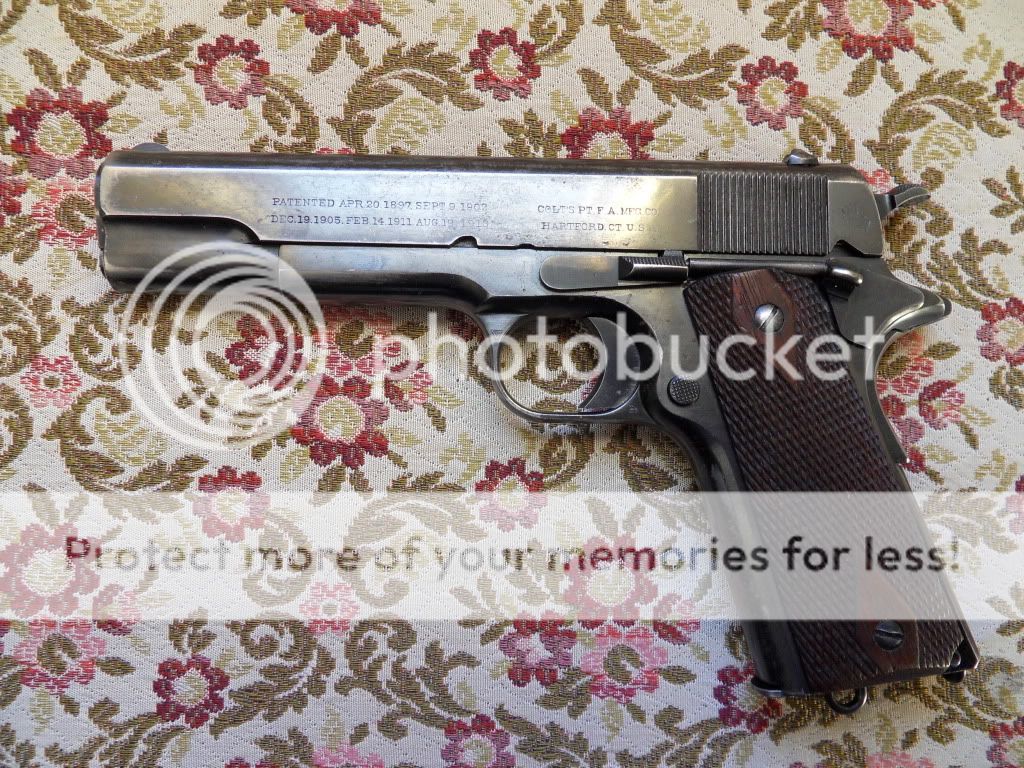
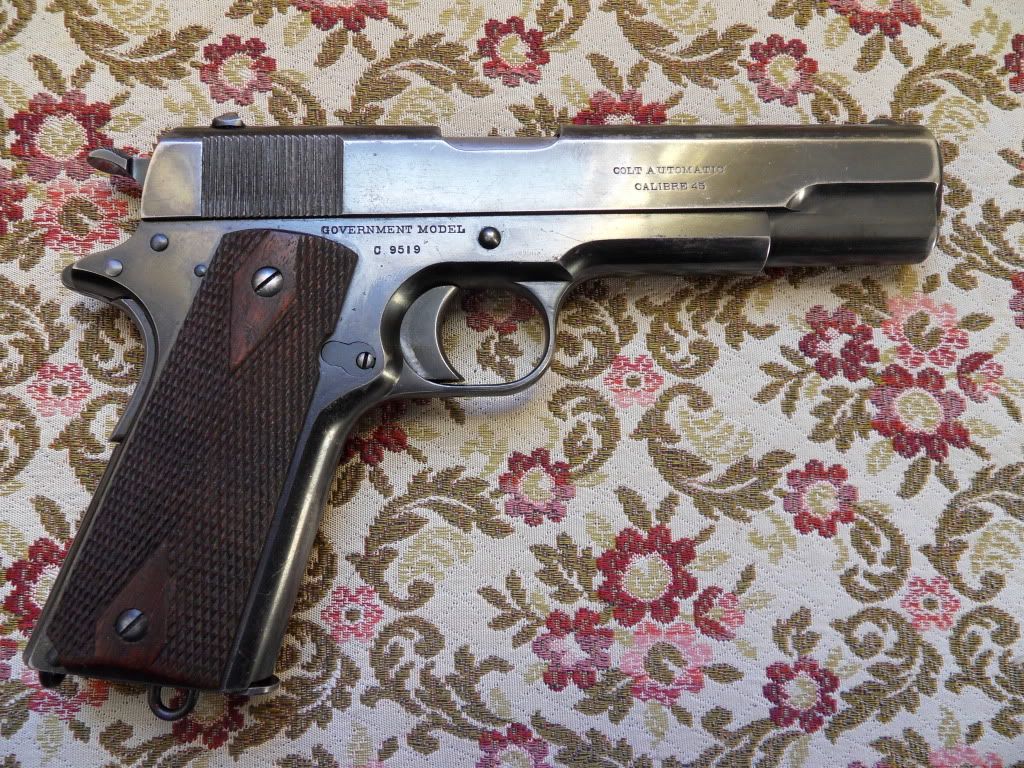
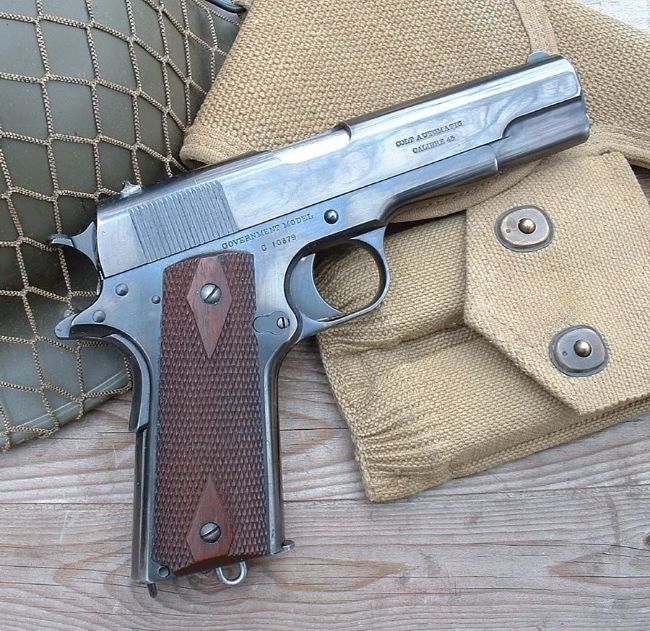
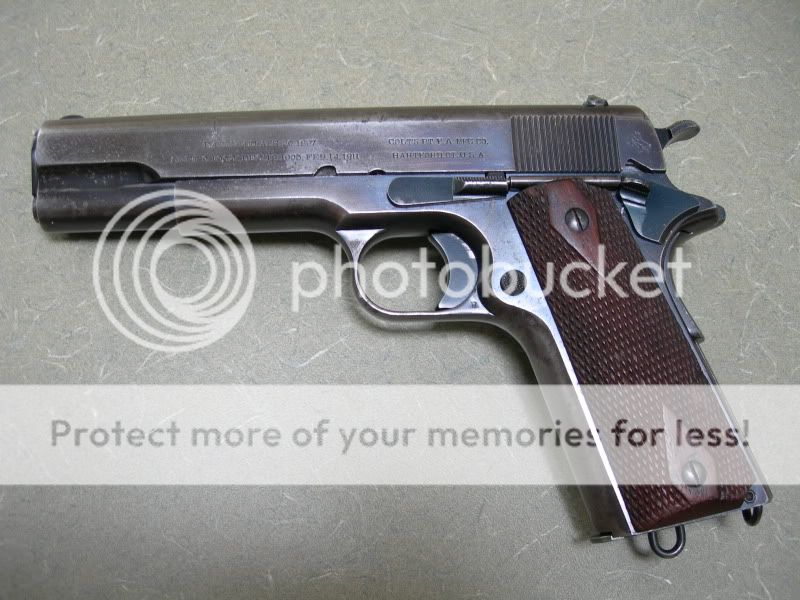
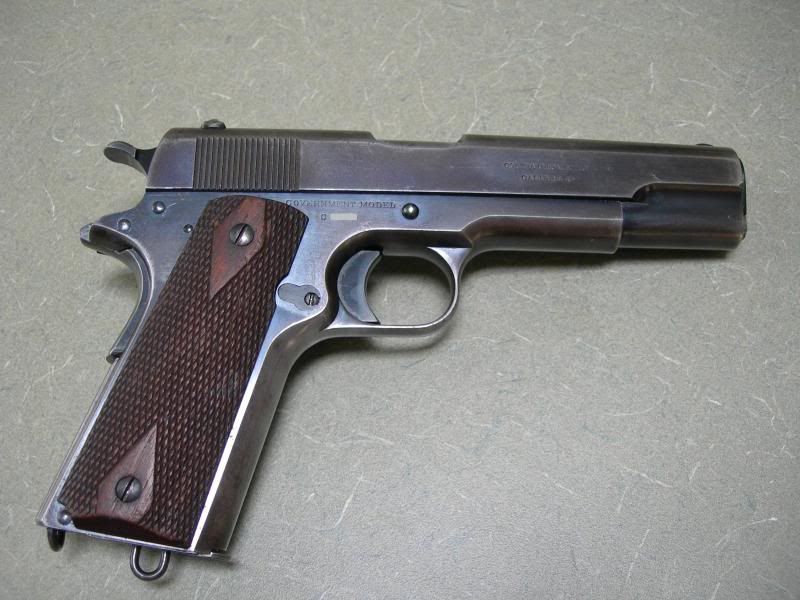
It is in very remarkable
original condition .... the apparent streaks or "mottling" on the slide are in fact the reflection of tree branches! (The photograph was taken outside on a 'cloudy-bright' late fall day.)
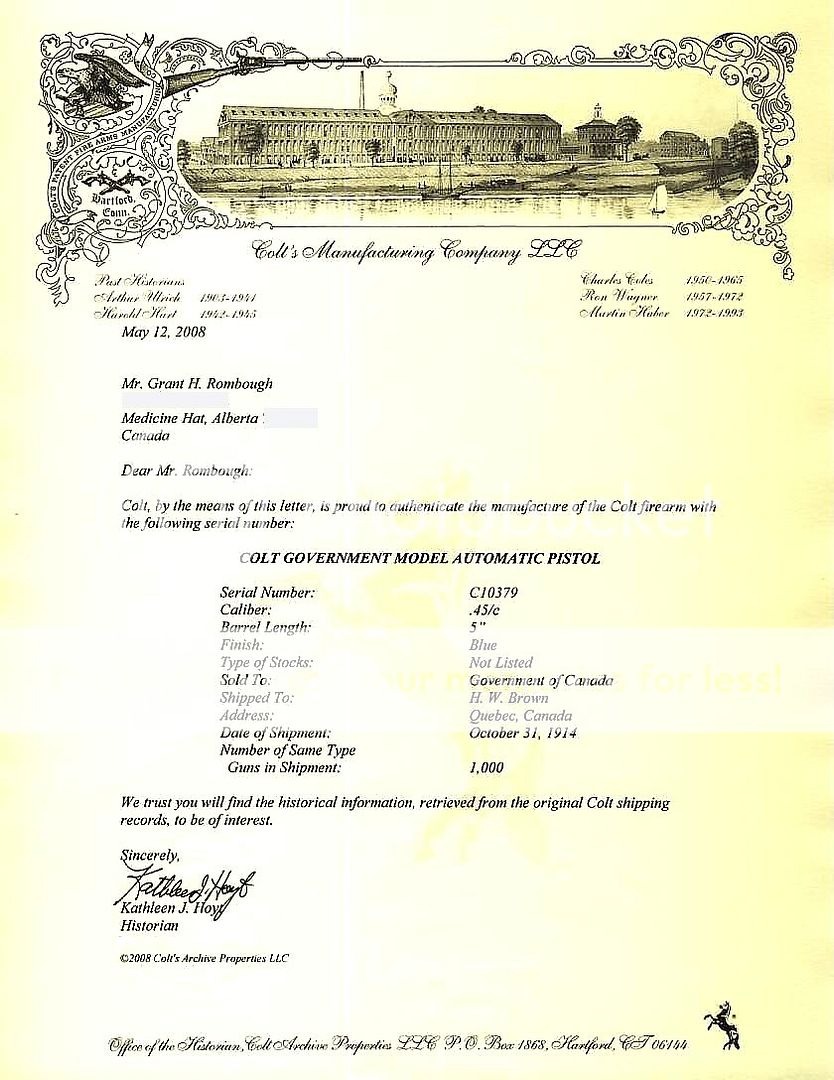
The pistol was purchased from the Canadian Government by Major William Arthur Mitchell, who served in the Canadian Expeditionary Force as a Company commander in the Army Service Corps ..... assigned to the Divisional Train of the Canadian 2nd Division. (In my researches, I have learned that the term "Train" in this context denotes the use of horse-drawn transport, whereas if the unit had motorized transport it would have been referred to as a "Park" ....) Major Mitchell, whose civilian occupation was listed as "Hardware Merchant", volunteered for service with the C.E.F. in April of 1915 and served at the Front, but was invalided home due to ill health in November of 1917, at the age of 48.
In 1943, newly-commissioned Canadian Lieutenant Ken B. Knox (who had just volunteered for service following graduation from university) made up his mind that he did not want to be stuck with one of the standard issue .38 revolvers, which had already gained a reputation for being underpowered. Learning that Maj. Mitchell (a friend of his fiancée's parents) still had this Colt .45 Government Model, he arranged to purchase it and Major Mitchell's original leather holster .... as officers were still permitted (although no longer
required) to provide their own handgun. Lieutenant Knox spent considerable time in training (being trained both for infantry command and then artillery), and was finally sent to England, but never went into combat. Rather, he ended up being transferred back home to the Canadian 6th Division, which had served in a Home Defence role but was then in the process of reorganization and training for anticipated service in the Pacific Theater once hostilities ended in Europe (the latter being Canada's primary Allied role.) As you likely know, it was expected that hostilities with Japan could last at least a year or two beyond the defeat of Germany, but subsequent events "cut things short".
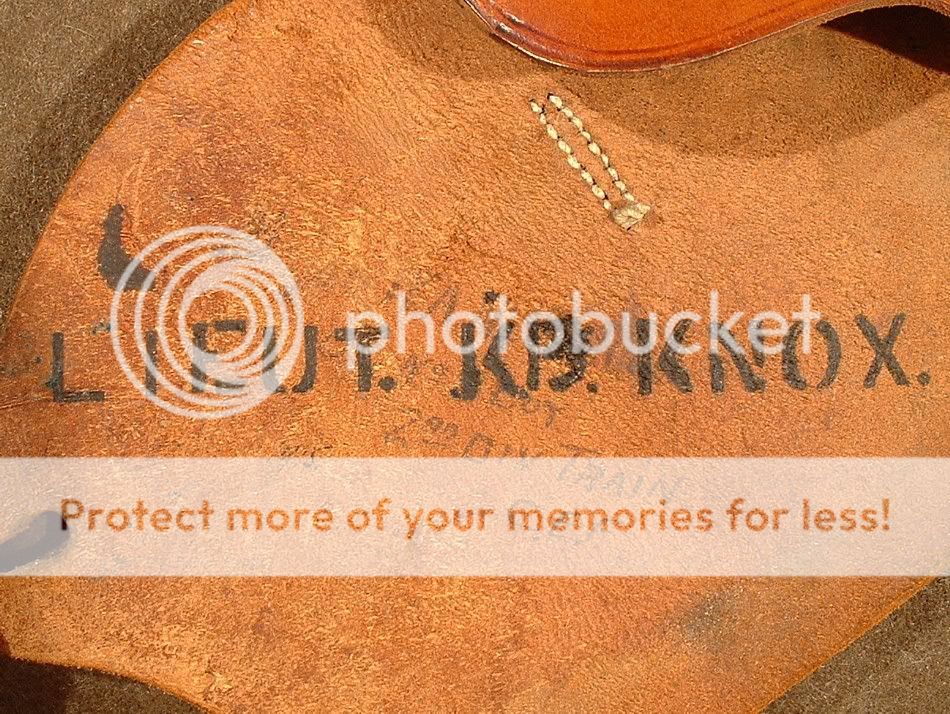
I acquired the pistol (and original leather holster) from Mr.Knox a few years ago. Here is a photo of the markings on the underside of the flap - the original pencil marking, partially obscured by the stencil of Lt. Knox's name, reads:
MAJ. W.A. MITCHELL
OC No. 5 COY.
2nd DIV TRAIN
C.E.F.
Note, also, the date "1915' lightly marked in ink off to the left at the same level as "C.E.F."
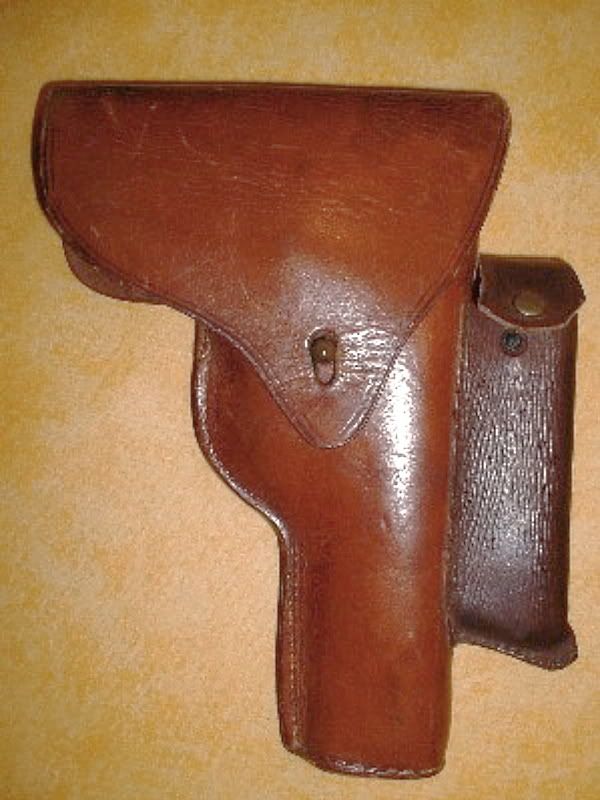
The holster also demonstrates this history in another way. Wanting a convenient means of carrying a spare magazine, Ken Knox had a shoemaker sew one - made of significantly different leather - onto the leading edge of the holster. Needless to say, that modification will remain in place!
I used this holster as the pattern to make one for a period-style rig for historical shooting (e.g. "Wild bunch" matches in Cowboy Action Shooting, and the like. Believe it or not, i actually shot this pistol in two such matches before acquiring a modern clone!) The belt is patterned on the uniquely Canadian 1898 Oliver Pattern Equipment, which was still in use at the beginning of WWI -