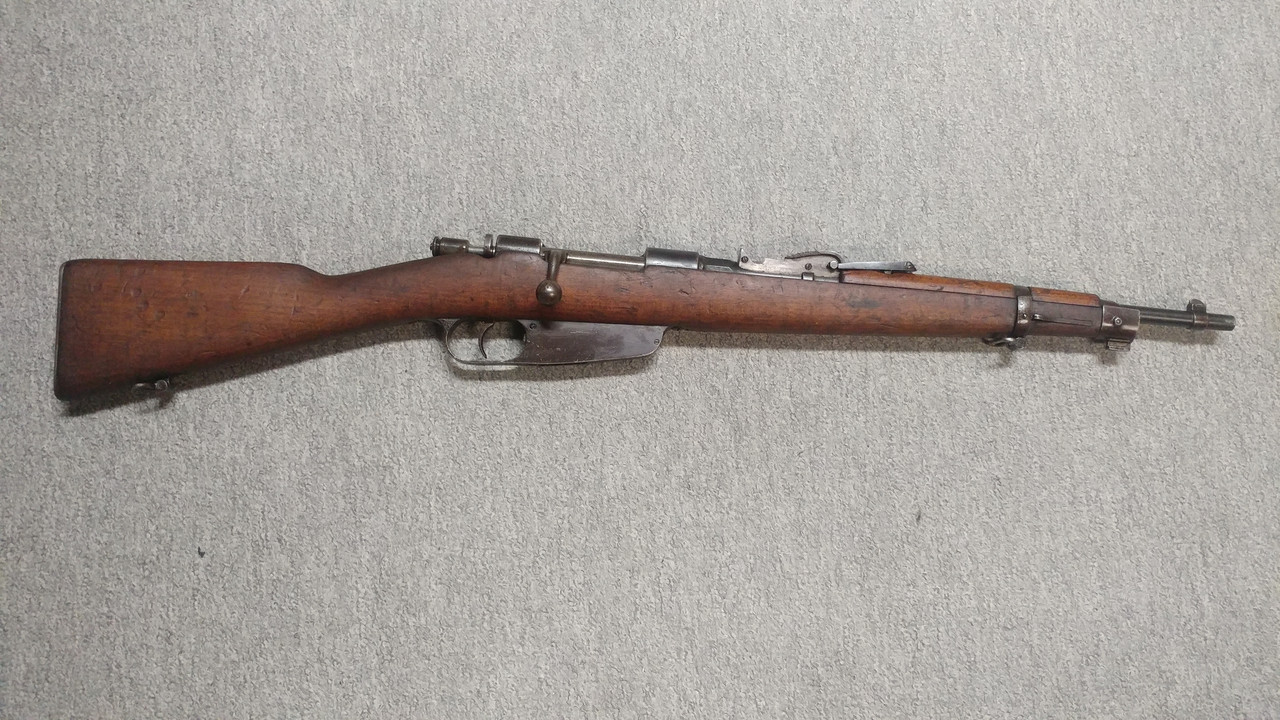
I went the other direction when building loads for my raft of Carcani.
I reasoned that the original Italian loading used a 163-grain bullet of .266" diameter, on top of 30.04 grains of an energetic double-based flake powder. Those figures are from the 1908 Text Book of Ammunition.
At the time, all I had were Remington bulk-pack 140 PSP slugs; my Hornady .268s had been on back-order for 4 years and still no sign of them.
My reasoning was that the Italians had no troubles with their rifles as to accuracy and their barrel dimensions, especially in wartime, were all over the map. I had some Norse Norma slugs and they, also, were all over the map! It would have been nicer had they been on the paper once in a while.
I settled on a loading of 28 grains of IMR-4198 to give the Remington flat-base slugs a good swift kick on the fundament, then headed for the range. My nice new-condition Model 41 put them under an inch. So did the 1917 Marksman's rifle. So did a 1918 Model 91. My Model 38 6.5mm CARBINE even started shooting quite well (for something with a sighting radius a bit longer than a dollar bill). And, with the Carbine, GONE was that Gawd-awful muzzle blast, fireball and ear-splitting report. The Carbine, which I had dreaded trying (having shot it with Western military Ball ammo) became docile and accurate!
With those results, I have stuck with that load. It likely is a touch under MilSpec but my scrawny 76-year-old shoulders do appreciate the absence of kick and my ears (partly wrecked from an argument with a Firefly many years ago) appreciate the moderate report. I would recommend it for any rifle in decent condition.