










































You are using an out of date browser. It may not display this or other websites correctly.
You should upgrade or use an alternative browser.
You should upgrade or use an alternative browser.
Cast Bullet ####
- Thread starter jethunter
- Start date


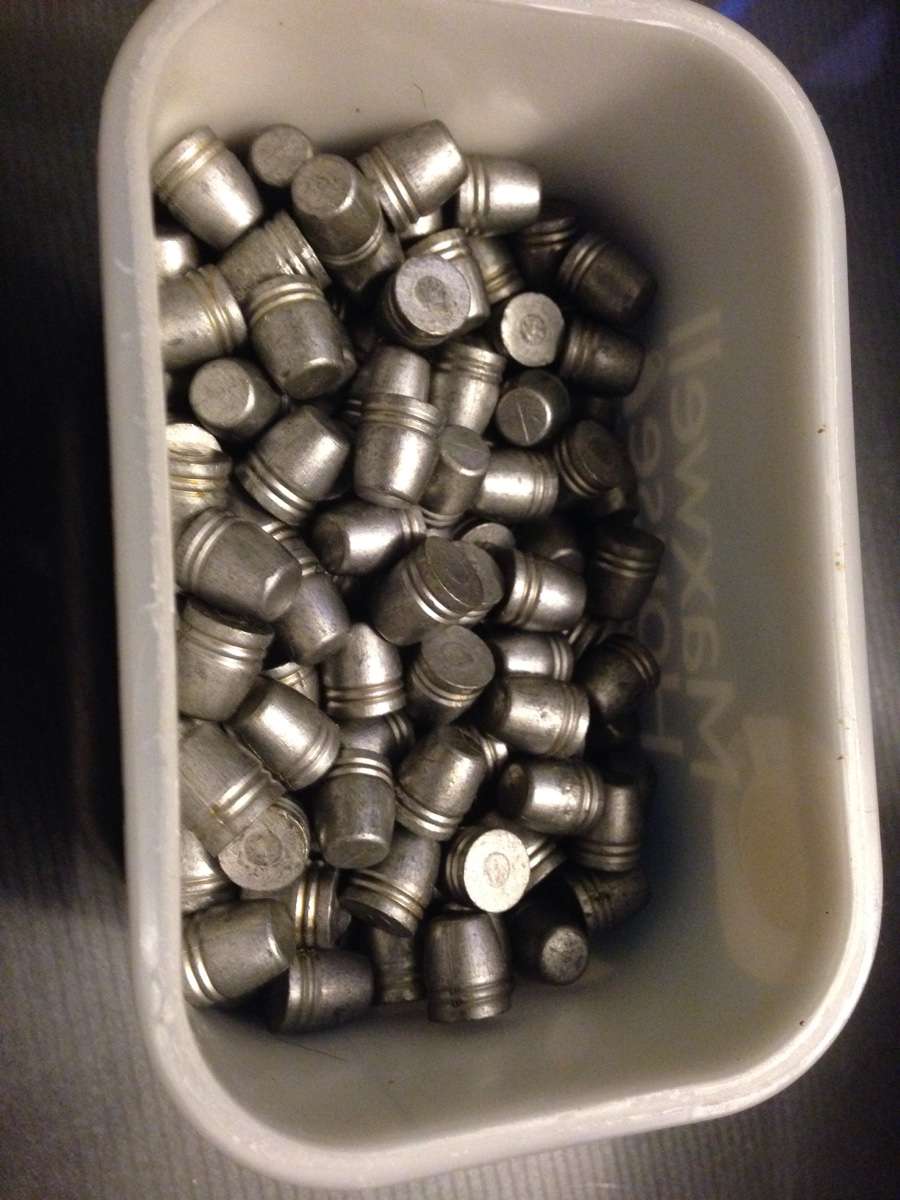
Cast up a couple hundred Ranch Dog TL358-100-RF the other day. They're cast from copper enriched clip on wheel weights and water dropped. These are tumbled with "Ben's Liquid Lube" and sized to .357" with a Lee push through. Loaded over 4.2gr of IMR Hi-Skor 700x they shoot amazing out of my CX4 carbine. I find it a nice economical load, in both powder and lead. It does not lead at all with the BLL and is extremely accurate.
I shot a gopher with it today and did it ever do the trick! Just the head poking up out of the hole and it vaporized it! The CX4 is quickly becoming one of my favorite rifles!

Bassmaster
CGN frequent flyer
- Location
- WMU 48 - Whitetail country
Can you explain 'copper enriched' or are you gonna force me to use my Google-Fu

Can you explain 'copper enriched' or are you gonna force me to use my Google-Fu
the quick and dirty is to take as fine strand as possible copper wire and add it to the lead pot and stir it around for a bit. it imparts some copper into the mix and makes it harder. i'm not sure how long or what temp it requires though.
Actually, I contaminated 10lb of pure lead with 2 ounces of zinc. Then "fluxed" the zinc back out with copper sulphate powder in small batches many times. The blue cs dries out to white crust on the alloy and then I crush it up and mix it into the lead. It turns brown as the copper is leeched from the cs and it bonds the zinc to the powder. Then scoop it off and do it again. Keep doing that until the powder stays white. Then all the zinc is gone and replaced with an equivalent amount of copper. I then pour that out into 1lb ingots to be added to 10lb of clip on wheel weight lead. If you do it with wheel weight lead, the cs will start replacing the tin too, that turns the white stuff grey. If you're not comfortable contaminating your lead with zinc, you can do it with tin as well. It's just tin is way more expensive than zinc. When you're done, you can add tin back in to help fillout. The copper makes the alloy very slightly harder, but more importantly, very tough and malleable. Water quenched clip on wheel weight boolits crack and break when mashed with a hammer but with the copper, they hold together and mash flat without cracking crumbling or breaking.

Bassmaster
CGN frequent flyer
- Location
- WMU 48 - Whitetail country
Thank you all for the explanation.....
If you want some copper, toss in some SAC305 lead free solder. Contains 3% copper.
Auggie D.
Actually, it's 3% silver and only 0.5% copper. Silver isn't great for casting bullets...and I imagine this solder is pretty expensive. Also not nearly enough copper in the solder to effectively add enough to casting alloy. Great for adding tin though, as it's 96%. There is, however, copper rich babbit out there which works extremely well for adding to lead for casting bullets.


I picked up 2 new to me Ideal 2 cavity bullet molds, both is beautiful shape with handles and had been lubed well and stored for years.
A 429421 245 gr SWC and a 357466 160 gr SWC.
After 2 rounds of removing the old oil from the blocks I was able to get them casting quality bullets quickly, both drop the bullets from the blocks will no effort. I am a ladle caster and enjoy using some of these older 2 cavity molds. Most people seem to want 6 cavity molds for volume and pass up these 2 bangers.
https://www.dropbox.com/s/z4tw9bihzy6fjc7/20150405_102555.jpg?dl=0
https://www.dropbox.com/s/sxsk562irsnsx35/20150405_102420.jpg?dl=0
Both are producing bullets just larger than their advertised size which is perfect.
And the 357466 are weighing in at 160.7-.8 grains, and the 429421 are coming in around 254 gr with my alloy.
A 429421 245 gr SWC and a 357466 160 gr SWC.
After 2 rounds of removing the old oil from the blocks I was able to get them casting quality bullets quickly, both drop the bullets from the blocks will no effort. I am a ladle caster and enjoy using some of these older 2 cavity molds. Most people seem to want 6 cavity molds for volume and pass up these 2 bangers.
https://www.dropbox.com/s/z4tw9bihzy6fjc7/20150405_102555.jpg?dl=0
https://www.dropbox.com/s/sxsk562irsnsx35/20150405_102420.jpg?dl=0
Both are producing bullets just larger than their advertised size which is perfect.
And the 357466 are weighing in at 160.7-.8 grains, and the 429421 are coming in around 254 gr with my alloy.
Last edited:

How about some pictures of your home made projectiles? I'll start:


This is where I hope to be...in about a year or so.
Already case slugs ( Lee 7/8 and 1 oz), but really want to do rifle and handgun bullets.
What is the two red rings?? Wax?? And is there a sticky or link, some where on the whole process.
Very nice work!! A thing of beauty!!
Cheers
Brian
This is where I hope to be...in about a year or so.
Already case slugs ( Lee 7/8 and 1 oz), but really want to do rifle and handgun bullets.
What is the two red rings?? Wax?? And is there a sticky or link, some where on the whole process.
Very nice work!! A thing of beauty!!
Cheers
Brian
the red rings are grease or lube depends on what you want to call it. they help prevent leading as the bullet goes down the barrel. there is many MANY different types from factory stuff like dragon lube, lee alox, red dragon lube and lots more for home made lubes, my personal favorite is ben's red. easy enough to make and lasts forever pending the size and amount of lube used obviously.
see the sticky here, http://www.canadiangunnutz.com/forum/showthread.php/1024050-Bullet-lube-forum
also alot more info on cast boolits forum.

kenneth carlson
Regular
- Location
- thunder bay on
Double post
kenneth carlson
Regular
- Location
- thunder bay on
205 gr cast spire point loaded up for subsonics in my rem 700 tac sps 300 AAC blackout. Gonna test em tommorow. Range report tommorow night. This is a brand new gun. No rounds through her yet. Got a few hundred different test rounds to go through. Gonna be a fun day at the range.
Attachments

kenneth carlson
Regular
- Location
- thunder bay on
Yeah. That was before I adjusted the sizing die. Still will shoot though. Might be a little smokey though.
kenneth carlson
Regular
- Location
- thunder bay on


kenneth carlson
Regular
- Location
- thunder bay on
I did. I sent 187 rounds down the barrel first. Before I got to the 40 rounds of cast. I found some very good potential loads but so far the cast seem to need lots of work. I got 2 other moulds on the way also right now.