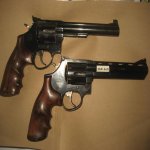
I was cranking out 1000 38Spl rounds loaded with the lead 158 SWC. Powder similar to Power Pistol.
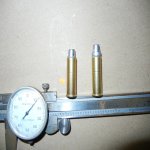
I noticed that about 1 in 20 rounds would seat the bullet too deep. The brass was a bit thin, I guess, and the ID was not enough to hold the bullet in place.
I put these is a separate container.
Then I got to thinking "If the bullet is seated deeper, will this increase pressure & velocity?" Conventional wisdom is that it will, because of reduced inside capacity.
So I decided to test some of these deep-seated bullets against the correct length ammo.
This load was already a 900 fps load (I would consider 950 to be Max) so in an abundance of caution, I decided to test in a 357, just in case the pressure was much higher. (I am becoming slightly less venturesome in my old age.)
So I shot some of the deep seated rounds and the velocity was in the same ballpark as the "normal" round. Actually, it was slightly slower. This was not what I expected and did not seem right.
So I shot some "normal" rounds and found them to be much slower than 900 fps. They were only 837.
So then I hypothesised that the longer 357 chamber acted like a lot of freebore and reduced the pressure in the short 38Spl case.
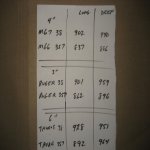
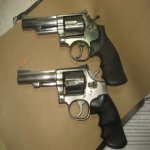
So I shot the same two batches (long and short rounds) in a similar revolver, except in 38SPl. (The two revolvers were a Smith M66 and M67.) Sure enough, the 38SPL chamber showed normal velocity (902 fps) with the correct seating depth and 990 fps with the deep seated bullets.
So this confirmed that seating deeper increases pressure and that a 357 chamber will reduce pressures with a 38SPL case.
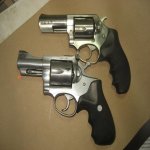
I then grabbed a pair of Rugers (SP101 38Spl and Security 6 357) and repeated the test. Same result. Deep seated bullets shot faster and 357 chamber reduced pressures.
Note: S&W revolvers were 4" and the Rugers are both 3" barrels.
I was going to repeat with a pair of 6" Taurus revolvers, but is started to rain quite hard.
I noticed that about 1 in 20 rounds would seat the bullet too deep. The brass was a bit thin, I guess, and the ID was not enough to hold the bullet in place.
I put these is a separate container.
Then I got to thinking "If the bullet is seated deeper, will this increase pressure & velocity?" Conventional wisdom is that it will, because of reduced inside capacity.
So I decided to test some of these deep-seated bullets against the correct length ammo.
This load was already a 900 fps load (I would consider 950 to be Max) so in an abundance of caution, I decided to test in a 357, just in case the pressure was much higher. (I am becoming slightly less venturesome in my old age.)
So I shot some of the deep seated rounds and the velocity was in the same ballpark as the "normal" round. Actually, it was slightly slower. This was not what I expected and did not seem right.
So I shot some "normal" rounds and found them to be much slower than 900 fps. They were only 837.
So then I hypothesised that the longer 357 chamber acted like a lot of freebore and reduced the pressure in the short 38Spl case.
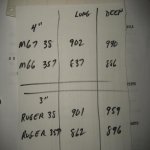
So I shot the same two batches (long and short rounds) in a similar revolver, except in 38SPl. (The two revolvers were a Smith M66 and M67.) Sure enough, the 38SPL chamber showed normal velocity (902 fps) with the correct seating depth and 990 fps with the deep seated bullets.
So this confirmed that seating deeper increases pressure and that a 357 chamber will reduce pressures with a 38SPL case.
I then grabbed a pair of Rugers (SP101 38Spl and Security 6 357) and repeated the test. Same result. Deep seated bullets shot faster and 357 chamber reduced pressures.
Note: S&W revolvers were 4" and the Rugers are both 3" barrels.
I was going to repeat with a pair of 6" Taurus revolvers, but is started to rain quite hard.
Attachments



Last edited: