












































You are using an out of date browser. It may not display this or other websites correctly.
You should upgrade or use an alternative browser.
You should upgrade or use an alternative browser.
CHRONOGRAPH
- Thread starter Jguichon01
- Start date

Do you need it?
Depends on your motivations in reloading.
If your sole motivation is to lower the cost of ammo and you are non competitive shooter/hunter then no, and likely if this is you if you buy a chrono it would likely be a cheaper one that is more difficult to use than necessary leading to it collecting dust.
If your motivation is to make the best ammo for your purpose (a hobby in and of itself, independent of cost savings) a chrono is absolutely mandatory in my opinion. Chrono’s provide data and the more data you have the more you can make positive changes with certainty; it’s that old line, if you measure it you can improve it.
My recommendation would be to get one easy to use from a reputable manufacturer, for me that has lead to the first gen Garmin and it’s excellent.
Depends on your motivations in reloading.
If your sole motivation is to lower the cost of ammo and you are non competitive shooter/hunter then no, and likely if this is you if you buy a chrono it would likely be a cheaper one that is more difficult to use than necessary leading to it collecting dust.
If your motivation is to make the best ammo for your purpose (a hobby in and of itself, independent of cost savings) a chrono is absolutely mandatory in my opinion. Chrono’s provide data and the more data you have the more you can make positive changes with certainty; it’s that old line, if you measure it you can improve it.
My recommendation would be to get one easy to use from a reputable manufacturer, for me that has lead to the first gen Garmin and it’s excellent.

To answer your question, as others have said it depends on your needs.How important is it to add a chronograph?
If you are shooting for fun at your local range, you don't need one at all. If you are going to stretch out to 1000 yards - you still don't need one if you are just shooting for fun. Watch the bullet impact, adjust your scope and make notes in your DOPE sheet.
The target will tell you if you have a good load, and if you don't you try other things (seating depth, powder charge, etc.).
In the 'fun' scenario, pretty far down the list. The best thing you can do is practice basic shooting skills and reading the wind, even at 100 yards.Just wondering how far down the list it would be compared to spending some extra time and $ shooting, and figuring out the ballistics with paper and a calculator.


The folks above are giving you some very valid points.I have a basic reloading set up and limited knowledge on the more intricate details of rifle reloading. How important is it to add a chronograph? They're not overly expensive, but also not cheap. Just wondering how far down the list it would be compared to spending some extra time and $ shooting, and figuring out the ballistics with paper and a calculator.
But, as todbartel so aptly put it, numbers don't lie.
I went for a few decades avoiding getting some sort of device for measuring velocities. Back in the day, when I first started, measuring velocity reliably and consistently, involved setting up screens to shoot through at different distances, which were all hardwired to a console, that read numbers, to be extrapolated.
If you're only loading for a couple of firearms, Chrony systems can now be found online, used, of course, for under $100. The readings will vary depending on light conditions, but they will give information that is reliable on the day you're shooting. The Chrony will indicate whether ignition is consistent, or your "thrown" charges are consistent, by the velocity readings.
The reading will be "close enough" for the average needs of most reloaders.
A chronograph will indicate the dangerous ranges of velocities, from too low to too high. Both can give you extreme pressure issues.
If you're loading within tolerances, the chronograph will indicate consistent velocities, so you can adjust loads for the harmonics generated in your barrel, so you can duplicate the "sweet spot" with the same components.
It will also show you the difference between powders that are close in burn rates, and different primers.
If you're into extreme accuracy, then you need to go to something better. Again, it doesn't have to be perfect or the most expensive, unless you're anal, like tod ;-).
I now use the Garmin Xero C1. It's a mid range price, but it's one of the best out there, and it will fit into your pocket.

I have a love hate thing going with chronographs. I’ve thrown more than a few away. That changed with the Garmin, Its so easy and accurate that there is ‘t a whole lot of use not setting it up,
In the end you have to believe the targets. If my vertical is good at extended ranges its a consistent load. If the drops don’t agree with your chronograph velocity you pretty much have to believe the target and lie to your program until it tells the truth.
For what its worth, drop charts based on my Garmin work; with others the velocity often needs to be tweaked up or down a bit before all the lies align.
I tend to use the chronograph for developing loads more now than in the past. I’ll run a quick pressure sequence over the chronograph; if I’m not getting about what I was after that frees me up to quit and try a different powder. Saves the barrel, and there’s no law against working down a load from the top while searching for that last bit of accuracy. Surprisingly often the best load is right up there at the top. I guess it shouldn’t be that shocking that powders burn consistently at the pressures they were designed to run at.
When you get off the beaten paths and the SAAMI spec world a chronograth is invaluable. When you start having to drop or raise a load 4 grains over a brass change its nice to have some warning.
In the end you have to believe the targets. If my vertical is good at extended ranges its a consistent load. If the drops don’t agree with your chronograph velocity you pretty much have to believe the target and lie to your program until it tells the truth.
For what its worth, drop charts based on my Garmin work; with others the velocity often needs to be tweaked up or down a bit before all the lies align.
I tend to use the chronograph for developing loads more now than in the past. I’ll run a quick pressure sequence over the chronograph; if I’m not getting about what I was after that frees me up to quit and try a different powder. Saves the barrel, and there’s no law against working down a load from the top while searching for that last bit of accuracy. Surprisingly often the best load is right up there at the top. I guess it shouldn’t be that shocking that powders burn consistently at the pressures they were designed to run at.
When you get off the beaten paths and the SAAMI spec world a chronograth is invaluable. When you start having to drop or raise a load 4 grains over a brass change its nice to have some warning.

Talltimber1
CGN Regular
- Location
- BC Bring Cash
For plinking loads, NO
For the most accurate long range loads you can develop, YES
I had a shoot through and used it once in a while developing a load.
Ive have had a Garmin for a couple years now and use it every time I go out. So convenient, so much data.
For the most accurate long range loads you can develop, YES
I had a shoot through and used it once in a while developing a load.
Ive have had a Garmin for a couple years now and use it every time I go out. So convenient, so much data.
prairie lover
CGN Regular
- Location
- southern MB
Tweak the bc not the speed.I have a love hate thing going with chronographs. I’ve thrown more than a few away. That changed with the Garmin, Its so easy and accurate that there is ‘t a whole lot of use not setting it up,
In the end you have to believe the targets. If my vertical is good at extended ranges its a consistent load. If the drops don’t agree with your chronograph velocity you pretty much have to believe the target and lie to your program until it tells the truth.
For what its worth, drop charts based on my Garmin work; with others the velocity often needs to be tweaked up or down a bit before all the lies align.
I tend to use the chronograph for developing loads more now than in the past. I’ll run a quick pressure sequence over the chronograph; if I’m not getting about what I was after that frees me up to quit and try a different powder. Saves the barrel, and there’s no law against working down a load from the top while searching for that last bit of accuracy. Surprisingly often the best load is right up there at the top. I guess it shouldn’t be that shocking that powders burn consistently at the pressures they were designed to run at.
When you get off the beaten paths and the SAAMI spec world a chronograth is invaluable. When you start having to drop or raise a load 4 grains over a brass change its nice to have some warning.
I’d like to, but sometimes you have to make massive changes in BC, right into the extremely unlikely range to make that work. Small changes in velocity or click value line things up nicely and to my mind are more likely to be true. I seldom shoot past 1000, so it works out.Tweak the bc not the speed.
When I revisit rifles that the come-ups (or reticle subtension) determined the velocity entered and measure them with my Garmin they inevitably come out matching. With lesser chronographs I’m happy to be within 50 plus or minus.
I don’t have the Faith some have in their chronographs, obviously. Then there’s the guys that are striving for single digit ES with instruments that aren’t even rated for that kind of accuracy. Which brings me back full circle to believing the targets, and treating everything else with suspicion

prairie lover
CGN Regular
- Location
- southern MB
Click value is a big thing. A few to almost double digit percentage error is common.I’d like to, but sometimes you have to make massive changes in BC, right into the extremely unlikely range to make that work. Small changes in velocity or click value line things up nicely and to my mind are more likely to be true. I seldom shoot past 1000, so it works out.
When I revisit rifles that the come-ups (or reticle subtension) determined the velocity entered and measure them with my Garmin they inevitably come out matching. With lesser chronographs I’m happy to be within 50 plus or minus.
I don’t have the Faith some have in their chronographs, obviously. Then there’s the guys that are striving for single digit ES with instruments that aren’t even rated for that kind of accuracy. Which brings me back full circle to believing the targets, and treating everything else with suspicion
I might pull the trigger on an Athlon Rangecraft...
Experience anyone ?
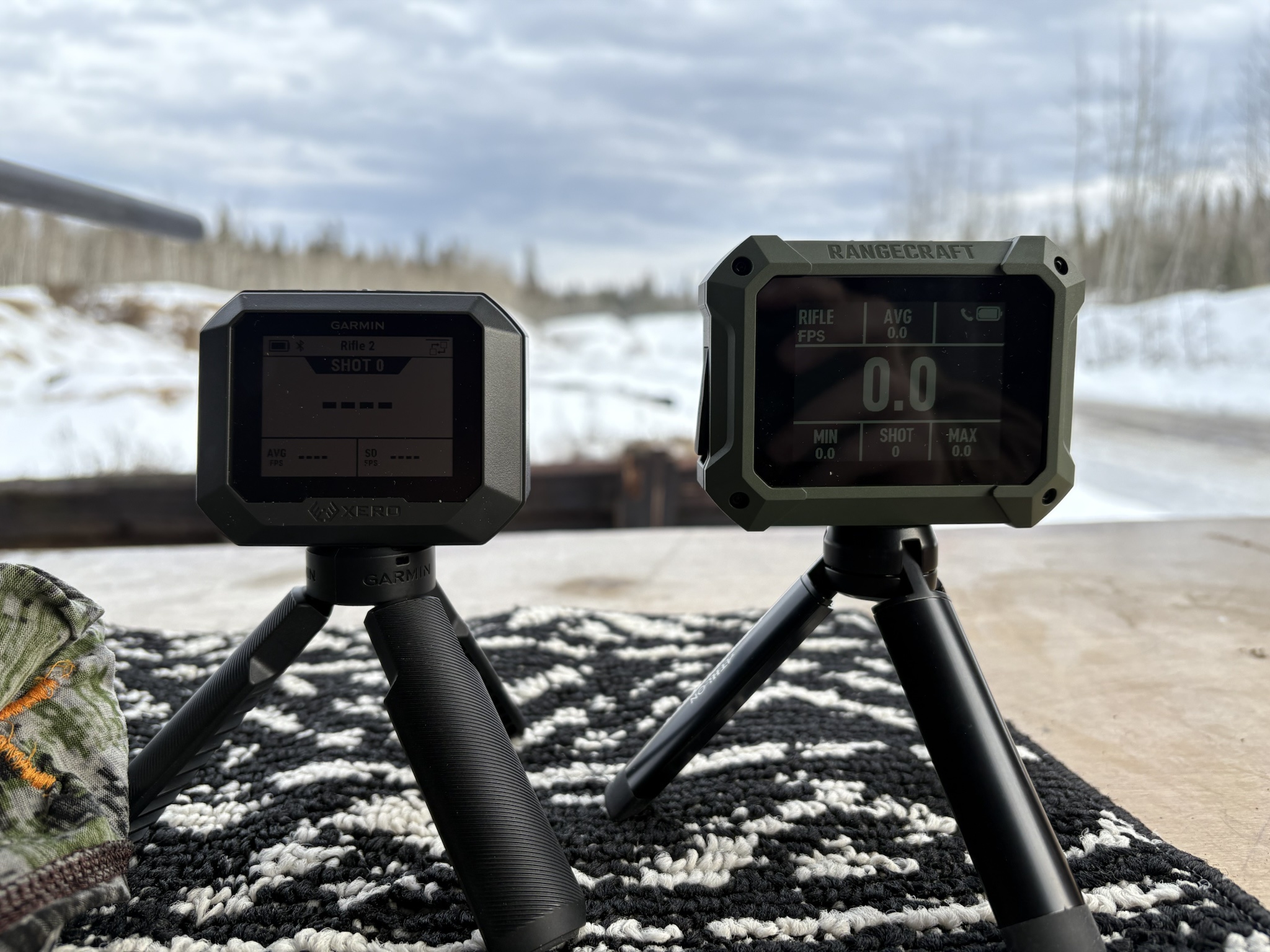
Have one, used it quite a bit head to head with the Garmin Xero c1
Athlon Pros
- less money than Xero c1
- heavier tripod
- comes with a storage case
- glossier screen harder to see
- doesn't give a battery % when charging unit
- little bit larger size (still very compact)
- App isn't as good as Garmin
- Menu layout not as easy to function (for me) vs Garmin
- Velocity always slower than multiple Garmin's and Labradar by about 12 fps
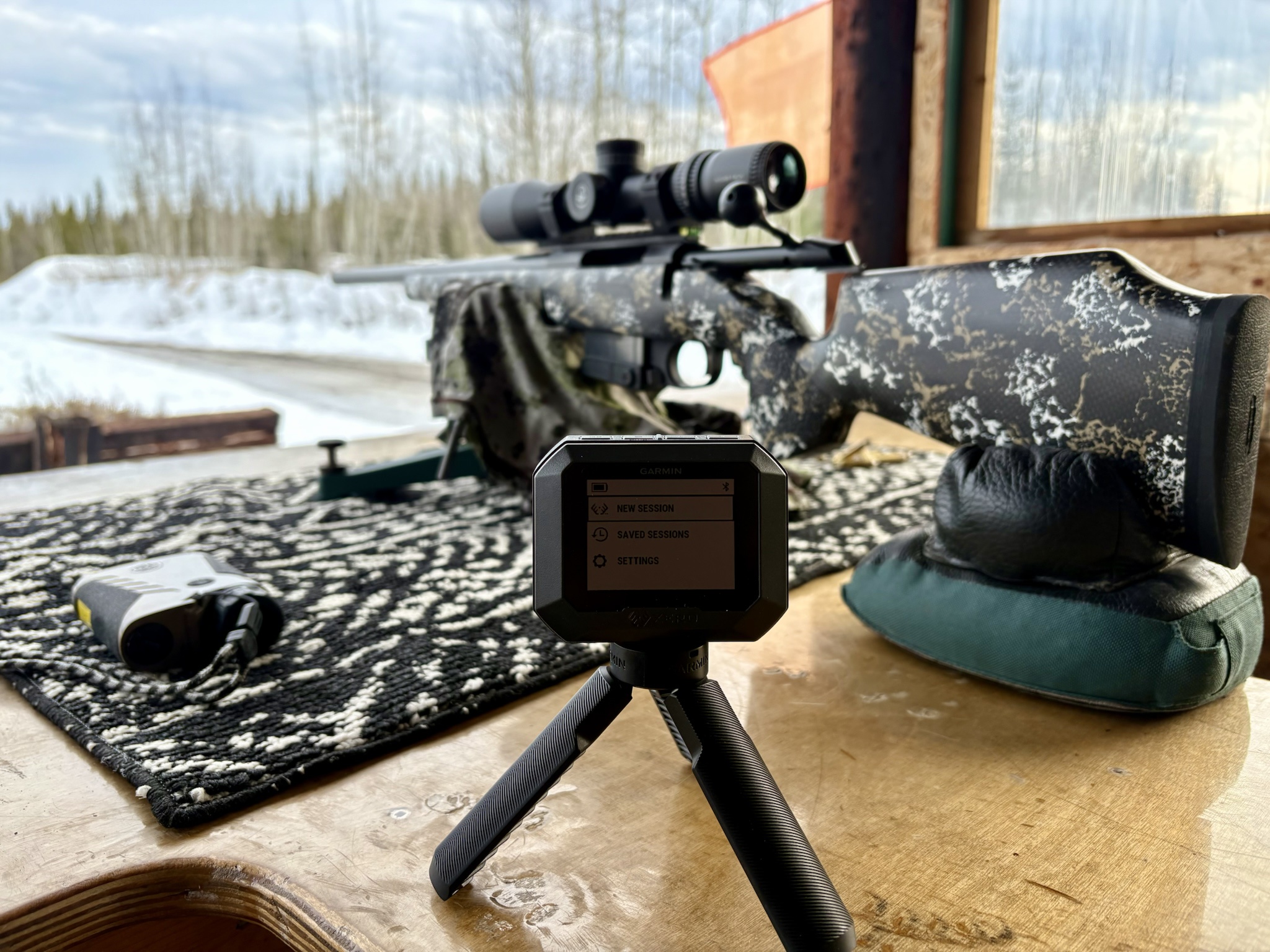
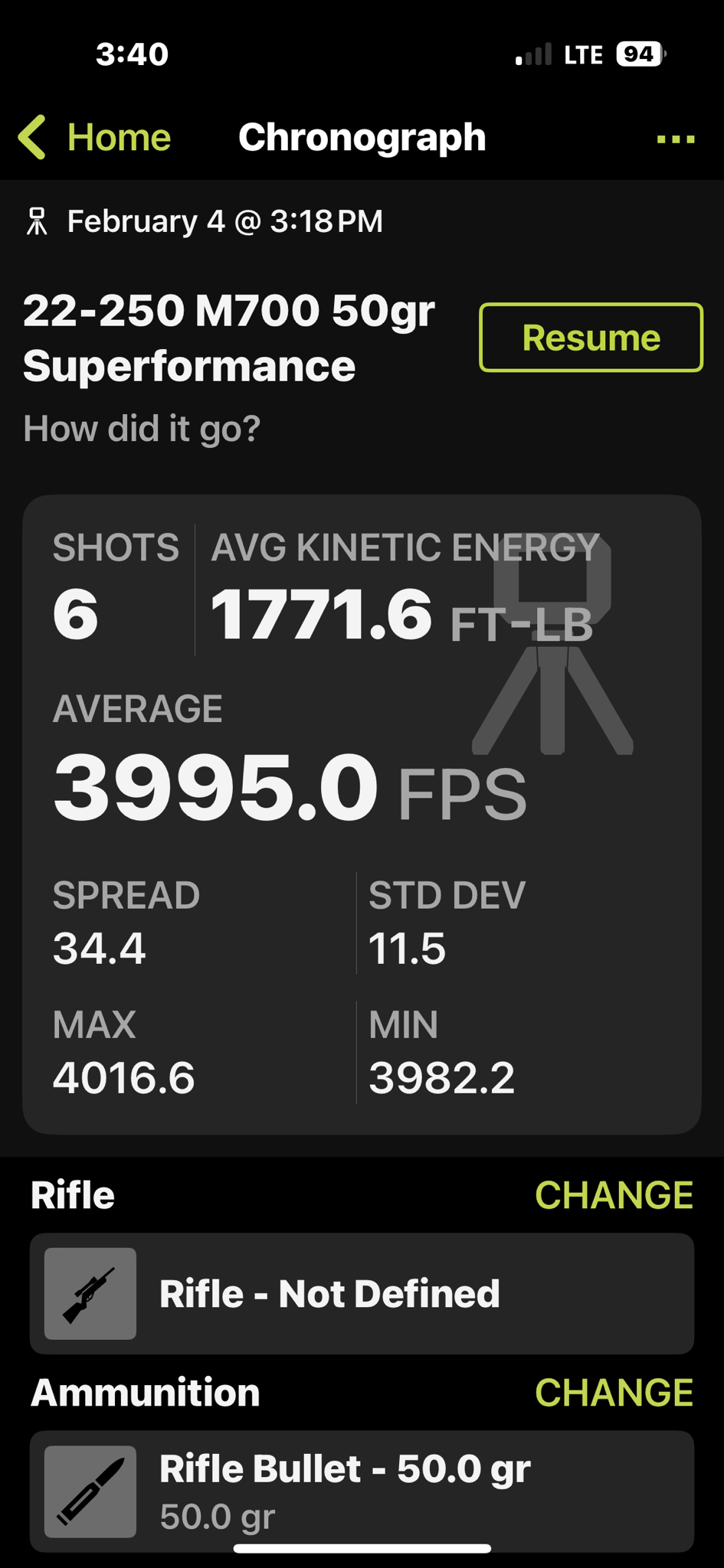
I have upgraded to the Xero C2, it's phenomenal and worth the $ over the C1 for no other reason than you can resume sessions/series that you've closed prior. Big time saver for me as I generally go to the range with six to eight rifles and I'm shooting 3-10 rounds per rifle then switching to the next and then back to the first rifle / ammo. When I get home I have to spend way too much time piecing together the velocities from 3 or 4 sessions/series for each rifle to get the average FPS / SD / ES
Xero C2 =

I feel like a dinosaur around you guys with my big orange Labradar. lol!
Funny thing about my Labradar is I found a way to never miss a .22LR with it, yet a borrowed Garmin missed a few .22LR shots.
I’ll stick with the big orange box until it dies. Not sure which way I’d go then.
Funny thing about my Labradar is I found a way to never miss a .22LR with it, yet a borrowed Garmin missed a few .22LR shots.
I’ll stick with the big orange box until it dies. Not sure which way I’d go then.
I've shot a few thousand 22lr from my T1X, with the Garmin C1 behind the muzzle, about two inches higher, and six inches on the left side. Never dropped a round reading. What are "you" doing wrong, or maybe the unit has a glitch????
I've heard there are issues when the battery is just about dead, but I've never run mine that low.
I've heard there are issues when the battery is just about dead, but I've never run mine that low.

- Location
- Delta B.C.
They are pivotal in understanding your reloads... full stop... Cheers
The owner set it up beside my rifle. He was surprised it missed shots too.I've shot a few thousand 22lr from my T1X, with the Garmin C1 behind the muzzle, about two inches higher, and six inches on the left side. Never dropped a round reading. What are "you" doing wrong, or maybe the unit has a glitch????
I've heard there are issues when the battery is just about dead, but I've never run mine that low.
No idea.






















