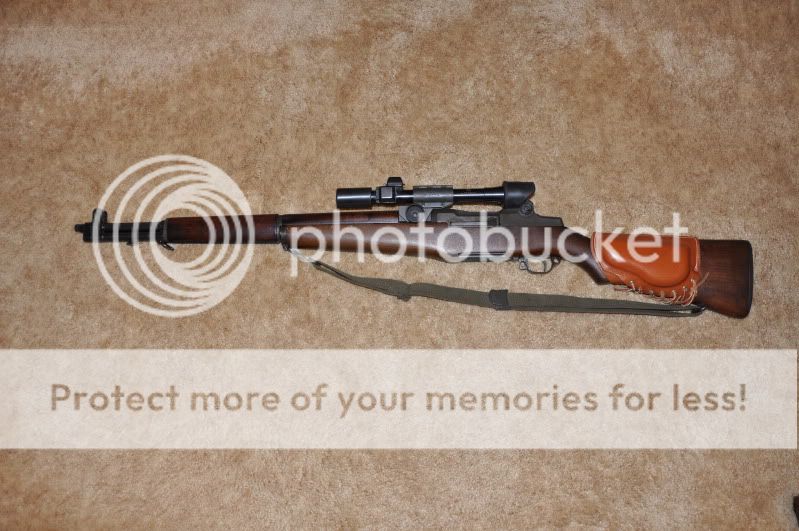
There is an excellent article in the 2012 spring issue of GCA Journal, the official publication of the Garand Collectors Assocation, on Danish Garands.
If you google it you can find out more about this association and yes you can buy back issues. They are excellent little magazines with good articles and nice color pics.
The author of this article interviewed the guy that exported all the Danish Garands. Yep, all of them.
I know many, including myself, wanted a clearer understanding of the history of these rifles. This article did an amazing job of it.
I will summarize the main points of the article here.
In 1949, under the Military Assistance Program (MAP), Denmark was loaned 20,000 M1 Garands from the USA. The contract stated they had to be returned when they were not needed anymore.
Denmark needed more small arms to equip it's new army, so ordered another 49,000 M1s and 1,000 M1Ds from the Americans. The last US made Garands made it to Denmark in 1964. The total of all US Garands sent to Denmark, loaned or purchased, equalled 69,810.
They then ordered another 10,000 Italian made M1s from Breda Works, and another 10,000 from Petro Beretta.
In 1966 Denmark adopted the 7.62 NATO round. Some experiments were made to convert Garands to 7.62 but nothing really came of it. The Garands remained the principal rifle of Danish infantry till 1975 when they decided to go with the G3. A fine German weapon.
The Garands were slowly phased out. Ending up with reserve and home guard units while the regular army got the new rifles. For those of you that were in the reserves using the FN C1, while the Reg force had the C7, you can relate to this.
Around 1979/80 the Garands were put into storage. Cleaned and greased up. Kind of like many collections here before the LGR was enacted!
Then in 1998 they were sold to a Danish company called Topmark Trading for export. This caused a political storm in Denmark, and the exporting company had to jump through some hoops, but they did get em.
Since 20,000 US made could not be "sold back" because they were under the MAP deal they were actually returned to the US. FREE! These guns were put in the Civilian Marksmanship Program and sold to US buyers.
Topmark Trading then got about 40,435 Garands that they sold to gun wholesalers in the US, Canada, Germany, and Switzerland. These included US and Italian made, and 909 out of the 1000 M1Ds. That leaves 91 M1Ds in museums or some Danish officers basement....
Some guns that made it into Canada, as a whole, had to be broken down to bring it into the US. I guess back in 98' there was more demand for them in the US and the Canadian wholesalers ordered more than they could sell here. That would not happen today....right?!
Markings. The Breda and Beretta Garands have the Danish crown, but not the US made. Denmark did a huge overhaul program in the mid 60s and the ones that needed it were given new Danish barrels and they also changed some stocks to new beechwood. They may have a DK, crown, or VAR marking on those barrels. Apparently those Danish barrels were well made and known for great accuracy.
The M1D was not given a lot of attention in the article. Very unfortunate. I own one (as of a few days ago - YES!), and it's a 1941 Springfield receiver with a 1952 Springfield barrel. That appears to be in line with the large US order from 1950-1964 which included 1000 M1Ds. The m84 scope has the Danish crown. From other sources it appears the Danes marked these scopes after getting them from the Americans. They were valuable, and they wanted it clear it was the property of the Danish government. They are original, not repros.
I think the Danish Garands need to be given a bit more respect out there. And not just because I own one. The US made ones were likely GI issued in WW2. If I had to put a GI Garand in anyone's hands between 1945 and when it got into mine, well....I would prefer a western army, professional, that did not have to use it (and thus maybe abuse it!). The Danes probably took good care of them, and likely did not shoot them too much. Sorry to all the Danes out there-but you know its likely true. Far better you got them, then in the hands of 20+ owners around the world...hunting with them, sporterizing them, doing god knows what.
So take out your "Danish" Garand and crack open a Carlsberg. A fine GI weapon that happenned to have a long vacation in northern Europe before ending up back home, well almost home.
Skaal!
(thats cheers in Danish)
If you google it you can find out more about this association and yes you can buy back issues. They are excellent little magazines with good articles and nice color pics.
The author of this article interviewed the guy that exported all the Danish Garands. Yep, all of them.
I know many, including myself, wanted a clearer understanding of the history of these rifles. This article did an amazing job of it.
I will summarize the main points of the article here.
In 1949, under the Military Assistance Program (MAP), Denmark was loaned 20,000 M1 Garands from the USA. The contract stated they had to be returned when they were not needed anymore.
Denmark needed more small arms to equip it's new army, so ordered another 49,000 M1s and 1,000 M1Ds from the Americans. The last US made Garands made it to Denmark in 1964. The total of all US Garands sent to Denmark, loaned or purchased, equalled 69,810.
They then ordered another 10,000 Italian made M1s from Breda Works, and another 10,000 from Petro Beretta.
In 1966 Denmark adopted the 7.62 NATO round. Some experiments were made to convert Garands to 7.62 but nothing really came of it. The Garands remained the principal rifle of Danish infantry till 1975 when they decided to go with the G3. A fine German weapon.
The Garands were slowly phased out. Ending up with reserve and home guard units while the regular army got the new rifles. For those of you that were in the reserves using the FN C1, while the Reg force had the C7, you can relate to this.
Around 1979/80 the Garands were put into storage. Cleaned and greased up. Kind of like many collections here before the LGR was enacted!
Then in 1998 they were sold to a Danish company called Topmark Trading for export. This caused a political storm in Denmark, and the exporting company had to jump through some hoops, but they did get em.
Since 20,000 US made could not be "sold back" because they were under the MAP deal they were actually returned to the US. FREE! These guns were put in the Civilian Marksmanship Program and sold to US buyers.
Topmark Trading then got about 40,435 Garands that they sold to gun wholesalers in the US, Canada, Germany, and Switzerland. These included US and Italian made, and 909 out of the 1000 M1Ds. That leaves 91 M1Ds in museums or some Danish officers basement....
Some guns that made it into Canada, as a whole, had to be broken down to bring it into the US. I guess back in 98' there was more demand for them in the US and the Canadian wholesalers ordered more than they could sell here. That would not happen today....right?!
Markings. The Breda and Beretta Garands have the Danish crown, but not the US made. Denmark did a huge overhaul program in the mid 60s and the ones that needed it were given new Danish barrels and they also changed some stocks to new beechwood. They may have a DK, crown, or VAR marking on those barrels. Apparently those Danish barrels were well made and known for great accuracy.
The M1D was not given a lot of attention in the article. Very unfortunate. I own one (as of a few days ago - YES!), and it's a 1941 Springfield receiver with a 1952 Springfield barrel. That appears to be in line with the large US order from 1950-1964 which included 1000 M1Ds. The m84 scope has the Danish crown. From other sources it appears the Danes marked these scopes after getting them from the Americans. They were valuable, and they wanted it clear it was the property of the Danish government. They are original, not repros.
I think the Danish Garands need to be given a bit more respect out there. And not just because I own one. The US made ones were likely GI issued in WW2. If I had to put a GI Garand in anyone's hands between 1945 and when it got into mine, well....I would prefer a western army, professional, that did not have to use it (and thus maybe abuse it!). The Danes probably took good care of them, and likely did not shoot them too much. Sorry to all the Danes out there-but you know its likely true. Far better you got them, then in the hands of 20+ owners around the world...hunting with them, sporterizing them, doing god knows what.
So take out your "Danish" Garand and crack open a Carlsberg. A fine GI weapon that happenned to have a long vacation in northern Europe before ending up back home, well almost home.
Skaal!
(thats cheers in Danish)