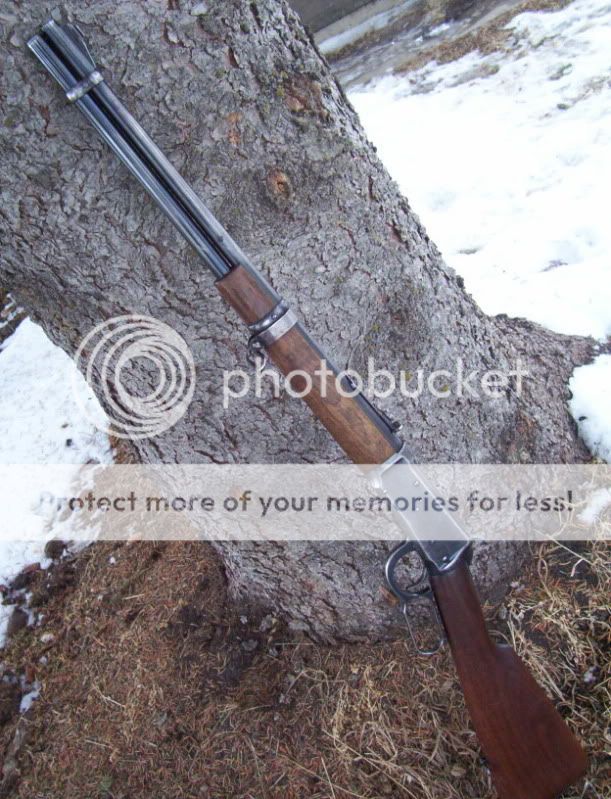
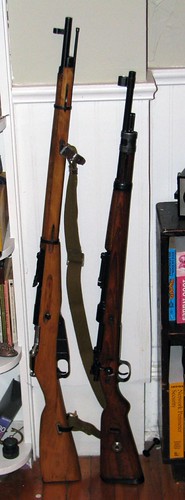
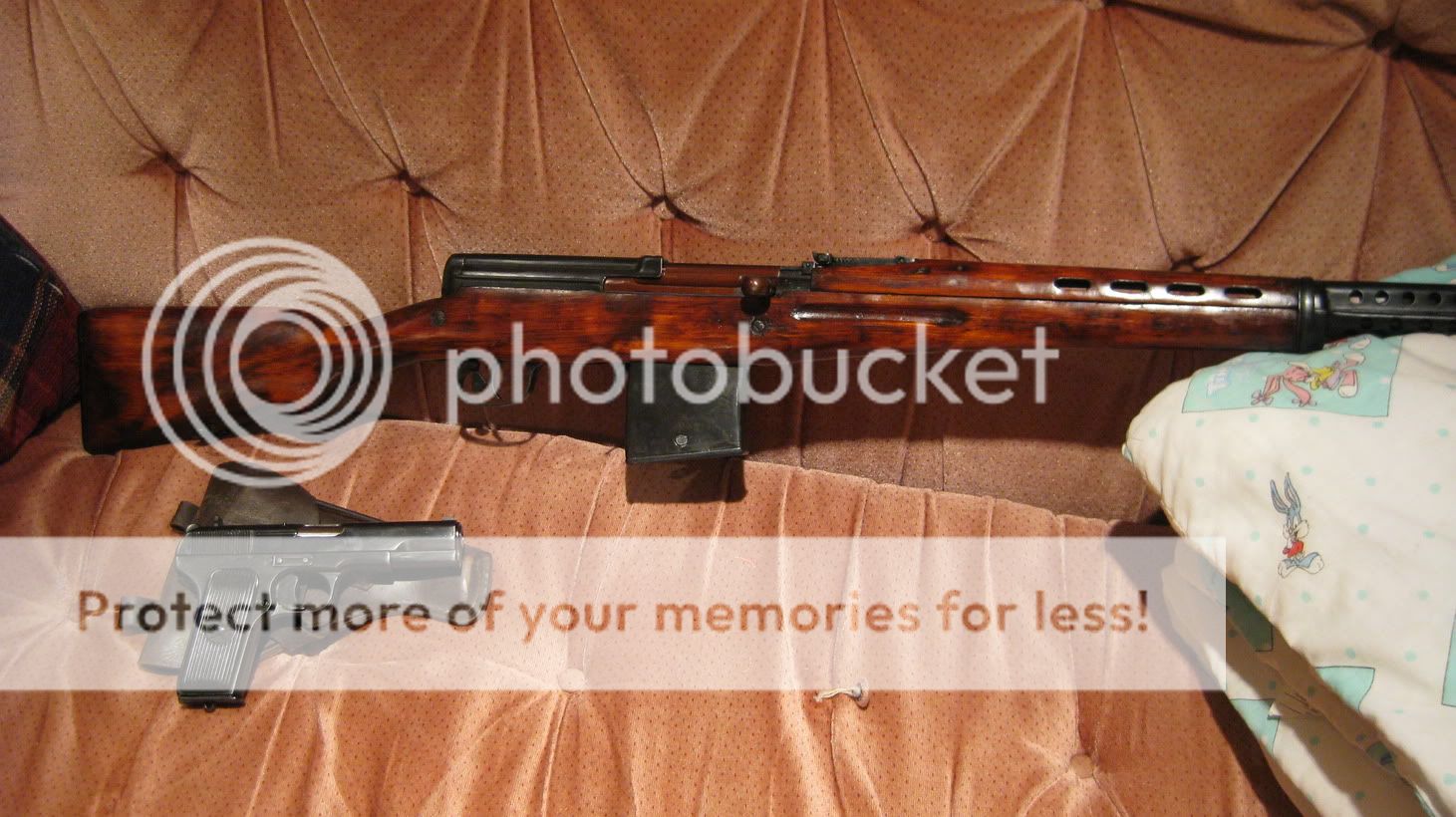
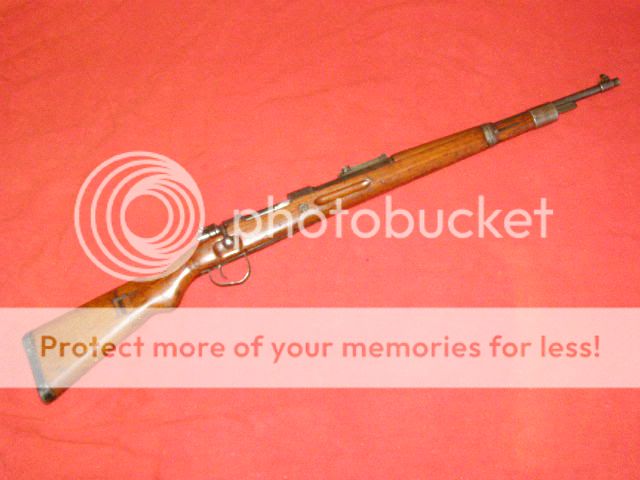
Very few people found the looks of a milsurp rifle appealing in those days. Canada had just gone through two wars and the people were tired of sending their sons off as cannon fodder to quell the evil tides. Milsurp firearms just brought things to close for comfort.
Those inlets were the rage back then. It was in vehicle interiors, furniture, rifle stocks and just about everything you could imagine. Today we look at it as tacky, back then it was fashionable. As for the stock with it's recoil pad, it's more than likely serving dual duty as a spacer as well. In 1955, my father bought a new in grease 303Brit No4 at the local gas station in Princeton BC for $2. That's what the owner was paying for them and was using them to get people to come to his station, rather than the new one on the high way. He had them for several years before they were all gone. Because of so many rifles being flooded on the markets, the milsurps generally got a bad name. Bubba would cut them down and relieve all of the pressure points, try to make them look pretty (in his mind) and in the case of mausers, throw away the pillars. Because of this, the rifles became unreliable and inaccurate. Many ended up in dumps and on lake bottoms or even buried in the outhouse. That rifle in the picture is a fine piece of craftsmanship compared to many I've seen. The fellow that did that one had a drill, saw, some sandpaper and varnish. I'll bet he was all of 10 or 12 years old when he got it for Christmas as a complete rifle and spent the rest of the year "customising" it for deer season, not that anyone paid much attention to seasons back then. If it shoots acceptably, at least he kept it up.
I understand your chagrin but you have no idea what it was like back then. I won't get into this here but the way most people did things and lived then, especially in the country, would curl up the hairs on your neck. If you graduated elementary school, you were considered well educated and prepared for most of what the world had to offer. Hard physical labor was the only work available for most and there were few if any laws or percs. 50-60 hours was a standard work week. My father worked in a copper mine above Princeton in a company town called Copper Mountain. Everything we bought came from the company store. You didn't pay for anything, the store just sent a slip to the accontant at the end of the month and all was deducted from your wages. Just like Tennesee Ernie Ford sang "I owe my soul to the company store". For many, that was literally the truth. The company store sold rifles by the way, the miners used them to supplement their larders.
Things are better now in many ways. Not all but most. In my youth, it wasn't uncommon for a man with a broken limb not to go to a doctor. It cost to much and most, being very self sufficient would get their buddy to set it for them. Same thing for stitches and dentistry. Personally, the first doctor I saw was when I got mumps at 7 years of age. I saw my first dentist in a company school when I was 6. People lived hard back then, many died early as well. Companies would work a man to death and think nothing of it. There was little if any social network but people "got by". It was up hill, both to and from school. Mostly because we hated being locked up in school where as many as six grades in one room was the norm and when we went home, there were some heavy duty chores to complete. With most men and the women that worked, working 6 day weeks, the kids had to do their share. Life is better now by a long shot. So are our rifles. What's left is history and fun, back then, they were a dime a dozen and considered ugly, because they were purpose built to kill people, not big game. It was a common phrase back then. The same was said about military cartridges, hence the "wildcat frenzy" of the period.
Enough already.
Those inlets were the rage back then. It was in vehicle interiors, furniture, rifle stocks and just about everything you could imagine. Today we look at it as tacky, back then it was fashionable. As for the stock with it's recoil pad, it's more than likely serving dual duty as a spacer as well. In 1955, my father bought a new in grease 303Brit No4 at the local gas station in Princeton BC for $2. That's what the owner was paying for them and was using them to get people to come to his station, rather than the new one on the high way. He had them for several years before they were all gone. Because of so many rifles being flooded on the markets, the milsurps generally got a bad name. Bubba would cut them down and relieve all of the pressure points, try to make them look pretty (in his mind) and in the case of mausers, throw away the pillars. Because of this, the rifles became unreliable and inaccurate. Many ended up in dumps and on lake bottoms or even buried in the outhouse. That rifle in the picture is a fine piece of craftsmanship compared to many I've seen. The fellow that did that one had a drill, saw, some sandpaper and varnish. I'll bet he was all of 10 or 12 years old when he got it for Christmas as a complete rifle and spent the rest of the year "customising" it for deer season, not that anyone paid much attention to seasons back then. If it shoots acceptably, at least he kept it up.
I understand your chagrin but you have no idea what it was like back then. I won't get into this here but the way most people did things and lived then, especially in the country, would curl up the hairs on your neck. If you graduated elementary school, you were considered well educated and prepared for most of what the world had to offer. Hard physical labor was the only work available for most and there were few if any laws or percs. 50-60 hours was a standard work week. My father worked in a copper mine above Princeton in a company town called Copper Mountain. Everything we bought came from the company store. You didn't pay for anything, the store just sent a slip to the accontant at the end of the month and all was deducted from your wages. Just like Tennesee Ernie Ford sang "I owe my soul to the company store". For many, that was literally the truth. The company store sold rifles by the way, the miners used them to supplement their larders.
Things are better now in many ways. Not all but most. In my youth, it wasn't uncommon for a man with a broken limb not to go to a doctor. It cost to much and most, being very self sufficient would get their buddy to set it for them. Same thing for stitches and dentistry. Personally, the first doctor I saw was when I got mumps at 7 years of age. I saw my first dentist in a company school when I was 6. People lived hard back then, many died early as well. Companies would work a man to death and think nothing of it. There was little if any social network but people "got by". It was up hill, both to and from school. Mostly because we hated being locked up in school where as many as six grades in one room was the norm and when we went home, there were some heavy duty chores to complete. With most men and the women that worked, working 6 day weeks, the kids had to do their share. Life is better now by a long shot. So are our rifles. What's left is history and fun, back then, they were a dime a dozen and considered ugly, because they were purpose built to kill people, not big game. It was a common phrase back then. The same was said about military cartridges, hence the "wildcat frenzy" of the period.
Enough already.