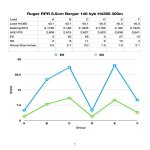
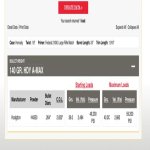
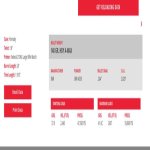
You bring up an excellent point, and a big reason I don't list my load data... if you look at various load data from component companies, you will quickly see that min/max powder charges vary ... and quite a bit.
https://load-data.nosler.com/load-data/65-creedmoor/
https://sierrabulletsblog.com/2017/01/09/sierra-bullets-6-5-creedmoor-load-data/
With all the possible options in brass, primers (size and type), bullets, barrels and of course, powder lots, how the heck do you know what to believe and where to start?
Follow the main rule in reloading... "start low and work up, looking for pressures signs".... and I will add one more very important thing... monitor the velocities and understand you are near max pressures when you approach the max listed velocities of several professional data sources.
Powder lots can and will vary.. sometimes quite a lot. So can case volumes and primer brissance, etc.
When the data was generated, THAT specific combo of stuff produced the results which they list. If you look at the other two links.. Nosler and Sierra offer quite different max loads. The data I am basing my loading on, had a slightly higher max charge again.... and yes, I do load within that range which I will get to in a moment.
But the one thing that is universal throughout ALL the data (and if you check, factory ammo) is the listed max velocity for that given bullet weight.
Look up the velocity from EVERY reloading manual and site (again, professional only), and you will see that the listed max velocity for a 6.5 Creedmoor in a 24" barrel using a 140gr bullet is right around 2700fps... a bit lower, a bit higher, but all in the same ball park.
And this is why owning a chronograph is so important.
When I worked up my loads with MY set of components, I hit 2700fps right in the middle of the range I suggested... other shooters I know were closer to the top end likely due to longer throats and/or looser barrels (all shoot factory rifles.. but that can also vary).
If you hit 2700fps but are say at 39.8gr of H4350 in YOUR set up, that's it.... in your rifle, using your specific batch of stuff, you are working in the max pressure ranges of this cartridge. Sure you can fudge a little higher as long as there are no obvious pressure signs but you aren't getting another 100fps or more with "no pressure".
I run two brands of brass... and the working loads vary almost 1 gr between. Same velocity, same drop chart out to 1000yds
now you run a small rifle primer brass and find that you actually need to add more powder, that would not be weird or unsafe. SR primers can have way less flash then a LR primer... but then some SR primer cases have smaller case volume... and on and on it goes.
So instead of trying to brain crunch all options to figure out THE load (which you never can by the way), just go to the range with ammo starting low and work up. Monitor the velocities and fired cases... and of course the target.
If you are new, or never seen this combo of chamber and rifle, I would make up 2rds using a min, mid and max printed load. Shoot them and see where the velocities lie.
I have had rifles that hit max using a start load (just like my suggested powder charge compares to your posted data)... I have had rifles that went a few grains beyond to hit the expected velocities. You just never know so don't guess... start low and work up.
Now a big giveaway on why your Hodgdon data is so different then the other two sources, note that both H4350 and IMR 4350 data show a compressed load. Compare that to the Nosler data which also uses HRN brass but only lists it as 93% full.
The brass that Hodgdon ran had way less case volume then the stuff Nosler ran. More case volume... more fuel to reach the same pressures/velocity. I love that Nosler shows the H2O capacity of the cases they tested... THAT is good data.
I am also using HRN brass, I am no where near a compressed load.
Components vary..... work up slowly... watch the max velocities and target.
Simple.
Jerry