Finnish Service rifles (19th century and 20th century) - Collections & Accessories

Jeepix

Member
Rating - 0%
0   0   0
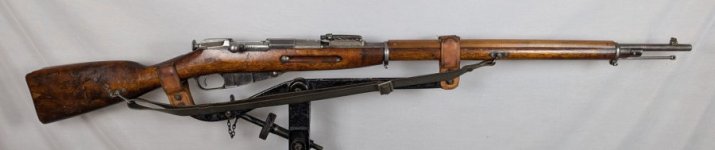
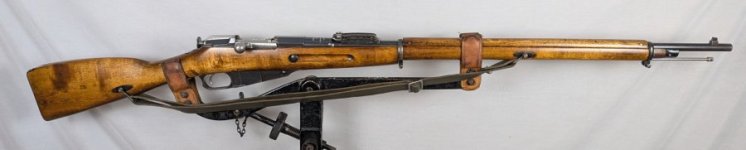
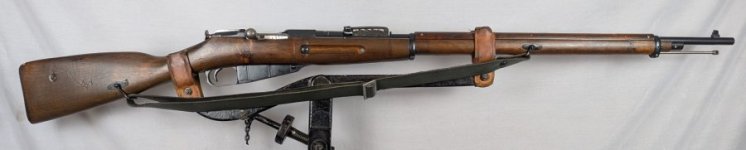
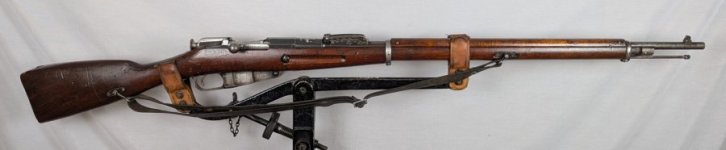
Suomalainen m/91 ("7,62 kiv/91" & "762 KIV 91")
Mosin-Nagant Model 1891 "Three-line rifle"
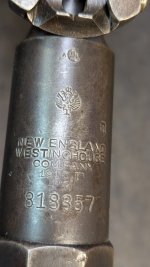
1915 Made by New England Westinghouse Co. (East Springfield, Massachusetts) J. Stevens Arms & Tool Company, (Chicopee Falls, Mass.)
Production: 1915 to 1918 (New England Westinghouse Co.)
SN# 818857
7,62×53mmR (m.1936 typ D166)
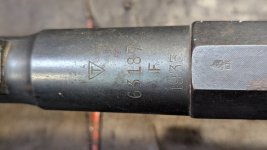
"D" stamp on the barrel shank of earlier Finnish Mosin’s (such as upgraded m/27s and m/91). This indicated that the chamber throat was modified to safely accept the wider D-166 projectile and allowed troops to utilize captured Russian steel-core ammo without causing overpressure.
5 rd. Single stack Integral Box Magazine (Non-removable)
The final cost of manufacturing a M1891 (three-line) rifle with its bayonet was at the time between $25 and $30 USD.
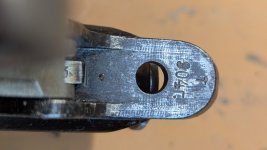
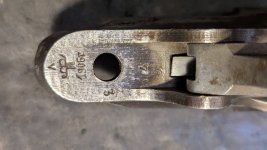
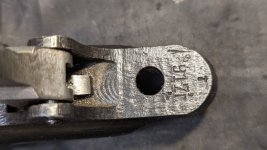
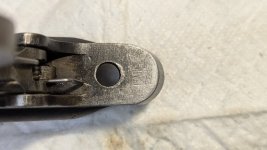
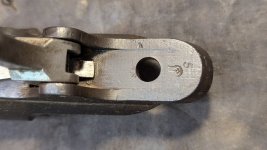
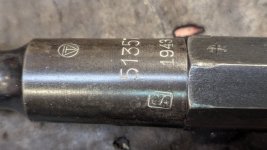
Receiver Tang marking – Year (19??) & Made by New England Westinghouse Co.
Bolt action (Cocking on Open & Hexagonal receiver, some prefer "octagonal")
Designed by Captain Sergei Ivanovich Mosin & Émile and Léon Nagant.

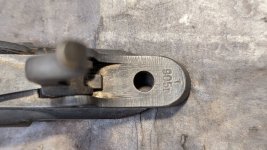
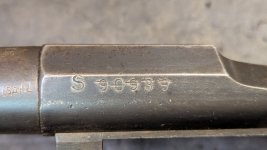
Civil Guard District: Vaasa District S90939

Russian Name Origin: "Three-line" (tret'ya lin'ya) comes from the Imperial Russian system where one "line" equals one-tenth of an inch (approx. 2.54mm), making the bore diameter 0.3 inches, or 7.62mm. Russian Official Designation: Its official name was the "3-Line Rifle, Model 1891" (Tрёхлинейная винтовка образца 1891 года).

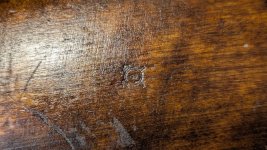
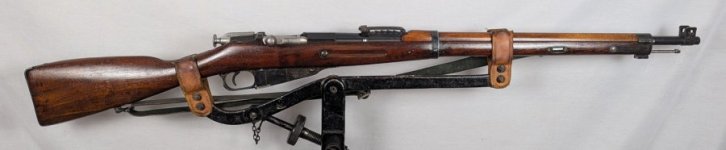
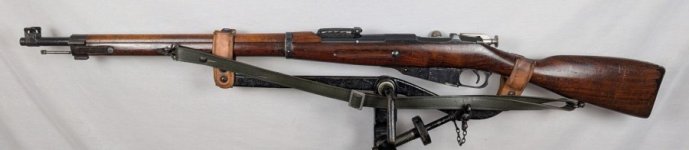
Used by Finland before and after their independence from Russia (December 6, 1917), the former Grand Duchy of Finland being under Russian rule; 1,165,000 rifles were produced by the New England Westinghouse Co. and sent to Russia before the Russian Revolution of 1917; SA marked (Suomen Armeija); Matching bolt & barrel; Finn sling swivels; Russian arshin range markings on the left side & meter range marking on the right (1 arshin = 28 inches), the original rear sights on the Model 1891 rifles are a flat leaf graduated in arshini (singular arshin) which is an archaic Russian unit equal to 28". The base has five notches numbered 4, 6, 8, 10, and 12 representing hundreds of arshini; manufacturer) was used by the famous Finnish sniper Simo Häyhä at the very beginning of his military career. Normally 'D' Marked for Finnish D166 cartridge (Not visible on this m/91) was done to the chamber to allow the use of the new Finn D-166 and Soviet 'D' rounds. D-166 round straight from the Soviet factory. D-166 round had the same dimensions as the Soviet 'D' round introduced in the 1930s. The barrel would still have been marked 'D' for the Finns peace of mind; New England Westinghouse, “straight logo” arsenal mark with “soft” eagle; Finnish use: This was the standard issue Russian infantry long rifle of World War 1. It was also the most common rifle in Finnish use from year 1918 until 1950's. Due to often-poor condition of m/91 rifles during World War 2 the intention was to primarily issue newer rifles to frontline-infantry, but as there never were enough of newer rifles available, so also m/91 was issued to frontline infantry and all kinds of other troops in very large numbers; "Boxed SA" marked; Russian rear sight "Konovalov sight M/1910". "Boxed SA" marked. Finn Leather sling (Original), m/91 wooden muzzle cover.
Capture d’écran 2026-02-10 180319.jpg
PXL_20251124_014248471.jpg
PXL_20251124_014323224.jpg
PXL_20251124_015504519.jpg
PXL_20251124_015508572.jpg
 
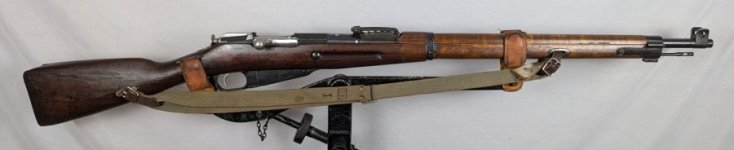
Suomalainen m/27 ("7,62 kiv/27" & "762 KIV 27")
(AKA "Pystykorva")
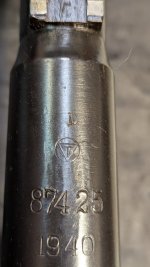
1940 Made by Tikka (Oy Tikkakoski Ab).
SN# 87425
7,62×53mmR (m.1936 typ D166)
"D" stamp on the barrel shank of earlier Finnish Mosin’s (such as upgraded m/27 and m/91). This indicated that the chamber throat was modified to safely accept the wider D-166 projectile and allowed troops to utilize captured Russian steel-core ammo without causing overpressure.
5 rd. Single stack Integral Box Magazine (Non-removable)
Production: 1927 to 1940.
Total Production Quantity: 68,000 rifles and 13,000 rifles m/27 produced in 1940 (Tikka).
Bolt action (Cocking on open & Hexagonal receiver, some prefer "octagonal")
Designed by Captain Sergei Ivanovich Mosin & Émile and Léon Nagant.
Receiver Tang marking – Year (19??) & Made by ????

Matching bolt & barrel shank; Russian arshin range markings on the left side & meter range marking on the right (1 arshin = 28 inches), the original rear sights on the Model 1891 rifles are a flat leaf graduated in arshini (singular arshin) which is an archaic Russian unit equal to 28". The base has five notches numbered 4, 6, 8, 10, and 12 representing hundreds of arshini; Spliced Russian stock & intact sling slot with no rear swivel & Late one-piece nose cap with "popsicle sticks" reinforcement upgrade; ‘’D’’ Marked for Finnish D166 cartridge; Usually early m/27 stocks had their rear parts recycled from old m/91 rifle stocks, while front parts were new and Finnish made. Also, handguards used for the rifles were new and Finnish-made; 'D' Marked for Finnish D166 cartridge. The Finnish 'D' modification was done to the chamber to allow the use of the new Finn D-166 and Soviet 'D' rounds. It is unlikely that a captured rifle would've received the 'D' modification as the chamber would be able to handle the D-166 round straight from the Soviet factory. The D-166 round had the same dimensions as the Soviet 'D' round introduced in the 1930s. The barrel would still have been marked 'D' for the Finns peace of mind.

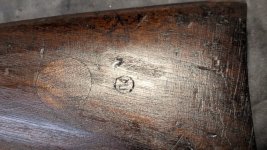
Finnish use: This was the first domestic rifle model designed for Finnish Army. What is known it was the most common rifle model issued for frontline infantry during Winter War (1939 - 1940), even if it had its share of problems. Spliced Russian stock, intact sling slot, no rear swivel & late nose cap with "popsicle sticks" reinforcement upgrade; "Boxed SA" marked; Russian rear sight "Konovalov sight M/1910". Finnish Army canvas sling (SA marked); m/27 wooden muzzle cover. "Boxed SA" marked. Finn Leather sling (Original).

Capture d’écran 2026-02-10 142419.jpg
PXL_20251125_192858318.jpg
PXL_20251125_193244987.jpg
 
Last edited:
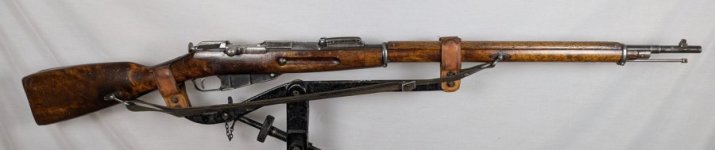
Suomalainen m/28 ("7,62 kiv/28" & "762 KIV 28")
(AKA "Suojeluskuntain Pystykorva")
1928
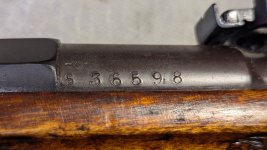
SN# S36598
Made by SIG Schweizerische Industrie Gesellschaft (Société industrielle suisse - SIG), In Neuhausen - SIG barrel only (20,000 barrels produced).
Productions: 1928 to 1930 and 1933 (SIG)
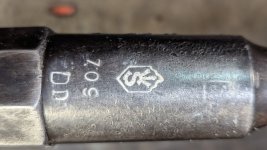
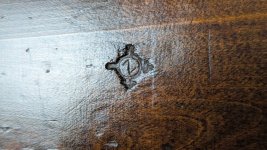
Total production quantity: 20,000 barrels; Not dated, but small 2-digit date (27, 28, or 29) in a diamond on the underside of the barrel shank indicates the barrel manufacture date.
7,62×53mmR (m.1936 typ D166)
"D" stamp on the barrel shank of earlier Finnish Mosin’s (such as upgraded m/27s and m/91). This indicated that the chamber throat was modified to safely accept the wider D-166 projectile and allowed troops to utilize captured Russian steel-core ammo without causing overpressure.
5 rd. Single stack Integral Box Magazine (Non-removable)
Receiver Tang marking – Year (19??) & Made by ????
Bolt action (Cocking on open & Hexagonal receiver, some prefer "octagonal")
Designed by Captain Sergei Ivanovich Mosin & Émile and Léon Nagant.

Civil Guard District: Kanta District S36598

Russian arshin range markings on the left side & meter range marking on the right (1 arshin = 28 inches), the original rear sights on the Model 1891 rifles are a flat leaf graduated in arshini (singular arshin) which is an archaic Russian unit equal to 28". The base has five notches numbered 4, 6, 8, 10, and 12 representing hundreds of arshini; Normally 'D' Marked for Finnish D166 cartridge (Not visible on this m/28). The Finnish 'D' modification was done to the chamber to allow the use of the new Finn D-166 and Soviet 'D' rounds. It is unlikely that a captured rifle would've received the 'D' modification as the chamber would be able to handle the D-166 round straight from the Soviet factory. The D-166 round had the same dimensions as the Soviet 'D' round introduced in the 1930s. The barrel would still have been marked 'D' for the Finns peace of mind.

Finnish use: Bought by Suojeluskunta (Civil Guard), used by Finnish Army in World War 2, one of the rifle models issued mainly to frontline infantry use. Some of these rifles were modified to m/28-30 before the war. Early two-piece nose cap; "Boxed SA" marked; Russian rear sight "Konovalov sight M/1910".

Finnish Civil Guard Mosin-Nagant depot replacement sling (SkY marked); m/28 Aluminum muzzle cover (Civil guard marked).

Capture d’écran 2026-02-10 143516.jpg
PXL_20251125_234120565.jpg
PXL_20251125_020431170.jpg
 
Last edited:
Suomalainen m/91-24 ("7,62 kiv/91-24" & "762 KIV 91-24")
(AKA "Lotta-Svärd")
None of the m/91-24 barrels are dated. Prototype: 1923 (Unclear) And production: 1925-1928, total amount about 26,000.
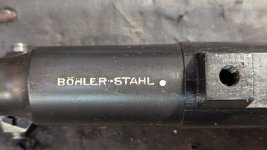
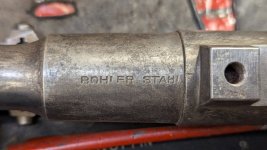
Made by Venus Waffenfabrik (Deutschland) Böhler-Stahl barrel only (Heavy "Stepped" Barrel)
SN# 769DD
7,62×53mmR (m.1936 typ D166)
"D" stamp on the barrel shank of earlier Finnish Mosin’s (such as upgraded m/27s and m/91). This indicated that the chamber throat was modified to safely accept the wider D-166 projectile and allowed troops to utilize captured Russian steel-core ammo without causing overpressure.
5 rd. Single stack Integral Box Magazine (Non-removable).
Receiver Tang marking - Year (Non-visible) & Made by (Non-visible).
Bolt action (Cocking on open & Hexagonal receiver, some prefer "octagonal")
Designed by Captain Sergei Ivanovich Mosin & Émile and Léon Nagant.

Normally the rifle barrels originating from Venus Waffenfabrik are marked with Böhler Stahl marking to indicate quality of steel specified in Civil Guard's order; ‘’D’’ Marked for Finnish D166 cartridge; Les lottas (Lotta-Svärd) sont les femmes qui se sont engagées volontairement dans l'armée finlandaise à partir de l'indépendance de leur pays en 1917, En 1944, elle comptait 242 000 volontaires, soit la plus importante organisation d'auxiliaires volontaires du monde, alors que la population de la Finlande ne dépassait pas les 4 millions d'habitants. Les fonds ont été fournis par la Lotta-Svärd, qui a amassé environ un demi-million de marks finlandais pour ce projet. Usually m/91-24 stocks had their rear parts recycled from old m/91 rifle stocks, while front parts were new and Finnish made. Also, handguards used for the rifles were new and Finnish-made; 'D' Marked for Finnish D166 cartridge. The Finnish 'D' modification was done to the chamber to allow the use of the new Finn D-166 and Soviet 'D' rounds. It is unlikely that a captured rifle would've received the 'D' modification as the chamber would be able to handle the D-166 round straight from the Soviet factory. The D-166 round had the same dimensions as the Soviet 'D' round introduced in the 1930s. The barrel would still have been marked 'D' for the Finns peace of mind.

Finnish use: In essence infantry rifle m/91-24 was Finnish Civil Guard developed long rifle directly based on m/91 with new rifle barrel and some small improvements. While this was originally Civil Guard rifle model, during World War 2 it served with Finnish Armed Forces along other Civil Guard weapons transferred to Armed Forces in mobilization of year 1939. Barrel band retaining screw (late); Russian arshin range markings on the left side & meter range marking on the right (1 arshin = 28 inches), the original rear sights on the Model 1891 rifles are a flat leaf graduated in arshini (singular arshin) which is an archaic Russian unit equal to 28". The base has five notches numbered 4, 6, 8, 10, and 12 representing hundreds of arshini; "Boxed SA" marked; Russian rear sight "Konovalov sight M/1910". Finn Leather sling (Original). "Boxed SA" marked, m/91-24 ('Zamak' Zink muzzle cover).

Capture d’écran 2026-02-10 172956.jpg
PXL_20260320_021924037.jpg


PXL_20260320_021618270.jpg
 
Last edited:
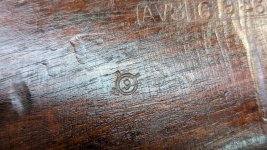
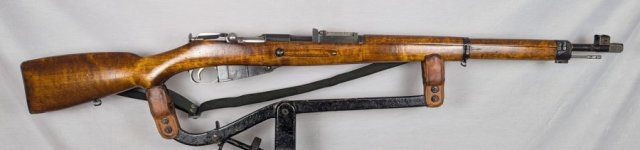
Suomalainen m/39 ("7,62 kiv/39" & "762 KIV 39")
(AKA "Ukko-Pekka")
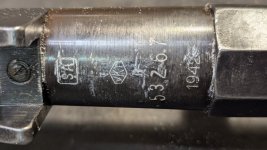
1942
Made by AV3 – (Asevarasto 3 - Army Weapons Depot #3) & VKT – (Valtion Kivääritehdas; State Rifle Factory, Now Valmet)
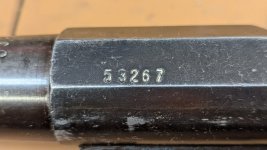
SN# 53267
7,62×53mmR (m.1936 typ D166)
"D" stamp on the barrel shank of earlier Finnish Mosin’s (such as upgraded m/27s and m/91). This indicated that the chamber throat was modified to safely accept the wider D-166 projectile and allowed troops to utilize captured Russian steel-core ammo without causing overpressure.
5 rd. Single stack Integral Box Magazine (Non-removable).
Production: 1940 to 1944.
Total Production Quantity: 55,000 rifles (VKT).
Receiver Tang marking – Year (1904) & Made by Tula.
Bolt action (Cocking on open & Hexagonal receiver, some prefer "octagonal")
Designed by Captain Sergei Ivanovich Mosin & Émile and Léon Nagant.

The Finnish army was looking to solve their problems with the m/27 and formed an agreement with the Civil Guard to standardize on a new rifle that utilizes key features from the m/28-30. Sako would begin producing this new rifle in 1940, and the first 7,000 had no pistol grip. After the initial 7,000, all subsequent m/39 rifles now had a pistol grip but were otherwise unchanged mechanically. Sako produced these rifles for both the army as well as the civil guard, and VKT would produce examples for the army; Weapons Depot 3 (AV3) manufactured about 30,300 m/39 rifles, which went to Armed Forces. The rifles m/39 manufactured in Weapons Depot 3 had rifle barrels made by VKT (Valtion Kivääritehdas = State Rifle Factory); 'D' Marked for Finnish D166 cartridge. The Finnish 'D' modification was done to the chamber to allow the use of the new Finn D-166 and Soviet 'D' rounds. It is unlikely that a captured rifle would've received the 'D' modification as the chamber would be able to handle the D-166 round straight from the Soviet factory. The D-166 round had the same dimensions as the Soviet 'D' round introduced in the 1930s. The barrel would still have been marked 'D' for the Finns peace of mind.

Finnish use: Issued mainly to Finnish frontline troops during Continuation War (1941 - 1944). As produced mainly during that war the percentage m/39 among all rifles used by Finnish troops increased steadily during the war. Most typical Finnish post World War 2 rifle type until bolt lock rifles were replaced by assault-rifles starting from 1960's; "Boxed SA" marked. Finn Leather sling (Original); m/39 Bayonet; Blank Firing Adaptor (BFA), Muzzle cover (Red Plastic modification); Muzzle cover (Checketed steel modification); Muzzle cover (Flat brass modification).

Capture d’écran 2026-03-15 183915.jpg
PXL_20251130_214546576.jpg
PXL_20260527_025029147.jpg
PXL_20260527_024931151.jpg
 
Last edited:
Suomalainen P-26
1926

SN# 6829
Production: 1925 to 1928 (Date is two digits following "P-" on the barrel shank). Known Serial Number Range 284 to 10595 for the P-26.
"P-Series" ('P' stands for 'Putkitettu' which means 'sleeved')
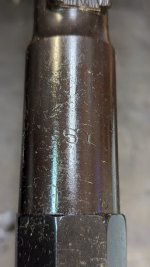
"S" Marked (stands for Salerno where process was developed)
Made by Sako (Suojeluskuntain Ase- ja Konepaja Oy) with the “Salerno-method” Relining process (m/91 Relined barrels).
Bolt action (Cocking on open & Hexagonal receiver, some prefer "octagonal")
Designed by Captain Sergei Ivanovich Mosin & Émile and Léon Nagant.
Receiver Tang marking – (1906) & Made by Izhevsk.

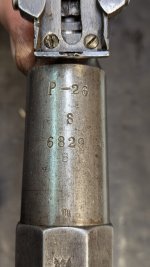
The Finnish army undertook a project to reline worn out m/91 barrels in 1925. "P-Series" with markings of P-26 on the barrel shank with the numbers indicating the year. These rifles were stamped P-25, P-26, P-27, or P-28 depending on the year the conversion was done, P-25 markings have been reported but not confirmed; All the original Russian markings are removed from the barrel shank. Some of these barrels are also marked with an “S” which is believed to indicate “Salerno”, the town in Italy where the relining process was developed. Salerno Sleeved Barrel, in order to reuse the larger diameter bores of many rifles 10,4x47mmR would drill out the rifling and insert a sleeve using the method developed by the Italian man Giuseppe Salerno. This method was used by Italy during WW1 to convert 10,4x47mmR Vetterli rifles to shoot the smaller diameter 6,5x52mm Carcano projectile. It is thought that many of these relined barrels were not installed on receivers until the desperate times of the Winter (1939-40) and Continuation wars (1941-44). Many of the P-Series barrels are “in the white” while the receiver and other parts are blued, which supports this theory. The basic configuration is identical to the m/91, with the same variations in minor features typically found on Finnish rifles. P-Series rifles have the same type sights as the Russian Konovalov design of 1908.

The primary difference is the Finns remarked the rear sight bases in meters utilizing the existing notches. Occasionally an extra notch is cut at the rear of the base and is marked 2 (200 meters). Typically, the numbers are placed on the right side of the base, which was left blank by the Russians, but there are lots of variations in the manner of the numbering and how the existing Russian numbers were treated. P-Series front sight bases are integral to the barrel and identical to the Russian version. However, the variation in blades is tremendous. Uses the Russian socket bayonet Model 1891; Russian arshin range markings on the left side & meter range marking on the right (1 arshin = 28 inches), the original rear sights on the Model 1891 rifles are a flat leaf graduated in arshini (singular arshin) which is an archaic Russian unit equal to 28". The base has five notches numbered 4, 6, 8, 10, and 12 representing hundreds of arshini; P-25 markings have been reported but not confirmed; "Boxed SA" marked; Russian rear sight "Konovalov sight M/1910". Finn Leather sling (Original), m/91 wooden muzzle cover.

Capture d’écran 2026-02-10 171735.jpg
PXL_20251204_163031467.jpg
PXL_20251204_163221934.jpg
 
Last edited:
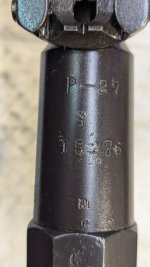
Suomalainen P-27
1927

SN# 15276
Production: 1925 to 1928 (Date is two digits following "P-" on the barrel shank). Known serial number range 9922 to 16854 for the P-27.
"P-Series" ('P' stands for 'Putkitettu' which means 'sleeved')
"S" Marked (stands for Salerno where process was developed)
Made by Sako (Suojeluskuntain Ase- ja Konepaja Oy) with the “Salerno-method” Relining process (m/91 Relined barrels).
Bolt action (Cocking on open & Hexagonal receiver, some prefer "octagonal")
Designed by Captain Sergei Ivanovich Mosin & Émile and Léon Nagant.
Receiver Tang marking – Year (1906) & Made by Sestroryetsk.

The Finnish army undertook a project to reline worn out m/91 barrels in 1925. "P-Series" with markings of P-26 on the barrel shank with the numbers indicating the year. These rifles were stamped P-25, P-26, P-27, or P-28 depending on the year the conversion was done, P-25 markings have been reported but not confirmed; All the original Russian markings are removed from the barrel shank. Some of these barrels are also marked with an “S” which is believed to indicate “Salerno”, the town in Italy where the relining process was developed. Salerno Sleeved Barrel, in order to reuse the larger diameter bores of many rifles 10,4x47mmR would drill out the rifling and insert a sleeve using the method developed by the Italian man Giuseppe Salerno. This method was used by Italy during WW1 to convert 10,4x47mmR Vetterli rifles to shoot the smaller diameter 6,5x52mm Carcano projectile. It is thought that many of these relined barrels were not installed on receivers until the desperate times of the Winter (1939-40) and Continuation wars (1941-44). Many of the P-Series barrels are “in the white” while the receiver and other parts are blued, which supports this theory. The basic configuration is identical to the m/91, with the same variations in minor features typically found on Finnish rifles. P-Series rifles have the same type sights as the Russian Konovalov design of 1908.

The primary difference is the Finns remarked the rear sight bases in meters utilizing the existing notches. Occasionally an extra notch is cut at the rear of the base and is marked 2 (200 meters). Typically, the numbers are placed on the right side of the base, which was left blank by the Russians, but there are lots of variations in the manner of the numbering and how the existing Russian numbers were treated. P-Series front sight bases are integral to the barrel and identical to the Russian version. However, the variation in blades is tremendous. Uses the Russian socket bayonet Model 1891; Russian arshin range markings on the left side & meter range marking on the right (1 arshin = 28 inches), the original rear sights on the Model 1891 rifles are a flat leaf graduated in arshini (singular arshin) which is an archaic Russian unit equal to 28". The base has five notches numbered 4, 6, 8, 10, and 12 representing hundreds of arshini; P-25 markings have been reported but not confirmed; "Boxed SA" marked; Russian rear sight "Konovalov sight M/1910". Finn Leather sling (Original), m/91 wooden muzzle cover.

Capture d’écran 2026-02-10 170610.jpg
PXL_20251204_200933867.jpg
PXL_20251204_200939591.jpg
PXL_20251204_201109705.jpg
 
Suomalainen m/91 ("7,62 kiv/91" & "762 KIV 91")
Mosin-Nagant Model 1891 "Three-line rifle"
1917
Production: 1917 & 1918 (Remington Arms Co.)
SN# 283820
Made by Remington Arms Co. (Ilion, NY or Bridgeport, CT)
The final cost of manufacturing a M1891 (three-line) rifle with its bayonet was at the time between $25 and $30 USD.
Receiver Tang marking – Year (Non-visible) & Made by Remington Arms Co.
7,62×53mmR (m.1936 typ D166)
"D" stamp on the barrel shank of earlier Finnish Mosin’s (such as upgraded m/27 and m/91). This indicated that the chamber throat was modified to safely accept the wider D-166 projectile and allowed troops to utilize captured Russian steel-core ammo without causing overpressure.
5 rd. Single stack Integral Box Magazine (Non-removable).
Bolt action (Cocking on open & Hexagonal receiver, some prefer "octagonal")
Designed by Captain Sergei Ivanovich Mosin & Émile and Léon Nagant.

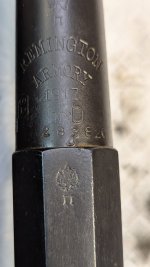
Russian Name Origin: "Three-line" (tret'ya lin'ya) comes from the Imperial Russian system where one "line" equals one-tenth of an inch (approx. 2.54mm), making the bore diameter 0.3 inches, or 7.62mm. Russian Official Designation: Its official name was the "3-Line Rifle, Model 1891" (Tрёхлинейная винтовка образца 1891 года). Used by Finland both before and after its independence from Russia (December 6, 1917), the former Grand Duchy of Finland being under Russian rule; 508,000 rifles were produced by the Remington Arms Co. and shipped to Russia before the 1917 Russian Revolution; SA marked (Suomen Armeija); Matching bolt/barrel and receiver; Finn sling swivels; Russian arshin range markings on the left side and meter range marking on the right (1 arshin = 28 inches); This model (including the same manufacturer) was used by the famous Finnish sniper Simo Häyhä at the very beginning of his military career. 'D' Marked for Finnish D166 Cartridge. The Finnish 'D' modification was made to the chamber to allow the use of the new Finn D-166 and Soviet 'D' rounds. It is unlikely that a captured rifle would've received the 'D' modification as the chamber would be able to handle the D-166 round straight from the Soviet factory. The D-166 round had the same dimensions as the Soviet 'D' round introduced in the 1930s. The barrel would still have been marked 'D' for the Finns peace of mind. Remington Arms Co., Remington Armory (1917-1918) with “soft” eagle.

Finnish use: This was the standard issue Russian infantry long rifle of World War 1. It was also the most common rifle in Finnish use from year 1918 until 1950's. Due to often-poor condition of m/91 rifles during World War 2 the intention was to primarily issue newer rifles to frontline-infantry, but as there never were enough of newer rifles available, so also m/91 was issued to frontline infantry and all kinds of other troops in very large numbers. "Boxed SA" marked; Russian arshin range markings on the left side & meter range marking on the right (1 arshin = 28 inches), the original rear sights on the Model 1891 rifles are a flat leaf graduated in arshini (singular arshin) which is an archaic Russian unit equal to 28”. sight M/1910". Finn Leather sling (Original); m/91 wooden muzzle cover.

Capture d’écran 2026-02-10 175422.jpg
PXL_20251211_034930225.jpg
PXL_20251211_035031225.jpg
 
Last edited:
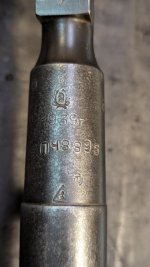
Suomalainen m/91-30 ("7,62 kiv/30" & "762 KIV 30")
Mosin-Nagant-kivääri, malli 1891/30 (sotapalkinto)
1939
Production: 1935 to 1945 for Izhevsk with round receiver.
SN# ПЧ8898 (PC8898 in Latin)
Made by Izhevsk Mechanical Plant - Ижевский Механический Завод, Izhevsky Mekhanicheskiy Zavod
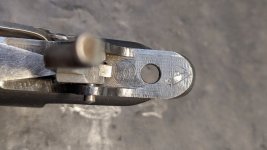
Receiver Tang marking – Year (1939) & Made by Izhevsk.
7,62×53mmR (m.1936 typ D166)
"D" stamp on the barrel shank of earlier Finnish Mosin’s (such as upgraded m/27 and m/91). This indicated that the chamber throat was modified to safely accept the wider D-166 projectile and allowed troops to utilize captured Russian steel-core ammo without causing overpressure.
5 rd. Single stack Integral Box Magazine (Non-removable).
Bolt action (Cocking on open & Round receiver)
Designed by Captain Sergei Ivanovich Mosin & Émile and Léon Nagant.

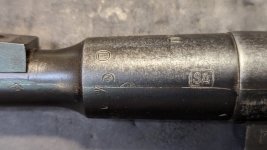
The best-known identifier is the SA mark typically found on the left side of the barrel along the Woodline, although occasionally in other locations on the barrel shank. Other Finnish marks include "PUOLUSTUSLAITOS", "D", and "41". Stocks on Finnish/Soviet M1891/30’s can be Soviet, Soviet with a spliced Finnish fore end, or completely Finnish. Miscellaneous parts and features vary greatly due to the number of early parts on hand in Finland used for repairs. Serial numbers on the floorplate and Butt plate are typically mismatched and should be expected. Bolts are typically re-numbered either on the body or the knob. Despite this "parts gun" character Finnish marked Soviet M1891/30s are very desirable and more valuable than the typical refurbished import. There have also been several cases of Finnish marked M1891/30s being imported from Ukraine in refurbished condition. These would have been captured from the Soviets during the Winter or Continuation War, marked, and subsequently recaptured by the Soviets and placed back in inventory. They are much less common than rifles marked by Finland which stayed in Finland and should command a slight premium. They are certainly a "must buy" when sold at the going price for Soviet refurbs which they often are. Less common even than Finnish marked Soviet M1891/30s are an interesting part of any Mosin-Nagant collection.

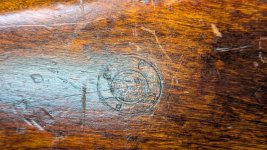
Finnish use: Over 100,000 of these rifles were captured and used by Finnish troops during World War II. Few thousand M1891/30 rifles were built with Finnish barrels in 1943 – 1944; "Boxed SA" marked; Flat rear sight & "Stacked" front blade sight; Soviet "CCCP" cartouche Stock. Soviet Canvas sling, "Boxed SA" marked; M1891/30 bayonet & Leather Scabbard.

Capture d’écran 2026-02-10 165450.jpg
PXL_20251213_195425588.jpg
PXL_20251213_195513802.jpg

PXL_20251213_195634651.jpg
PXL_20251213_201627016.jpg
 
Suomalainen m/91 ("7,62 kiv/91" & "762 KIV 91")
Mosin-Nagant Model 1891 "Three-line rifle"
1917
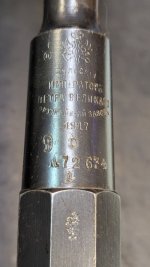
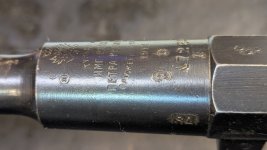
Production: 1912 to 1918 at Tula (Imperial Tula Arms Plant / Императорский Тульский оружейный завод)
SN# 72634
Made by “Tula Emperor’s Peter the Great (Peter I) Firearm Factory” Тульский императорский оружейный завод Петра Великого (Петра I)
Receiver Tang marking – Year (1917) Made by Tula.
7,62×53mmR (m.1936 typ D166)
"D" stamp on the barrel shank of earlier Finnish Mosin’s (such as upgraded m/27s and m/91). This indicated that the chamber throat was modified to safely accept the wider D-166 projectile and allowed troops to utilize captured Russian steel-core ammo without causing overpressure.
5 rd. Single stack Integral Box Magazine (Non-removable).
Bolt action (Cocking on open & Hexagonal receiver, some prefer "octagonal")
Designed by Captain Sergei Ivanovich Mosin & Émile and Léon Nagant.

Russian Name Origin: "Three-line" (tret'ya lin'ya) comes from the Imperial Russian system where one "line" equals one-tenth of an inch (approx. 2.54mm), making the bore diameter 0.3 inches, or 7.62mm. Russian Official Designation: Its official name was the "3-Line Rifle, Model 1891" (Tрёхлинейная винтовка образца 1891 года).

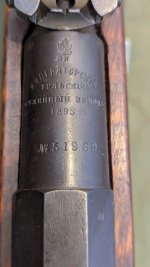
The Imperial Tula Arsenal Peter the Great markings: 1912 – 1918: In the first production of the year 1891, the Tula barrel was marked with a different font and style, then the marking in use changed to the one previously shown. About the barrel, another change started in 1912 with the introduction of a new style of markings due to the celebration of the Tsar ‘’Peter the Great’’ (Peter I), founder of the Arsenal in 1712, as mentioned before (Russia's first state arms factory and a crucial center for military production). This led to the following beautiful barrel marking, that is usually rare to find intact. This version, with a big Tsarist eagle, was in use from 1915 till 1918 while a version with a small eagle was stamped starting from 1912 till 1914.

Used by Finland before and after their independence from Russia (December 6, 1917), the former Grand Duchy of Finland being under Russian rule; SA marked (suomen armeija); Matching bolt/barrel & Receiver; Finn sling swivels; Russian arshin range markings on the left side & meter range marking on the right (1 arshin = 28 inches), the original rear sights on the Model 1891 rifles are a flat leaf graduated in arshini (singular arshin) which is an archaic Russian unit equal to 28". The base has five notches numbered 4, 6, 8, 10, and 12 representing hundreds of arshini; 'D' Marked for Finnish D166 Cartridge. The Finnish 'D' modification was done to the chamber to allow the use of the new Finn D-166 and Soviet 'D' rounds. It is unlikely that a captured rifle would have received the 'D' modification as the chamber would be able to handle the D-166 round straight from the Soviet factory. 'D' for the Finns peace of mind; This was the standard issue Russian infantry long rifle of World War 1. It was also the most common rifle in Finnish use from year 1918 until 1950's. Due to often-poor condition of m/91 rifles during World War 2 the intention was to primarily issue newer rifles to frontline-infantry, but as there never were enough of newer rifles available, so also m/91 was issued to frontline infantry and all kinds of other troops in very large numbers. "Boxed SA" marked; Russian rear sight "Konovalov sight M/1910". Finn Leather sling (Original); m/91 wooden muzzle cover.

Capture d’écran 2026-02-10 174300.jpg
PXL_20251218_014906776.jpg
PXL_20251218_014914139.jpg
PXL_20251218_014953391.jpg
 
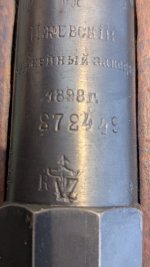
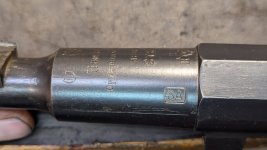
Suomalainen m/91 ("7,62 kiv/91" & "762 KIV 91")
Mosin-Nagant Model 1891 "Three-line rifle"
1898 Izhevsk production: 1891 to 1926 and may have ended prior to 1926.
SN# 272449
Made by Izhevsk Mechanical Plant - Ижевский Механический Завод, Izhevsky Mekhanicheskiy Zavod
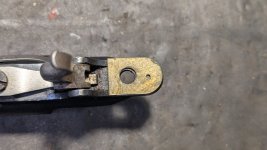
Receiver Tang marking – Year (Non-visible) & Made by (Non-visible).
7,62×53mmR (m.1936 typ D166)
"D" stamp on the barrel shank of earlier Finnish Mosin’s (such as upgraded m/27 and m/91). This indicated that the chamber throat was modified to safely accept the wider D-166 projectile and allowed troops to utilize captured Russian steel-core ammo without causing overpressure.
5 rd. Single stack Integral Box Magazine (Non-removable).
Bolt action (Cocking on open & Hexagonal receiver, some prefer "octagonal")
Designed by Captain Sergei Ivanovich Mosin & Émile and Léon Nagant.

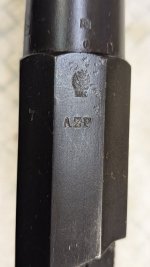
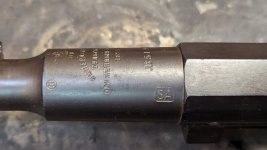
Russian Name Origin: "Three-line" (tret'ya lin'ya) comes from the Imperial Russian system where one "line" equals one-tenth of an inch (approx. 2.54mm), making the bore diameter 0.3 inches, or 7.62mm. Russian Official Designation: Its official name was the "3-Line Rifle, Model 1891" (Tрёхлинейная винтовка образца 1891 года). Austro-Hungarian capture (Has a partial AZF stamp on the barrel and "AZF", which stands for Artilleriezeugsfabrik). Austro-Hungarian arsenal in Vienna; most of these rifles were later acquired by Finland, so you will typically see Finnish markings on these rifles as well.

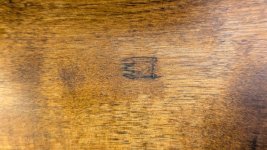
Used by Finland before and after their independence from Russia (December 6, 1917), the former Grand Duchy of Finland being under Russian rule. Austro-Hungarian capture (Has a partial AZF stamp on the barrel and "AZF", which stands for Artilleriezeugsfabrik) Austro-Hungarian arsenal in Vienna, most of these rifles were later acquired by Finland, so you will typically see Finnish markings on these rifles as well; SA marked (suomen armeija); Russian arshin range markings on the left side & meter range marking on the right (1 arshin = 28 inches), the original rear sights on the Model 1891 rifles are a flat leaf graduated in arshini (singular arshin) which is an archaic Russian unit equal to 28". The base has five notches numbered 4, 6, 8, 10, and 12 representing hundreds of arshini; Russian rear sight "Konovalov sight M/1910". "Boxed SA" marked. Finn Leather sling (Original), m/91 wooden muzzle cover.
Capture d’écran 2026-02-10 181416.jpg
PXL_20251223_014430281.jpg
PXL_20251225_053940779.jpg
PXL_20251225_022149189.jpg
PXL_20251225_054840932.jpg
 
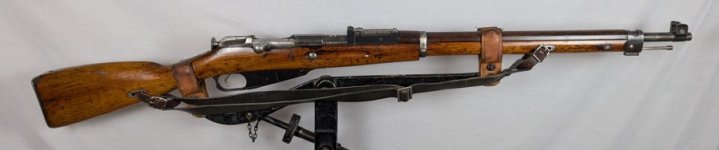
Suomalainen m/28-30 "7,62 kiv/28-30" & "762 KIV 28-30"
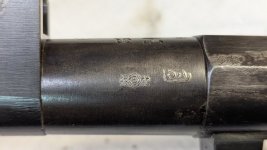
1937
Order made in July 1937 = 2650
Production: 1934 to 1941 / Total Production Quantity: 40,000 rifles (Sako).
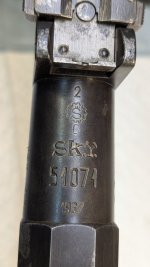
SN# 51071
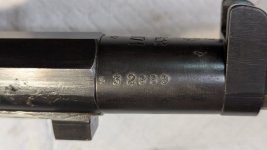
Civil Guard District: Pori District S32889
Receiver Tang marking – Year (Non-visible) & Made by (Non-visible).
Bolt action (Cocking on open & Hexagonal receiver, some prefer "octagonal")
Designed by Captain Sergei Ivanovich Mosin & Émile and Léon Nagant.

Same model was used by legendary Finnish Sniper Simo Häyhä; The most famous user of military rifle m/28-30 was Simo "Simuna" Häyhä (1905 - 2002), who in military history has record of being possibly the most lethal military sniper ever, with number of snipers kills possibly as high as over 500. The m/28-30 rifle that he used for sniping had presumably been issued to him as guardsman of Finnish Civil Guard in around 1934 - 1935. What is known the particular rifle was early production variant of m/28-30, which still had front sight similar that used in military rifle m/28. Apparently, his sniper rifle was year 1934 manufactured rifle with serial number 35281 and Civil Guard District number S60974. During Winter War he was donated as a gift with another rifle m/28-30, which is year 1938 production civilian sales m/28-30 rifle with serial number 100781. The rifle that he used for sniping went missing after he was seriously wounded in 6th of March 1940 and have not been seen since, while the rifle donated to him during Winter War is now in collections of Military Museum (Sotamuseo).

Finnish use: One of the main Finnish rifle types of World War 2. Mainly issued to front-line infantry. This rifle model was known for its accuracy - mostly due to its excellent iron sights; The new rear sight (called m/32) was developed an improved by the engineer Harry Mansner working in Ordnance Department of Suojeluskunta General Staff, so Mansner developed also new front sight (known as m/33), which allows precise windage adjustments with ordinary screwdriver; Rifle barrels manufactured by Sako from Swedish Fagersta-steel; The Finnish Civil Guard still saw the glaring issues with the M28 rifle, primarily the rear sight. The Konovolov rear sight was not well suited to precision shooting and lacked the ability to have fine, incremental adjustments made. The solution was to implement a near rear sight, as well as an aluminum tube which helped to free float the barrel. Many consider these to be the finest Mosin-Nagant ever made. "Boxed SA" marked. Finn Leather sling (Original); Finnish m/28-30 Muzzle cover (Sk.Y. Civil Guard. Suojeluskunta).

Capture d’écran 2026-02-10 163046.jpg
PXL_20251219_023635844.jpg
PXL_20251219_023654883.jpg
PXL_20251219_023712953.jpg
PXL_20251219_023747868.jpg
 
Suomalainen m/91 ("7,62 kiv/91" & "762 KIV 91")
Mosin-Nagant Model 1891 "Three-line rifle"
1893 (Second year of production of Mosin-Nagant M1891)
SN# 51969
Made by Tula (Imperial Tula Arms Plant) Императорский Тульский оружейный завод
Receiver Tang marking – Year (Non-visible) & Made by (Tula).
7,62×53mmR (m.1936 typ D166)
"D" stamp on the barrel shank of earlier Finnish Mosin’s (such as upgraded m/27 and m/91). This indicated that the chamber throat was modified to safely accept the wider D-166 projectile and allowed troops to utilize captured Russian steel-core ammo without causing overpressure.
5 rd. Single stack Integral Box Magazine (Non-removable)
Bolt action (Cocking on open & Hexagonal receiver, some prefer "octagonal")
Designed by Captain Sergei Ivanovich Mosin & Émile and Léon Nagant.

Russian Name Origin: "Three-line" (tret'ya lin'ya) comes from the Imperial Russian system where one "line" equals one-tenth of an inch (approx. 2.54mm), making the bore diameter 0.3 inches, or 7.62mm. Russian Official Designation: Its official name was the "3-Line Rifle, Model 1891" (Tрёхлинейная винтовка образца 1891 года).

Used by Finland before and after their independence from Russia (December 6, 1917), being the former Grand Duchy of Finland under Russian rule; SA marked (suomen armeija); Russian arshin range markings on the left side & meter range marking on the right (1 arshin = 28 inches), the original rear sights on the Model 1891 rifles are a flat leaf graduated in arshini (singular arshin) which is an archaic Russian unit equal to 28”. sight M/1910"; Receiver Grease Hole: Before 1894, Mosin receivers had a threaded grease hole on the left side of the receiver. The idea was that the screw could be removed, which would expose the barrel threads, and this would allow the thread barrels to be greased which would make it easier to remove the barrel. This removed was to simplify and speed up production. Finn Leather sling (Original); m/91 wooden muzzle cover.

Capture d’écran 2026-02-10 182712.jpg
PXL_20260102_191921069.jpg
PXL_20260105_032947429.jpg
PXL_20260105_033048940.jpg
PXL_20260105_033849854.jpg
 
Suomalainen m/27 ("7,62 kiv/27" & "762 KIV 27")
(AKA "Pystykorva") and in this particular case (AKA ‘’Ski Trooper’’)
1933 - Production: 1927 to 1940 / (1932 to 1934: 9,000 to 12,000 rifles per year.)
SN# 63187
Made by Tikka (Oy Tikkakoski Ab)
Receiver Tang marking – Year (1905) & Made by Tula.
7,62×53mmR (m.1936 typ D166)
"D" stamp on the barrel shank of earlier Finnish Mosin’s (such as upgraded m/27 and m/91). This indicated that the chamber throat was modified to safely accept the wider D-166 projectile and allowed troops to utilize captured Russian steel-core ammo without causing overpressure.
5 rd. Single stack Integral Box Magazine (Non-removable)
Bolt action (Cocking on open & Hexagonal receiver, some prefer "octagonal")
Designed by Captain Sergei Ivanovich Mosin & Émile and Léon Nagant.

One piece Finnish stock, no sling slot patch; late nose cap, front ski swivel "Ski Trooper"; Matching bolt & barrel shank; Russian arshin range markings on the left side & meter range marking on the right (1 arshin = 28 inches), the original rear sights on the Model 1891 rifles are a flat leaf graduated in arshini (singular arshin) which is an archaic Russian unit equal to 28". The base has five notches numbered 4, 6, 8, 10, and 12 representing hundreds of arshini; Spliced Russian stock & Late one-piece nose cap with "popsicle sticks" reinforcement upgrade; ‘’D’’ Marked for Finnish D166 cartridge; Usually early m/27 stocks had their rear parts recycled from old m/91 rifle stocks, while front parts were new and Finnish made. Also, handguards used for the rifles were new and Finnish-made; 'D' Marked for Finnish D166 cartridge. The Finnish 'D' modification was done to the chamber to allow the use of the new Finn D-166 and Soviet 'D' rounds. It is unlikely that a captured rifle would've received the 'D' modification as the chamber would be able to handle the D-166 round straight from the Soviet factory. The D-166 round had the same dimensions as the Soviet 'D' round introduced in the 1930s. The barrel would still have been marked 'D' for the Finns peace of mind.

Finnish use: This was the first domestic rifle model designed for Finnish Army. What is known it was the most common rifle model issued for frontline infantry during Winter War (1939 - 1940), even if it had its share of problems. Spliced Russian stock, intact sling slot, no rear swivel & late nose cap with "popsicle sticks" reinforcement upgrade; "Boxed SA" marked; Russian rear sight "Konovalov sight M/1910". Finnish Leather sling; m/27 wooden muzzle cover.

Capture d’écran 2026-02-16 233326.jpg
Capture d’écran 2026-07-18 145707.jpg
PXL_20260217_023641012.jpg
PXL_20260217_023906914.jpg
 
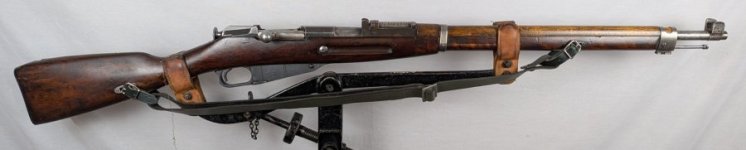
Suomalainen m/28-30 "7,62 kiv/28-30" & "762 KIV 28-30"
1936 (order made in May 1936 = 2650) - Production: 1934 to 1941 / Total Production Quantity: 40,000 rifles (Sako).
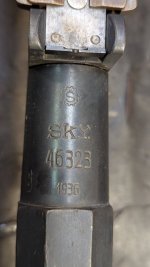
SN# 46323
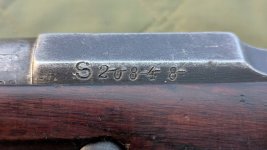
Civil Guard District: Viipuri District S137022 and formerly Varsinais District S20848
Made by Sako (Suojeluskuntain Ase- ja Konepaja Oy) – Sk.Y.
36 S 06 (Sako Factory marking) Sako pressure test - 3,600 BAR (52,214 psi).
Receiver Tang marking – Year (###6) & Made by Tula.
7,62×53mmR (m.1936 typ D166)
"D" stamp on the barrel shank of earlier Finnish Mosin’s (such as upgraded m/27s and m/91). This indicated that the chamber throat was modified to safely accept the wider D-166 projectile and allowed troops to utilize captured Russian steel-core ammo without causing overpressure.
5 rd. Single stack Integral Box Magazine (Non-removable).
Bolt action (Cocking on open & Hexagonal receiver, some prefer "octagonal")
Designed by Captain Sergei Ivanovich Mosin & Émile and Léon Nagant.

Same model was used by legendary Finnish Sniper Simo Häyhä; The most famous user of military rifle m/28-30 was Simo "Simuna" Häyhä (1905 - 2002), who in military history has record of being possibly the most lethal military sniper ever, with number of snipers kills possibly as high as over 500. The m/28-30 rifle that he used for sniping had presumably been issued to him as guardsman of Finnish Civil Guard in around 1934 - 1935. What is known the particular rifle was early production variant of m/28-30, which still had front sight similar that used in military rifle m/28. Apparently, his sniper rifle was year 1934 manufactured rifle with serial number 35281 and Civil Guard District number S60974. During Winter War he was donated as a gift with another rifle m/28-30, which is year 1938 production civilian sales m/28-30 rifle with serial number 100781. The rifle that he used for sniping went missing after he was seriously wounded in 6th of March 1940 and have not been seen since, while the rifle donated to him during Winter War is now in collections of Military Museum (Sotamuseo).

Finnish use: One of the main Finnish rifle types of World War 2. Mainly issued to front-line infantry. This rifle model was known for its accuracy - mostly due to its excellent iron sights; The new rear sight (called m/32) was developed an improved by the engineer Harry Mansner working in Ordnance Department of Suojeluskunta General Staff, so Mansner developed also new front sight (known as m/33), which allows precise windage adjustments with ordinary screwdriver; Rifle barrels manufactured by Sako from Swedish Fagersta-steel; The Finnish Civil Guard still saw the glaring issues with the M28 rifle, primarily the rear sight. The Konovolov rear sight was not well suited to precision shooting and lacked the ability to have fine, incremental adjustments made. The solution was to implement a near rear sight, as well as an aluminum tube which helped to free float the barrel. Many consider these to be the finest Mosin-Nagant ever made. "Boxed SA" marked; Finn Leather sling (Original); Finnish m/28-30 Muzzle cover (Sk.Y. Civil Guard. Suojeluskunta).

Capture d’écran 2026-02-11 211403.jpg
PXL_20260217_145736806.jpg
PXL_20260212_024545497.jpg
PXL_20260217_145910892.jpg
PXL_20260718_192434249.jpg
 
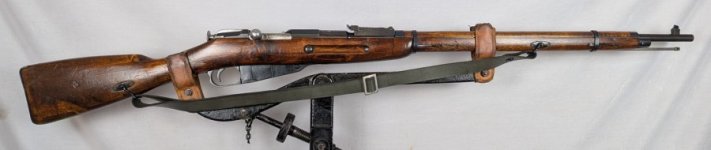
Suomalainen m/30 ("7,62 kiv/30" & "762 KIV 30")
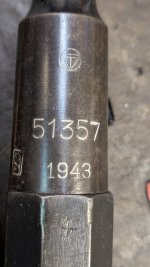
1943
Barrel made by Tikka (Oy Tikkakoski Ab).
Production Quantity: Tikkakoski: 24,000 rifles (1943 to 1944).
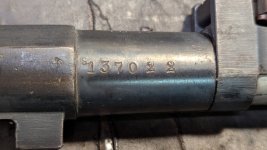
SN# 51357
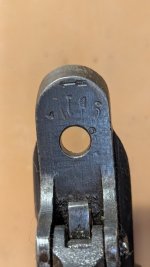
Receiver Tang marking – Year (1901) & Made by Izhevsk.
7,62×53mmR (m.1936 typ D166)
"D" stamp on the barrel shank of earlier Finnish Mosin’s (such as upgraded m/27 and m/91). This indicated that the chamber throat was modified to safely accept the wider D-166 projectile and allowed troops to utilize captured Russian steel-core ammo without causing overpressure.
5 rd. Single stack Integral Box Magazine (Non-removable).
Bolt action (Cocking on open & Hexagonal receiver, some prefer "octagonal")
Designed by Captain Sergei Ivanovich Mosin & Émile and Léon Nagant.

After capturing countless Mosin-Nagant Model 1891/30 parts from the Soviet Union (Over 100,000 of these rifles were captured and used by Finnish troops during World War 2), as well as receiving a large shipment of parts guns from Germany, Finland would start domestic production of the Model 1891/30 (m/30) rifle using Tikkakoski barrels in 1943. Few thousand m/91-30 rifles were built with Finnish barrels in 1943 - 1944. Those Finnish-built rifles were commonly referred also referred as m/30. Many of these rifles will have the famous two piece "pot belly" stock; Late in the Continuation War Tikkakoski produced m91/30 rifles although it is a less refined model than the current m/39. The project was probably undertaken simply because there were large numbers of Model 1891/30 parts on hand from captured Soviet rifles that were not serviceable otherwise. The most noticeable difference in these and Soviet M1891/30’s is the blade front sight as opposed to the post and globe used by the Soviets, although some of the Finnish rifles also use a post and globe.

Most Finnish m91/30s are built on the earlier hexagonal receivers, but there are some found on later round receivers, primarily with barrel dates of 1944; Finnish Z cartouche Inspection (Passed inspection in a Finnish Arsenal) on the stock; Finnish repairs made for damaged captured M1891/30 resulted introduction of some new Finnish design features, which apparently were not introduced in any notable uniform manner and vary from one rifle to another. New sights that the Soviets had designed for M91/30 rifle were intended to be adjusted with new kind of sight adjustment tools, which the Finns did not have. So Finnish solution was to equip the rifles with m/91 type front sight with filling part, added in between front sight post and front sight base, this stacked sight front sight design allowed using the same adjustment tools as were already being used with old m/91 rifles. Also new rifle stocks were needed, so domestic production of rifle stocks for m/91-30 was started. Finnish made rifle stocks have several differences to original Soviet ones and due to their shape are commonly referred as "pot belly stocks". And finally in year 1943 also manufacturing of rifle barrels for m/91-30 started in Tikkakoski factory.

When captured Soviet M1891/30 had been rebuilt in Finland with these changes one could argue if it really could be anymore called Soviet M1891/30, or a Finnish one, since some of the most important parts were now Finnish. With typical Finnish practice of recycling parts from damaged and worn-out rifles the line in between doing extensive repairs to damaged rifles and manufacturing new rifles was unclear to begin with. Personally I would place the fine line in between the two in manufacturer of rifle barrel - with any M1891/30 rifle that has Finnish-manufactured rifle barrel being considered as Finnish-built. This sort of Finnish version can well be called Finnish m/91-30, or more simply rifle m/30 as the particular Finnish-modified version was often listed. While Finnish military ordered during Continuation War enough most important parts to repair or built 20,000 rifles, it seems that only few thousand m/91-30 built with Tikkakoski-manufactured rifle barrels were delivered by end of Continuation War in September of 1944. Year 1951 Finnish inventory included 91,334 rifles m/91-30, but only 4,279 of these were listed as rifle m/30. Finnish military kept rifles m/91-30 mothballed until late 1980's, until they were declared obsolete and sold to surplus small arms market, with most apparently being exported to Canada. "Boxed SA" marked; Finn Leather sling (Original).

Capture d’écran 2026-03-19 152610.jpg
PXL_20260318_214533616.jpg
PXL_20260318_214539422.jpg
PXL_20260318_214547012.jpg
PXL_20260318_220039854.jpg
 
Suomalainen m/91 ("7,62 kiv/91" & "762 KIV 91")
Mosin-Nagant Model 1891 "Three-line rifle"
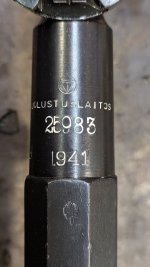
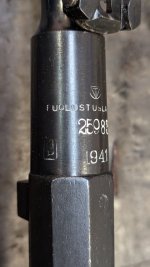
‘’Puolustuslaitos’’ Marked
1941
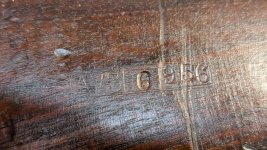
SN# 25983
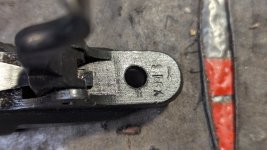
Receiver Tang marking – Year (Non-visible) & Made by Izhevsk.
7,62×53mmR (m.1936 typ D166)
"D" stamp on the barrel shank of earlier Finnish Mosin’s (such as upgraded m/27 and m/91). This indicated that the chamber throat was modified to safely accept the wider D-166 projectile and allowed troops to utilize captured Russian steel-core ammo without causing overpressure.
5 rd. Single stack Integral Box Magazine (Non-removable).
Bolt action (Cocking on open & Hexagonal receiver, some prefer "octagonal")
Designed by Captain Sergei Ivanovich Mosin & Émile and Léon Nagant.

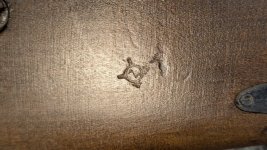
Emergency Wartime Production of the m/91; Finnish Z cartouche Inspection (Passed inspection in a Finnish Arsenal) on the stock; The Puolustuslaitos marking is one of the more desirable markings that can be found on a Finnish or Finnish-used Mosin-Nagant. It is commonly called the "PL" marking by non-Finnish speakers. The Finnish Army began marking its small arms with the “PUOLUSTUSLAITOS” marked in late 1941 and early 1942 before adopting the boxed "SA" later that year. The larger "PUOLUSTUSLAITOS” mark stood for “Department of Defense” and denoted that a weapon was government equipment and could not be taken home by a Finnish soldier. However, it required a roll stamp that was difficult and time-consuming to apply to each rifle’s barrel chamber. The army still intended for the boxed "SA" marking to denote government property and it served the same purpose of deterring Finnish soldiers from taking home government property while on leave or after their discharge. Most commonly found on 1941 Sako m/39 rifles as well as 1941 and 1942 Tikkakoski m/91 rifles, it can also be found less commonly on 1941 VKT m/91 rifles, captured m/91-30 rifles, imperial m/91 rifles, Tikkakoski m/27 rifles, and a couple other types. "Boxed SA" marked; Finn Leather sling (Original), m/91 wooden muzzle cover.
Capture d’écran 2026-03-19 194700.jpg
PXL_20260319_223219713.jpg
PXL_20260319_223224424.jpg
PXL_20260319_223245062.jpg
PXL_20260319_225417532.jpg
 
Last edited:
Suomalainen m/91-24 ("7,62 kiv/91-24" & "762 KIV 91-24")
(AKA "Lotta-Svärd")
Made by Venus Waffenfabrik (Deutschland) Böhler-Stahl barrel only (Heavy "Stepped" Barrel) & Sako (Suojeluskuntain Ase- ja Konepaja Oy) – Sk.Y.
None of the m/91-24 barrels are dated. Prototype: 1923 (Unclear) And production: 1925-1928, total amount about 26,000.
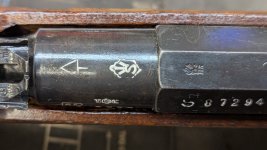
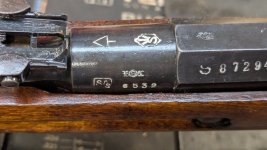
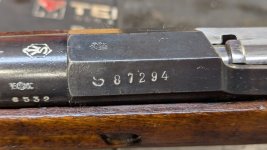
SN# S87294
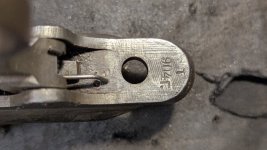
Receiver Tang marking – Year (1904) & Made by Tula.
7,62×53mmR (m.1936 typ D166)
"D" stamp on the barrel shank of earlier Finnish Mosin’s (such as upgraded m/27 and m/91). This indicated that the chamber throat was modified to safely accept the wider D-166 projectile and allowed troops to utilize captured Russian steel-core ammo without causing overpressure.
5 rd. Single stack Integral Box Magazine (Non-removable).
Bolt action (Cocking on open & Hexagonal receiver, some prefer "octagonal")
Designed by Captain Sergei Ivanovich Mosin & Émile and Léon Nagant.

Civil guard district: Pohjois S87294 and S6532 (Raasepori District)
36 S 06 (Sako Factory marking) Sako pressure test - 3,600 BAR (52,214 psi).
"Christmas Tree" Marked

Suojeluskuntain Yliesikunta (Civil Guard shield) & "Christmas Tree" on barrel, marking used to indicate the rifle is chambered for a specific load from the Sako factory and barrel was shortened from rear and rechambered because of throat erosion. It is almost always found on the barrels of m/91-24 rifles, but can also very rarely be found on Russian m/91 barrels. Normally the rifle barrels originating from Venus Waffenfabrik are marked with Böhler Stahl marking to indicate quality of steel specified in Civil Guard's order; ‘’D’’ Marked for Finnish D166 cartridge.

The Lotta's (Lotta-Svärd) were the women who voluntarily joined the Finnish army after their country's independence in 1917. By 1944, it numbered 242,000 volunteers, making it the largest voluntary auxiliary organization in the world, while Finland's population was less than 4 million. The funds were provided by the Lotta-Svärd, which raised approximately half a million Finnish marks for this project. Usually, m/91-24 stocks had their rear parts recycled from old m/91 rifle stocks, while the front parts were new and Finnish-made. Also, the handguards used for the rifles were new and Finnish-made; the 'D' is marked for the Finnish D166 cartridge. The Finnish 'D' modification was made to the chamber to allow the use of the new Finn D-166 and Soviet 'D' rounds. It is unlikely that a captured rifle would've received the 'D' modification as the chamber would be able to handle the D-166 round straight from the Soviet factory. The D-166 round had the same dimensions as the Soviet 'D' round introduced in the 1930s. The barrel would still have been marked 'D' for the Finns peace of mind; Finnish use: In essence infantry rifle m/91-24 was Finnish Civil Guard developed long rifle directly based on m/91 with new rifle barrel and some small improvements. While this was originally Civil Guard rifle model, during World War 2 it served with Finnish Armed Forces along other Civil Guard weapons transferred to Armed Forces in mobilization of year 1939.

Barrel band retaining screw (late); Russian arshin range markings on the left side & meter range marking on the right (1 arshin = 28 inches), the original rear sights on the Model 1891 rifles are a flat leaf graduated in arshini (singular arshin) which is an archaic Russian unit equal to 28 in. The base has five notches numbered 4, 6, 8, 10, and 12 representing hundreds of arshini; "Boxed SA" marked; Russian rear sight "Konovalov sight M/1910". Finn Leather sling (Original); m/91-24 ('Zamak' Zink muzzle cover).

Capture d’écran 2026-04-29 213039.jpg
PXL_20260430_004958002.jpg
PXL_20260430_005002491.jpg
PXL_20260430_005005697.jpg
PXL_20260429_024659538.jpg
PXL_20260429_024638372.jpg
 
Last edited:
Back
Top Bottom