first time buyer for a shotgun!

mandingo

New member
EE Expired
Rating - 0%
0   0   0
Location
B.C
Hello everyone, I pray you are having a great day today!


I am a first time buyer, and looking for a good sized pump action shotgun that can be used for hunting and target shooting. A classic wood/metal one like Remington, Mossberg, Winchester, etc. However I either find shotguns with excessive barrels for my taste (26, 28, 30 inches) or I find tacticool shotguns which I do not mind but I'm not looking to buy one.

I want a nice 12 gauge (3 inch shells so I can fit smaller ones) that has a barrel length of 18-22 inches. A 'classic' shotgun if you will! Sorry if this does not fit here but I looked around the forum and I didn't find some 'thread' with asking these types of questions.
 
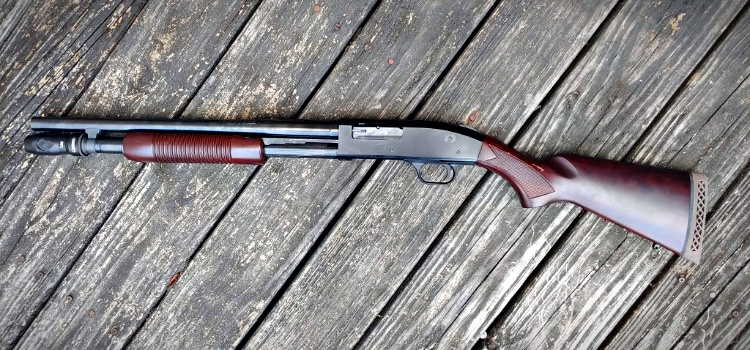
Something like this?

Mossberg-500-Retrograde.jpg


That’s a mossberg 500 retrograde.

Can defiantly see where you having difficulty finding something fits your requirements, since most shotguns with the shorter barrels around 18-22” are tactical models while longer barrels are more typical for the traditional sporting shotguns where wood and metal are more common.

If you like polished blue and wood you could also look into a Remington 870 police model with wood furniture and thr polished blue finish rather than the more common mat bluing. Bit those are a little uncommon

24899.jpg


This one here

https://www.remingtondefense.com/shotguns/870-police/bead-sight/24899.html
 
Browning bps. Me and everyone I hunt with uses them and they are built like tanks. Only thing I'd buy other then another bps would be a ithica. Nvm lol don't think either of those have short barrel versions.
 
Browning use to make a upland special 22” bbl so did Rem in a wingmaster model they show up used occasionally used 500-800$ depending on condition
As far as mossberg and other low end guns fairly crude but work
 
Hello everyone, I pray you are having a great day today!


I am a first time buyer, and looking for a good sized pump action shotgun that can be used for hunting and target shooting. A classic wood/metal one like Remington, Mossberg, Winchester, etc. However I either find shotguns with excessive barrels for my taste (26, 28, 30 inches) or I find tacticool shotguns which I do not mind but I'm not looking to buy one.

I want a nice 12 gauge (3 inch shells so I can fit smaller ones) that has a barrel length of 18-22 inches. A 'classic' shotgun if you will! Sorry if this does not fit here but I looked around the forum and I didn't find some 'thread' with asking these types of questions.

Classic hunting shotguns usually come with 26-30 barrels, unless its a dedicated slug or turkey gun. Is that what you're after?
 
No classic shotgun I know of comes with 18" to 22" barrels.

You might have been able to buy them, you might have cut the barrels on a classic shotgun, but when the barrels are 18", it's not a classic.
 
...I am a first time buyer, and looking for a good sized pump action shotgun that can be used for hunting and target shooting. A classic wood/metal one like Remington, Mossberg, Winchester, etc. However I either find shotguns with excessive barrels for my taste (26, 28, 30 inches) or I find tacticool shotguns which I do not mind but I'm not looking to buy one. I want a nice 12 gauge (3 inch shells so I can fit smaller ones) that has a barrel length of 18-22 inches. A 'classic' shotgun if you will...

I'd look here, and then I'd click on 'models'.
 
If you're using it for hunting, wouldn't you want a longer barrel? Honestly just go for an old production 870 Wingmaster if you want a "classic" hunting shotgun.
 
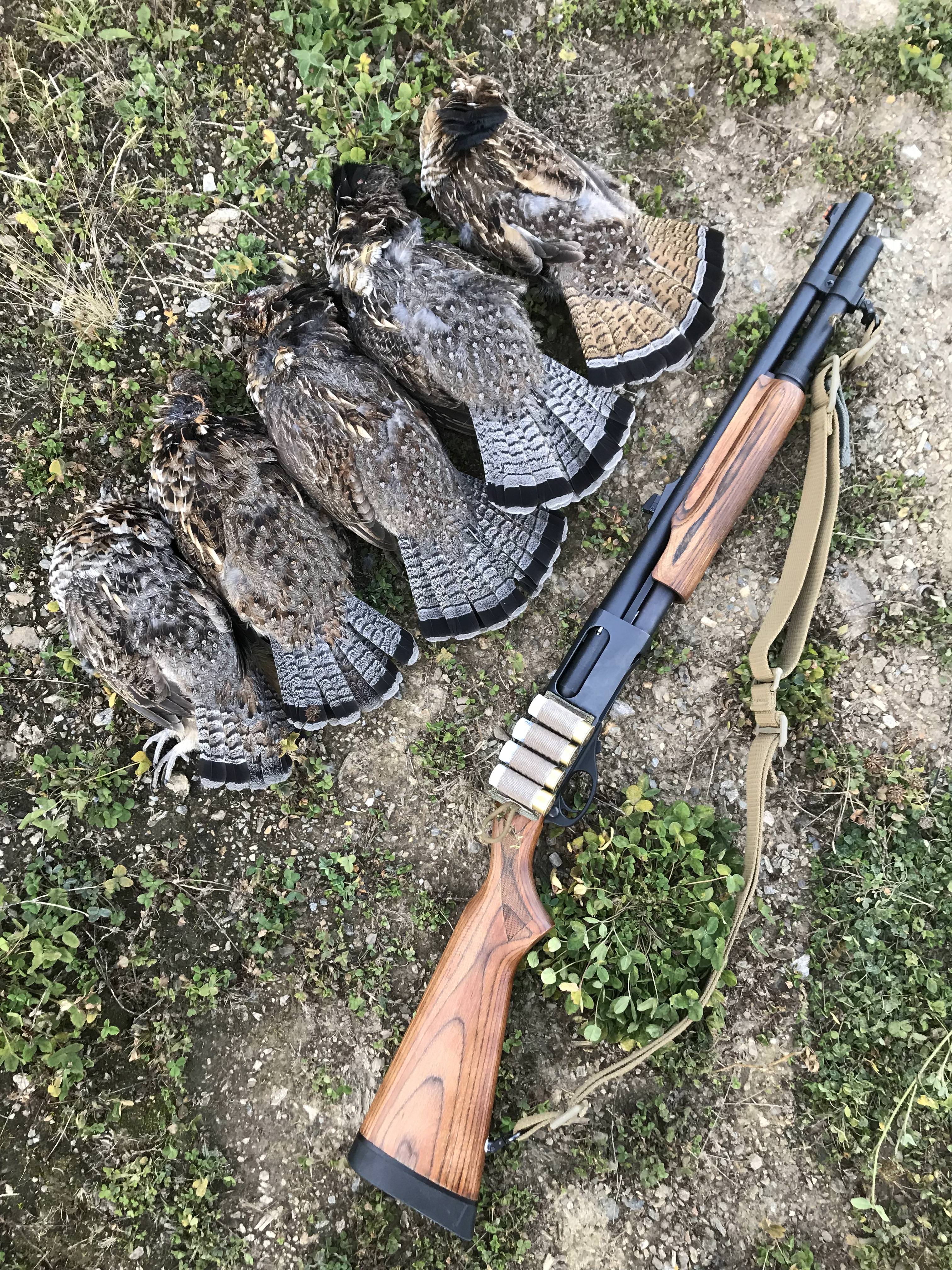
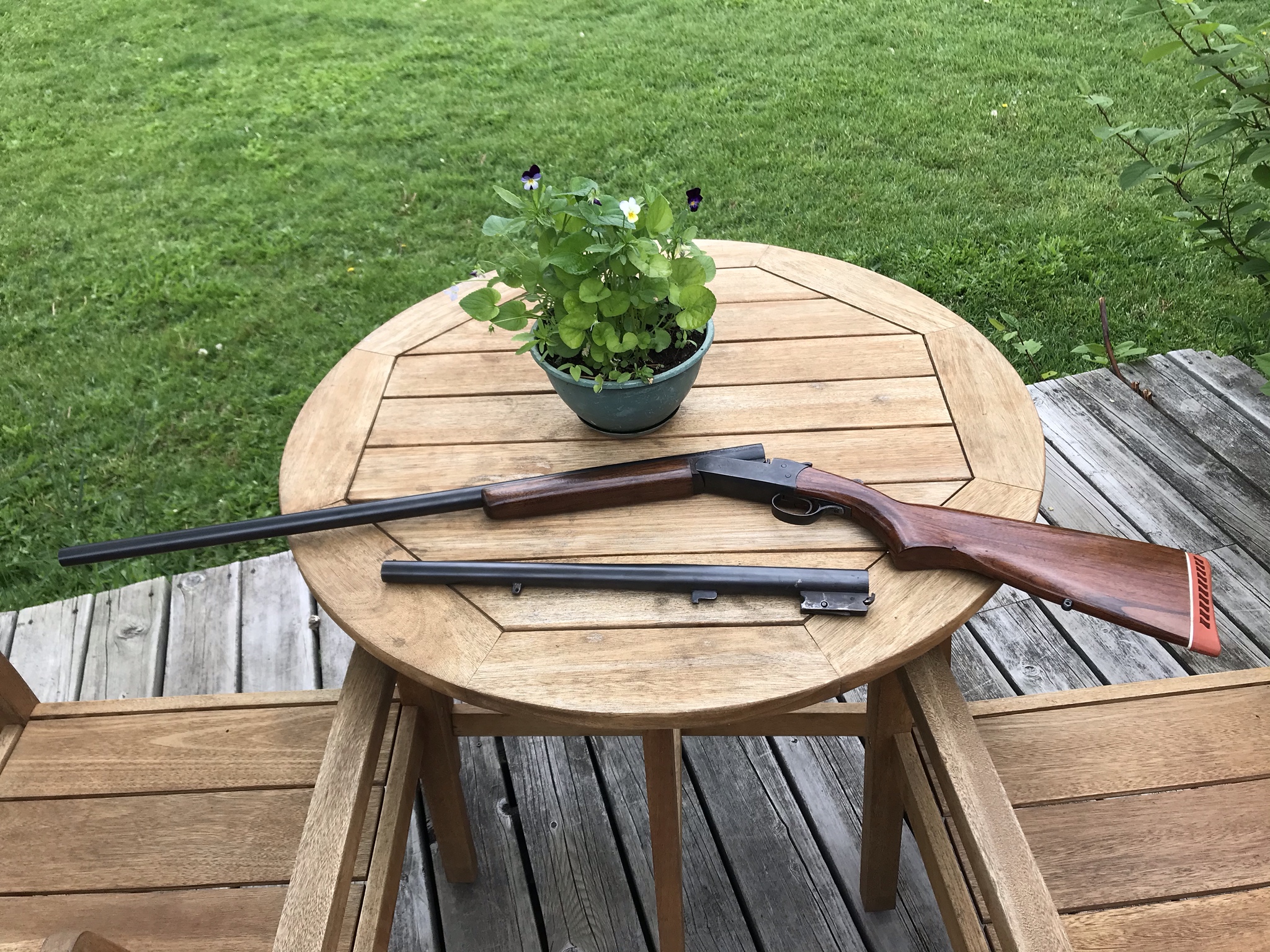
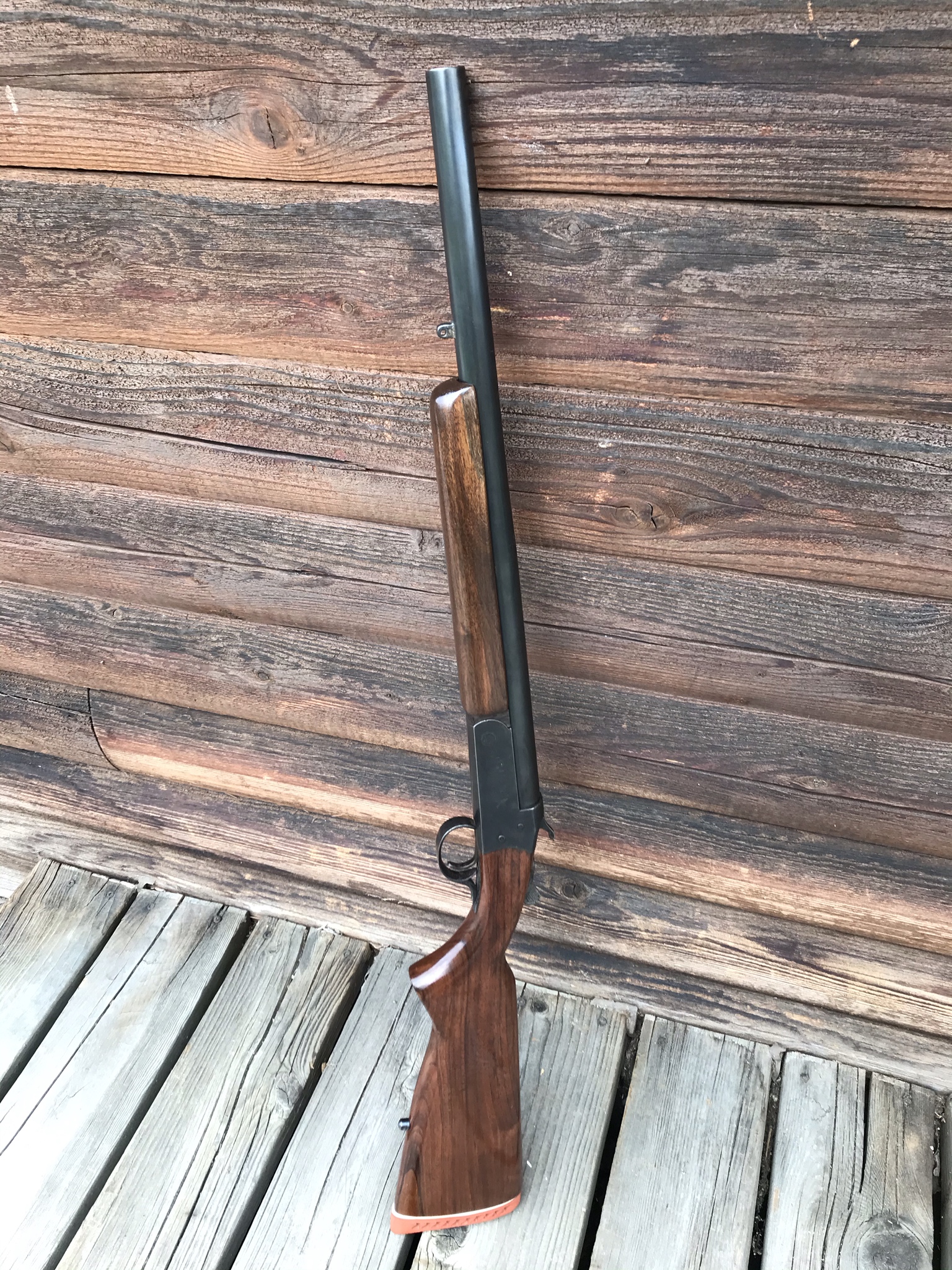
Get yourself a nice 870 and a couple different barrels, tons of aftermarket parts available for them and you can go from short to long barrel or rifled slug barrel easy. This is the same 870 express with a 20” rifle sighted turkey barrel, a 23” rifled slug barrel and a 28” vent rib. I shoot a ton of grouse with it and the 20” barrel, the laminate stock set was an add on.

lxymSiW.jpg

PgbOPEw.jpg

wZwpBxb.jpg

vfxdIx2.jpg
 
I'm with those who feel that anything shorter than a 25" barrel is not really suitable for hunting. In fact, shorter barrels aren't well suited for any of the clay sports, either. Skeet can be shot with shorter barrels, but barrels as short as 18 - 22" would be difficult to swing smoothly, making success harder, not easier. About the only shotgun sport I can think of that often involves barrels that short is Cowboy Action Shooting. If that's what you're gearing up for, the short barrels would be fine.

Another common misconception is that the term "furniture" refers to the stocks. It does not. Furniture, in gun parlance, refers to the small metal parts. Consequently, wood or plastic furniture is an impossibility. How could small metal parts be made of wood or plastic? Even some of the accessories manufacturers (Magpul comes to mind) use the term incorrectly. But, sadly, you don't have to know what you're talking about to sell accessories. Wood or synthetic stocks, on the other hand, are the two most common types. (NOTE: The trigger guard is part of the furniture, but if/when it's made of plastic, it no longer meets the definition of being a small metal part and is not included in the furniture.)

Edited to add: If you want good advice as to what pumps might be good for your purposes, I would suggest you specify what you might be hunting and what target sports you expect to try. Otherwise all you're going to get is individuals' personal favourites or what they personally have experience with.
 
Last edited:
This is something I would like! Thank you for the info, I think this might be the way to go. Get a good quality shotgun like Remington and buy aftermarket barrels with different lengths.
 
Hey, sorry for the lack of specification, I'm new to all of this so bear with me. I would be hunting small game like birds, and also hog (do you hunt wild hog/boar with a shotgun? If not I will buy a rifle for that). I guess I should buy a reliable shotgun where you can switch out the barrel easily then.
 
This is something I would like! Thank you for the info, I think this might be the way to go. Get a good quality shotgun like Remington and buy aftermarket barrels with different lengths.

I bought mine as a three barrel combo, Rem sells 2 barrel combos as well. Iirc they’ll come with a 18.5” home defense barrels and a 28” vent rib barrel. The nice thing about the turkey barrel is it’s threaded for Rem chokes from the factory, the fiber optic rifle sights have quickly become my favourite sights on a shotgun and I’ve used everything from a head sight to a red dot.
 
Hey, sorry for the lack of specification, I'm new to all of this so bear with me. I would be hunting small game like birds, and also hog (do you hunt wild hog/boar with a shotgun? If not I will buy a rifle for that). I guess I should buy a reliable shotgun where you can switch out the barrel easily then.

I've seen boars shot with slugs so yes you can hunt hogs with a shotgun. I just don't know where to hunt them in BC.
 
That helps a lot. Small game birds sounds like you mean upland birds, as opposed to migratory birds. Correct me if that is a misimpression. For upland birds, you don't need a steel-capable barrel. For migratory birds, steel shot is mandated by law (or other non-toxic shot). However, since this is a first shotgun, a steel ready barrel might be a good idea anyway, in case your interests expand.

Hunting wild boar doesn't require steel capability, either. What both slugs and bird shot do have in common is that they are best run through barrels longer than 25 inches. You could be under the impression that the shorter barrels give you better odds of hitting your prey. But, they're not a factor. What matters more is using the correct choke for the type of shells and the expected distance of the shot. For example, you get better accuracy with slugs using a longer barrel and something like an improved-modified choke. You can use a rifled shot gun barrel with slugs, you can't with bird shot.

With bird shot, you get better patterns for close shots (say 15 to 35 yards) using chokes in the cylinder to modified range. Bird shot patterns for distances from 25 to 55 yards are likely best shot with chokes ranging between skeet 2 to improved-modified. And, shots from 45 yards to 85 yards likely require full choke. However, choke selection is not a hard science. There are slight variations in results depending on what shells you use (and the size and type of shot they're loaded with) and the specific maker of the choke tubes (or the barrels when they are fixed chokes). Guessing based on internet advice is not a good methodology. The only way you'll ever be sure if your gun is giving consistent groups (in the case of slugs) or consistent patterns (in the case of bird shot) is to take the actual shells you want to test and shoot them through the actual barrel and choke you will be using.

You can test slug accuracy with pretty much any target starting at say 25 yards and eventually out to around 75 yards. Testing bird shot needs to be done at a "patterning board", which is when you shoot at a 30" diameter circle drawn on a piece of paper or a sheet of metal. With paper, you have to replace the paper target after every shot (counting the number of pellet holes that hit within the 30" circle). With the metal sheet, you can simply roll a layer of grease on the sheet with a paint roller, then refresh the grease with the roller after counting pellets just like you would with paper targets. But, it's not all about the number of pellets - you also want to watch how evenly the pellet hits are spread out. If the pattern has high numbers of pellet hits, but there are large gaps in the pattern, birds can fly through a perfect shot by being lucky enough to be in one of the gaps. Start this process at 16 yards, then 5 yards further back each time. You'll quickly see the effective range of the shot shell/load spec/choke that you're testing.

Anyone serious about hunting or clay sports knows that the barrel, the chokes, and the shells/shot size have to be doing what you think they're doing. Even through the same barrel and choke, different shell manufacturers and/or different shot sizes can and do yield different results. Patterning your gun will also improve your familiarity with your new gun (loading speed, safety use, etc). When you know what your equipment is doing, your success will improve far more than anything else you might do. Many gun clubs have a patterning board. Or, you can set one up anywhere where it is safe to blast away with a shotgun for an afternoon.

So you see, short barrels are probably just a waste of time and money. Sorry if that's disappointing to hear.

 
That helps a lot. Small game birds sounds like you mean upland birds, as opposed to migratory birds. Correct me if that is a misimpression. For upland birds, you don't need a steel-capable barrel. For migratory birds, steel shot is mandated by law (or other non-toxic shot). However, since this is a first shotgun, a steel ready barrel might be a good idea anyway, in case your interests expand.

Hunting wild boar doesn't require steel capability, either. What both slugs and bird shot do have in common is that they are best run through barrels longer than 25 inches. You could be under the impression that the shorter barrels give you better odds of hitting your prey. But, they're not a factor. What matters more is using the correct choke for the type of shells and the expected distance of the shot. For example, you get better accuracy with slugs using a longer barrel and something like an improved-modified choke. You can use a rifled shot gun barrel with slugs, you can't with bird shot.

With bird shot, you get better patterns for close shots (say 15 to 35 yards) using chokes in the cylinder to modified range. Bird shot patterns for distances from 25 to 55 yards are likely best shot with chokes ranging between skeet 2 to improved-modified. And, shots from 45 yards to 85 yards likely require full choke. However, choke selection is not a hard science. There are slight variations in results depending on what shells you use (and the size and type of shot they're loaded with) and the specific maker of the choke tubes (or the barrels when they are fixed chokes). Guessing based on internet advice is not a good methodology. The only way you'll ever be sure if your gun is giving consistent groups (in the case of slugs) or consistent patterns (in the case of bird shot) is to take the actual shells you want to test and shoot them through the actual barrel and choke you will be using.

You can test slug accuracy with pretty much any target starting at say 25 yards and eventually out to around 75 yards. Testing bird shot needs to be done at a "patterning board", which is when you shoot at a 30" diameter circle drawn on a piece of paper or a sheet of metal. With paper, you have to replace the paper target after every shot (counting the number of pellet holes that hit within the 30" circle). With the metal sheet, you can simply roll a layer of grease on the sheet with a paint roller, then refresh the grease with the roller after counting pellets just like you would with paper targets. But, it's not all about the number of pellets - you also want to watch how evenly the pellet hits are spread out. If the pattern has high numbers of pellet hits, but there are large gaps in the pattern, birds can fly through a perfect shot by being lucky enough to be in one of the gaps. Start this process at 16 yards, then 5 yards further back each time. You'll quickly see the effective range of the shot shell/load spec/choke that you're testing.

Anyone serious about hunting or clay sports knows that the barrel, the chokes, and the shells/shot size have to be doing what you think they're doing. Even through the same barrel and choke, different shell manufacturers and/or different shot sizes can and do yield different results. Patterning your gun will also improve your familiarity with your new gun (loading speed, safety use, etc). When you know what your equipment is doing, your success will improve far more than anything else you might do. Many gun clubs have a patterning board. Or, you can set one up anywhere where it is safe to blast away with a shotgun for an afternoon.

So you see, short barrels are probably just a waste of time and money. Sorry if that's disappointing to hear.


Everything you said up until you’re last point was good info, just because you dislike or have never used shorter barrels doesn’t mean they’re a waste of time. Short barrels for upland game hunting are more useful than longer barrels from my experience, provided they are threaded for chokes. You’ll lose some muzzle velocity and follow through on a moving targets isn’t as easy, but otherwise they’re just as effective. Maybe you should try them before you slag them, seeing as you said “probably a waste of time” I’d guess you’ve never bothered to. I’ve shot plenty of upland game with a choked 12.5” barrel, in fact more than with the 28” paperweight in my closet lol.

 
Everything you said up until you’re last point was good info, just because you dislike or have never used shorter barrels doesn’t mean they’re a waste of time. Short barrels for upland game hunting are more useful than longer barrels from my experience, provided they are threaded for chokes. You’ll lose some muzzle velocity and follow through on a moving targets isn’t as easy, but otherwise they’re just as effective. Maybe you should try them before you slag them, seeing as you said “probably a waste of time” I’d guess you’ve never bothered to. I’ve shot plenty of upland game with a choked 12.5” barrel, in fact more than with the 28” paperweight in my closet lol.

Big range of birds and behaviour fall into the “upland “ category. Curious as to what you are shooting with these 12.5” barrels.
 
Big range of birds and behaviour fall into the “upland “ category. Curious as to what you are shooting with these 12.5” barrels.

Mainly grouse and some snowshoe hare, distances ranged anywhere from 10y to 40y with a 12.5” barrel with a full Winchoke. We all know a few inches of barrel have next to no effect on effective range of shot, chokes however make a big difference in that dept.
 
Back
Top Bottom