












































You are using an out of date browser. It may not display this or other websites correctly.
You should upgrade or use an alternative browser.
You should upgrade or use an alternative browser.
For The Whelen Fans**Update**
- Thread starter DIGGER2
- Start date

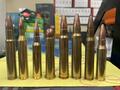
How the heck do you post pics like that? I use photobucket and you have to hit the link to see them. Anyone please? I will post my 35's!!
Start your thread/post as you normally would. Enter in whatever text you want then just open up another window/tab and run photobucket- don't hit the "submit reply" at this point. When you go to the image you want, the drop down window appears on that photo with some options like Email & IM, Direct link,HTML code, IMG code. You want to highlight the IMG code and right click your mouse and "copy" it then go back to your post and paste it into your post. It will come up as a bunch of text and numbers when in rough draft, but if you preview post they will show up there. Then when your happy hit "submit reply". Hope this helps.

Nothing wrong with the 4200 series. Very bright glass. The only down side is weight really, as the adjustments are accurate, and smooth.
Leupold is "my" brand at the moment as I had a bad experience with Bushnell's service. Leupy has it all when you account for service, bang for buck, and weight. Kinda like the Whelen actually.
If you flip the current scope you should try the 4200 1.5-6x40. Very very bright scope, with a very forgiving range of magnification for hunting.
A nice McMillan on that Whelen would really finish it
I have a 4200 3x9 and a leupold vx1 4-12/ Despite being in a lower class the leupold is slightly clearer. It's just slightly less bright, barely noticeable and has better eye relief at low magnification, very similar at high mag. The 4200 has constant eye relief which is nice, but it's low at 3.3". The bushnell water repllent coating (forget what it's called) actually works. And the bushnell is heavier despite lower magnification.
Sorry for the O.T....
So off to the range I went today after shoot 3 rounds of skeet at another club to see how my new purchase is going to shoot. The temperature today here in Central Ontario was pretty warm about 26 degrees C. So I loaded up some factory Rem 250 gr ammo I had, to use to sight the beast in on paper. I fired 4-3shot groups today from the gun. The gun shot it's best group in the 2nd 3-shot string. I didn't have much time to wait between shots (getting later in the day). Below is a picture of my best group, but the others started to open up due to barrel heat. It at least it looks promising to start with. I did shot 3 rounds of reloads (58gr RL 15, Rem 9.5M primer, & 250gr Hornady SP) at the last, but they strung vertical and the gun was pretty hot so I called it a day. So far I'm happy.

I have yet to hear of the 30 whelen, isn't the 35 whelen pretty much a 30-06 opened up to 35 caliber? If so would a 30 whelen basically be the same as 30-06
Yes sir, you are correct. The 30-06 is the new hot-rod 30 Whelen, "tigger" just gave it a new name.
The 30 Whelen sounds waaaay cooler than just plain 30-06.
Digger2 - accuracy does look promising. 3 shots all touching is about the best I ever see when I'm shooting - more like rarely seen. However my 12 twist 35cal Rugers all are accurate with 250s too if I do my part. Congrats on a real fine shooter there.
I do. And it was a likely addition.But does anybody have a 35 Whelen/Ackley improved yet?? Seems to be a likely addition IMO.
But does anybody have a 35 Whelen/Ackley improved yet?? Seems to be a likely addition IMO.
I do. And it was a likely addition.
Me too!!


as the article I read it in suggested, tell them 30-06 and its end of discussion concerning cartridge, say 30 whelen and they will be talking about your "wonder cartridge" all night. An ackley improved version would be interesting to see, if one does not exist if you have more money than i do, get a reamer and dies built and have a wildcat named after you. If I had my copy of COTW handy, I would look it up, but its bullet casting while I have a rainy day off. Need a puter in my reloading room already.
I do. And it was a likely addition.
Me too!!
Very cool!
Now i'm interested.Oh yea, Digger- nice rig bro. I used to own a ruger and thought highly of it. Well made stainless rifle.
.

Well, that might be not as much blessing. I have Win mod 88 in 358 Win in 1-16" twist and when shooting my "emergency loads" 275g Horrnady RN at almost 2100FPS and suprise, suprise even at 200yds those bullets don't keyhole. To have 12" twist in 35 Whelen is uncalled for, whatsoever, it will invite spikes in pressure and obvious loss in velocity compared to 16" twist. How much loss? as much as up to 100fps I am sure. Only when shooting 310gr Woodleighs I would consider using 14" twist. My 2c.
I chronied my Rem700 35Whelen with 1:16 twist and 24" barrel against the my new Ruger with 22" barrel 1:12 twist Hornady 250gr SP in front of 55gr of H4895... 64fps difference.

The Ruger's trigger needs work though.
Nope - there are no 338 Whelens out there - no such cartridge so named. Instead look for a 338/06 chambering. A few of those around. Don't know anything about the Rigby versions.I am looking for a 338 Whelen ...Any out there?
http://35cal.com/loading.html#vz24Very cool! Now i'm interested.
---
Nope - there are no 338 Whelens out there - no such cartridge so named. Instead look for a 338/06 chambering. A few of those around. Don't know anything about the Rigby versions.
http://35cal.com/loading.html#vz24
---
There is, however, 375 Whelens & 400 Whelens... just missed out on a set of 400 dies on e-bay.
gunrunner8
CGN Ultra frequent flyer
- Location
- Kamloops, B.C.
Well, it is hard to compare performance of two diferent factory barrels especially the ones with diferent lenght. Some of them are "slow" and some of them are "fast". One thing is certain, if the barrels are made by the same maker, one with 16" twist, the other with 12" twist, the latter will have speed reducing spike of presure much earlyier than the other one and that's is the truth, no matter what anybody says otherwise.I chronied my Rem700 35Whelen with 1:16 twist and 24" barrel against the my new Ruger with 22" barrel 1:12 twist Hornady 250gr SP in front of 55gr of H4895... 64fps difference.
Not really - just report/compare what velocities are generated by each and leave it there. Nothing more is really necessary. However Yeti doesn't actually say which rifle was the faster of the two - just that there was a difference. Was it the 16" twist Remington or the 12" twist Ruger that gave the extra velocity? He doesn't say explicitly though I can guess - but I'd be interested to know certainly - just to know - period.Well, it is hard to compare performance of two diferent factory barrels especially the ones with diferent lenght.
gunrunner8 - stating your own sentiment right back at you - something's not "certain" and "the truth" - just because you say so. I'd be interested in your evidence particularly where the 35 Whelen is concerned. If it is "the truth" as you say - which I doubt - let me know how you know it to be true.One thing is certain, if the barrels are made by the same maker, one with 16" twist, the other with 12" twist, the latter will have speed reducing spike of presure much earlyier than the other one and that's is the truth, no matter what anybody says otherwise.
Also please define more exactly what a "speed reducing spike of presure" is. An unexplained pressure spike is always bad news but results in a higher velocity reading not lower. I've been shoveling powder to the max into various 35s in twists from 12 to 16 for decades and never have seen any thing like it. BTW I just recounted my 12" twist 35s and I have five in all I reload for - all factory (Browning Ruger and Marlin - forgot about two in my previous post). The poor man's magnum began life as a 12 twist as designed by James Howes as already noted. Lots have used that same twist successfully since.
gunrunner8
CGN Ultra frequent flyer
- Location
- Kamloops, B.C.
Lets say you have ridiculous 4" twist in your 35 Whelen. If bullet is shot in that barrel with max allowable but normal powder charge (compared to normal 16" twist) that rifle would either explode (from overpressure)or bullet would exit without engraved rifling on it (compl stripped). OK, "speed reducing spike of presure" if you want to stay on the safe side you MUST stay at or below max presure. With that kind of twist (4") you would be lucky to use 50% allowable powder charge compared to let say 16" twist and lower charge means lower speed no matter what the weight of bullet. The greater portion of powder energy would be transfered into spinning the bullet and friction. The situation is comparable to workings of NC and NF screws and bolts. If engine's head was screw down with NC bolts then in no time they will loosen up, with NF ones, not so easy b/c no matter what the presure, there is to much friction, torque and g-force for nut to overcome.Also please define more exactly what a "speed reducing spike of presure" is. An unexplained pressure spike is always bad news but results in a higher velocity reading not lower. I've been shoveling powder to the max into various 35s in twists from 12 to 16 for decades and never have seen any thing like it.The poor man's magnum began life as a 12 twist as designed by James Howes as already noted. Lots have used that same twist successfully since.
Last edited:

Lets say you have ridiculous 4" twist in your 35 Whelen. If bullet is shot in that barrel with max allowable but normal powder charge (compared to normal 16" twist) that rifle would either explode (from overpressure)or bullet would exit without engraved rifling on it (compl stripped). OK, "speed reducing spike of presure" if you want to stay on the safe side you MUST stay at or below max presure. With that kind of twist (4") you would be lucky to use 50% allowable powder charge compared to let say 16" twist and lower charge means lower speed no matter what the weight of bullet. The greater portion of powder energy would be transfered into spinning the bullet and friction. The situation is comparable to workings of NC and NF screws and bolts. If engine's head was screw down with NC bolts then in no time they will loosen up, with NF ones, not so easy b/c no matter what the presure, there is to much friction, torque and g-force for nut to overcome.
I will offer the following theory as an amateur physics geek, not an experienced ballistician:
A tighter twist will require that more energy be imparted into the bullet to acheive a given velocity, as a larger poportion of the energy imparted is spent on rotating it, rather than propelling it forward.
Having said that, the energy required to rotate the bullet is still a relatively small fraction of that which propels it forward. A 35 caliber bullet travels only .358 x pi = 1.125 inches around it's outer diameter as it travels 12 inches down a 1 in 12 twist barrel. It's forward velocity is therefore fully 12/1.125 = 10.667 times it rotational velocity at the OD. Since energy is proportional to the square of the velocity, over 100 times more energy is invested in forward velocity than rotational velocity. And that's without even bothering to calculate the average rotational velocity of the bullet, which would be significantly less than the the velocity at the OD (and is also a problem which requires calculus to solve, which I'm too drunk to perform right now).
Frictional losses would likely be a much more significant factor as the angle of the rifling changes. I can't even begin to calculate those, but the angular difference between a 16" vs 12" twist in 35 caliber is only about 1.3 degrees.
IOW, I doubt it matters much. I also suspect that what little difference there is could largely be compensated for by utilizing the same methods that are applied to bullets which accelerate more slowly by virtue of their greater mass: use a slower burning powder.
But I'd be happy to hear from anyone with real world experience who can debunk my egghead theories.






















