Help me win a challenge ! (Lee Enfileld question)

bobfortier

Regular
EE Expired
Rating - 100%
19   0   0
Location
Lyster PQ
Hi all

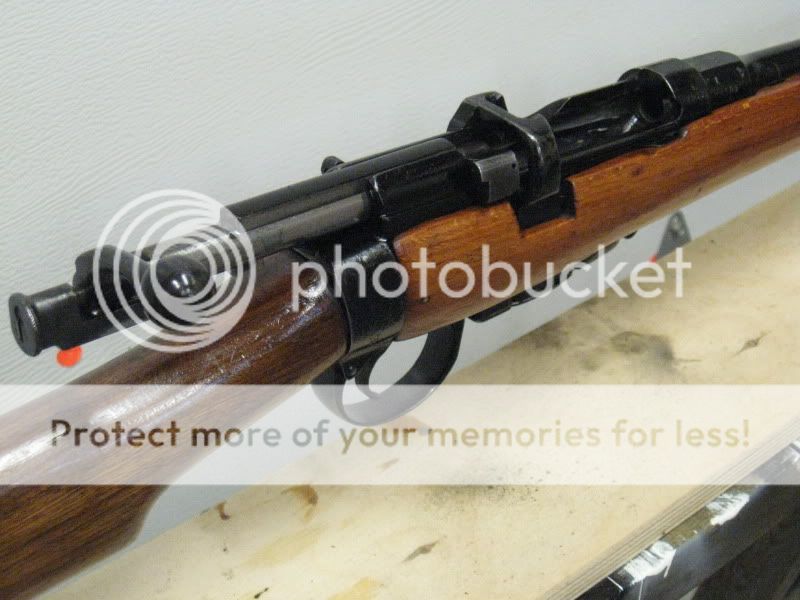
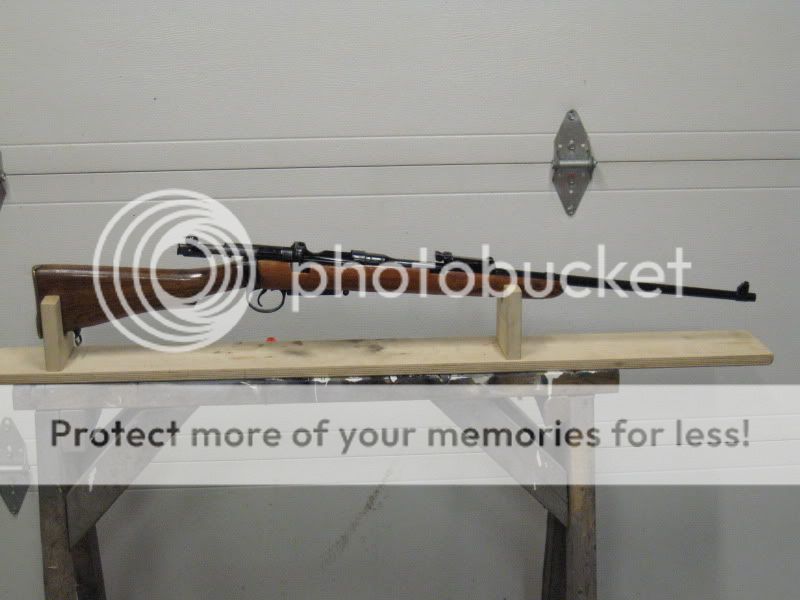
First real post here. I got my first Lee Enfield a couple of weeks ago. A No 1 Mk III, sporterised. The bore was in ok condition, not shinny, but I cleaned it the best I could.

Here are some pics

SMLE006.jpg


SMLE005.jpg


My brother in law and I were talking about the shooting range he goes to. There is a 100 yards target. I told him I wanted to try my SMLE there with the original iron sight, and he tols me I would not do any grouping because at that distance I would not see the target. He has a 7mm with scope...

I need some tricks, mainly how to aim properly with this SMLE model, so that I can show up at the range and try to win the argument... I know that practice makes perfect, I'm not a bad shooter, just need some info on the Lee Enfield I have.

Thanks !!!
 
With good trigger control, and a rifle in decent shape, and almost decent ammo, you should get decent grouping!

I have seen a man just yesterday with a No1Mk3 (not sporterized) shoot 10 shots, on three occasions, under 6 inches (give or take a couple of flyers) - not on a bench rest. He's a better shot than I am, granted!

(Hey Leadslinger, just to say I'm still impressed) :D

Lou
 
I need some tricks, mainly how to aim properly with this SMLE model, so that I can show up at the range and try to win the argument... I know that practice makes perfect, I'm not a bad shooter, just need some info on the Lee Enfield I have.

Thanks !!!

It's not a trick, just basic shooting fundamentals, but do you know to focus on the front site, and let the target go slightly out of focus?
If you have the 100 yard target perfectly in focus, then you cannot be hard focussing on the front site.

BTW, using a 1950 Longbanch LE and some ~25 year old ammo, I shot a 3 shot, 100 Metre, 1 1/4" group. Off a bench and fully sandbagged in, but I did it.
 
Question, I read the "zeroing instruction" on the Lee Enfield, and the figure 4 is why I'm asking question. Since the distance is 100 yards and the adjustable sight is 200, should I aim a bit lower, like the image ?

http://enfieldrifles.profusehost.net/ti16.htm

No. Since your argument with your brother-in-law is about being able to see the aiming mark at 100 yards, it doesn't matter whether the group's MPI (mean point of impact) is on the POA (Point Of Aim) or not, as long as it's a good (tight) group it will demonstrate that you were consistently able to see your aiming mark o.k.
 
...If you are looking for a 'grouping', aim at the same point everyshot, do not worry with accuracy at this time, just consistency of shots, accruracy will come later with sights adjustment. My other advise would be to get maximum support (Benchrest) so you are measuring the capacity of the rifle more than your own...
I would like to hear your range report...good luck!
 
Wow, thanks guys. I did not know about the front sight focus. I will use a sling to "wrap" my left arm, this help with left and right movement (at least it did in the Sea Cadet 15 years ago) and there is suppose to be some rest for the front of the rifle at the range (I'm not that good with the proper terminology yet).
 
From what you say in your post, you need a whole bunch of practise with a tangent sighted 22 rim fire. Something with low recoil and cheap to shoot but also has a similar sight picture. You also need to find mentor at the range to show you how to properly use the sights on that rifle. It is most likely sighted in for 300 meters at its lowest rear sight setting or in other words, 12cm to 17cm above point of aim at 100m.
From your pics, the forward retaining band is still in place but the fore end pressure plate and spring area has been cut away. This might or might not lead to accuracy issues. Another thing, that rifle wasn't made to shoot into nice little sub minute of angle groups. In 1915, 10cm groups were perfectly acceptable and normal.

The statement made by your brother in law that iron sights won't group well at 100 meters just shows his inexperience and ignorance. Anyone that takes the time to learn to shoot iron sights of all types, can shoot as well at 100m as anyone with a scoped rifle. Sometimes, even better.
I was at an egg shoot once, where an egg is glued to a 1/2m string and hung to swing in the wind from the bottom of the target rack. The rules were, any 22rf any sights, any ammunition and off the bench. Some clown with a Long Branch built No 7 (lee enfield No4 MkI*) single shot, with CCI standard velocity ammo, won the match hands down, over 6 other shooters with some pretty spiffy/pricey, scoped sporters. There were all sorts of excuses, but it was all in good fun. At another match, I saw some targets that were shot with a 7x57, 1908 Brazilian mauser in full regalia, shot by the same clown. The rules were any rifle/ammo, off the bench as long as it wasn't a purpose built heavy/medium built match rifle. It was scored by measuring the distance center to center between two shots only on target and then, closest to center if ther were a tie. The other target was the same but closest to center was the winner. The 1908 mauser shooter took out some very surprised shooters with some very decent rifles. That same clown also won an offhand match at 300 meters on a swinging 25cm gong with that same rifle. I'm willing to bet it took a lot of practise to get to that point though.

Now let me point out one glaring thing. The light was right. That means mid day with the sun behind the shooter. Perfect conditions for open iron sights. That is where scopes really pay off. Scopes are better in low light conditions and if shaded a bit into extreme light conditions as will happen late in the day or early morning, during sunset or sunrise minutes.

I suspect, you bought the No1 MkIII, because it was cheap. Not a bad decision by any means. You just have to learn to shoot it properly and how to properly take care of it. It will, usually, place the first few shots from a newly cleaned barrel where ever it pleases. Maybe close, maybe not. It should also be practise shot with a cold bbl. That will teach you an important lesson about patience and simulate hunting conditions. You shoud also do a lot of off hand shooting once you're satisfied with what you're doing from the bench. That's where the 22rf really shines. You won't develop a flinch from shooting off the bench rests/bags. In my opinion you should have at least a hundred rounds down range from that NoI MkIII before you hunt with it. Then, there should be at least another 500 rounds of 22rf practise from standing, prone, sitting and leaning against something to get started and your head around what's going on with your hunting rifle. You owe that to the game you are planning to hunt.
That's just the start of things. There are many nay sayers but like it or not, that reall is just the beginning if you're at all serious about the sport and hunting. Then there is the other matter of learning to hunt successfully. Hopefully your brother in law is a better mentor in that department.
The above posts are all correct, that's why you need a hands on mentor. Cheek weld, shoulder positioning and trigger control, are all need to know stuff. They're hard to learn by yourself, especially when you're first starting out. It might take several trips to the range and then to a field shooting area that's safe and will give you several challenges to become proficient but it will all be worth it when it counts.

 
By any means, try to get a good solid 6" black bullseye; it will simplify your aiming.
Try to keep a 6 o'clock sighting, it will give you a better view of the target.
Focus on the front sight at the last moment, aim and fire.
Do not aim longer than 15 seconds; if longer, relax, close your eyes, open them, aim and shoot.
Squeeze the trigger, don't jerk it.
Try a taking deep breath and, while aiming, let air escape just a bit, hold and shoot.
You'll see, with a little practice, all these things will occur at the right time and you'll begin to group consistently.
Good shooting!
PP.
 
By any means, try to get a good solid 6" black bullseye; it will simplify your aiming.

A 6" bull is more than enough to see at 100yds unless your eyesight is poor. I am somewhat nearsighted and can see it with no problems.

I have shot sub 3" groups using a front rest only with my Yugo M48 and 3" groups with my No.4 Mk.1 sporter, and I am no great shot with open sights. Good target shooters can shoot 1 MOA or better with iron sights, so a decent group is not at all unreasonable to expect. It just takes practice to know your rifle and hone your skills.


Mark
 
yeah, just get some practice and use the techniques these guys told you. Its the basics that count.

I agree with ipscgraz about the scope thing.
 
If I can hit with a m44 at 100 yards you should have no problem hitting with your 303. and I have bad eyes and wear glasses.I am using the open sights no scope. Hell years ago with the old FNC1, I could hit at 300 and 500 yards.
 
Glad to see another LE going back into service.

Kind of a shame that society is at the point where it is thought, even by a few, that you need a scope to shoot at 100 yards or more.

How did we fight two world wars with iron sighted rifles, exactly like yours.

When I was a younger man, I used to shoot iron sights out to 600 yards. In my 50's and wearing bifocals... 50 yards is my personal max without a scope.
 
Check the headspace before you shoot it. Then do the same thing you did as a Cadet.
Rear sight for elevation adjustment. Front sight, moved in the opposite direction you want the group to go.
"...Sea Cadet 15 years ago..." Shiver me timbers! Sea Cadets lost their rifles in the early 80's. Had to be invited to go shooting with an Army Cadet Corps. Happened regularly. Aharrrr!
 
We had a couple of Lee Enfield no 7 at the unit I was at, and there was a shooting range inside the building. That was fun.

I did shot 40 rounds with it, no split cartridge or anything.
 
Range practice

As mentioned before, practice, practice, and more practice.

Start with the .22, use a good well defined paper target, and shoot a lot.
Then, after a few hundred rounds, shift to the Lee Enfield. There will be a lot more recoil, and make sure you have ear protection. A good pair of ear muffs will certainly help.

Light a wooden match and run the tip of the flame over the back of the rear sight and the front sight. This not only burns off any fuzz or dust, but also blackens the sights, giving a more well defined sight.

Set the rear sight at it's lowest position, and fire three rounds for a group. See where they hit. With the removal of the wood and front bedding of the barrel, you are probably going to be out of zero. Adjust the sights if you can, but if you want the group to land in the bulls eye, you can always stick an auxillary aiming point on the target.

Move the front sight so that the windage gets the group in a line with the target.....either up, or down, but centered horizontally. If low, raise the sights. If high, you can aim lower, at the bottom of the bullseye. In fact, it is a good idea to aim so that the bulls eye sits on top of the front sight, like a ball on a stick. It is beter defined that way, as the black front sight is not lost in the black bulls eye.

Good luck.
 
Your brother in law seems to ignore something important about service guns: some sharpshooters in the units may have access nowadays to the best sniper equipment ever but the regular soldier doesn't have anymore some of the capabilities his grand-grand-father had in the WW1 trenches. Rifles were then designed to kill a man at about 300m with open sights. It is not an easy task and the training of shooters has always been a problem for all the armies of this world. Add to this that a good shooter may loose most of his talent under stress (when he's being shot at) and you can understand why, since WWII, the goal as changed : we are now talking of "neutralizing fire" and to do that , load spraying assault guns are OK . To solve the training problem, modern technology is providing all kinds of ways to do without focus control techniques by using red dots and holographic devices.

In short, it means that without the full auto mode of the new guns, and it is prohibited for us civilians, 100 year rifles in the right hands may well be superior to some brand new stuff to reach a target.

Stories about surprising Lee Enfields are numerous, to say the least. We've heard so much about zeroing problems and approximative caliber (from .307 to .317) that we don't expect better than a 5" inch group for a 1st test. Well, sometimes, you put your hands on a good one and you won't believe the fun you have doing better than most of the guys on the range with brand new hunting rifles. I know: it happened to me.

The zeroing problem is still there and I'm shooting only 3 shot groups with it but they are most of the time within 2" and btw, I must add something: I put a a scope on it but you know what ? My best group ever, I did it with the open sights.

Have fun.
 
Back
Top Bottom