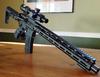
How come we never see any real SUT/LI training with SKS's ?

By the numbers folks!

1). There has been training offered in the past centered around using older weapon designs. It was a prepper carbine course set up specifically to teach those whose primary focus was prepping, not aggressive gun fighting. Lack of interest and lack of a training venue put the ki-bosh on it.

2). As has been stated previously, bullets could care less if you're rocking the disco kit or not.

3). Reserve units do not train in small unit tactics. They train in section, platoon and company level tactics within a supported framework of combat arms. So a section will train within platoon and be supported by same platoon, the platoon will train within a company and be supported by same company etc.. There is a very big difference between even section level & small unit tactics. Infantry firearms training in the TA involves a 40 hour segment on basic weapons manipulation and marksmanship and basic infantry assault tactics in field operations and FIBUA. CQB, Assymetrical, Small Unit and Covert operations are not taught at this level. You'll only see the extra training given to those reserve unit members who are going to be deployed in a combat zone.

So learning four man TAB, recce patrol, nail missions, FCAC, break contact etc. will be highly unlikely at this level unless you're willing to put the time and effort into your Reserve career and even then, it won't happen overnight.

-S.
 
Last edited:
You will run into an inherent flaw with our beloved SKS in Canada, the castrated capacity to 5 rounds via stripper clip clumsy reloading will frustrate you to no end.

No doubt, I cut strippers in half to dedicated 5 rounders but then it's a pain to get them out of the bandolier. So you're screwed either way lol, kind of like our FA lol!
 
I'm currently AR impaired so I am doing Tactical Teacher's CQB Clinic in June with my SKS...heavy and slow, but i'll let you know how it goes.
 
Do we have militia???

I actually meant the Rangers but I presume there is something in Québec!

It did. The jump in technology after ww2 was extremely fast. The SKS design was presented in 1945, after several prototypes evolved through the 1930s. The ak47, ar15 and even the hk G3 line rapidly developed from the concepts conceived and put into reality with the stg44 and prototype stg45 rifles. Rifles like the SKS and vz52 were transitional, short lived and quickly surpassed by a better design.

Age does not negate "modern" or current trends. Some still consider the 1911 a modern design due to it being a forward thinking design. It's features are still utilized in modern, new designs.

While I admit that advances in technology were present, such as using aluminum and post-Bakelite polymer, you have to consider that the AR15 of today is nothing like the AR15 of 1958. If the SKS had been redesigned with integral rails, a detachable magazine system and a lightweight polymer stock it would be just as "modern" as the AR15 or AK47. Consider that an AK47 is considered a modern platform and is used extensively with this sort of Rambo civilian training purpose in the USA and technologically it doesn't really offer anything over the SKS other than super loose tolerances / mass production.
 
Consider that an AK47 is considered a modern platform and is used extensively with this sort of Rambo civilian training purpose in the USA and technologically it doesn't really offer anything over the SKS other than super loose tolerances / mass production.

it offers magazines, that is what it offers.
 
You can set up stripper clips to take only 5 shots and be easily grab able by using electrical tape to limit the rounds on the clip and the zip tie off the top of each clip to allow easy gripping. There a YouTube vid on it under "is the SKS still a viable platform". Was that vid already poster in this thread.
 
Missing the point entirely.

Really? Isn't that exactly the point? Seeing how well your chosen rifle works in the real world on a level playing field?
I really don't see how it's any more complicated than what Stevo said; take it, see how it works. Either it will or it won't.

SKSs don't get a separate battlefield; what would be the point of seperate courses?

Who's budget limits them to a $200 rifle but allows them to attend a $1000 course in the US?

Civilian targeted light infantry courses are a thing now? Wow do I feel out of touch.
 
Really? Isn't that exactly the point? Seeing how well your chosen rifle works in the real world on a level playing field?
I really don't see how it's any more complicated than what Stevo said; take it, see how it works. Either it will or it won't.

SKSs don't get a separate battlefield; what would be the point of seperate courses?

Who's budget limits them to a $200 rifle but allows them to attend a $1000 course in the US?

Civilian targeted light infantry courses are a thing now? Wow do I feel out of touch.

Ummm.. yes, civilian targeted light infantry courses are a thing now.

For example:
http://www.maxvelocitytactical.com/blog/

Of course SKS's don't get a separate battlefield.

By the way, neither do unarmed civilians.
 
Me and one of my friends have been running drills with our SKS's the past few times we have gone shooting on crown land, setting up a few targets on the hillside and running drills where we advance and fire, quick reloads etc, covering each other while reloading, shooting from prone, one knee etc. Im sure it isn't as good as a actual course with an actual instructor but it is making both of us much more confident and faster operating our SKS's, and familer with using them in a non-standard manner that you cant do at most ranges.

IMO the SKS is still a very viable platform, if I was going to be stuck in the forrest in any type of gorilla warfare situation(which seems to be the theory behind most of these LI, small unit courses) id rather have a SKS than a AR, at least the SKS will always go bang when I pull the trigger no matter how much dirt and mud is in the action. Ive seen people at the range have more Failure to feeds or failures to fire in one session shooting 200 rounds from a AR than I have had with my SKS and im up to 2000+ rounds fired now. Had one failure to feed, and 2-3 failure to fires but had good primer strikes so I blame 40 year old surplus ammo for those.
 
Ummm.. yes, civilian targeted light infantry courses are a thing now.

For example:
http://www.maxvelocitytactical.com/blog/

Well, everyone's got to have a hobby, I guess. Neater than paintball or airsoft, that's for sure.

Of course SKS's don't get a separate battlefield.

Right, so I guess I don't understand what the aim would be with attending an "SKS only" course, much less how it would look any different than the course on any other given iteration. Stevo's answer is really all there is to it; only have an SKS? Take an SKS. Heck, if I were in the market for a course like that, I'd strongly consider taking an SKS by choice for the fun of it.

By the way, neither do unarmed civilians.

Not sure I follow? Unarmed civilians are non combatants, and have no place on any battlefield.
 
Last edited:

People who say that tactics are independent of the platform are dead wrong.

The US completely overhauled its small unit tactical doctrine in Vietnam when they took on the AR platform, moving away from set piece engagements to strike and fade tactics, tactics of momentum. Set piece engagements were still a big part of the fighting, but over the course of the war, they moved more and more to small unit momentum tactics, as it played to the strengths of the AR platform. They have maintained and expanded on this doctrine since.

The SKS is unsuited to this type of fighting - it will do Ok, but it isn't it's forte. With the limited mag capacity, or slow mag swaps if you have converted to duckbill mags, it just can't put out the same volume of fire of a modern fighting rifle.

If you want an idea of how the SKS is most effectively used, look again to Vietnam, and how the NVA used the weapon. They would mix them in with AK rifles in a unit, as a kind of poor man's DMR. They would push forward with AK equipped troops to engage and pin American forces, and the SKS equipped forces would hang back 50 to 100 yards behind the main line of attack and take aimed shots at targets of opportunity.

An advantage to this for the NVA, was that all the troops in the unit were using the same ammo, so it simplified the supply chain. Also, because the sound signature and wound profiles of the weapons are similar, it was very difficult for the American forces to determine what was offering the most effective fire, and most in need of being countered. Basically, in the chaos of an engagement, it all sounded the same, so they would engage the obvious (AK equipped assault troops) and often ignore the less obvious (SKS equipped DMR-ish troops). It was a very dangerous and effective technique.

The Communist Chinese hung onto the SKS for much longer than other East Block nations, because they had the raw manpower to support these kinds of tactics, and trained in them extensively.

A gun is a gun is a gun. But knowing the strengths and weaknesses of a given platform, allow you to play to its strengths, and avoid its weaknesses.

Going toe to toe in a rapid momentum engagement, when you've got an SKS and the opposition has an AK or an AR, is probably a bad idea. The SKS is a hide, shoot, and scoot, kind of weapon, that can step up its game in a pinch, and will be unfailingly reliable, even in very adverse conditions.
 
Well, everyone's got to have a hobby, I guess. Neater than paintball or airsoft, that's for sure.


Right, so I guess I don't understand what the aim would be with attending an "SKS only" course, much less how it would look any different than the course on any other given iteration. Stevo's answer is really all there is to it; only have an SKS? Take an SKS. Heck, if I were in the market for a course like that, I'd strongly consider taking an SKS by choice for the fun of it.


Not sure I follow? Unarmed civilians are non combatants, and have no place on any battlefield.

No, its not a hobby for most who involve themselves in this type of training. Clearly they have legitimate concerns and are taking responsibility to prepare themselves.

The point of an SKS only course (.... fill in the platform) is about maximizing what you have.

Unarmed civilians are non combatants, and have no place on any battlefield?
No doubt but Idealism is not reality. Sadly, wars are fought where people live.
 
People who say that tactics are independent of the platform are dead wrong.

The US completely overhauled its small unit tactical doctrine in Vietnam when they took on the AR platform, moving away from set piece engagements to strike and fade tactics, tactics of momentum. Set piece engagements were still a big part of the fighting, but over the course of the war, they moved more and more to small unit momentum tactics, as it played to the strengths of the AR platform. They have maintained and expanded on this doctrine since.

The SKS is unsuited to this type of fighting - it will do Ok, but it isn't it's forte. With the limited mag capacity, or slow mag swaps if you have converted to duckbill mags, it just can't put out the same volume of fire of a modern fighting rifle.

If you want an idea of how the SKS is most effectively used, look again to Vietnam, and how the NVA used the weapon. They would mix them in with AK rifles in a unit, as a kind of poor man's DMR. They would push forward with AK equipped troops to engage and pin American forces, and the SKS equipped forces would hang back 50 to 100 yards behind the main line of attack and take aimed shots at targets of opportunity.

An advantage to this for the NVA, was that all the troops in the unit were using the same ammo, so it simplified the supply chain. Also, because the sound signature and wound profiles of the weapons are similar, it was very difficult for the American forces to determine what was offering the most effective fire, and most in need of being countered. Basically, in the chaos of an engagement, it all sounded the same, so they would engage the obvious (AK equipped assault troops) and often ignore the less obvious (SKS equipped DMR-ish troops). It was a very dangerous and effective technique.

The Communist Chinese hung onto the SKS for much longer than other East Block nations, because they had the raw manpower to support these kinds of tactics, and trained in them extensively.

A gun is a gun is a gun. But knowing the strengths and weaknesses of a given platform, allow you to play to its strengths, and avoid its weaknesses.

Going toe to toe in a rapid momentum engagement, when you've got an SKS and the opposition has an AK or an AR, is probably a bad idea. The SKS is a hide, shoot, and scoot, kind of weapon, that can step up its game in a pinch, and will be unfailingly reliable, even in very adverse conditions.


thank you for the excellent and accurate post grelmar.

This was essentially the point of the thread. Maximizing and pushing the limits of what you have.
 
People who say that tactics are independent of the platform are dead wrong.

Well, that may be. Admittedly I only spent the entirety of my twenties and some of my thirties taking or teaching courses incorporating small unit tactics, and employing them in both training and operational environments. So I could certainly be all wet on this, but whether the candidates or soldiers were armed with SKS or ARs, or even No 4 Mk 1s would matter not one whit, only the weapon specific portion of the instruction would change. And I suppose, "change magazines, fix bayonets" would have to become "charge magazines, extend bayonets" if you had SKSesssss. Seriously, if Red Dawn happened tomorrow and I found myself leading a section of guerillas (aka fantasy world where you get your pick of rifles) I'd take my Sako 85 Black Bear in .30-06 just for the LCF, and poops and giggles. That's how much it really matters. Also, the protagonist in Robert Ruark's "Something of Value" carried a .416 Rigby bolt gun during the Mau Mau uprising, and I always thought that was as cool as sh*it.

Section battle drill hasn't, in fact, significantly changed since the advent of the LMG into the rifle section, which is where the real firepower comes from, and the Canadians were using bolt action rifles at the time. A Canadian rifleman from WW2 would blend nearly seamlessly into modern infantry section and platoon tactics, though I'm sure they'd marvel at the LAV III. The basic battle drill, truly, has not changed since WW2. The seven infantry section battle drills of Prep for Battle, React to Effective Enemy Fire, Locate the Enemy, Win the Firefight, Approach (and here's decision time, you have two big choices; frontal or flanking. Well, three I guess if you count left or right flanking as two separate choices), Assault and Consolidation would be as familiar to an infantryman in Normandy, 1944 as they would be to one in Pashmul, 2006.

The US completely overhauled its small unit tactical doctrine in Vietnam when they took on the AR platform, moving away from set piece engagements to strike and fade tactics, tactics of momentum. Set piece engagements were still a big part of the fighting, but over the course of the war, they moved more and more to small unit momentum tactics, as it played to the strengths of the AR platform. They have maintained and expanded on this doctrine since.

That's not quite correct, at all. There seems to be some conflation here between tactical, operational and strategic doctrine. The US did overhaul it's small unit tactics POST Vietnam, but certainly not during or upon adoption of the AR. The key changes post Vietnam were the codification (in FMs) of patrolling, ambushes, etc (in other words enshrining the lessons learned from small unit fighting in the jungles and paddies) - but most specifically the changes that came with the adoption of a true LMG, the M249. The cornestone infantry section and platoon manual used during the Vietnam war, 7-15 Rifle Platoon and Squads, was revised just prior to the initial introduction of the AR, and nearly two years prior to the adoption of the XM16E1 as the M16A1. The M16 most emphatically did not drive either small unit tactics or larger operational or strategic doctrine, the nature of the war in Vietnam did.

The terms used above (momentum, set piece engagements, etc) are a bit confusing to me - they resemble but aren't quite the "kosher" terminology I'm used to, so I may be misunderstanding what you mean. If so, forgive me... That in mind, the US Army has absolutely not maintained or expanded on the same doctrine since Vietnam. The doctrine adopted immediately post Vietnam was called Active Defence, and was still attritional in nature; that is, it emphasized manoeuvering to bring fires to bear. By 1981 - 2 it had changed again to AirLand Battle, and was the first manoeuver warfare doctrine the US adopted - that is, it emphasized bringing fires to bear to enable manoeuver. AirLand Battle has itself been replaced by Full Spectrum Operations and Network Centric Warfare.

As mentioned above, the keystone FM relevant during Vietnam was FM 7-15. It was replaced by FM 7-8 which was in use from the mid 70s to 2001, and the current one is FM 3.21-8. If you delve into them and compare the tactics, you'll see that it really wont matter in the slightest if the rifleman concerned is armed with an AR, SKS, AK or for that matter a K98K.
 
Last edited:

Clearly they have legitimate concerns.

Well, we'll have to disagree as to the legitimacy of the concerns; but I would suggest that if one did have concerns that they thought would be answered by taking such a course, three days times two or three courses just won't cut it. The old adage of just enough knowledge to be dangerous is very applicable here.

The point of an SKS only course (.... fill in the platform) is about maximizing what you have.

Gotcha. Then I would suggest that if that's the aim, a specific course is not necessary. Just do "the course" with what you have. Nothing will be different except the specific operation of that weapon. "Best practices" in small unit tactics are still best practices, regardless of what's in your hands. There will be different limitations and degrees of effectiveness, but that just comes down to knowing your tools; that is very independent of training in tactics. Indeed, they are taught on entirely separate courses in the military.
 
Infantry skills are based on teamwork that can't be taught in a weekend. Most civilians have never experienced what military teamwork is. Whether you use a clip or a magazine isn't of prime concern. The cost of the rifle is less than 1% of the cost of training.
 
Back
Top Bottom