Big Bad
CGN Ultra frequent flyer
I don't care though, I just never liked the 1911. Sorry, John Moses.
But if I read this right, Luger once made a .45 auto?
1͏3͏h͏ ·
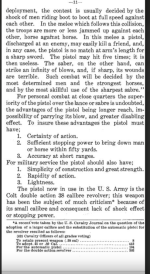
In 1904, the Army gave Colonel John T. Thompson and Major Lewis LaGarde a grim assignment: find out what it really takes to stop a determined attacker. They ran ballistic tests at a Chicago slaughterhouse, firing different calibers into animal carcasses and human cadavers to measure penetration and tissue damage. Their conclusion was blunt and specific. A military pistol needed to be at least .45 caliber, a slow but heavy round that delivered the shock and stopping power the .38 had failed to provide.
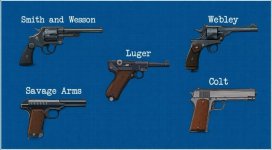
By 1906 and into 1907, the War Department opened a formal competition for a new service pistol. The requirements were strict. The gun had to be semi-automatic, hold at least six rounds, have a trigger pull under six pounds, and be easy to strip down and maintain in the field. It also had to fire a .45 caliber cartridge. Entries came from across the globe, including Smith & Wesson, Savage Arms, Germany’s Luger, Britain’s Webley, Bergmann, and Colt, all racing to meet the Army’s new standard.
Working with Colt, genius designer John Moses Browning submitted his .45 ACP semi-automatic design. After years of grueling trials that whittled the field down to Colt and Savage, the final 1911 tests proved decisive. The Colt fired 6,000 rounds without a single failure, while the Savage suffered dozens of malfunctions and multiple parts breakages. In March 1911, the Army officially adopted Browning’s design as the Model 1911, beginning a century-long legacy as one of the most trusted combat pistols ever made.
But if I read this right, Luger once made a .45 auto?
Simple History
1͏3͏h͏ ·
In 1904, the Army gave Colonel John T. Thompson and Major Lewis LaGarde a grim assignment: find out what it really takes to stop a determined attacker. They ran ballistic tests at a Chicago slaughterhouse, firing different calibers into animal carcasses and human cadavers to measure penetration and tissue damage. Their conclusion was blunt and specific. A military pistol needed to be at least .45 caliber, a slow but heavy round that delivered the shock and stopping power the .38 had failed to provide.
By 1906 and into 1907, the War Department opened a formal competition for a new service pistol. The requirements were strict. The gun had to be semi-automatic, hold at least six rounds, have a trigger pull under six pounds, and be easy to strip down and maintain in the field. It also had to fire a .45 caliber cartridge. Entries came from across the globe, including Smith & Wesson, Savage Arms, Germany’s Luger, Britain’s Webley, Bergmann, and Colt, all racing to meet the Army’s new standard.
Working with Colt, genius designer John Moses Browning submitted his .45 ACP semi-automatic design. After years of grueling trials that whittled the field down to Colt and Savage, the final 1911 tests proved decisive. The Colt fired 6,000 rounds without a single failure, while the Savage suffered dozens of malfunctions and multiple parts breakages. In March 1911, the Army officially adopted Browning’s design as the Model 1911, beginning a century-long legacy as one of the most trusted combat pistols ever made.