I have carried my 5946 concealed a lot and I have realized that having the right holster makes all the difference in good concealability and comfort. That being said, if I was carrying as a civilian, it would be one of my 1911's. Don't worry, carrying my 5946 was duty related ... Don't need the trolls jumping on that one.













































You are using an out of date browser. It may not display this or other websites correctly.
You should upgrade or use an alternative browser.
You should upgrade or use an alternative browser.
If CCW was granted, have you thought about what you would carry?
- Thread starter Farlsincharge
- Start date


notsorichguy
CGN Ultra frequent flyer
- Location
- The city that rhymes with fun
Currently I only have one pistol I would "trust" as a CCW & that's my M&P9.
Ideally I would take a cutdown 1911, or a commander....... neither of which I currently own
But thats all just a pipe dream here in Canuckistan.......
Ideally I would take a cutdown 1911, or a commander....... neither of which I currently own
But thats all just a pipe dream here in Canuckistan.......


As mentioned earlier as long as the Queen or any of her heirs are on our money we will never see CCW in Canada. British fear mongering of firearms has always found it's way into our laws and always will. So until we are a nation truly unto ourselves like the USA keep dreaming.
But I did go snubby way at the beginning!
But I did go snubby way at the beginning!


- Location
- Niagara Region, Ontario. For now
For the revolver folks Ruger SP101, or Taurus ultralite!!!!!!!!!
But like I said its hard to argue with 10 rounds of .40 s&w in a G27!
But like I said its hard to argue with 10 rounds of .40 s&w in a G27!


Somebody said something about a backup? Oh drool drool drool drool, I wasn't even thinking about backup, I still say hkp7 for all purpose CCW, but id love to have a small revolver strapped on my ankle when I wear baggy pants. Even though I dont have my prohib, ive been lusting over the set of colt python snake eyes that Gunnar has in. The stainless is my fav


- Location
- Centre of the universe
Probably a Ruger .357 snubby... Adrenaline proof


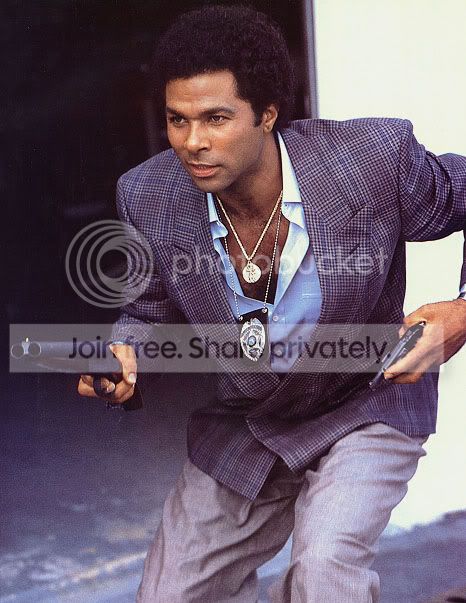
Just a shotgun.
I'll take the pocket revolver in Tubb's lefthand if you don't want it.

mlehtorvaara said:Wow some of you guys are more than dreaming! Full size pistols...... for CCW???? Ok have fun with that!
But like I said its hard to argue with 10 rounds of .40 s&w in a G27!
You can carry a G22 just as comfortably as a G27. Trust me I have personal experience in that area...
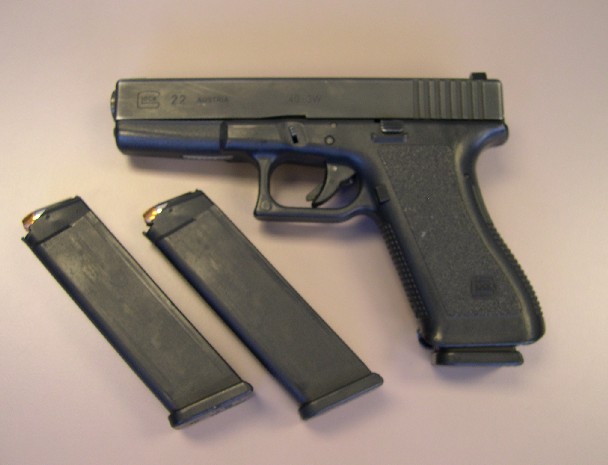
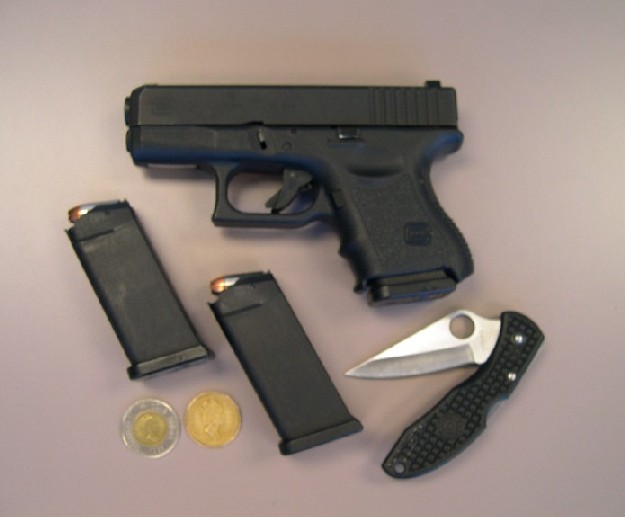
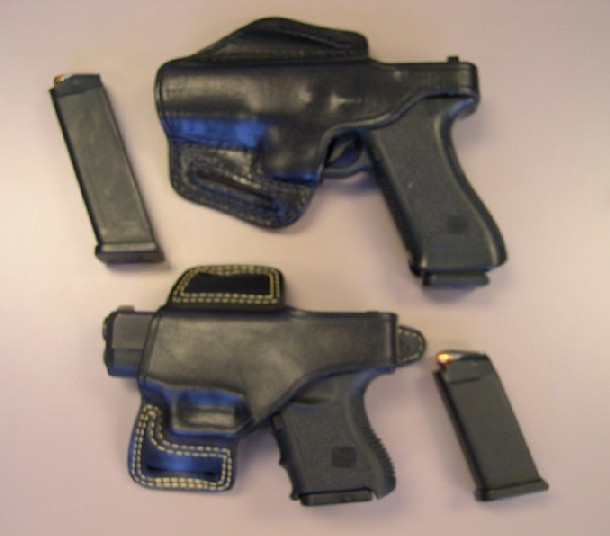

NAA.
Some kind of smallish revolver. It's idiot proof, doesn't jam, and even if it misfires, pulling the trigger again is the only "immediate" action that is needed to get it back into action (no need to fiddle with mags, rack a slide, or do anything else in a moment of profound stress where one's brain functions on autopilot).
I don't really see any credible CCW scenario that would require me to get into a prolongued firefight that would require more than the 5-7 rounds that a revolver contains.
I don't really see any credible CCW scenario that would require me to get into a prolongued firefight that would require more than the 5-7 rounds that a revolver contains.

- Location
- Somewhere on the Hudson Bay Coast
More important than the gun you choose is how you intend to carry it, and how you train for action. Once basic marksmanship has been established, continuing to shoot at stationary, single dimensional targets, at static ranges, all at the same elevation, in good light, without no-shoot targets present produces a false sense of security. A human torso can appear as much as 50% smaller by simply turning at the waist, but a turning head remains the same apparent size. Can you instantly choose the correct aiming point that ensures deep penetration on a reduced target? Imposing unrealistic time limits to any particular drill serves little purpose, but man against man drills can be good teachers. Training only in bright ambient light won't help you much if you are attacked in a dark, garbage strewn alley. Drawing a back up gun and firing it with your support hand is faster than diagnosing and clearing a failure to fire with your primary, but only if you can hit with your weak hand. A back-up gun is of no use, if it is hidden away so well that you cannot access it when you need it. An auto pistol stops being a useful tool if you experience a double feed in the middle of a fight. Can you clear a failure to fire if you have the use of only of your weak arm. By the time you have diagnosed the problem, never mind cleared it, the fight is over and there you are in second place. A DA revolver stops being a relevant if unburned powder accumulates under the extractor star or it the ejector rod unscrews so the cylinder cannot be closed. Shooting center of mass is of no help if the angle to the target is such that the bullet does not penetrate deeply into the target. Shooting Mozambique drills is not applicable to all defensive situations. Firing quick pairs doesn't make sense if your target is no longer visible after the first shot. In some situations a single pelvic shot trumps two in the chest and one in the head. When seat belted in your car, do you carry your pistol in the same position as you do when walking down the street? What is the closest range you train to shoot from? When you draw a pistol and shoot at a contact close target, do you rotate the pistol away from you to prevent the slide from hitting you or your clothing causing a malfunction? Do you understand the difference between cover and concealment? Can you effectively shoot on the move?
The purpose here is to make those who someday hope to participate in CCW aware of some of the misconceptions and pitfalls surrounding practical shooting techniques so often spouted in print. Get the best training you can afford. Go to as many schools as you can afford to attend, and adapt some of the ideas from each that best suit your own defensive shooting techniques. A gun is simply a means to an end, a way of applying force to a given situation. The gun(s) you choose to accomplish this are if not irrelevant, almost so, as no handgun cartridge that can be controlled for fast repeat shots can guarantee the fabled one shot stop, and it is training, mindset, and luck that wins the day. If you find yourself in a gunfight, that covers the luck part of the equation, so all that is left is mindset and training. The choices of a revolver or a pistol, a 1911, or a Glock, a 9mm or a .45 while interesting to the gun enthusiast is a secondary concern to the fighter, provided his gun has a trigger he can manage, sights he can see, and power he can control.
Thank you Louis Awerbuck.
The purpose here is to make those who someday hope to participate in CCW aware of some of the misconceptions and pitfalls surrounding practical shooting techniques so often spouted in print. Get the best training you can afford. Go to as many schools as you can afford to attend, and adapt some of the ideas from each that best suit your own defensive shooting techniques. A gun is simply a means to an end, a way of applying force to a given situation. The gun(s) you choose to accomplish this are if not irrelevant, almost so, as no handgun cartridge that can be controlled for fast repeat shots can guarantee the fabled one shot stop, and it is training, mindset, and luck that wins the day. If you find yourself in a gunfight, that covers the luck part of the equation, so all that is left is mindset and training. The choices of a revolver or a pistol, a 1911, or a Glock, a 9mm or a .45 while interesting to the gun enthusiast is a secondary concern to the fighter, provided his gun has a trigger he can manage, sights he can see, and power he can control.
Thank you Louis Awerbuck.
Last edited:






















