Thank you all.
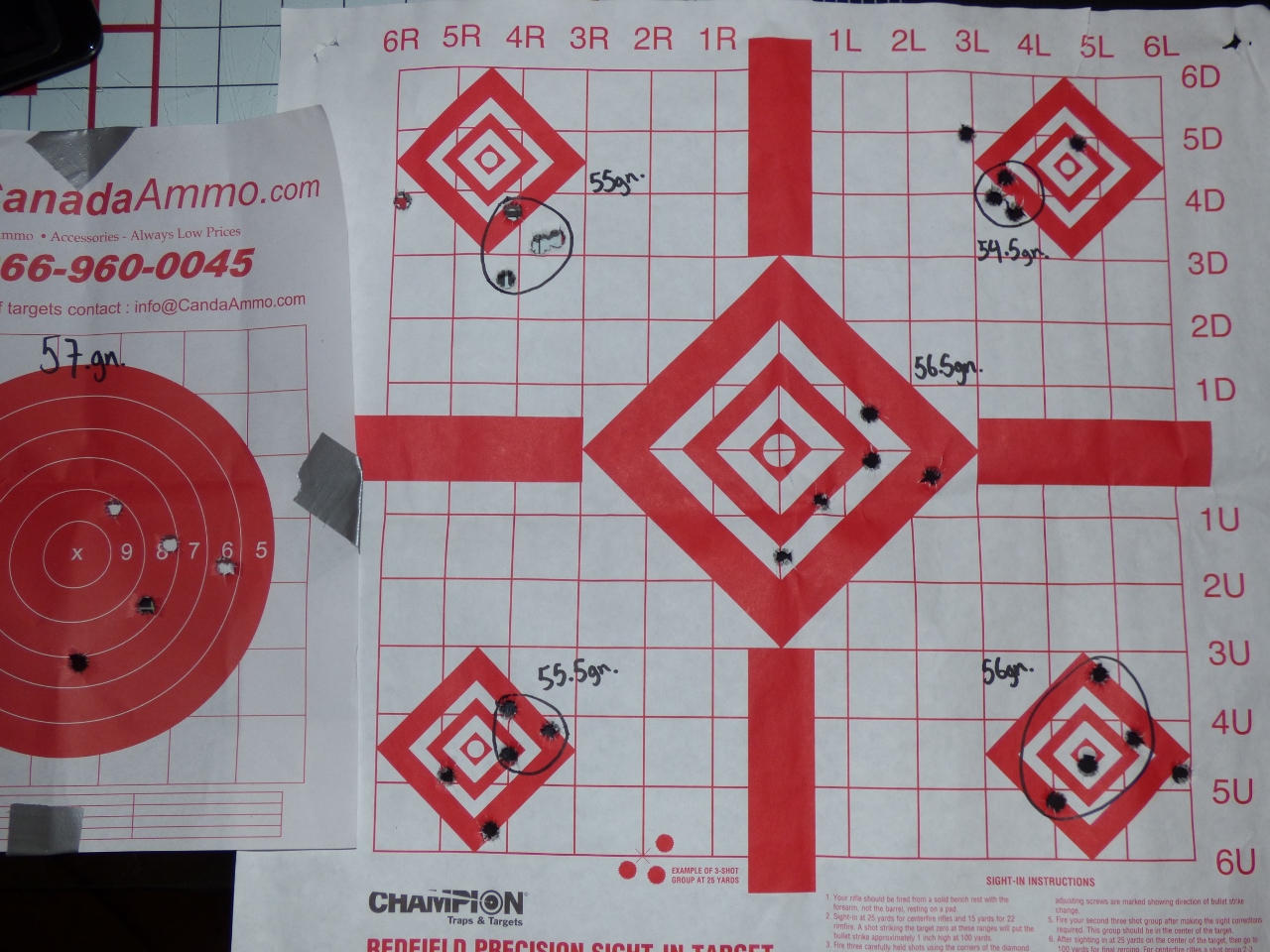
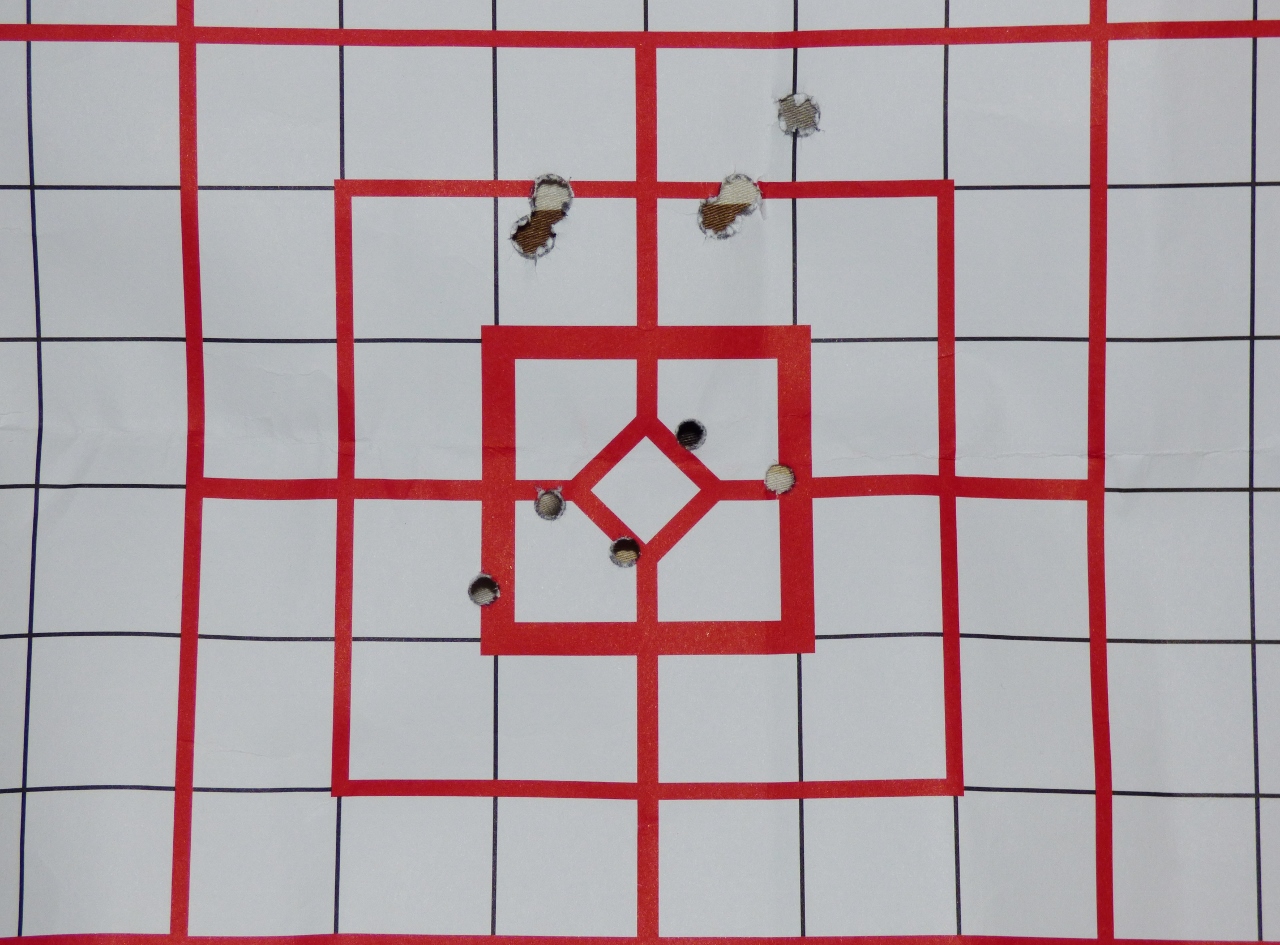
I went out to the range today for the first time with my reloads. Im having an extremely hard time finding info on Hornady INTERLOCK 165g BTSP. So I decided to start with what the previous owner had told me. fav load at 57g, but start a bit low.
I decided to go with 54.5 up to 57 in .5 grain increments.
I had the rifle on a home made full size rest.
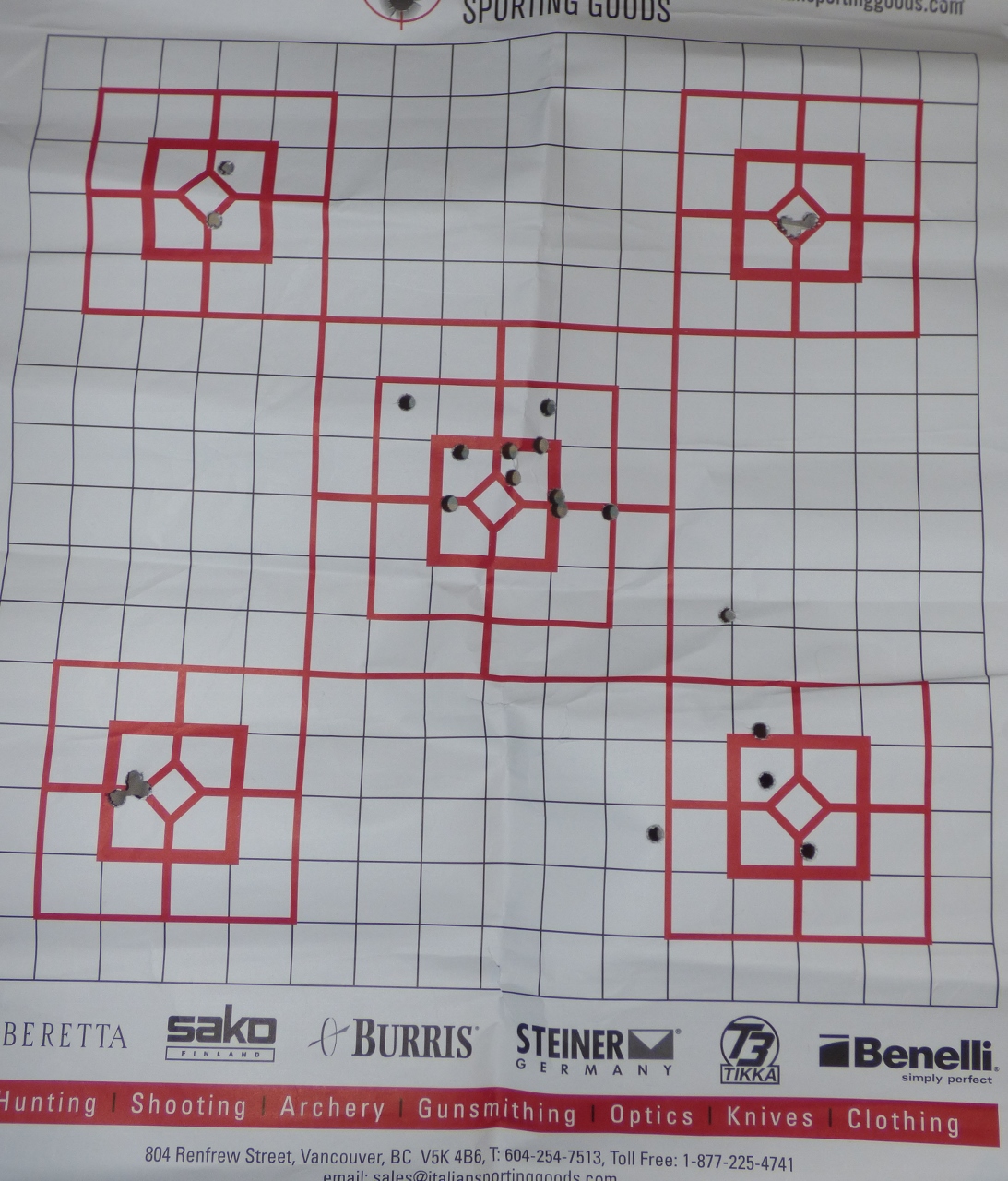
I also tried to let the barrel cool down between volleys as it was getting quite hot. I was doing 5 shot groups @ 100. Im not really sure what to make of the results, some input is appreciated. Seems like I had some flyers? I may add more info, im tired now and going to bed. Cheers!
Oh, and this may be a silly question, but with the lead at the tip not always being the same, how do you measure a constant COL?
OK, it seems that your rifle has all the features that one would expect to make a P17 really sing, including forend bedding. Since others have said this rifle shoots, then for the time being, we can eliminate the rifle as a factor.
There is no indication in your target photos about the order of your shots. If the general pattern is that shots 4 and 5 are the flyers, then you have a barrel heating problem. FYI, most hunting rifles don't like to be shot five times without a break. If you plan to shoot 5-round groups, I'd shoot no more than 3 shots and then wait some time before firing shots 4 and 5. The amount of time depends on the barrel heat. Those P17 barrels are skinny, so they heat up fast.
You chose well with a 165-grain Hornady BTSP and IMR 4350. That combination in the .30-06 is about like turkey + cranberry; apple pie + ice cream; mashed potatoes + gravy -- loved by pretty much everyone. The Hornady bullet, in particular, is the best choice for this kind of rifle. Hornady bullets tend to be softer than other brands, and this means that they are more forgiving of slightly weird dimensions of older military barrels (and P17 barrels were on the loose side to begin with). I agree that a boattail could be your problem (assuming that it is not simply heat-stringing shots 4 and 5 all the time). If you switch to a 180 Hornady flat base with IMR 4350, that is basically guaranteed to work in a .30-06. If it doesn't work, then there is something wrong somewhere, possibly with your barrel itself.
You also need to be honest about your own shooting ability. It takes a bit of focus and experience to shoot groups systematically and consistently. In fact, to eliminate some of these human factors, I've personally adopted the "round robin" shooting technique recommended by Dan Newberry in his OCW method. (Google it. This technique makes a lot of sense and it might even give you some insights into the target you posted.) Basically, fire one shot at a time out of each load, at different targets, working your way up in charges. When you reach the top, start working your way back down. Monitor your barrel heat and rest as needed. By the end of the process, you will have targets just like you posted, only this time all of the shots will have been fired in a different sequence. This will eliminate the flyers often associated with shooting one entire group in a string.
Finally, I agree with the others that you should actually be able to push higher than 57 grains of IMR 4350 with this rifle and combination. I personally wouldn't hesitate to push it up to 58.5 -- something that writer John Barsness established is perfectly acceptable by doing exactly that in the Nosler pressure lab, and getting confirmation that 58.5 grains of IMR 4350 raised the pressures up to about those associated with .270 Winchester factory loads -- something which your strong P17 action should be able to digest without a hiccup.
I do believe, however, that a 180-grain Hornady flat base should make a difference with this rifle -- as long as barrel heat is not the cause of your flyers.