












































stickhunter
CGN frequent flyer
- Location
- Victoria, B.C.
I posted earlier about receiving brass for my Ruger RSM in 505 Gibbs. In preparation for ordering a bullet mold, I wanted to take a chamber cast, so I removed the barreled receiver from the stock. Here's what I found:
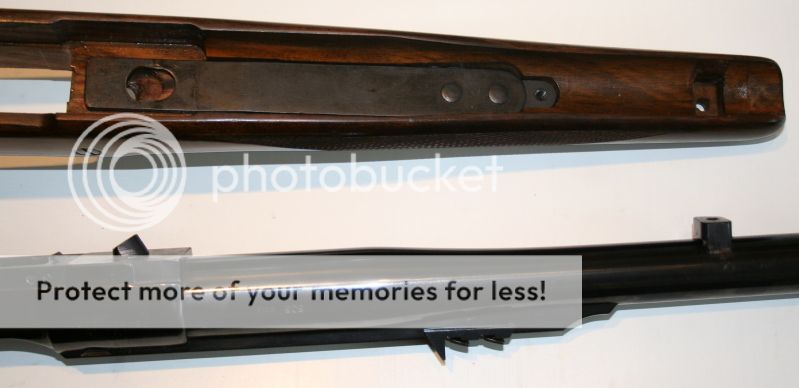
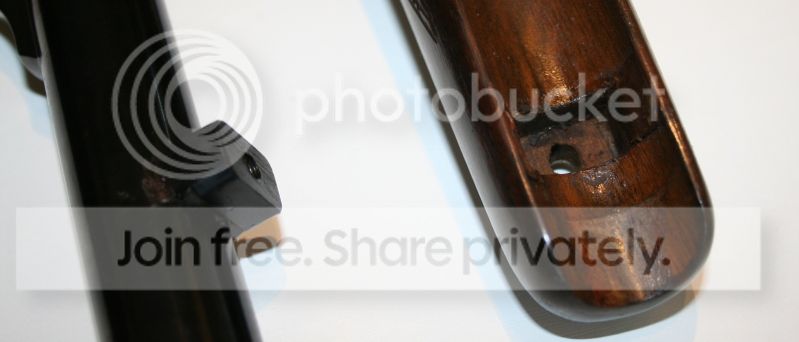
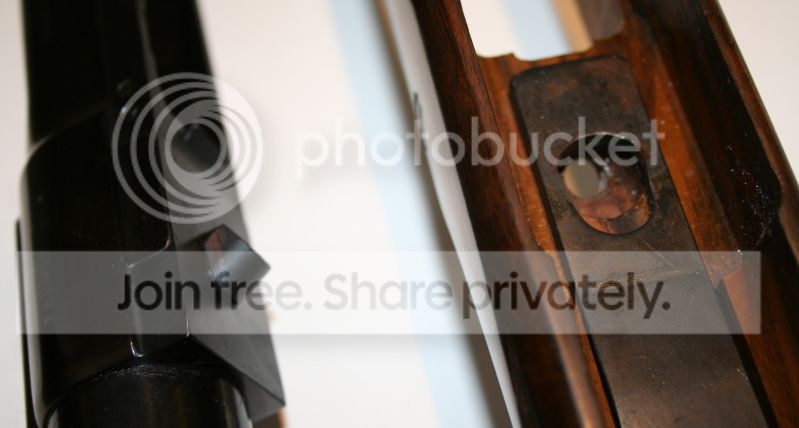
As you can see, the RSMs have a steel bedding plate that is secured to the forearm by the rearmost screw. Instead of bearing against the wood, the recoil lug with the angled action screw engages a cut-out in the bedding plate. The bedding plate on my rifle is securely attached, even with the screw removed, so I imagine that underneath is some inletting to which the recoil is transfered.
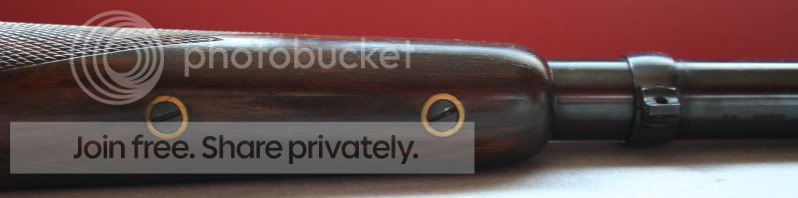
The barrel lug is dovetailed and welded or brazed to the barrel. The foremost screw in the forearm engages this lug. Correct me if I'm wrong, but I think this barrel lug was added when the rifle was converted. I've been looking at the arrangement of the forearm screws, and I think my rifle was originally one of the early RSMs with the barrel band under the forearm:

I believe I can see some evidence of where the barrel band used to bear against the forearm inletting. There also appears to be a small "cradle" of epoxy bedding on either side of the barrel lug inlet, but that is all.
More for curiosity's sake, has anyone glass bedded their RSMs, and if so, how? I imagine the primary motivation for additional bedding is to prevent stock splitting rather than improving shot-to-shot consistency, so in that respect, is the steel bedding block generally sufficient?
------
In case anyone's interested, here are the measurements I took from the chamber cast:
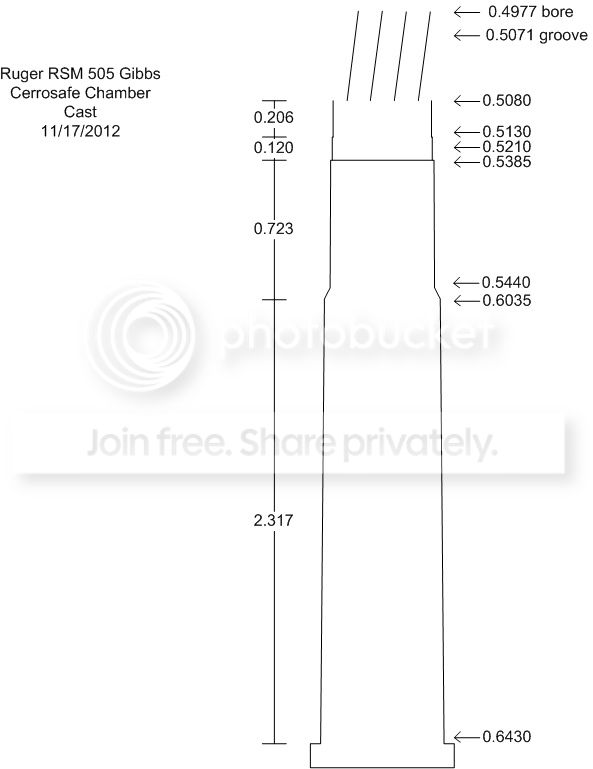
The chamber agrees pretty well with the cartridge specs:

Aside from the bore/groove diameters, measurements were taken with a caliper, so they are really only accurate to ~0.001. I was surprised (don't know why, but I was!) to see a distinct freebore to the throat; that's the 0.521" diameter section with length 0.120".
I also slugged the muzzle with a lead weight and got these measurements:
.4955 bore
.5032 groove
So at least the bore is tapered in the right direction.
As you can see, the RSMs have a steel bedding plate that is secured to the forearm by the rearmost screw. Instead of bearing against the wood, the recoil lug with the angled action screw engages a cut-out in the bedding plate. The bedding plate on my rifle is securely attached, even with the screw removed, so I imagine that underneath is some inletting to which the recoil is transfered.
The barrel lug is dovetailed and welded or brazed to the barrel. The foremost screw in the forearm engages this lug. Correct me if I'm wrong, but I think this barrel lug was added when the rifle was converted. I've been looking at the arrangement of the forearm screws, and I think my rifle was originally one of the early RSMs with the barrel band under the forearm:
I believe I can see some evidence of where the barrel band used to bear against the forearm inletting. There also appears to be a small "cradle" of epoxy bedding on either side of the barrel lug inlet, but that is all.
More for curiosity's sake, has anyone glass bedded their RSMs, and if so, how? I imagine the primary motivation for additional bedding is to prevent stock splitting rather than improving shot-to-shot consistency, so in that respect, is the steel bedding block generally sufficient?
------
In case anyone's interested, here are the measurements I took from the chamber cast:
The chamber agrees pretty well with the cartridge specs:
Aside from the bore/groove diameters, measurements were taken with a caliper, so they are really only accurate to ~0.001. I was surprised (don't know why, but I was!) to see a distinct freebore to the throat; that's the 0.521" diameter section with length 0.120".
I also slugged the muzzle with a lead weight and got these measurements:
.4955 bore
.5032 groove
So at least the bore is tapered in the right direction.
Last edited:























