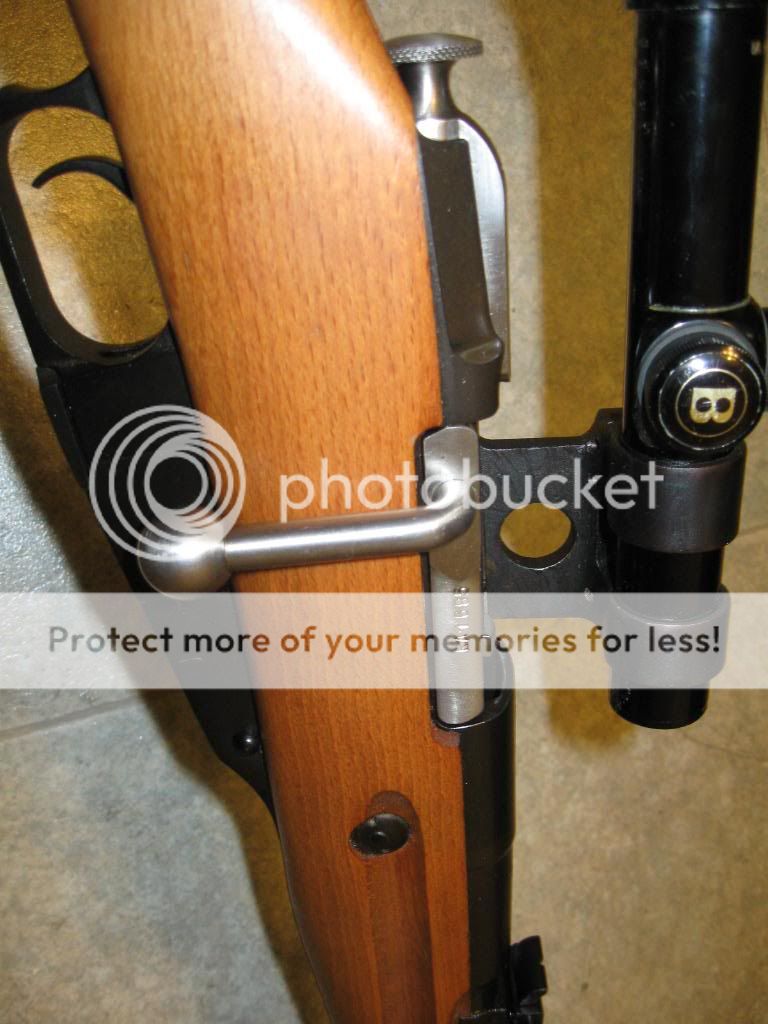
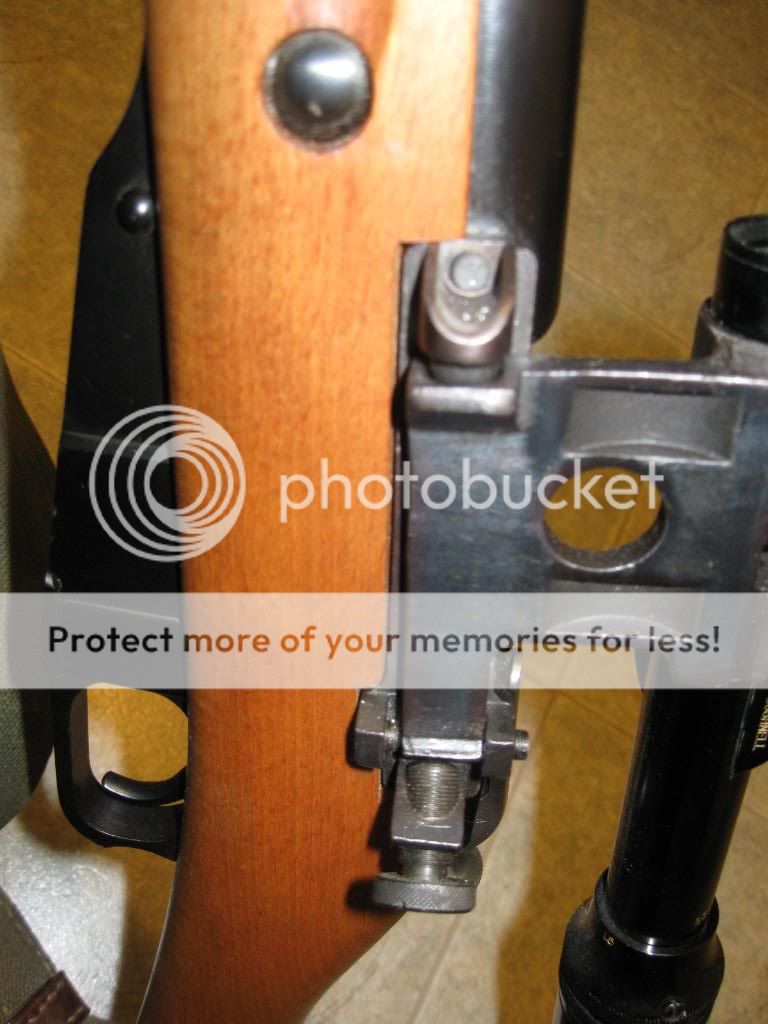
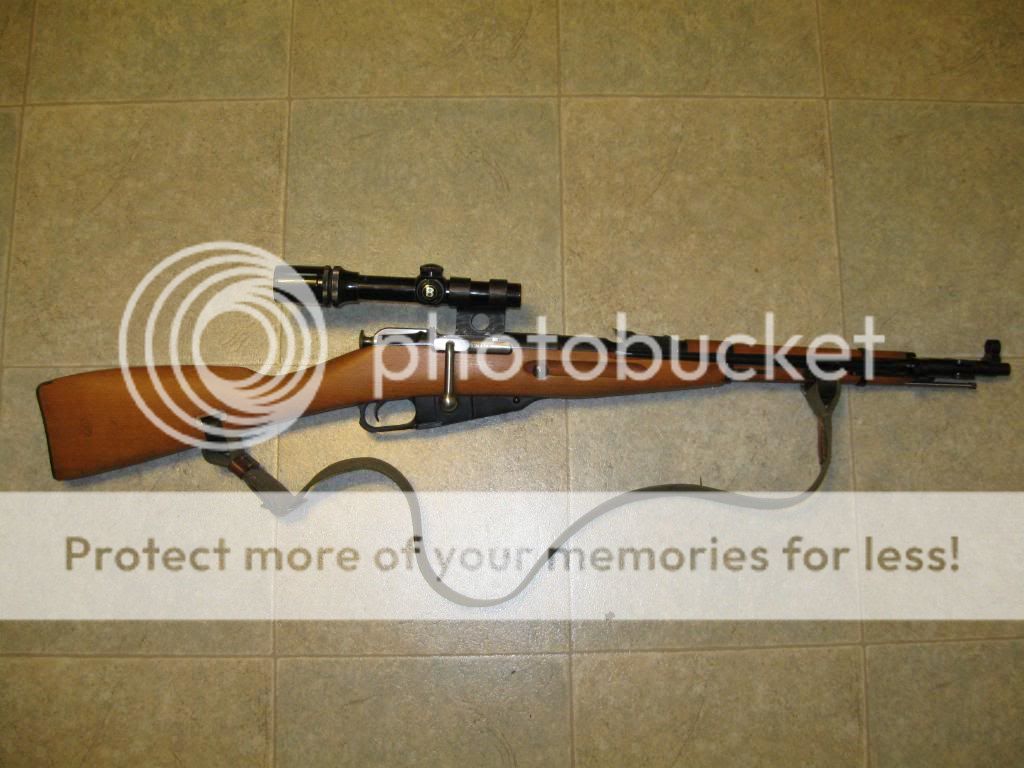
I don't disagree with wallflower, as his advice has merits, but may as well add some other opinion to the pile.
First off, if you aren't 100% sure that you're 90 degrees to the center of the vertical axis of the reciever then having the drill bit naturally center won't help one bit. Also, it can still wander the length of the reciever and mar that surface up.
I don't mean to say this a better way, but hopefully you'll find some info that you can use.
What I did was:
1) Took barrelled and stripped reciever and fit into vice, clamped flat length and width wise, with two blocks of hard wood cut to fit the barrel.
2) Take both mount and scope assembly, and hold to side of reciever, got an idea as to where was right. Specifically was checking that the vertical arm of the scope assembly was 90 degrees to horizontal on the rifle (and also 90degrees to horizontal on the ground, but if the reciever shifts at all you'll have to either take that into account or reset it).
3) Eyeball and confirm the scope is sitting directly above the center of the reciever, and move if necessary.
4)mark the outline closely with a white paint, or in my case, white out (it's very easy to see, and comes off easily once you're done).
5) remove everything, coat the scope base in 24 hour epoxy, and clamp it back in place using the paint as a guide, and quick clips and clamps to hold it in place. I premade some fitted wood blocks for the other side of the reciever so the clamps wouldn't slip on the rounded edges and angles of the reciever.
6) recheck everything. Make sure the base plate is directly against the reciever and the glue isn't creating a gap anywhere.
7) leave for 24 hrs to dry in an above zero place. Warmer helps

8) Find out it slipped during the night because a quick clip was pulling it out of alignment, swear, repeat #5-7.
9) Keep as many clamps on it as possible while exposing the drill holes. I made a center punch that fitted both the pin and the screw holes, so that it would self center. Could have just as easily eyeballed it. I just wanted to give another try at tempering tool steel.
10) Drill a pilot hole for each of the holes. Keep in mind the thinner the bit, the more PITA it is if it snaps in place... because you can't drill it out. Keep it well oiled, use good drill bits, take it slow.
11) Redrill holes to diameter, taking into account the pin holes will need to be the exact diameter of outer hole, if not erring on sliiiightly bigger, and the screw holes need to be the correct size for the tap set that matches the screws. The pins may or may not be a good idea. I did mine, but I've seen lots without them. I also drilled mine all the way through, but many people suggest a blind hole.
12) If everything looks good, unclamp the base plate and gently pry the scope base off. You may be surprised how strongly it's on there, but some very gentle prying can probably remove it and not scratch the reciever. Use a hard piece of plastic to get all the epoxy and white out off.
13) Tap the two screw holes. Make sure the tape is 100% 90 degrees to the holes. A wandering tap pretty much starts from the first turn and will piss you off to no end. The gun I stripped my scope assembly off was drilled and tapped horribly... about 10-15 degrees difference... which when a screw is in, shows a lot!
14) Keep cutting and lubricating as you go. I have almost no experience with this, so my info isn't very good. Basically what I've figured out is that A) lube is good, B) chips are bad, C) the tap breaking off in the hole is horrible d) stopping turning while tapping creates a slight bur there??
d) occasional backing out, cleaning, and relubing is adviseable.
You'll want to do your own research here. This worked for me, but I don't know what I'm doing...
15) Pins. Cut pins ever so slightly short... In this case we're talking about a pin that runs from the face of the scope base to almost the face of the inside of the reciever (remember, I drilled all the way through, and used pins.... someone else more knowledgeable will chime in on if they were used and what the best way is). You make the pins slightly shorter so they A) don't impede bolt travel and B) don't impede the scope assembly from mating tightly against the scope base. As you hammer them in place they may flare, so take that into account if they aren't cooperating, as that creats a PITA if they stick and are still very exposed.
As well, I only did the rear pin on mine, as the length of the scope base and location of the pin holes meant I was dicing with the possibility of either trying to drill a blind hole into the thin wall area where the lugs lock, and have a weakly anchored pin, or drilling all the way through and possibly messing up the locking action and weakening the reciever. I decided if the guns can function without them, it didn't need the front one.
I measured my pin out and made it about 2mm shorter than necessary. It was slightly overly large for the hole, so I also sanded it very lightly and lightly filed / rounded the ends to avoid flaring, and ensure a good fit. In my case, it tapped in nicely, and fitted very snugly. I left it silver, but will probably blue it at some point.
16) screw in scope base screws. Mine just about passed the inner reciever wall, so I didn't have to do anything. If yours are too long, it would look cool to have the ends have the same concave profile as the inside of the reciever wall.
17) Locking screws. Since my scope assembly was previously used the anchoring screws had already been inletted to allow for locking screws to hold them in place. One of mine worked, but the other needed a new cut made. I screwed it in place, then used a file corner to scratch the remainder of the locking screws circle profile into the anchoring screws head.
Removed it, used a dremel with a metal cutting head to remove metal as necessary. I would put it back in place and check it frequently.
It also isn't necessary to cut the entire profile of the screw head out in a dish, as the locking screw head isn't as deep as the anchor screw head is. Just be aware that if the locking screw is as all exposed on the surface of the base plate, it may interefere with how tightly the scope assembly mates to the scope base.
Annnnnnnnnnndddddd that's about it.... preliminary sighting in was very promising, however I ran out of ammo

I may also try that No-bubba gunsmithing accurising solution I posted a link to on pg one as well.
Hope that helps!