J Manton & Co SxS

Ganderite

CGN Ultra frequent flyer
Rating - 99.7%
355   1   0
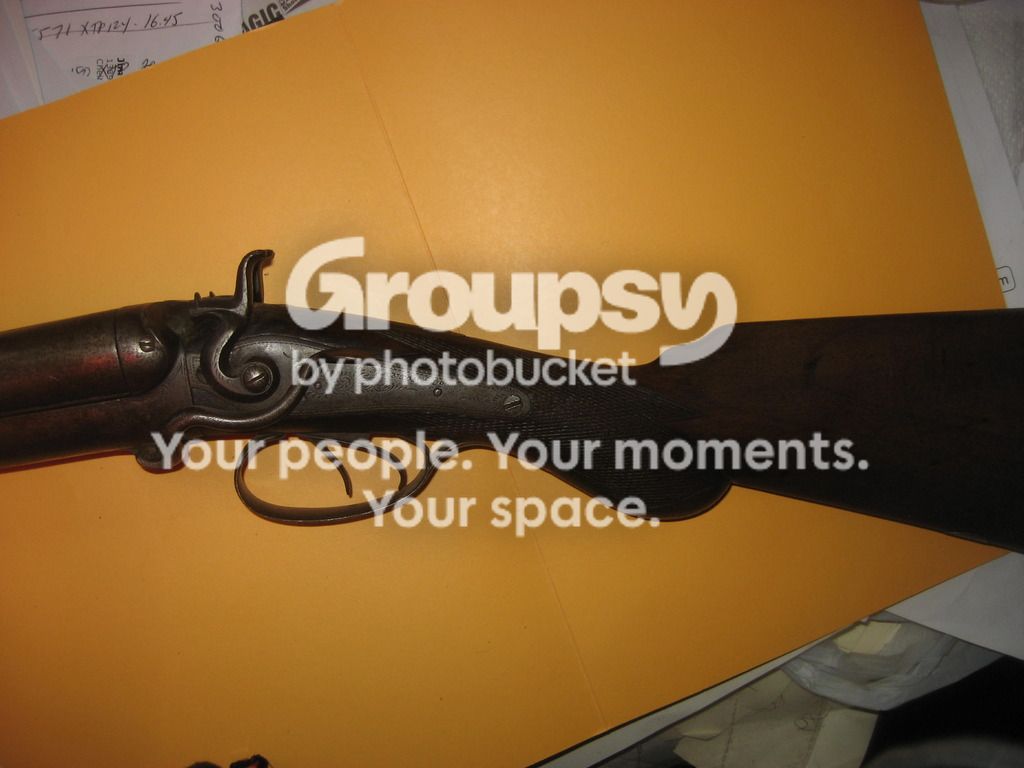
I was given this old gun recently.

I know it is a 30" Damascus steel 2 3/4" 12 ga.

Side plate is marked J Manton & Co.
IMG_1540.jpg


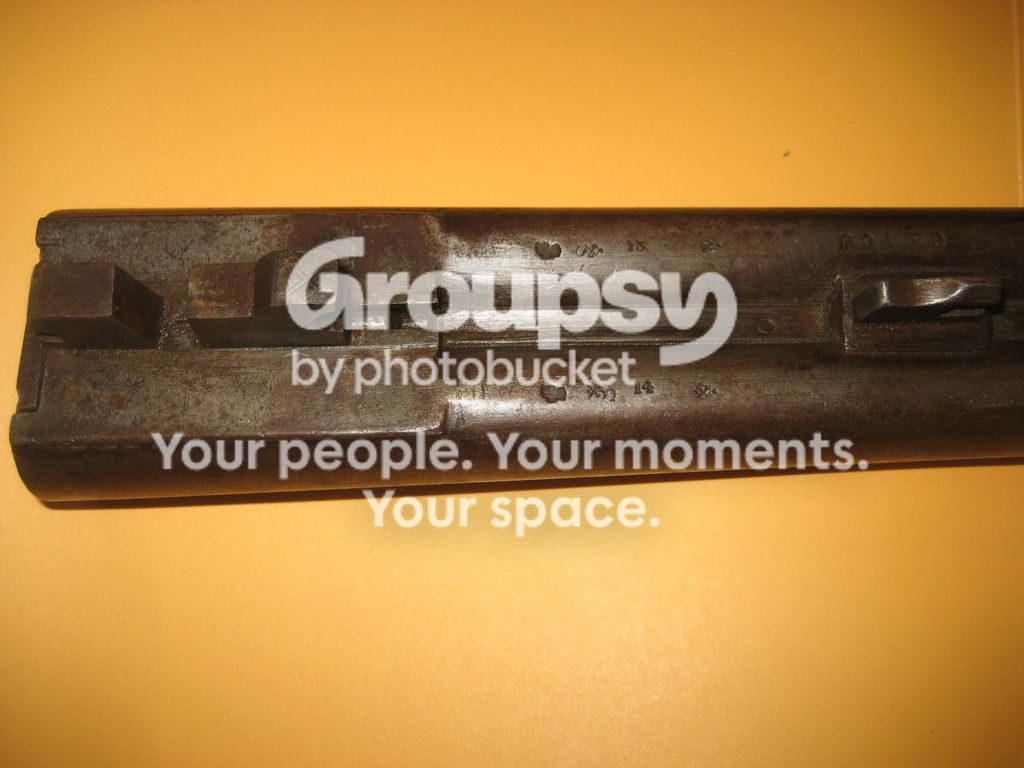
Under the barrels there are proof marks and the numbers 13 and 14. I assume these might refer to the chokes (13 ga and14 ga?)

I don't know what proof house this is.
IMG_1533.jpg


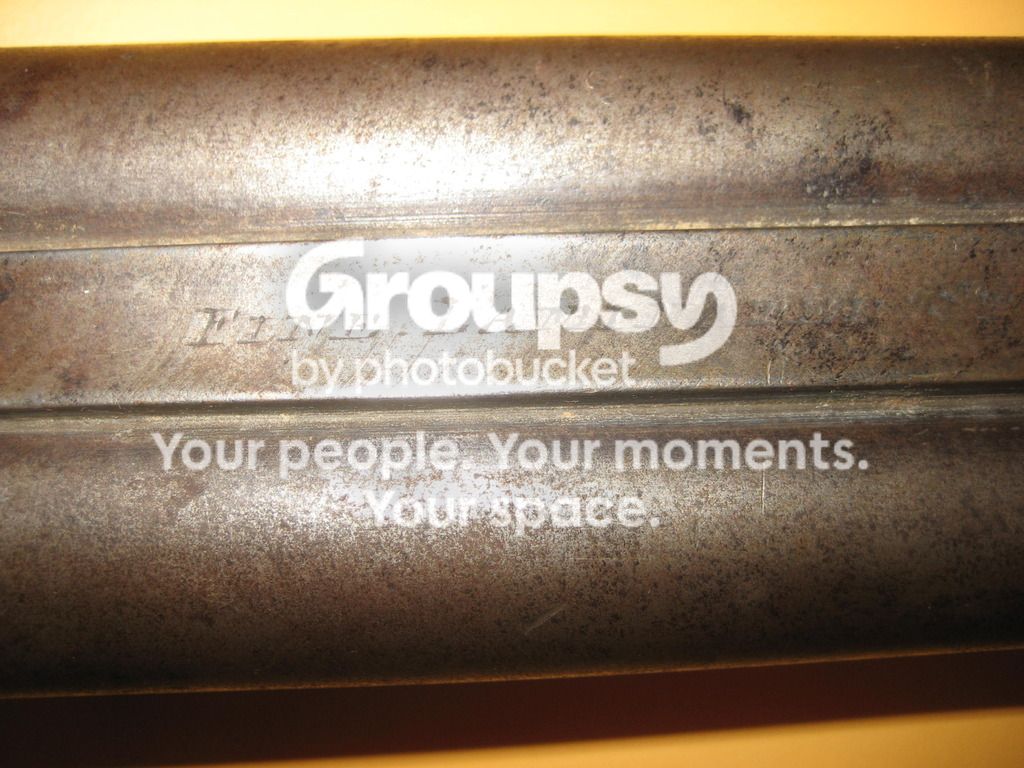
The barrel rib is marked Fine L'Aduin###? Steel
IMG_1536.jpg


I assume I can play with this if I make up some blackpowder loads.

I am assuming this is a $5 shotgun from the turn of the century Eaton's catalog. Where was it made?

The firing pins have been removed and lost. Any source?
 
Appears to be Birmingham proof marks which indicates it's an English made gun. The 13 and 14 I believe stand for the nominal bore size of each barrel at the time they were made. I assume the gun is a 12 gauge?
The rib says Fine Laminated Steel, a lower grade of damascus. You can see the pattern in the barrels.
The gun will also have short chambers unless someone lengthened them out. Be cautious about shooting this even with black powder until the barrels are properly checked out.
If you google Manton you will get a lot of info from the original Joseph Manton, to his relatives who made guns to fakes.
I see the stock has also been altered a bit.
 
Last edited:
Joseph Manton fine guns. This is not a fine gun.

Chamber is 2.3/4". I measured them. I don't see chamber length marked on flats, so don't know if it was originally a 2 1/2 that got modified.

Is it possible this is a cheap Belgian gun that got shipped to England to be proofed?
 
I don't think a 2 3/4 inch chamber will take a 2 3/4 inch shell. The chamber needs to be long enough to accomodate the opened crimp. It probably takes a 2 1/2 inch shell.
 
If the chambers are 2 3/4" there is a great possibility they have been lengthened. This gun probably dates from around 1875 give or take. It was likely made in England but who knows for sure. Yes there were fake Mantons made in Belgium but they bear Belgian proof marks. It is not a Joseph Manton gun. It is likely one that was made by one of Joseph's brother's sons when the company was named J. Manton & Co. As mentioned, the Manton name is quite complex in regards to firearms. But an original Joseph Manton it is not. He was dead by then.
 
Last edited:
I don't think a 2 3/4 inch chamber will take a 2 3/4 inch shell. The chamber needs to be long enough to accomodate the opened crimp. It probably takes a 2 1/2 inch shell.
A 2 3/4" chamber will be 2 3/4" when measured. Remember, a 2 3/4" shell is not that long before it is fired. It is 2 3/4" (roughly) after it is fired. Same as a 2 1/2" shell will not be that long before it is fired. It will roughly be 1/4" shorter. So if his gun does indeed measure 2 3/4", it has likely been lengthened.
 
I just remembered that I had a J Manton & Co. double barrel that I sold a few years ago. It was a bit later and was a top opening lever. It was a sidelock and not a back action lock. It had basically the same proof marks. It was indeed a Birmingham gun. It had higher grade damascus barrels which I had refinished and looked beautiful. Problem was one barrel was cracked so it was sold as a wall hanger. Aside from the higher grade damascus, the rest of the quality was about on par with the gun in this thread.

Below is a link with a lot of info:

http://www.doublegunshop.com/forums/ubbthreads.php?ubb=printthread&Board=1&main=28689&type=thread
 
Last edited:
If it was made elsewhere and proofed in England it would have @ not English made " stamped with the proofs. .Nice back actioned side release for hunting and shooting if it 's tight.
You will have to make pubs however .
Cat
 
The 'not English make' stamp was only applied to foreign-made guns in England between the years 1925 and 1955.

The craftsmanship on this gun, as seen under the barrels, is truly awful. Back in the day, Jos. Manton made 'best' guns that sold for ten times the annual wages of the average craftsman of the day, and were exquisitely made with the highest precision then possible to achieve.

Any parts needed for this gun will need to be made for it.

tac
 
The 'not English make' stamp was only applied to foreign-made guns in England between the years 1925 and 1955.

The craftsmanship on this gun, as seen under the barrels, is truly awful. Back in the day, Jos. Manton made 'best' guns that sold for ten times the annual wages of the average craftsman of the day, and were exquisitely made with the highest precision then possible to achieve.

Any parts needed for this gun will need to be made for it.

tac

I have no doubt it is a $5.00 Eaton's gun. Did the English make guns this poorly? Or is it Belgian?
 
The 'not English make' stamp was only applied to foreign-made guns in England between the years 1925 and 1955.

The craftsmanship on this gun, as seen under the barrels, is truly awful. Back in the day, Jos. Manton made 'best' guns that sold for ten times the annual wages of the average craftsman of the day, and were exquisitely made with the highest precision then possible to achieve.


Any parts needed for this gun will need to be made for it.

tac


This has been established that this is not a Joseph Manton gun. The main question is is it Belgian or English made. One has to go by something to take an educated guess at that. The only proof marks on it are Birmingham marks so if one is to have any faith in those marks, that is all we have to establish where this gun was made. If one wants to go on a gut feeling that it was made in Belgium, so be it. However, there were others in England making lower quality guns stamped J. Manton & Co.
As far as did the English make guns that poorly back in the day, the answer is yes they could and did. Just like today, gun makers would turn out guns to any price point that was ordered. And the name of the retailer who ordered the guns would be stamped on them if so requested.
 
Last edited:
it has british proofs and is a british british made gun. As long as the barrels are not deeply pitted and as long as the weld lines have not rusted through, it should be safe to shoot but tie it to a tire for the first shot, just in case. The chamber length is probably 2 5/8" and made for roll crimped shells. You can use 2 3/4" plastic shells in it but load with black powder. 2 3/4 paper shells are much thicker and I would not use them in that gun, even if you finds some. It looks to be open bored because I don't see 13 B 15 M or similar numbers meaning the breach and muzzle bore diameter. Also no "Not for Ball" or the work Choke on the underside of the barrels. You appear to still have the collars that hold the firing pins in, still there and a competent gunsmith could make replacement pins. Important that they do not protrude too far forward when fired and have rounded tips to prevent puncturing the primers. It is a bit strange to me that the gun appears to have been made in the 1870s or later based on the forestock being held on with a latch rather than a barrel key, and yet it is not choke bored, which I would have expected post 1875.

As to quality I would call it a standard economy grade gun and I would expect the locks to be perhaps better than belgian locks and certainly no worse. In my opinion, the biggest difference between belgian and british guns was the internal quality of their locks, with many belgian locks being functional not not highly finished. The quality of the barrels, stocking, and stock wood was similar to similar grade british guns.

Almost forgot; the legend on the top is "fine laminated steel" and was protably put there as a marketing ploy.

cheers mooncoon
 
It is choked. I think the 13 & 14 stamps refer to the chokes. 13 and 14 gauge at the muzzle.

The middle word is not "Laminated" It appears to be some kind of French word. can't quite make it out.

did you measure both the bore ahead of the chamber and forcing cone as well as the muzzle? Alternately use one of those T shaped hole guages and measure the muzzle diameter then push it in as far as the handle will allow and lock the arms followed by pushing it out the breach end and measure again

cheers mooncoon
 
did you measure both the bore ahead of the chamber and forcing cone as well as the muzzle? Alternately use one of those T shaped hole guages and measure the muzzle diameter then push it in as far as the handle will allow and lock the arms followed by pushing it out the breach end and measure again

cheers mooncoon

I don't have any fancy shotgun kit, except a 12 gu bronze brush on my cleaning rod. When I cleaned the barrel, I could tell the barrels were chocked and that the left one had more choke (more resistance).
 
I will maintain that the 13 and 14 were the bore measurements 9" from the breech at the time the gun was made. These measurements were required by the proof house back then and were indicated on the barrels.
I had an English Stanfort & Laxton 12 gauge hammer gun where both bores were stamped 14. I inquired about it at the time and was told by several that the 14 was the bore measurement 9" from the breech. I was also informed that English 12 gauge guns have been seen with a 15 bore stamping. Of course the higher the number, the tighter that particular bore is.
 
Last edited:
I will maintain that the 13 and 14 were the bore measurements 9" from the breech at the time the gun was made. These measurements were required by the proof house back then and were indicated on the barrels.
I had an English Stanfort & Laxton 12 gauge hammer gun where both bores were stamped 14. I inquired about it at the time and was told by several that the 14 was the bore measurement 9" from the breech. I was also informed that English 12 gauge guns have been seen with a 15 bore stamping. Of course the higher the number, the tighter that particular bore is.

Yes.

tac
 
I will maintain that the 13 and 14 were the bore measurements 9" from the breech at the time the gun was made. These measurements were required by the proof house back then and were indicated on the barrels.
I had an English Stanfort & Laxton 12 gauge hammer gun where both bores were stamped 14. I inquired about it at the time and was told by several that the 14 was the bore measurement 9" from the breech. I was also informed that English 12 gauge guns have been seen with a 15 bore stamping. Of course the higher the number, the tighter that particular bore is.

OK. You are saying the numbers rear to the bore near the breach, and not the choke at the muzzle. The brush tells me they are choked, and my eyeball tells me that one of them must be about a full choke.
 
Back
Top Bottom