kynoch "air service" cartridges???

tristanium

Regular
Super GunNutz
Rating - 100%
376   0   0
Location
south stukely
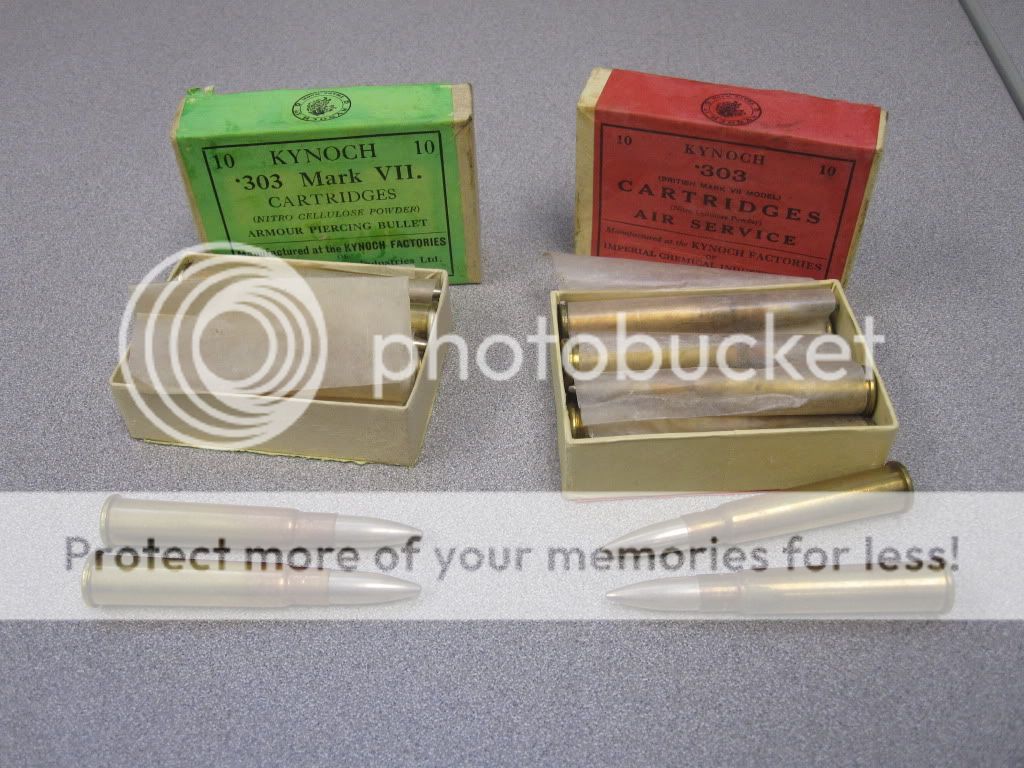
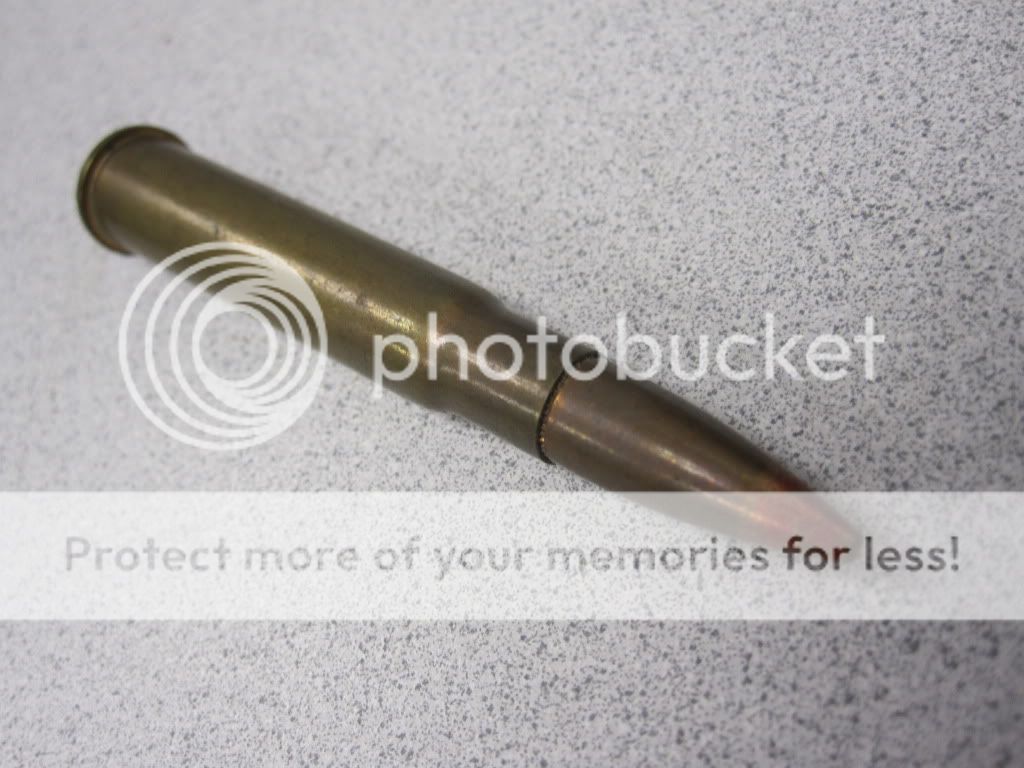
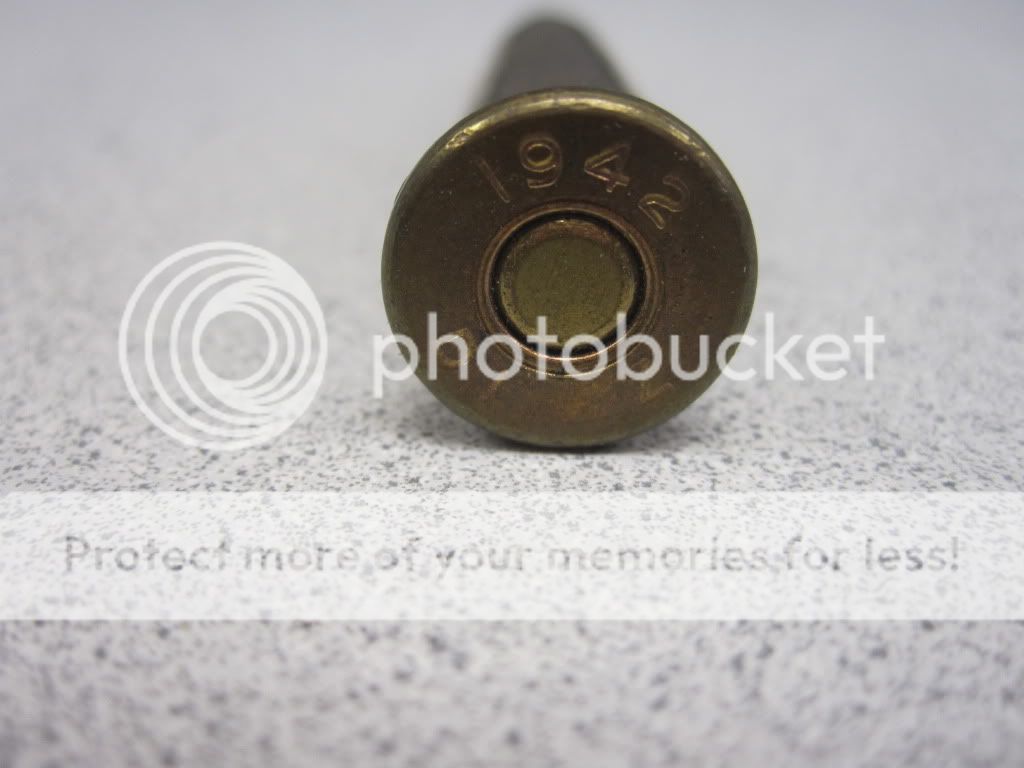
i bought 3 boxes of these today and never saw them before,what were they for? is this uncommon ammo? mfg date on the back?
PICT0276.jpg
[/IMG]

 
Could be higher quality rounds for aircraft machine guns. back in the '20s there would have been biplane fighters and fighter bombers in service that may still have had cowl mounted guns requiring syncronization.

I was prompted to suggest this by the packaging of Canadian .303 (the big wooden cases) that always said "Not to be used in synchronized guns after (date)".

This is just a W.A.G. (Wild Assed Guess) mind you.
 
Likely you are right, paulz.

Even the nonsynchronised guns on the Hurri II had fresh ammo issued for them; after the expiry date it was used for target practice or some other purpose.

Reason, of course, is that the old primers used to deteriorate, starting the day they were made. Back in the blackpowder cartridge days, mercury fulminate primers could go dead in as little as 2 years, depending on storage. The British primers for the .303 were mercuric AND corrosive (potssium chlorate) and so might not stand climate changes all that well, although the mixture WOULD fire under almost any circumstances..... although it might be more than a bit irregular.

But the 10-round boxes just don't add up. Can you imagine loading a Lewis drum out of 10-round boxes? How about a full-length belt for a synchronised Vickers? I think this is ammunition designed for civilian sale, fr people who are taking part in the military-style matches which were so popular. Aircraft-grade stuff had to be highest-quality, so they ran extas and put them in little boxes.

That's my take on it, anyway.

Likely John Sukey will be on shortly; he will know for sure.
.
 
Smellie your right again. its target ammo.there was also blue, and green packages. most ammo collectors will want this stuff. not sure of the value, but have seen at gunshows.would not be in a hurry to shoot it or open the boxes.
 
Air Service ammunition

Ammunition designated "Air Service" was better quality ammunition designed to be fired in the Lewis and Vickers machine guns. Generally, the Vickers was loaded with Ball and Tracer, and the Lewis with A.P. and Incendiary. As the Lewis was used by Observers, the loading on a flexible mount gun was considered better for defensive purposes. Also, fixed Lewis guns on aircraft such as the SE-5 or Neiuport were loaded with A.P. and Incendiary.

Kynoch exported a lot of this ammunition to Latvia, Estonia and Norway. Why the red boxes is a mystery, as Red Boxes designated Tracer, Buff boxes were Ball, Green were A.P. and Blue were Incendiary.

Perhaps Kynoch wanted to show that the quality of this ammunition was good for target practice?

I can see where specialized rounds like Tracer, A.P. and Incendiary would be loaded in 10 round boxes, but with a standard loading of 4 ball to 1 tracer, you would think that larger boxes would be used for the Ball ammo. However, maybe Kynoch's production line was set up for the 10 round box, and these were used for everything. Another speculative mystery.
.
 
The ammunition issued to the DCRA and PRAs was specially selected lots of ball ammo made by Dominion Arsenal, Quebec.
Air service ammo differed in that it was loade to a slightly shorter length and to a higher standard. It was identified by having the date stamped with all four digits. In 1941 it was decided to make all .303" ammo to air service standard and the date stamp reverted to 2 digits.
"ID manual on the .303 British Service Cartridge" Vol I BA Temple.
 
I also have a couple of boxes of each type with, strangely enough, the same date stamp. They are probably from the same case, and I purchased this stuff from Marstar WAY back in the 90's.

IMG_0289.jpg


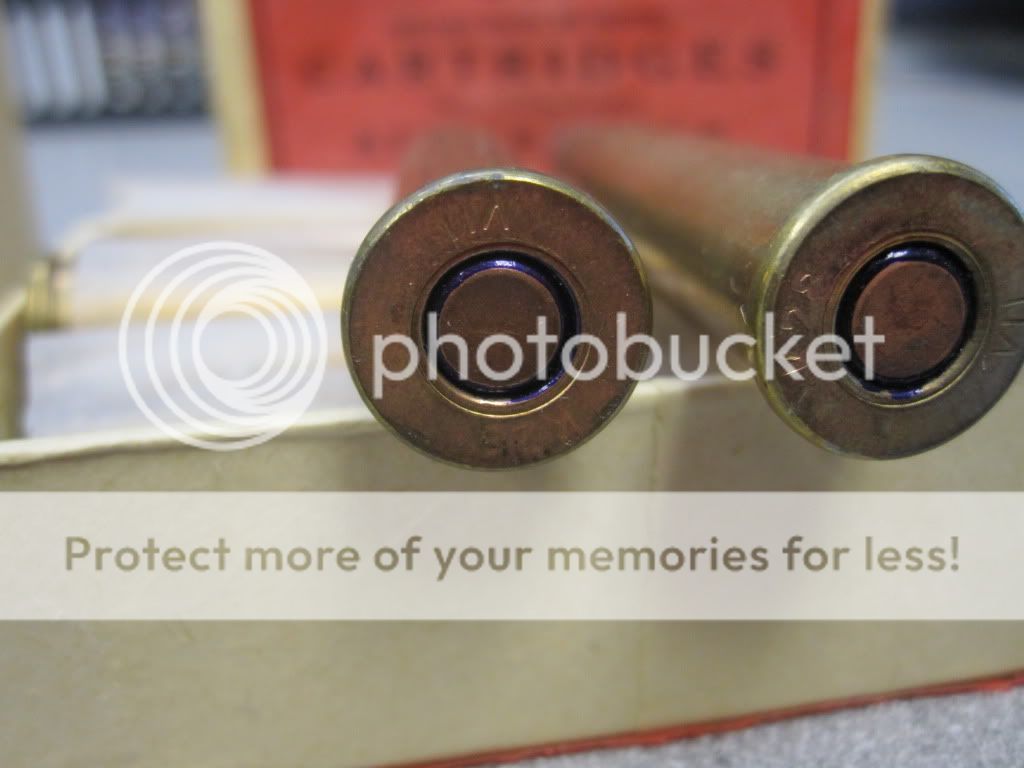
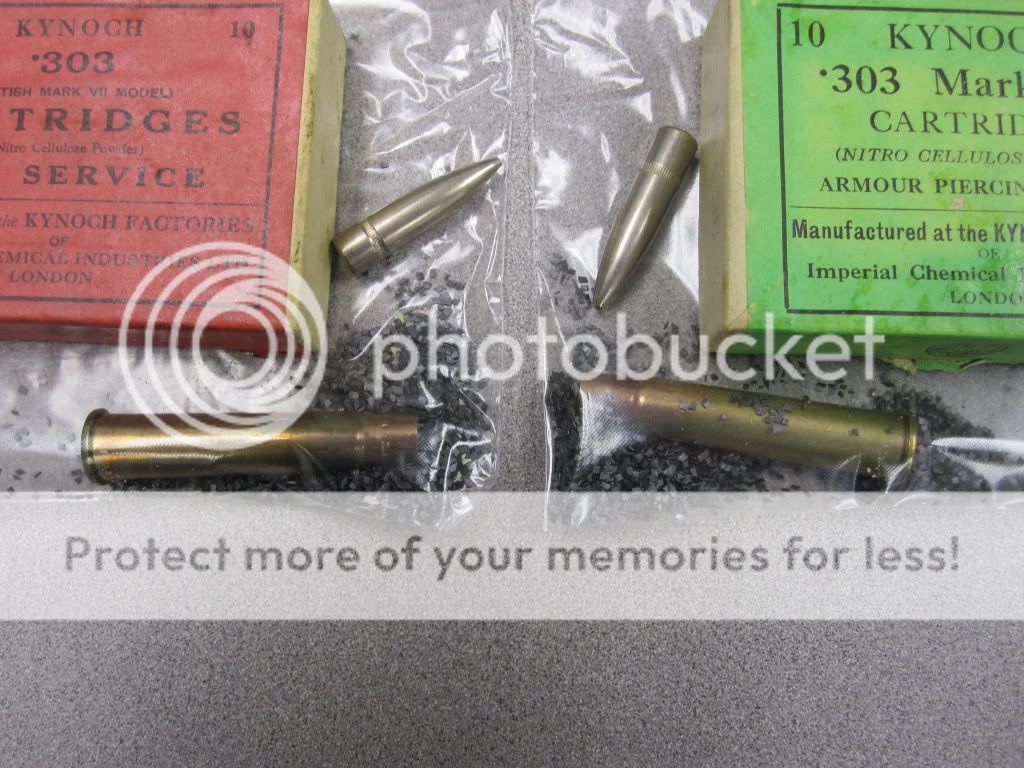
I always wondered if the Red ones were ALL tracers in the box. Perhaps they would mix them in with the other types of rounds in the belt or pan… making up whatever the “recipe” was for that day, or sortie. Headstamp is quite typical and unremarkable, K28 over VII. Cupro-nickel FMJ bullet. Primer lacquer is a purple colour.


IMG_0292.jpg


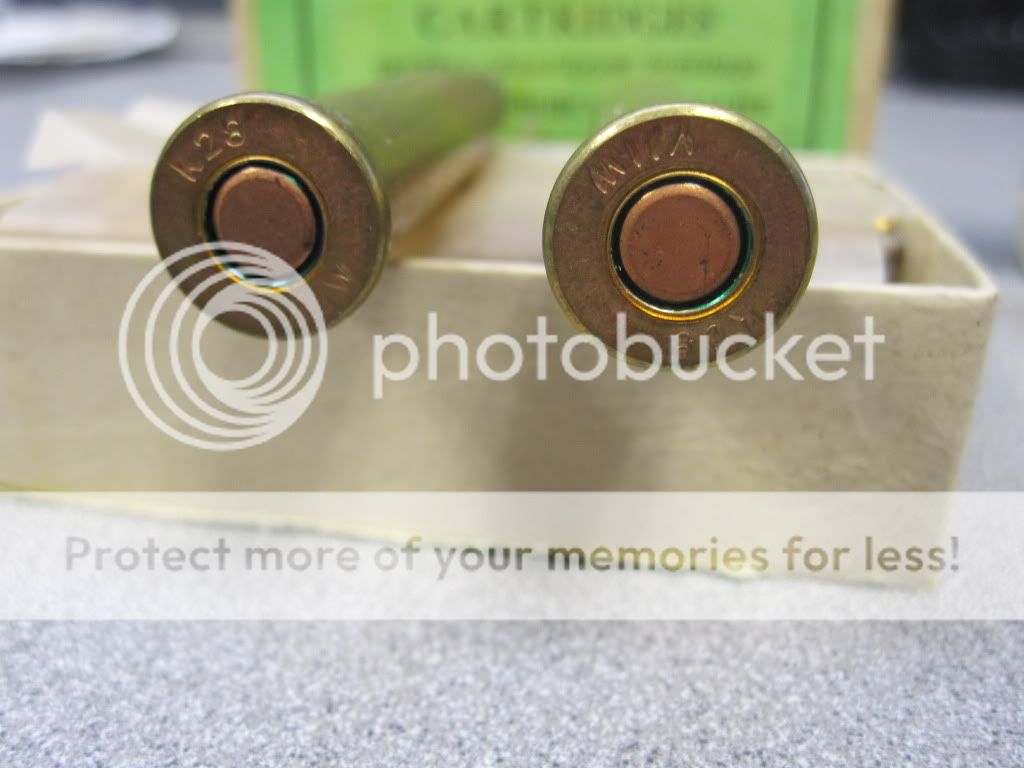
The Green ones are a bit more interesting, the headstamp is K28 over VIIW. The bullets don't look any different. I wonder if the W stands for "Wolfram" which is an old term for Tungsten. Would make sense, right? Or is it just the Canadian Club speaking? Primer lacquer is definitely a green colour.


IMG_0291.jpg


Never fired them so I have no idea if they fire at all, let alone if the Reds are tracers.
Now, I would be willing to pull the bullets on one of each of these … BUT... pulling a tracer always worried me a bit ( so I never have).

IMG_0293.jpg


Will it ignite the powder as soon as it hits the air? Burn my fingers? Burn the frigging house down?

If someone lets me know about the tracer question I’ll pull the bullets and post some pictures.

Anyways... interesting ammo that I had forgotten all about until this post!
 
Now those definately look like tracers, Fabrique Nationale, 1950 ?

Here is another tracer, Canadian made but strange because there is no "Mark" designator...just the "Z" denoting nitrocellulose propellant.


IMG_0296.jpg


Dominion Industries near Montreal I think... 1942 obviously... given to me by an old vet and he told me it was definately a tracer round.


IMG_0295.jpg


Anyways... going to pull the bullets from the Kynoch stuff when I get the chance.
 
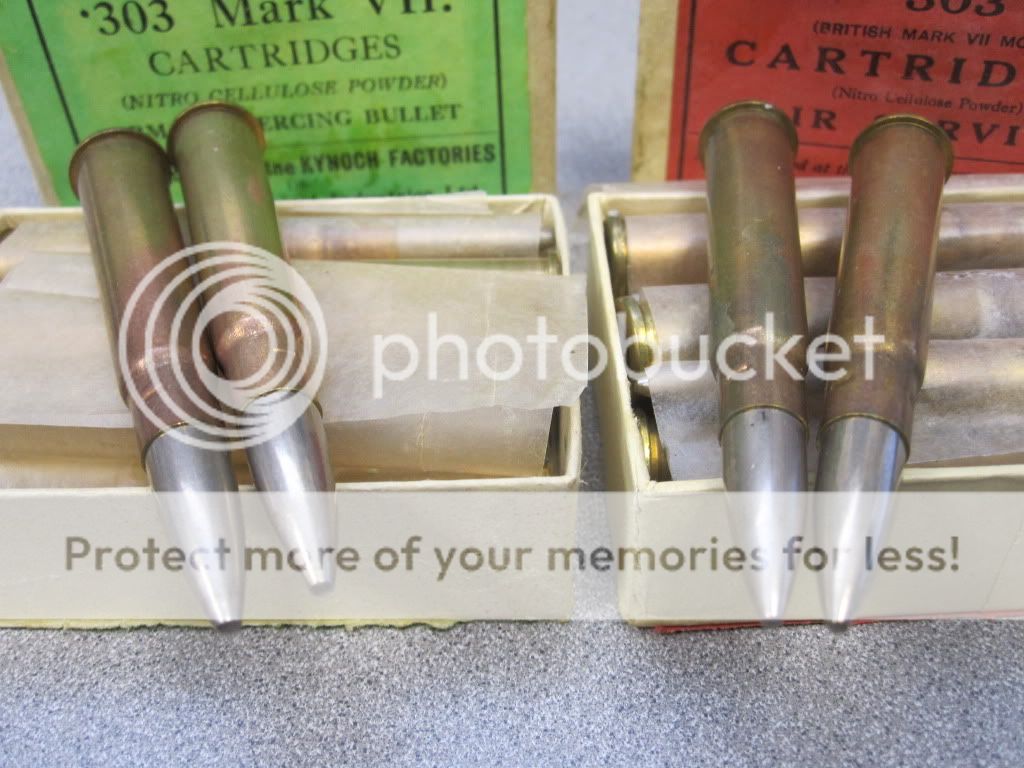
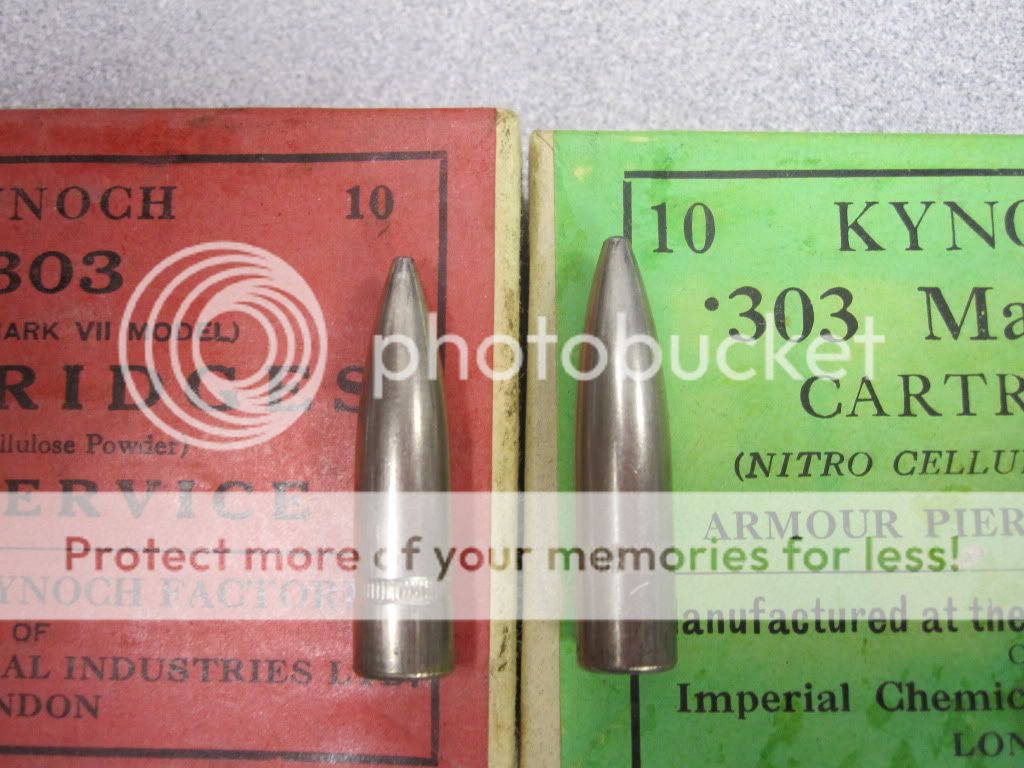
Well, there definitely is a difference in the bullets. Some quick measurements w/ calipers:

Air Service : D= 0.3115” OAL= 1.300”
Armour Piercing: D= 0.3109” OAL= 1.365”


IMG_0297.jpg


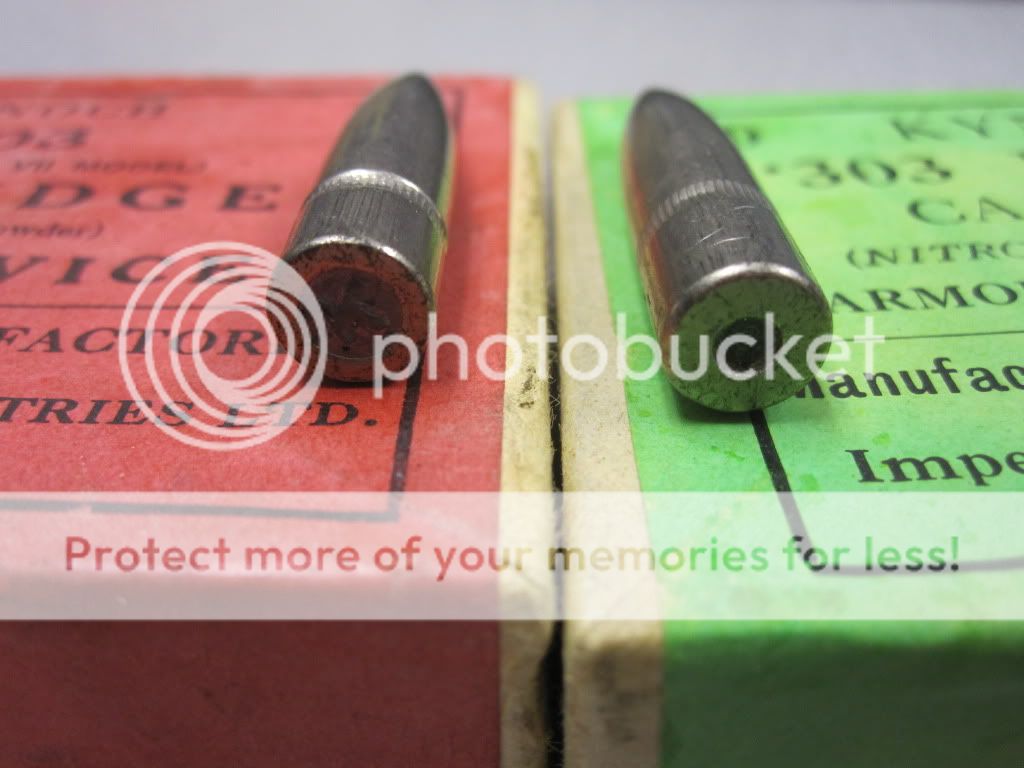
Bases are different as well…

AS : Bullet jacket swaged over core, hole is about 0.200” D , core is quite soft, non-magnetic, easily scratched. I’ll say it’s lead for sure. Letter “K” stamped into base.
AP : Bullet jacket swaged over core, hole is about 0.125” D , core is very hard, magnetic, hard to scratch. I’ll guess steel. No letter stamped on the base.


IMG_0298.jpg


Looks like they really are loaded with nitrocellulose powder, as advertised…


IMG_0299.jpg


Wish I had a reloaders scale to weigh the charges and the bullets with. If anybody in the Aylmer area want to weigh these for me, shoot me a PM.

I have to go back to work now, but I will try and section the bullets on a surface grinder, just for ####s&giggles!
 
found on the net:

Colour Coding of .303 Ammunition

Colour coding appears in several forms on small arms ammunition. The most common system with the .303 cartridge used coloured bullet tips or colour around the annulus of the primer cap. Other methods include colouring of part or the whole of the cartridge case. Originally markings arose from the need to make a quick visual check of the arrangements in a machine gun belt and they are now universally applied. As a general rule the absence of colour coding indicated a standard ball cartridge.

United Kingdom & Commonwealth Countries before 1955

including Australia, Canada, India, New Zealand and South Africa

Bullet Type - Colour of Tip - Colour of Annulus

Armour Piercing - - Green -- Green

Ball ----- -- None - - Purple

Incendiary - --- - Blue - - Blue

Observing --- - - Black -- Black

Proof ------ - None -- Yellow
-
Tracer Short Range - -- White - - - Red

Tracer Dark Ignition -- - Grey --- Red

Tracer Long Range -- - Red - - - Red
 
So the white tip and red lacquer would ID it as a short range tracer... very interesting chart!

So it also makes sense for these Kynoch rounds... AS is really just regular Ball in a fancy box! The AP has the green lacquer which checks out, although it's odd the tip should also be green.

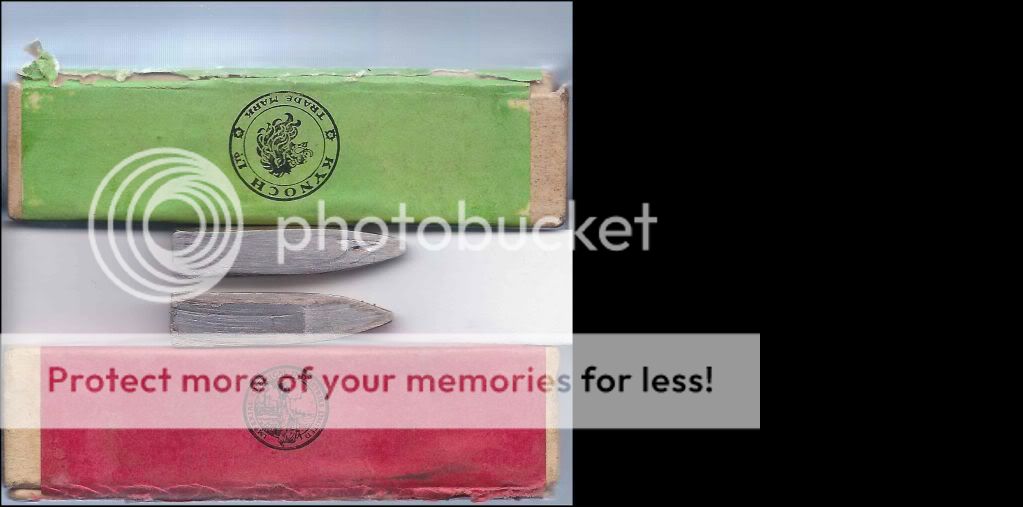
Anyways, I ground down the bullets, and lo and behold... no surprises! :


cutaway.jpg


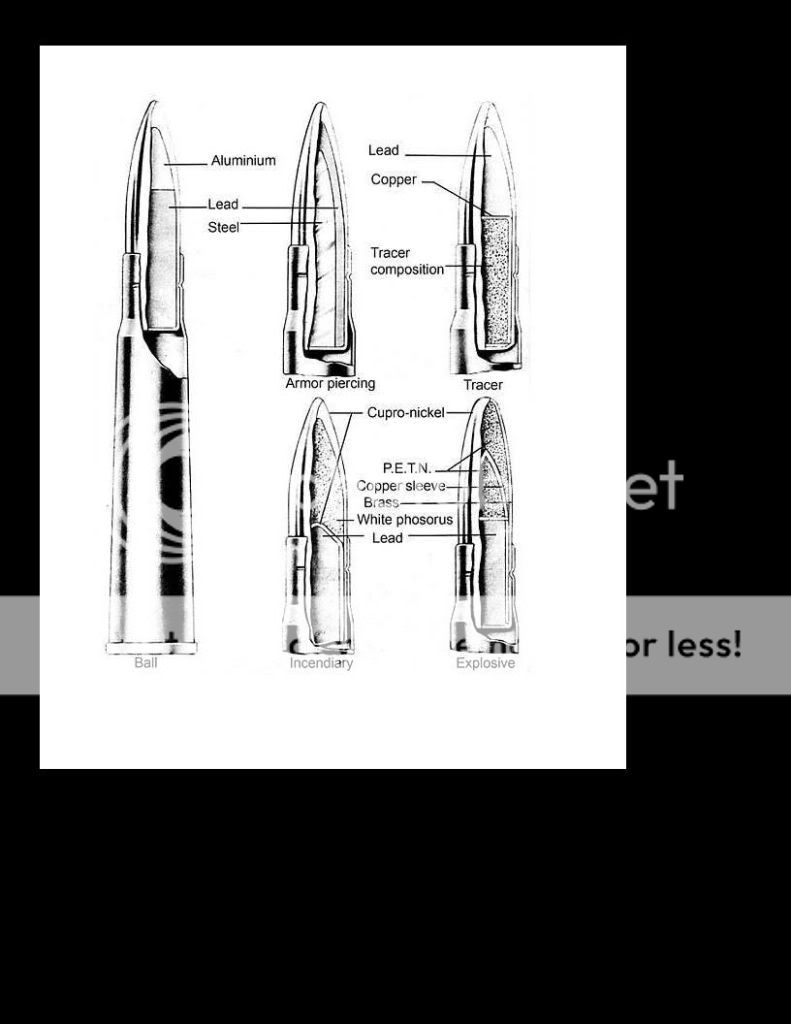
I looked on Wiki and they had a nice diagram showing me what to expect ... and there we have it :


Doc1.jpg


So finally... after all these years... an answer!
 
Back
Top Bottom