












































Lee Collet Neck Dies

Do you guys neck turn more than 1 time over the life of brass?

Would you eventually go to thin? Or will it flow enough to create the need to neck turn mote than one time over the life of brass.

I've been led to believe neck turning is just done 1 time only...

When fired the case has brass flow upward into the neck, and why you hear the word "donut" in the case neck. This is where the brass flowed into the base of the neck making the inside neck diameter smaller.

All this depends on how much you take off the necks when turning and how deep you seat the bullet.

Last night I watched a video where the shooter had to turn the necks each time the case was fired. This only removed a small amount of brass at the neck shoulder junction which would be a donut.

If you only skim turn the necks 50% to 75% and only remove the minimum amount your brass flow upward into the neck will have less effect. The more you reduce the neck thickness turning the necks the more brass flow upward into the neck will effect the formation of donuts.

I prefer to sort the cases with a Redding neck thickness gauge and not neck turn with a off the shelf factory rifle. And remember the more you reduce the neck diameter of the case neck the further the neck has to expand when fired. Meaning you work the brass more increasing work hardening of the case neck and how often the necks will need annealing
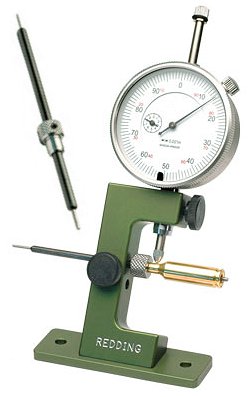
blZCE83.jpg


If you buy quality brass like Lapua or Peterson the neck should be very uniform and not need turning for the average shooter. But I have had Remington cases with .009 neck thickness variations.

Bottom line, its far easier to sort the case necks with the Redding neck thickness gauge and not neck turn the cases.

 
Do you guys neck turn more than 1 time over the life of brass?

Would you eventually go to thin? Or will it flow enough to create the need to neck turn mote than one time over the life of brass.

I've been led to believe neck turning is just done 1 time only...

https://www.facebook.com/mysticprecision/videos/466922883682745/

hopefully, the link will work.... this is neck turning brass that has already been turned. pretty sure this was 2 firings after turning. Yep, that would be brass coming off. The cutter was left at the same setting so this is touching off the brass flow that happens with EVERY firing.... if running standard and magnum pressure loads.

And the brass is properly annealed.

Jerry
 
Watch the video below, it is 25 min long by Joe R. a FTR shooter, and shows a lot about neck tension and neck turning. At 14 min into the video he shows the second neck turning and where the brass was removed. This video was posted at accurateshooter.com in a posting about neck turning. http://forum.accurateshooter.com/threads/help-trying-to-turn-necks.3972960/

Just remember much of what competitive shooters do in brass prep will have far less effect in factory SAAMI chambered rifles used by the average hunter/shooter.

 
When fired the case has brass flow upward into the neck, and why you hear the word "donut" in the case neck. This is where the brass flowed into the base of the neck making the inside neck diameter smaller.

All this depends on how much you take off the necks when turning and how deep you seat the bullet.

Last night I watched a video where the shooter had to turn the necks each time the case was fired. This only removed a small amount of brass at the neck shoulder junction which would be a donut.

If you only skim turn the necks 50% to 75% and only remove the minimum amount your brass flow upward into the neck will have less effect. The more you reduce the neck thickness turning the necks the more brass flow upward into the neck will effect the formation of donuts.

I prefer to sort the cases with a Redding neck thickness gauge and not neck turn with a off the shelf factory rifle. And remember the more you reduce the neck diameter of the case neck the further the neck has to expand when fired. Meaning you work the brass more increasing work hardening of the case neck and how often the necks will need annealing
blZCE83.jpg


If you buy quality brass like Lapua or Peterson the neck should be very uniform and not need turning for the average shooter. But I have had Remington cases with .009 neck thickness variations.

Bottom line, its far easier to sort the case necks with the Redding neck thickness gauge and not neck turn the cases.


I was going to order a neck wall thickness micrometer. But is suppose the Redding neck thickness gauge would do the exact same job? Just quicker and more convenient?

I may not need to neck turn for my rifles. I will be able to answer that question soon. I am going to put a few methods up against each other and see what happens.

As far as annealing I bought an AMP induction annealer. So I can anneal everytime very quickly and easily.
 
Back
Top Bottom



















