












































Lee Enfield Headspace Gauges 3D Printed

Zee705

CGN Regular
Rating - 100%
69   0   0
Location
Northern Ontario
I picked up a No.5 Jungle Carbine sporter from an estate sale that's a prime candidate for restoration, just replace the missing parts.

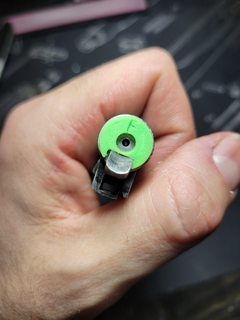
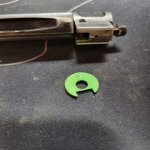
I wanted to check the headspace but because I'm super cheap, I reverse engineered a gauge from a picture and printed my own.
yDRZmJRm.jpg
rmGGaekm.jpg

Go - 0.064"
No-Go - 0.068"
Field - 0.074"

These are the British armourer's spec. I think SAAMI and CIP are a bit tighter.

My No.4 Maltby passes the Field gauge no problem but the No.5 just about closes all the way with a #0 bolt head. The #1 bolt head from the No.4 fairs a bit better in the No.5 but still not where it should be.

Some potential solutions I've heard and read are:
  • Find a #2 or #3 bolt head (probably hens teeth now)
  • I reload, so use cases that have thicker rims (PPU maybe?)
  • An old timer told me he puts orings around the base of the case to tighten the headspace on each round (is that legitimate or safe?)
  • ????

I'm going to restore it regardless but I'd prefer to be able to shoot the rifle.

If anyone wants the STL, let me know. Your printer has be fairly dialed in to hit the tolerance but you could always print it 1-2% bigger then sand down to spec.
 

Attachments

  • rmGGaekm.jpg
    rmGGaekm.jpg
    19.5 KB · Views: 352
Last edited:

Re: An old timer told me he puts an o-ring around the base of the case to tighten the headspace on each round (is that legitimate or safe?)

First off, you only need to do it once (the o-ring on the case), BUT then you do NOT full-length size your brass, only neck-size.

While I used to do that, I now neck-up new cases to 8mm, then neck-size a bit at a time, only until the bolt closes with a modicum of resistance.

Here again, your days of full-length sizing are done.

When the neck-sized cases no longer will fit into the chamber, you either buy a Redding body die, or use a .405 WCF or 9.3x74R fl sizing die, with the expander assembly removed, to size the base & body of your brass.

While it's easy-peasy to swap out bolt heads on a #4 or #5 (as long as you can read, that is), it's a bit more of a task for #1's. Having said that, if you've got a bunch, try swapping bolt heads to get within spec. There used to be a chart of bolt-head lengths that the Aussies made up.

Alternatively, if there is a spray-welder near you, I've also had that done to some bolt-heads.

btw, your H-space gauges will likely only work for a short period of time, given that they are plastic & once used in a tightly-headspaced rifle, you may exceed the elasticity of your material, thereby converting your No-Go gauge into a Go gauge.

My $0.02Cdn
 
Well - I wouldnt bother changing bolt heads, if you are reloading. As stated above, partial resizing or neck sizing can be employed to allow the brass to headspace on the shoulder. This will give you the most life out of your cases. The O-ring trick on the first firing also contributes to case longevity, perhaps more than a larger bolt head.
BTW - Its very easy to crush the gage when closing the bolt - use minimal force to make an assessment.
 
Last edited:

I think "cosmic" has got it - I am may be ludditte, ignorant or whatever, but I do use Full Length sizing dies to "partially" size the case - can see the mark on the neck - just do not let the shoulder of fired case touch - unless deliberately - is NOT setting up the die as per maker's instructions. Once you have used the O-ring trick to fire-form a new brass to your chamber - without creating the "incipient case head separation" ring ahead of the case head on the inside - transferring the headspace from the rim to the case shoulder - then partial FL sizing going to get all you will get from that case. Changing out bolt heads on No. 4 was innovative - but not needed to do so if you reload your cases - make your cases fit to your chamber - was NOT a thinking for military that used No. 4 - they had more or less "standard" rounds - perhaps millions of them - and well used rifles to make work - but they never reloaded - as a matter of course - but most of us do so ...

As was posted previously by others on CGN - is entirely possible to take new 303 British brass - run through a .323 or .338 size expander - then create a "false shoulder" to fire-form your case to your chamber - by adjusting your die down until your bolt just barely closes on that re-formed case - is NO excess play between your bolt face and that false shoulder. But fire-forming still about necessary to get fully formed case that fully fills your chamber.

That move of fire-forming a new brass case to your chamber might mean that the brass will not fit into next guy's rifle that nominally uses the same cartridge - so you decide who you are going to be reloading for.
 
Last edited:

Thanks for all the insight.

And yes, I realize the gauges will have a short lifespan but they cost $0.02 to make.
And you had fun making them. The only 303 I neck size for is my martini, has a longer chamber than most 303’s. Most of my cases get fully resized as they go in multiple rifles. These are cast loads so lower pressure which don’t destroy the cases like full power loads. When I was using the 303’s for hunting I picked 50 cases and fireformed for that rifle and neck sized. The Lee Enfield isn’t easy on cases with full power loads. My lead bullet cases are over 30 reloads and still going. If your only punching paper drop your load down and cases will last longer.
 
Zee705, jamesharrison is giving you some really good advice.

I can see from your posts that you hand load :)

By using the method jamesharrison is giving you, there isn't any reason to replace that bolt head.

The fireforming of each of the cases fired in your rifle will eliminate the need to headspace on the rim, because the cartridges will be headspacing on the shoulders, which, if you kneck size only or even bump back the shoulders a thou or two, will help you cases, especially with lighter loads to last a long time.

I have cases, fireformed for a specific No4, that has out of spec headspace, with over 30 reloads on them and they're still going strong. The cases are 50 year old Dominion Cartridge Co. manufacture.

I must admit, I like your ingenuity and am impressed with the results.
 
I had a bunch of 1944 DIZ cases that I used for 30+ years. I recently found 8 or 9 1f on the range and they will be drafted back into service.

There are a lot of LE's with out of round chambers, so any range brass you may find may require a bit of gentle full length resizing.

I've been finding some PPU brass that had partial separation, but was fresh and shiny. I took it all home for the dustman, lest some new reloader think they might be good enough for one more reload.
 
I have done some cases - what you read was likely called the "COW" method - use a small amount of very fast powder (10 grains or less) - like Unique or some shotgun powders - then fill case to brim with Cream of Wheat cereal - often a small square of tissue or a gob of hot glue to prevent spillage - fire off that round with barrel pointed straight up. The "down side" to that, for 303 British and most other cases, is that you still need a way to end up with about "0" "endplay" - so like nothing for excess headspace - is what that "false shoulder" technique, or the "O-ring" trick takes care of. And, about only works on new, unfired brass - unless you have inspected the inside of your cases - one by one - looking for the groove that might form on the inside of the case - just above the solid head. If a groove was formed on the brass' first firing - I do not know how to come back from that.

I might miss something - I don't think that I have ever got completely re-formed brass, until I fired it with a bullet and sort of Start level powder load - but that initial "fire-forming" usually gets the brass altered enough to accept that new bullet and loading.

At least one other CGN guy has told me that he "blows out" 30-06 cases to make 9.3x62 brass - and he does that with his full power loading - actually has gone hunting with re-formed, but not previously fired, cases. I think he said that he opens the 30-06 necks to like .40 (after annealing them) and then turns down his sizing die and tries for fit - a bit at a time - in his rifle - so creating a "false shoulder". His cases will have nearly "0" "endplay". It may or may not be significant to you, but I think you are going to use at least one primer to get completely "blown out" cases that fully fill your chamber.

You asked which is "best method" - likely based on what you are starting with - I think I would lean towards the "o-ring" thing if I was firing off factory ammo - and I would use the "false shoulder" if I was starting with brass cases.
 
Last edited:

Personally I would always try to get the rifle back into spec with a bolt-head swap. If this can't be done with available bolt-heads (and there are some really long ones available) it may mean the action body is shot and significant use of the rifle would be a waste of time. As far as neck sizing goes, I'm not a fan with my LE's. The stretch of the brass, in a rifle with in-spec headspace, is part of the rifle design and eliminating all ability for the brass to be worked will alter the bolt-thrust- what actually stresses the receiver. Bolt thrust is only a fraction of what it would be if the full chamber pressure was applied to the bolt-head area. Given the relative weakness of the LE action, I still mainly full-length resize. With rifles properly headspaced I've managed 5 reloads with the poorest brass available (Remington) and that's enough for me. Accuracy-wise, I've found the biggest improvement comes with simply switching to full-length resized (ie normal) reloads and that further gains with neck-sizing only are minimal.

milsurpo
 
I would load up a starting load and shoot it. Your cases will be fireformed after that. We're only talking about a few thousandths of an inch here. The gun isn't going to blow up.

If you're looking to conserve components, don't use bullets and use a fast burning powder. The charge needs to build up enough pressure to force the brass to fill the chamber. cover the charge with a tight wad of toilet paper. Some folks use other fillers.

In the real world, this isn't necessary.

The rubber band will hold the cartridge face against the bolt and your regular loads should be just fine. We're only talking about a few thousandths of an inch here, not a full on fireforming for a wildcat cartridge.

Sometimes caution is taken way to far. In this particular case, there isn't anything to worry about.
 
"bolt head swap" - I think in Peter Ladler's write-up on milsurp website - is not just "any" bolt head to swap - also want to check for "clocking" - so that the bolt head is bearing on the bolt body when fired - not that the bolt head threads are carrying the load. As I read - military armourers usually had trays of the things to select from - to find one that "clocked" correctly on that particular bolt body. And, as per another Internet posting, not all the numbered heads are identical lengths, even though they share the same number - still have to go through the headspace check after swapping - from a posting on Internet, there were some with a higher number that were shorter than ones with lower number - maybe a result of someone's attention in the past, or just the vagrancies of the manufacturing techniques, back then.
 
One thing many folks don't take into account is that Lee Enfield rifles of all Marks have GENEROUS HEADSPACE and chambers close to maximum OD. Yes, there are a few one offs and I'm sure we'll hear from someone that thinks all of these fine rifles are identical to his.

The great thing about fireforming your brass, is that you no longer have to worry about ''rim thickness'' which will not only vary between manufacturers but even within the same lot of ammo from a box and even when purchasing a bag of new cases.

I use the rubber band method for all of my rimmed centerfire rifle cartridges, unles they are straight walled.

You aren't going into combat with that rifle, where such tolerances are built into the rifle so that it will function flawlessly under the most aggressive conditions, when you really need it to go bang when the trigger is pulled and you need that cartridge to go into the chamber far enough so that it will go bang.

That means, for your purposes, you can eliminate accuracy degenerating tolerances to some extent and significantly increase the lifespan of your cases, especially if you learn how to properly anneal them as they harden, usual after 4-5 shots.

Don't turn the necks, it's a genuine waste of time that makes some people feel good. All you would be doing with a Lee Enfield is increasing tolerances and increasing the stress on the neck walls.
 
Back
Top Bottom


















