I purchased this rifle wrapped in cosmoline and cleaned it . This gun was manufactured at the royal ordnance factory (ROF) in Fazakerley , near England ,Made in 1954 unissued .This post war rifle was made for reserve stock for the British royal air force (RAF) .Blonde coloured stock with brass butt stock brand new and never fired . I want to sell it but not sure of its value .Can some one help me please .













































You are using an out of date browser. It may not display this or other websites correctly.
You should upgrade or use an alternative browser.
You should upgrade or use an alternative browser.
No 4 MK 2 ( F ) LEE ENFIELD 1954
- Thread starter ncollins1959
- Start date


Painkillers
CGN Ultra frequent flyer
These rifles are the best of the best of the Enfields. I have one and sourced the proper, yet mismatched bayonet. I also changed out the rear sight with an earlier, better made, and more accurate, machined one from a No4Mk1 from the late '30's or early '40's. Great rifle, but I don't shoot it much and the prices quoted are knocking me back a step.
I question this. I suspect they were built to a lower standard as evidenced by the metal finish and the wood type. Since they were stored unused they, of course, look "minty," but the fresh out of the wrap example I owned was so poorly bedded I couldn't even justify keeping it as a range gun. It would have required permanent wood alteration which would have killed its value as a collectible. It would be interesting to know how well these typically perform at the range—fresh from the wrapper.These rifles are the best of the best of the Enfields.
milsurpo
Painkillers
CGN Ultra frequent flyer
These rifles were part of post war government economic protectionist measures. The war was over, and millions of men were coming back to a broken country that was still on food rationing in the mid 1950's. Employing as many as possible was a priority for the British government. ROF was able to upstaff, slow production, and focus on various contracts unencumbered by wartime exigencies and Luftwaffe bombings. The result was, by all accounts, some of the finest Lee Enfield clearances and machining. What you're describing is anomalous. A poorly stocked rifle wouldn't have made it past quality control when they were being bombed, how it got past inspection when at easy stations confounds.I question this. I suspect they were built to a lower standard as evidenced by the metal finish and the wood type. Since they were stored unused they, of course, look "minty," but the fresh out of the wrap example I owned was so poorly bedded I couldn't even justify keeping it as a range gun. It would have required permanent wood alteration which would have killed its value as a collectible. It would be interesting to know how well these typically perform at the range—fresh from the wrapper.
milsurpo
Further, the metal finish on these was Suncorite, same as all the others, I find your furniture material choice criticisms to also fall flat. These were intended as military surplus rifles. Tools, not much different than a government made spade or woollen blanket in that regard, what would you have had them make the stocks out of, Ebony, African Blackwood, seasoned English Oak?
Ok, to the best of my knowledge suncorite was only used in FTR rebuilds. From the factory I believe No. 4 rifles were either blued or (at Long Branch and Savage) finished with "Du-Lite" or some such process that looks quite like bluing. And, stocks were walnut with a few exceptions. Whether machining was superior to wartime production or not I have no idea and doubt that there's a reliable source making that claim. These late rifles weren't built to arm a front-line army and weren't going to be used for target shooting, so why would they be built to high standards. My example, fresh from the wrapper, had forend-tip up-pressure of something like 50lb.Further, the metal finish on these was Suncorite, same as all the others, I find your furniture material choice criticisms to also fall flat. These were intended as military surplus rifles. Tools, not much different than a government made spade or woollen blanket in that regard, what would you have had them make the stocks out of, Ebony, African Blackwood, seasoned English Oak?
But, the proof of the pudding.......I have yet to see targets posted anywhere shot with fresh from the wrap Mk 2 rifles that are superior to the near MOA accuracy easily obtainable with a well preserved wartime rifle. The only point I would try to make is that guys looking for a superb range No. 4 might want to dig a bit deeper before concluding that the big bucks to buy one of these late ones guarantees that.
milsurpo
But, the proof of the pudding.......I have yet to see targets posted anywhere shot with fresh from the wrap Mk 2 rifles that are superior to the near MOA accuracy easily obtainable with a well preserved wartime rifle. The only point I would try to make is that guys looking for a superb range No. 4 might want to dig a bit deeper before concluding that the big bucks to buy one of these late ones guarantees that.
milsurpo
I, We would LOVE to see that !
If it is still in the wrap, slathered in long term storage grease, it would be as good as the day it was wrapped.Might also question storage conditions, whether seventy summers and winters might have cured the wood a bit differently than it had been when it was a young piece of walnut at its initial fitment.
It's only when they get shuffled around, for whatever reason, and the wrap is torn that they develop issues.
I purchased ten of them from International before they closed and weren't widely available on the market.
Nine of them were in the wrap, with a small razor knife cut just over the serial number. The cuts were likely done to check the rifle's serial number matched the tags on the butts, which were also protected.
One rifle had severely damaged wrapping. The rifle itself wasn't scratched or dented, but where the wrap had come off the wood, the grease had hardened and discolored the wood. This rifle became my "shooter."
I agree once the wrap is off and the protective grease has been cleaned off, shrinkage and warpage can be an issue if the rifle hasn't been maintained and had a yearly coat of Linseed Oil applied.

Ok, to the best of my knowledge suncorite was only used in FTR rebuilds. From the factory I believe No. 4 rifles were either blued or (at Long Branch and Savage) finished with "Du-Lite" or some such process that looks quite like bluing. And, stocks were walnut with a few exceptions. Whether machining was superior to wartime production or not I have no idea and doubt that there's a reliable source making that claim. These late rifles weren't built to arm a front-line army and weren't going to be used for target shooting, so why would they be built to high standards. My example, fresh from the wrapper, had forend-tip up-pressure of something like 50lb.
But, the proof of the pudding.......I have yet to see targets posted anywhere shot with fresh from the wrap Mk 2 rifles that are superior to the near MOA accuracy easily obtainable with a well preserved wartime rifle. The only point I would try to make is that guys looking for a superb range No. 4 might want to dig a bit deeper before concluding that the big bucks to buy one of these late ones guarantees that.
milsurpo
Suncorite was the standard finish on all UK-made Lee Enfields made from late 1944 onward. This includes the No.4, No.5, various Enforcer models, etc.
Post-war No,4 brit rifles are absolutely better finished than wartime, they actually took the time to polish off machining marks.
The finest made enfields for fit and finish, in my experience, were made at Longbranch in 1949-1950. They of course were MkI* rifles, and the trigger arrangement on post-war Mk2 rifles is far superior.
In terms of function, beech and walnut are equally serviceable. Walnut looks prettier, in my view.
Painkillers
CGN Ultra frequent flyer
Claven, you're wasting your time, the ponce wants the evidentiary benefit of live targets, shot from live examples...else it ain't so!?Suncorite was the standard finish on all UK-made Lee Enfields made from late 1944 onward. This includes the No.4, No.5, various Enforcer models, etc.
Post-war No,4 brit rifles are absolutely better finished than wartime, they actually took the time to polish off machining marks.
The finest made enfields for fit and finish, in my experience, were made at Longbranch in 1949-1950. They of course were MkI* rifles, and the trigger arrangement on post-war Mk2 rifles is far superior.
In terms of function, beech and walnut are equally serviceable. Walnut looks prettier, in my view.


Do you still have any?If it is still in the wrap, slathered in long term storage grease, it would be as good as the day it was wrapped.
It's only when they get shuffled around, for whatever reason, and the wrap is torn that they develop issues.
I purchased ten of them from International before they closed and weren't widely available on the market.
Nine of them were in the wrap, with a small razor knife cut just over the serial number. The cuts were likely done to check the rifle's serial number matched the tags on the butts, which were also protected.
One rifle had severely damaged wrapping. The rifle itself wasn't scratched or dented, but where the wrap had come off the wood, the grease had hardened and discolored the wood. This rifle became my "shooter."
I agree once the wrap is off and the protective grease has been cleaned off, shrinkage and warpage can be an issue if the rifle hasn't been maintained and had a yearly coat of Linseed Oil applied.
No, they're long gone.
There comes a time for everyone when they have to downsize. I fought bitterly to hold onto such things, but my body just keeps on aging, etc.
I had to learn that my passions weren't necessarily shared by my heirs, and they wouldn't have the slightest clue or care about what they were inheriting.
So I decided to use the cash for other purposes, more selfish, of course, and sold them off, along with most of the collection. Almost everything was pristine, in the grease.
I had opportunities to pick through hundreds and sometimes thousands of firearms to select the best of the best available.
It's helped make for a very comfortable retirement. 5000% - 10,000% returns on investment goes a long way when it's done in quantity.
There comes a time for everyone when they have to downsize. I fought bitterly to hold onto such things, but my body just keeps on aging, etc.
I had to learn that my passions weren't necessarily shared by my heirs, and they wouldn't have the slightest clue or care about what they were inheriting.
So I decided to use the cash for other purposes, more selfish, of course, and sold them off, along with most of the collection. Almost everything was pristine, in the grease.
I had opportunities to pick through hundreds and sometimes thousands of firearms to select the best of the best available.
It's helped make for a very comfortable retirement. 5000% - 10,000% returns on investment goes a long way when it's done in quantity.
Seriously? You doubt that a good No. 4 (or No. 1) can manage 1.0" to 1.5" groups? Perhaps you haven't owned or shot many of them?I, We would LOVE to see that !
Well, without some evidence it actually ain't so! There appears to be an interweb myth out there that these wrapped Mk 2s are the finest Lee Enfields ever produced. For those of us who have never directly experienced an unwrapped Mk 2 at the range, help us out with some proof. My own best No. 4 happens to be a Pakistani Mk 2 (India capture) that will easily outshoot my K31 at 300m.Claven, you're wasting your time, the ponce wants the evidentiary benefit of live targets, shot from live examples...else it ain't so!?
milsurpo
Painkillers
CGN Ultra frequent flyer
Okay, here we go. To argue that it isn't possible is a fools game, however I will boldly state the likelihood of any Lee Enfield to shoot 1 MOA out of the factory is slim to none.Seriously? You doubt that a good No. 4 (or No. 1) can manage 1.0" to 1.5" groups? Perhaps you haven't owned or shot many of them?
Well, without some evidence it actually ain't so! There appears to be an interweb myth out there that these wrapped Mk 2s are the finest Lee Enfields ever produced. For those of us who have never directly experienced an unwrapped Mk 2 at the range, help us out with some proof. My own best No. 4 happens to be a Pakistani Mk 2 (India capture) that will easily outshoot my K31 at 300m.
milsurpo
Bisley Marksmen would "ball burnish" rifling and entirely rebed the rifles (read: a tonne of work) to get 2 or 3 MOA. To get 1 MOA from a factory Enfield, nah...like you say, show me. And I'll add that we like to throw terms like minute of angle around, and while we actually know what these terms mean, new shooters may not. So, below is 1 MOA. Groups of 5 rounds, fired at a slow cadence at 100 meters. All 5 rounds printing within a 1 inch square. To be transparent, this is not my target, rather an internet example. I personally cannot shoot this accurately without a lot of magnification, and not with .303 British. I personally doubt even with all that work put into a rifle that .303 British ammunition is capable of this accuracy. Tailor made projectiles and loads, perhaps...but we aren't talking about possibilities. We are talking about ROF product out of the crate and ball or hunting ammo.
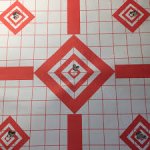
Making hits on a man sized target at 300 meters isn't difficult with milsurps. I can hit even moving (walking) targets at that distance with iron sights with regularity if I do my part...but hitting them vs piercing the flap of skin on an ear 5 times, every time, is beyond my capabilities, and certainly beyond the capabilities of a Lee Enfield and currently available ammunition. My friend, if your Enfields, in your hands, can produce these outcomes, you need to compete chrome-extension://efaidnbmnnnibpcajpcglclefindmkaj/https://dcra.ca/wp-content/uploads/2025/05/NSCC-2025-Manual.pdf. You'll clean up. Gold medals and accolades.
Last edited:
Seriously? You doubt that a good No. 4 (or No. 1) can manage 1.0" to 1.5" groups? Perhaps you haven't owned or shot many of them?
milsurpo
YES, I doubt, I will not only want to see, but I will PAY to see you printing 5 shots into 1 inch at 100 yards with a war time Enfield without any modifications.
Bisley marksmen were shooting prone-unsupported, not over a rest or bipod. I have seen 1.0" t0 1.5" 100m 5-shot groups (using a front sandbag) from three No. 4 rifles I can think of offhand, including my No. 4T. The only No. 1 I have had similar results with is my Australian H-barrel, but my current range "Long Lee" can do 2 inch groups easily enough. To be clear, I'm talking about results with rifles with excellent bores and proper in-spec bedding. I've also had many examples of No. 4s (and definitely No. 1s) that could barely pull off a six-inch group at 100m, but they were generally well-worn and with bedding problems. Generally, any No. 4 that won't group decently but has a decent bore is a candidate for forend repair. I currently am working with a '41 Maltby that went from 5" groups to 2" with nothing more than patched draws and restoration of proper up-pressure at the forend tip.Okay, here we go. To argue that it isn't possible is a fools game, however I will boldly state the likelihood of any Lee Enfield to shoot 1 MOA out of the factory is slim to none.
Bisley Marksmen would "ball burnish" rifling and entirely rebed the rifles (read: a tonne of work) to get 2 or 3 MOA. To get 1 MOA from a factory Enfield, nah...like you say, show me. And I'll add that we like to throw terms like minute of angle around, and while we actually know what these terms mean, new shooters may not. So, below is 1 MOA. Groups of 5 rounds, fired at a slow cadence at 100 meters. All 5 rounds printing within a 1 inch square. To be transparent, this is not my target, rather an internet example. I personally cannot shoot this accurately without a lot of magnification, and not with .303 British. I personally doubt even with all that work put into a rifle that .303 British ammunition is capable of this accuracy. Tailor made projectiles and loads, perhaps...but we aren't talking about possibilities. We are talking about ROF product out of the crate and ball or hunting ammo.
View attachment 1040105
Making hits on a man sized target at 300 meters isn't difficult with milsurps. I can hit even moving (walking) targets at that distance with iron sights with regularity if I do my part...but hitting them vs piercing the flap of skin on an ear 5 times, every time, is beyond my capabilities, and certainly beyond the capabilities of a Lee Enfield and currently available ammunition. My friend, if your Enfields, in your hands, can produce these outcomes, you need to compete chrome-extension://efaidnbmnnnibpcajpcglclefindmkaj/https://dcra.ca/wp-content/uploads/2025/05/NSCC-2025-Manual.pdf. You'll clean up. Gold medals and accolades.
Minute of angle potential is not really that unusual in WW2 milsurps. I have a number of Mosins (91/30s and M91s) that demonstrate that potential. Same for M1903 and M1917 rifles. Even a very good SVT 40 can put 5 in 1.5" but there are very few with really good bores.
So, the wrapped No. 4 Mk 2s all have perfect bores and it would be interesting to see what sort of potential they display, shot with a front support. I do think some guys buy these assuming they will yield the perfect range-Lee-Enfield. I honestly don't know if that's a reasonable expectation or not. As for my accuracy claims, I think I've now explained these were with top quality rifles of their type, shooting over a front sandbag.
milsurpo
But, the proof of the pudding.......I have yet to see targets posted anywhere shot with fresh from the wrap Mk 2 rifles that are superior to the near MOA accuracy easily obtainable with a well preserved wartime rifle. The only point I would try to make is that guys looking for a superb range No. 4 might want to dig a bit deeper before concluding that the big bucks to buy one of these late ones guarantees that.
milsurpo
You are just such an outstanding Marksman, all my respects.
Don't worry we will not want to see any proof, we believe you.
Bisley marksmen were shooting prone-unsupported, not over a rest or bipod. I have seen 1.0" t0 1.5" 100m 5-shot groups (using a front sandbag) from three No. 4 rifles I can think of offhand, including my No. 4T. The only No. 1 I have had similar results with is my Australian H-barrel, but my current range "Long Lee" can do 2 inch groups easily enough.
milsurpo






















