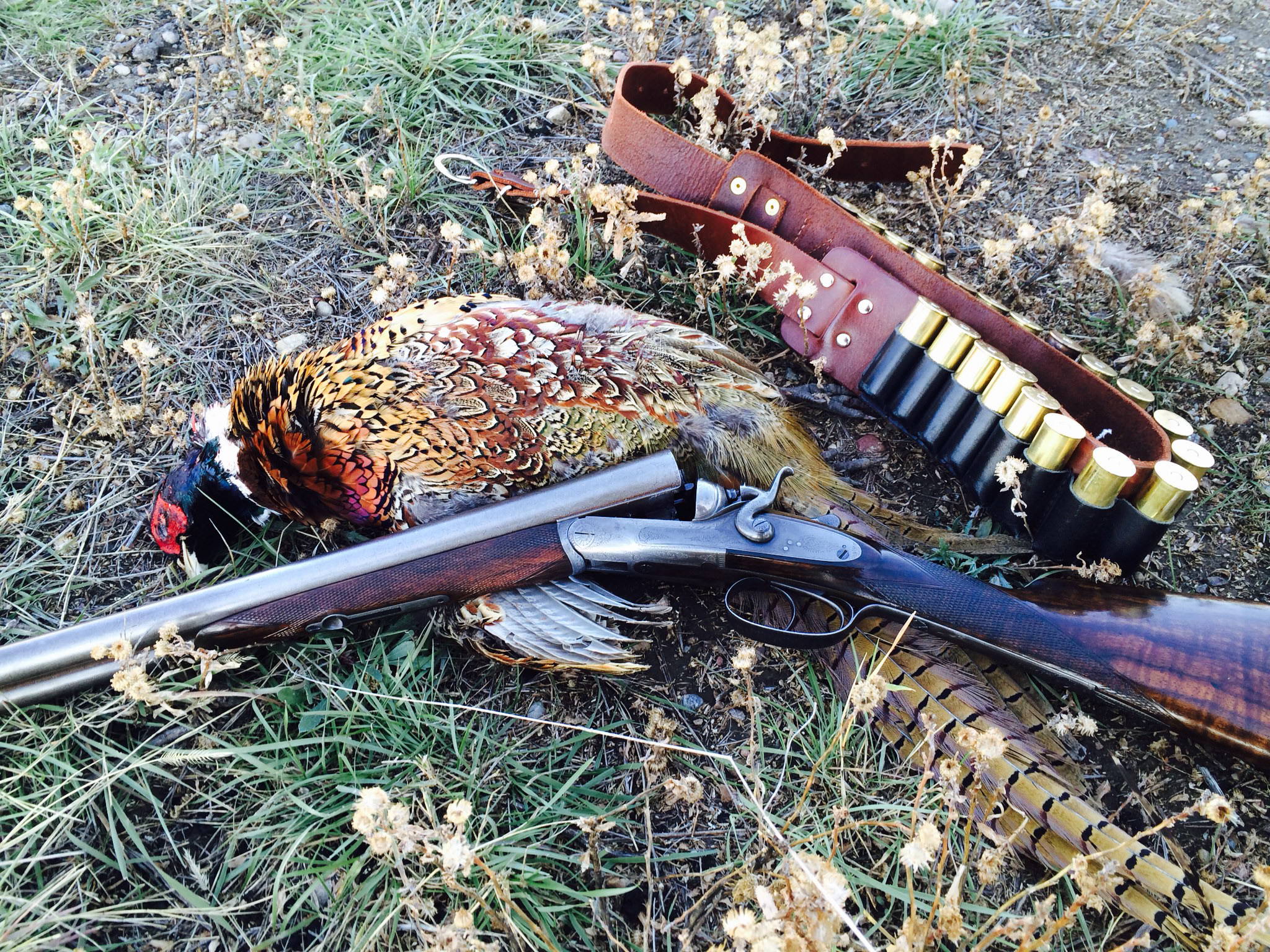
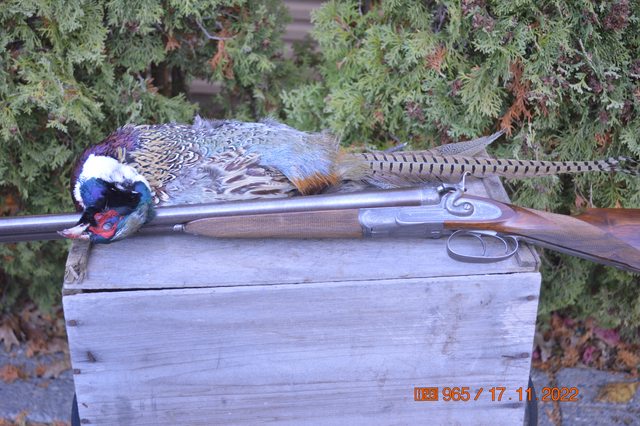
If I ever pull a shotgun from the safe anymore, it’s for a quiet small game hike through the back 40, I don’t compete or regularly use them for anything else. I do think old double barrel SXS are functioning art, and I quite enjoyed shooting my buddies grandfathers 12g SXS.
My questions are firstly, are old SXS safe? I’ve searched around but the best I can find suggests I shouldn’t consider anything pre 1940 for poor metal and design. Is there a particular model or any make I should keep my eyes open for?
We agree on the "functioning art" aspect of vintage SxS. So I'll try to list some basics to look for when examining a pre WWII gun. But let me correct an error that you start with. The design of SxS was essentially completed by the 1920s. Nothing of note has happened since in terms of design. The only real development is the quality of the steel used. So poor design existed back then......but also the best designs. What's happened since is the poor designs got abandoned and the good designs became ubiquitous.
First, is it from America or from the UK or Europe? American guns are not "proofed" by a public proofing house. Proofing is test firing of extreme loads to ensure the gun doesn't blow up. So American guns don't have "proof marks" stamped on the barrels. Why is this important? With American guns and law, with the onus on the maker to be sure the gun was safe, American makers tended (not 100%) to build very sturdy (read thick barrels) guns. So if you can look at the barrels, inside and out, and see little or no evidence of corrosion, odds are that the barrels are safe to shoot appropriate ammo.
For makers from across the Atlantic, whose guns must have passed through a public proof house, they were prepared to play it a little tighter with tolerances, ie thinner barrel walls, to get a lighter, more dynamic handling gun. Still safe but just with tighter tolerances.
And so with all of them, American and foreign, if the barrels look good, why does any of this matter? They look good....should be safe, right? The problem is that in their 80 to 150 year history, there is the strong possibility the inside walls have been "honed" to clean up the beginnings of corrosion. Do this a few times and you can easily get to a point where the barrel walls are now no longer strong enough to safely manage the internal pressure generated by firing it. And you can't know if the barrels have been honed, really, without having a qualified vintage SxS smith examine the gun. Not a guy who says he's a smith. Not a rifle smith or a guy who mostly works on handguns......a vintage SxS smith. They are few and far between but if you want to play with vintage SxS, it's worth finding one. The criteria for who to use is not "who is close enough I can drive to" but "who does good work". The upside for you is there are a few very competent sxs smiths on the fringes of the GTA. So not impossible for you.
The second aspect to consider, but intimately related to the above, is what ammo do you intend to use and what ammo is safe for the gun. Can it handle modern ammo needing a 2 3/4" chamber and generating pressure in the 11,000 psi range? Or does it need specialty ammo, designed for 2 1/2" chambers and generating pressures in the 6000 to 8000 psi range? Over the last 120 years of gun and ammo development, steel has been getting better and ammo has been developed to produce higher pressures and faster speeds. The guns of 1910 were never designed for the ammo of today.
And finally, in the fundamentals category, what is the condition of the stock and the impact that the recoil generated by the ammo you use is going to have on it. A couple issues here. The first is that as wood ages, the inletted portion of the stock, where the wood meets the metal, shrinks....pulling away from the metal. This reduces the contact area between the wood and metal, focusing the recoil forces onto an ever decreasing area of wood. Vastly increasing the likelihood of recoil causing the splitting of the wood. The action becomes a wedge being driven into the wood with every shot fired. And as a reminder......what affects recoil? It's simple....just three things......it's specifically the weight of the load ( 1 oz, 1 1/4 oz etc), the speed to which that load is accelerated to as it travels down the barrels and the overall weight of the gun. Nothing else matters.
So if you take a light gun......say 12 gauge 6 1/2 pounds, and you blast 1 1/4 oz loads out it at 1400 fps, not only will you have a sore shoulder, but you will shortly split your stock. On the other hand, take the same gun, shoot 1 oz loads at 1150 fps and both your shoulder and your gun will thank you.
Now, there is tons more I could talk about but it all makes a lot more sense from here to discuss a specific gun you might have in mind.