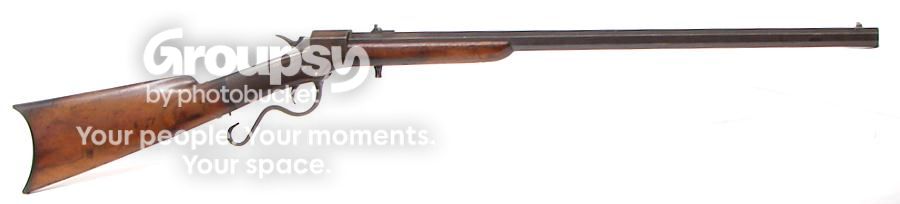
oldest but ruffest

dirkdigler

Regular
Rating - 100%
1   0   0
Here are a few pictures of an old double barrel muzleloader. I always imagine its from the war of 1812 as it came from a farm near Crysler farm which was a major point in the war as well as it has an engraving on it from 1801, but I honestly have no idea. The rifle has no markings from maker or model. the area around the triger gaurd is pretty ornate but the rest is pretty plain. if anybody has any info it would be appreciated.

http://s1247.photobucket.com/albums/gg635/dirkdigler102/

please disregard 44-40 pictures in the link.
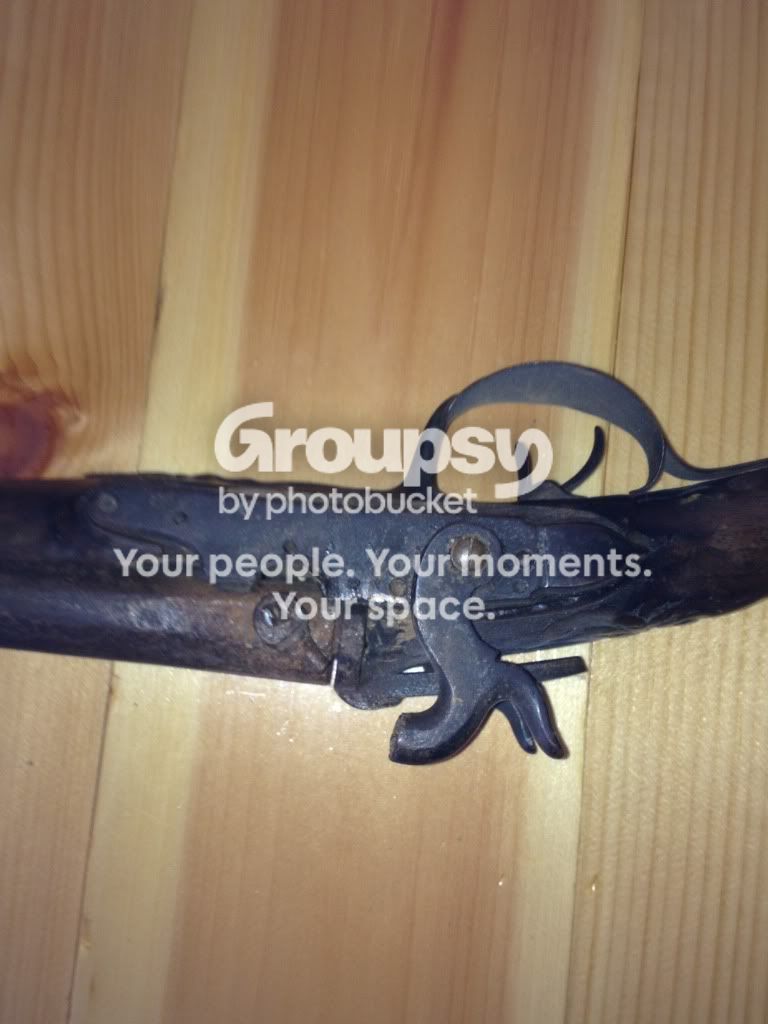
IMG_0313.jpg


IMG_0312.jpg


IMG_0307.jpg


IMG_0310.jpg


I have taken the liberty of posting the photos directly for you ---mooncoon
 
Last edited by a moderator:
It was a sporting gun, although that doesn't mean it couldn't have seen militia service.
I believe that it is French. It was made as a flintlock, was converted to cap during its period of use. Double flint guns were far less common than single flints double caps or single caps. The 1801 date is perfectly reasonable; the gun could be older.
While it is hurting, it could be worse. It would respond to gentle cleaning and stabilizing. I would suggest that it would not be a good first project for an amateur gunsmith. Further research to establish provenance would be a good idea.
 
Nice piece, rough or not.

Second on the further research. Personally I'd spend the effort on that first, regardless of whether it was used in the war the more context you can develop the more interesting it becomes... Still interesting though regardless of what you can find out.

Good find - good luck!
 
Can you track it back from where you acquired it?
European guns usually had proof marks, maker's names, etc. Have a really good look, in good light. A flint double was not an inexpensive gun when new; unlikely it would be unmarked.
 
If you are real keen, also consider research on the property it was found on. Take care not to imply a proven connection to the old girl, unless the evidence is definetly there - but it could prove useful. Even for your own reference & interest. Just a suggestion.
 
Take a look on the top rib and on the locks for signs of a maker's name(s). Also look under the barrels at the breach end for proof marks. They will indicate country of origin. The conversion to percussion would have taken place probably after 1830 because it took a while for percussion to evolve into metal caps and to become popular.

cheers mooncoon
 
If you are going to start your research on this gun, I would commence with the name M. Ault which is carved into the stock.
If that family name dates back to 1801 in that area, try to locate the family if they are still there or through municipal records.

However in 1801 I would have thought that the gun would have been a flintlock?

I went through a somewhat similar exercise and one thing leads to another.
(It depends how much effort you want to put into it for the piece you are dealing with.)

In my situation the gun belonged to my family forever and was supposedly used in the Battle of Eccles Hill in 1870 in the Eastern Townships against the Fenians by my great grandfather.

As it turned out this was not the gun that he used in that battle as was always assumed by the family.

David

DefiniteynotJamesPellsBallardRifle.jpg


DSC08930-1.jpg


As it turned out he was using a Ballard sporting rifle .44 cal. rim-fire which is not to be found.
He is shown second row right dressed in white looking at his rifle.
The Home Guard (Red Sashes) purchased 40 of these rifles from the Brown Manufacturing Company, Mass.

JamesPell1-1.jpg


A photo of a Ballard sporting rifle...apparently very accurate.
Not at all like the underhammer rifle shown above.
It is amazing how some guns get dragged along with history which is incorrect.
This is the case with the underhammer rifle shown above.

The irony is that my great grandfather went to Mass. with another fellow
to purchase these rifles, and his rifle has disappeared only to be left
with a gun that the family thought was his.

6e85433773df189370918acb9dc95e68.jpg
 
Last edited:
How would one go about properly stabilizing something like this?


When I see bare metal on something newer I think fluid film or sometimes No-ox-id for long term storage but that might not be the thing to do here.
 
How would one go about properly stabilizing something like this?


When I see bare metal on something newer I think fluid film or sometimes No-ox-id for long term storage but that might not be the thing to do here.

I'd suggest plain old oil...the metal should absorb the first coat or two, then just keep on top of it. I started doing that on the advice of some old timers and it hasn't let me down yet...
 
Plain old oil would be vegetable oil?

I'm not into toxic engine oil all over my hands if thats what your saying. (unless I'm working on a car)


Fluid film is non-toxic food grade for food processing equipment and it smells nice. Has a picture of a rifle on the can too.
 
Plain old oil would be vegetable oil?

I'm not into toxic engine oil all over my hands if thats what your saying. (unless I'm working on a car)


Fluid film is non-toxic food grade for food processing equipment and it smells nice. Has a picture of a rifle on the can too.

I agree its the best! im sick of toxic oils!

I only use fluid film now on my guns and other stuff to.
 
He he he on a routine basis I use gun oil; but to be honest on heavily rusted barrels and stuff I do use engine oil, hasn't killed me yet.
Rebuiilt my share of small block chevys and I'm still here - Only my 0.02 I respect folks' opinions on the toxicity of it, just won't convince me personally :)
 
Back
Top Bottom