












































You are using an out of date browser. It may not display this or other websites correctly.
You should upgrade or use an alternative browser.
You should upgrade or use an alternative browser.
PCMR Pacific Coast Militia Rangers - History, Photos and serial number survey
- Thread starter The Outsider
- Start date


- Location
- Delta B.C.
My uncle/fathers gun is 1335974 Pretty sure he/my uncle was the original owner. Vancouver born and very proud Canuck like his 5 brothers and one sister. Thank you for this. I've been thinking about this for some time now. CheersPCMR
Pacific Coast Militia Rangers
and the Winchester 94...
Canada’s Pacific coast was sparsely populated back in the 1940's and after the invasion of Pearl Harbour, there was a concern that the Japanese would take advantage of so much untamed wilderness and launch an invasion here. But because most regular forces were deployed overseas, it was believed that the citizens of British Columbia and the Yukon territory would be the best defence against a possible invasion, partly due to their familiarity with the land. Thousands of volunteers, primarily hunters, trappers, fishermen, ranchers, miners, and natives came forward. This group became known as the Pacific Coast Militia Rangers (PCMR).
The force was formed on March 14, 1942. Originally it was called the Coast Defense Reserve Militia, but the name was soon changed to the PCMR.
Over 125 companies were formed across British Columbia and the Yukon Territory. At first they used their own weapons, then some old P14 Enfields, Ross and other surplus rifles.Though they were operating under government orders, these men were not fully integrated with the military, but by mid 1942, the government approved the purchase of around 2,500 Winchester '94's in .30 W.C.F (.30-.30) along with a small number of Marlins. These Canadian carbines were marked with a “C” and broad arrow on the left side of the receiver, at the side of the fore stock, and at the base of the butt stock. All known examples are within the 1,300,000 serial range and were manufactured in 1941 and 1942. They were also outfitted with special sling swivel bands and British web slings.
The Rangers uniform consisted of just a cap badge and armband, later some weatherproof tunics and other gear were issued.
Some 15,000 men ranging from adolescents to grandfathers served in the PCMR.
The PCMR’s mission was to patrol B.C. and the Yukon, protect it’s people from Potential raids by the Japanese, and to counter any attempt at a full-scale Japanese invasion of the Canadian West Coast. Many men who served in the PCMR were either too old or too young to fight in the Canadian Army, and some were even veterans of the First World War. Because of the geographical distance between PCMR detachments, many of the militiamen went officially untrained, and relied mostly on members with prior military experience or those who had attended Ranger training to teach them the basics of fighting and patrolling. Because of this, the PCMR began publishing a magazine called The Ranger, which featured articles revolving around combat, survival, and various other tasks militiamen were expected to understand.
""The Ranger," magazine was first issued on September 1, 1942 and was filled with useful information that every well-rounded Ranger should know, such as: "Know where to shoot", "Edible plants of BC", "Dig or Die", and "What can you do with a tarp?". Age was not necessarily a consideration in the enlistment of these men.
It was observed that, "young lads from outlying areas were extremely valuable. Boys of 15 years and up proved to be good shots, could handle an axe, and were valuable as guides." Even those considered to be too old to join the war effort were able to contribute to the protection of BC.
Rangers filed reports on strange ships and aircraft and participated in training exercises with Canada’s Mobile Striking Force — a Cold War-era paratroop force designed to be flown quickly into remote northern areas. In one case, Rangers even helped the RCMP intercept bandits trying to flee the Yukon along the Alaska Highway.
First Nations people also made up a significant portion of the PCMR; in the January 1945 issue of The Ranger was written “Appropriately enough the man on this month’s cover is an Indian. "No one is more fitted to take part in the defense of this province than the native son, for his heritage as a British Columbian runs far back into the beginning of time. We are glad to have his native skill and woodcraft working against the common enemy.” Given the racist attitudes towards First Nations peoples at the time, this was an incredibly progressive statement to make.
With the conclusion of WWII the PCMR was disbanded on September 30, 1945 and the volunteers were given the option to purchase their rifles from the government for $5. Those not purchased by the men were re-issued to other government departments and used until 1962 when they were destroyed due to maintenance costs. As a result, there are few surviving examples of these Canadian Winchester 94s today, and even fewer Marlins.
Although the PCMR never engaged the Japanese in battle, they performed vital work such as emergency rescue and firefighting. Perhaps most importantly, they instilled some degree of confidence in the local population that they were being protected without tying up large numbers of regular forces who were needed overseas. By providing a degree of military control and discipline they also kept any overenthusiastic locals from running around the woods shooting at shadows in the hysteria-prone atmosphere.
The P.C.M.R. data below is from an ongoing survey by David Clark, Bert Hartman & Rick Hill.
Serial No. Model Caliber Barrel Band Rec. D&T Butt Plate PRSRB DOM
1261247 94 30 W.C.F. Milled No Serrated 1/10/41
1295289 94 30 W.C.F. Milled No Serrated 9/8/41
1302843 94 30 W.C.F. Milled No Serrated 10/25/41
1335921 94 30 W.C.F. Milled No Serrated 6/2/42
1335963 94 30 W.C.F. Milled No Serrated 6/2/42
1335965 94 30 W.C.F. Milled No Serrated 6/2/42
1335990 94 30 W.C.F. Milled No Serrated 6/3/42
1336016 94 30 W.C.F. Milled No Serrated 6/3/42


Last edited:

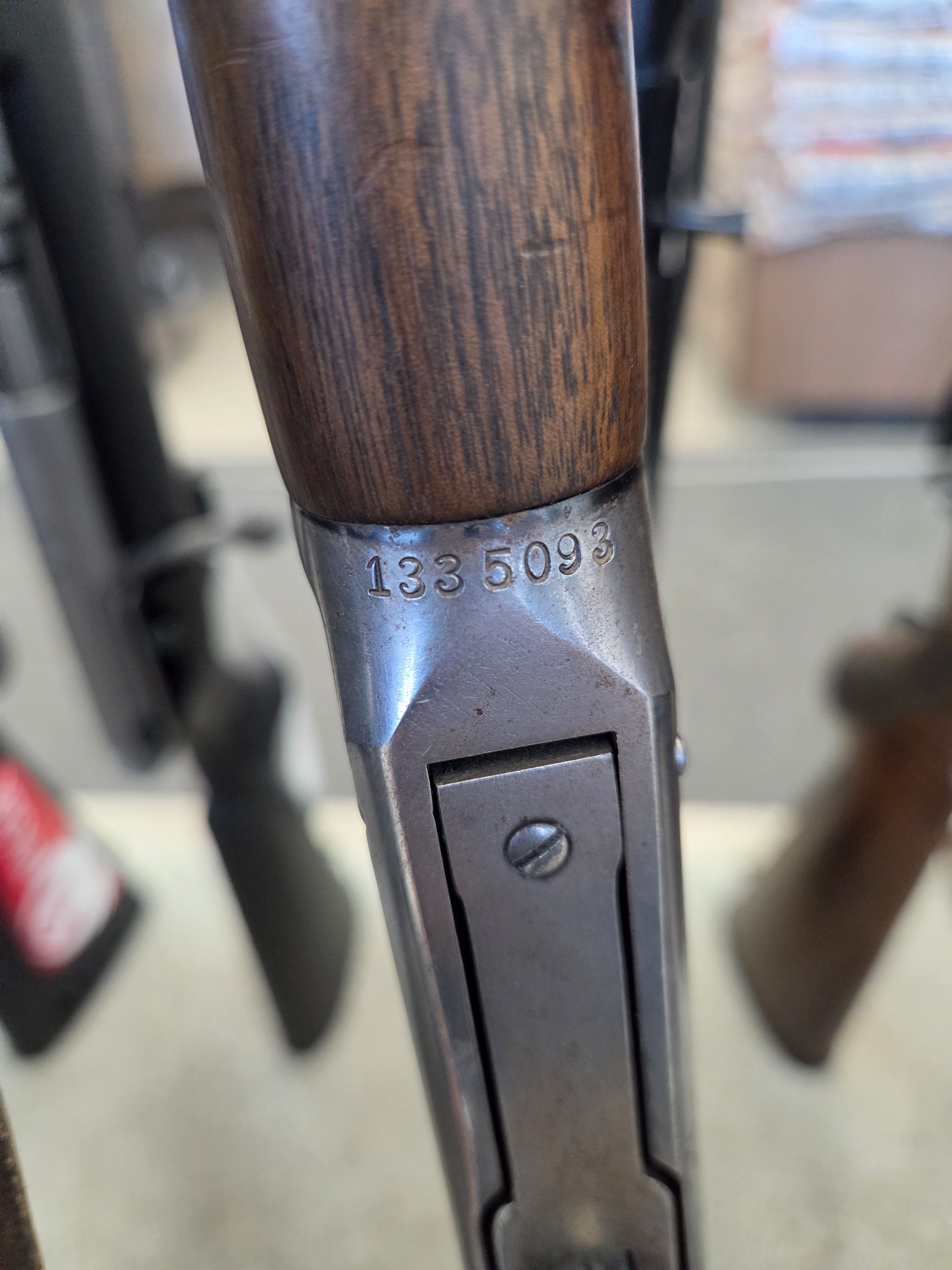
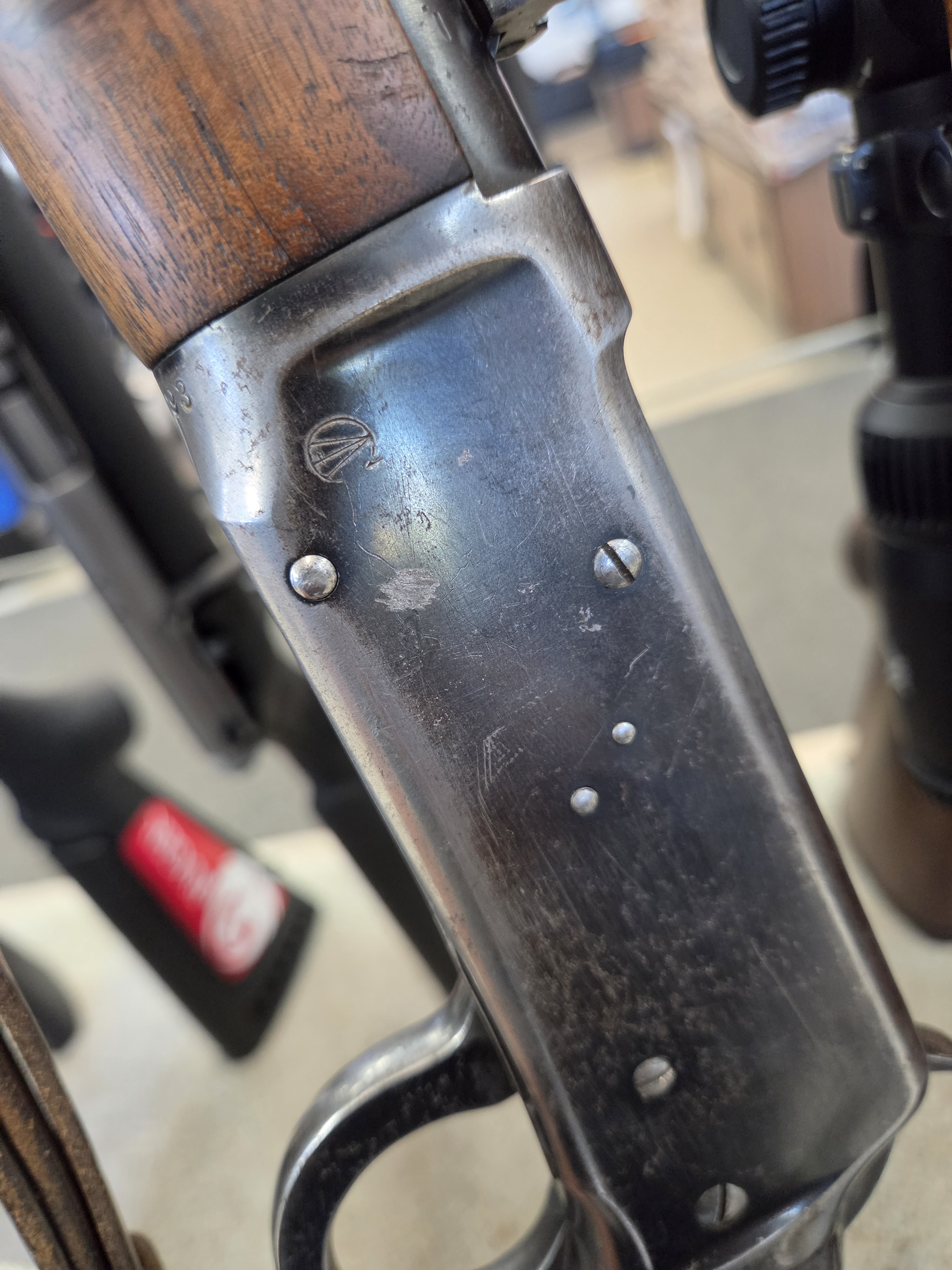

Keep us in the loop.If this one is still at the LGS store tomorrow I'm going to go try and make a deal on it.






















