- Location
- WMU248 near Edmonton















































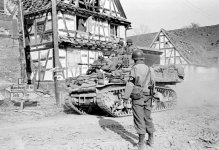
Not a likely encounter. The units were well aware of the limitations of their light tanks and relied on tactics with other arms, the light tanks were exploited due to their high mobility and small size to out flank German armour in Italy in combat in close quarters. The gun with M51APC shot could go through maybe 60mm of enemy armour at card table ranges. By 1944 Uncle Sam had replaced the M5 light tanks in the field units with the next generation.How would you like to be in a Stuart and turn the corner to face a Tiger?
Sandbag appliqué armour. They knew they were the runts of the litter, and they made sure they could survive a quick ambush


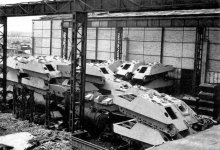
awesome, while you're at it (or anyone) can you find a video of a cast hull or turret being poured? you'd think it's just a google search away but no
awesome, while you're at it (or anyone) can you find a video of a cast hull or turret being poured? you'd think it's just a google search away but no
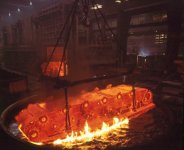
There is footage of the Russians manufacturing T34's in caves during the second war, i think it is part of a World at War episode that i've seen it in. The part I remember most is a turret coming out of a mold and a big mill peels the rotating ring face in one turn on a rotary and then put directly on a chassis...very impressive!!!while you're at it (or anyone) can you find a video of a cast hull or turret being poured?
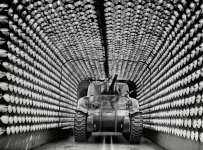
hell of a way to heat treat the hull
is this Austrian Leo 1s ??
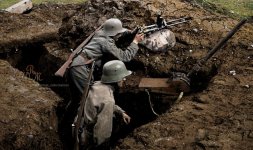

^You won't regret reading this articleOn the 21st May, the British Expeditionary Force mounted its only significant armoured operation of the 1940 campaign in France. The British, from Churchill down, had been trying to encourage the French to mount a counter-attack. The 21st May operation was first planned as a two-pronged pincer movement to cut off the German spearhead advancing to the French coast. The British would attack south-west, while a separate French force would attack in the opposite direction. For a variety of reasons, the French participation never materialised. So the British attack went ahead any way.