
Remember, "Size doesn't matter."













































You are using an out of date browser. It may not display this or other websites correctly.
You should upgrade or use an alternative browser.
You should upgrade or use an alternative browser.
Picture of the day
- Thread starter jwhc
- Start date


We need more !!
Okay...

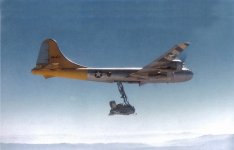
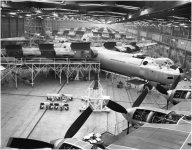
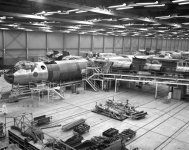
Hear me out.. what if we take a B29
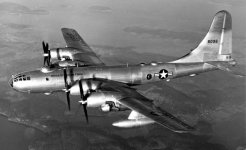
turn the engines around and add two more!
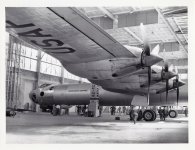
We'll call it a B36.
NO!
NOT ENOUGH!
WE NEED MORE !!
Okay, okay...
I know...
We'll stick 4 more GE J47-GE-19 turbojets on the end of each wings!
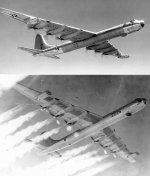
YES, YES...
I LIKE IT !!
Okay...
Hear me out.. what if we take a B29
turn the engines around and add two more!
We'll call it a B36.
NO!
NOT ENOUGH!
WE NEED MORE !!
Okay, okay...
I know...
We'll stick 4 more GE J47-GE-19 turbojets on the end of each wings!
YES, YES...
I LIKE IT !!
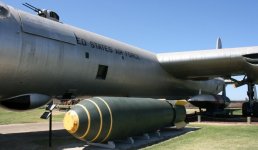
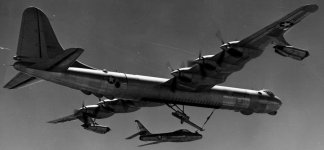
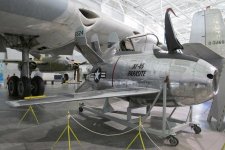
The National Museum of the United States Air Force in Ohio has her on display along with her thermonuclear payload. I've put my hand on it. It's huge! (I'm talking about the bomb). Yielded 11MT as Castle Romeo test. The actual device was designed to yield 15MT. Notice the RASCAL in the background. It was also to be launched from the B36.
Besides the jet engines, you forgot to add the nuclear reactor.
The Thunderflash and Goblin parasitic fighters were a nice touch.
Must've scared the absolute crap out of the Commies.
This is what 15MT looks like. Castle Bravo; planned yield was 6MT.
I like to call it 'The Big Whoopsie'
Besides the jet engines, you forgot to add the nuclear reactor.
The Thunderflash and Goblin parasitic fighters were a nice touch.
Must've scared the absolute crap out of the Commies.
This is what 15MT looks like. Castle Bravo; planned yield was 6MT.
I like to call it 'The Big Whoopsie'
Last edited:

- Location
- WMU248 near Edmonton
6 turning 4 burning
that's a lot of aluminum
that's a lot of aluminum


Rod B
CGN Ultra frequent flyer
Eighty two years ago today.A heartfelt thank you to all.


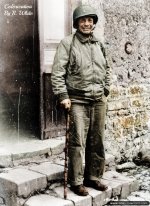
"On June 6, 1944, a 56-year-old general with a secret walked onto Utah Beach under fire, armed with a cane and a pistol. The secret: his heart was failing. He had hidden it from the army doctors so they wouldn't pull him from the mission.His name was Theodore Roosevelt Jr. Son of the President.
He had begged three separate times to lead the first wave ashore at Normandy before his commanders finally said yes. When his landing craft drifted 2,000 yards off course, every instinct said redirect the following waves to the correct zone. Instead, Roosevelt walked the beach himself, alone, under artillery fire, cane in hand, reading the terrain.
His verdict: "We'll start the war from right here."He then stood on that beach and personally greeted every regiment that landed after him, pointing them inland, cracking jokes under shellfire, steadying 18-year-olds who had never seen combat. He did this for hours.
Years later, Omar Bradley was asked to name the single most heroic act he had ever witnessed in combat. His answer, without hesitation: "Ted Roosevelt on Utah Beach."
Roosevelt's son, Captain Quentin Roosevelt II, also landed at Normandy that same morning. He was named after his uncle, Quentin Roosevelt, who had been shot down as a fighter pilot over France in World War I. Three generations. Three wars. One family.Theodore Roosevelt Jr. died in his sleep 36 days later. Heart attack. The thing he had been hiding finally won.
He never learned he had been awarded the Medal of Honor. He was buried at the Normandy American Cemetery.In 1955, his family had his brother Quentin, killed in WWI, exhumed from where he fell in France and reinterred right beside him. Quentin is the only World War I soldier buried there. Two brothers. Two world wars. The same French soil. Their father had once said: "Do what you can, with what you have, where you are. "Both of his sons did exactly that."


- Location
- Okanagan Valley B.C.
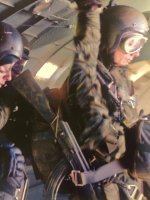
Looks like our first jump course.

ipscgraz
CGN Ultra frequent flyer
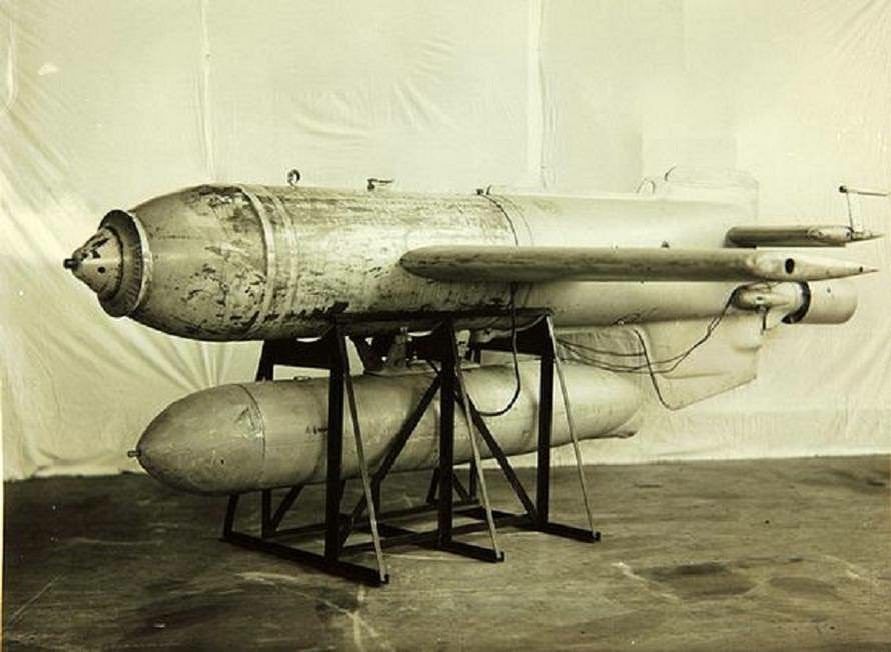
Henschel, HS 293, Glide Bomb
...a World War II German radio-guided glide bomb. It is the first operational anti-shipping missile, first used unsuccessfully on 25 August 1943 and then with increasing success over the next year, damaging or sinking at least 25 ships. Allied efforts to jam the radio control link were increasingly successful despite German efforts to counter them. The weapon remained in use through 1944 when it was also used as an air-to-ground weapon to attack bridges to prevent the Allied breakout after D-Day, but proved almost useless in this role.






















