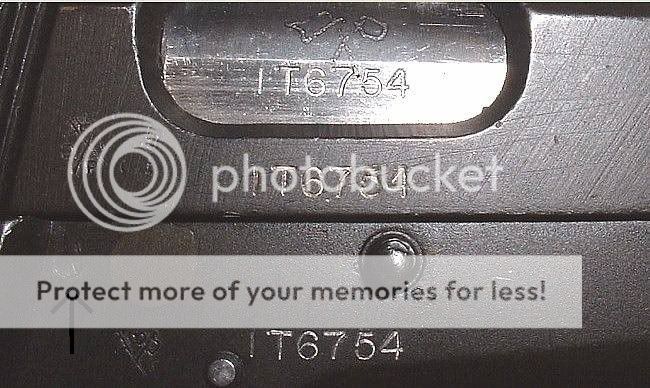
Wrong Way:
These Canadian-built High Power pistols were produced by the John Inglis Company in toronto, in 1944-45, in two configurations. The production came about because China (pre-Communist, of course) had adopted the Browning P'35 High Power pistol, as produced by FN in Belgium. However, when Belgium was occupied by the Germans, they took control of the fN manufacturing facilities to produce weapons for themselves, and China could no longer get the pistols. They kept after the Allies for production of the pistol to be re-commenced in one of the allied nations, and that job ultimately fell to Inglis (which was already turning out Bren guns and lots of other ordnance.)
Inglis literally "reverse-engineered" all the necessary production specifications and drawings from six FN-made pistols provided by the Chinese. (They did such a good job that parts will interchange with that model of pre-war FN High Power.)
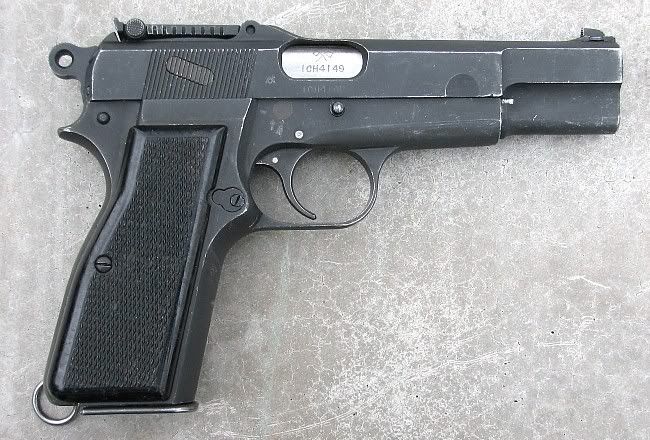
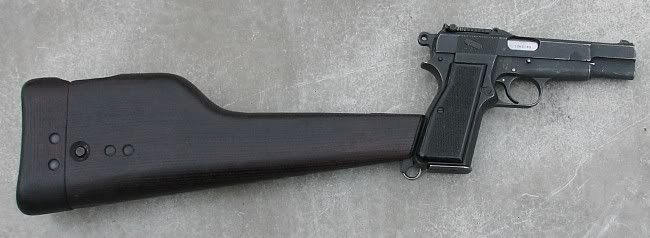
The first configuration of Inglis pistol, referred to as "Pistol No. 1", was the model adopted by the Chinese - which had a tangent-adjustable long-range rear sight calibrated to an incredibley optomistic 500 meters, and was slotted on the rear of the gripframe for attachment of a wooden holster/shoulder stock. No. 1 pistols have "CH" serial numbers.
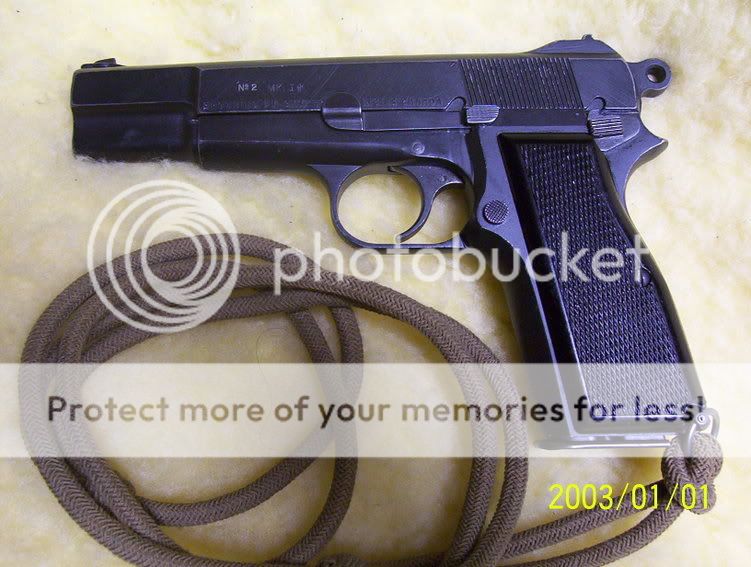
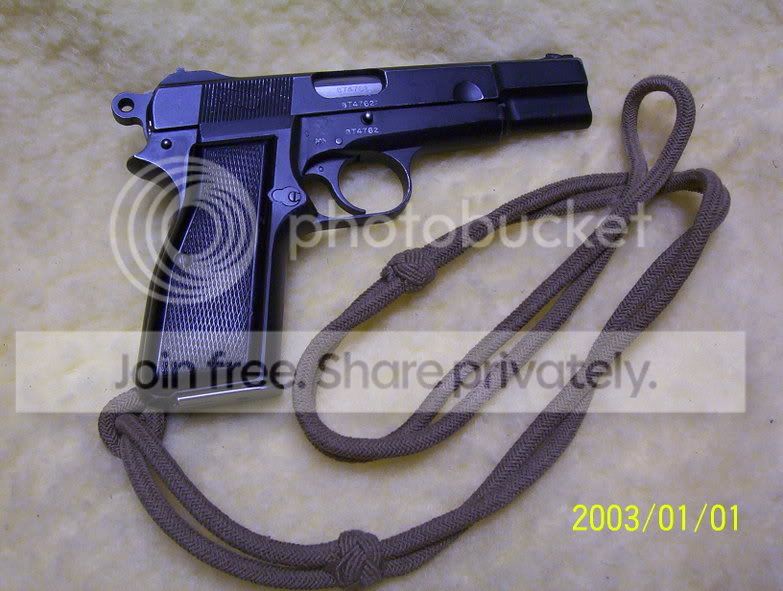
The second "model" of Inglis, as adopted by Canada and for limited purposes by the UK, was the "No. 2" pistol, of which yours is an example. As you are aware, it has a much simpler, non-adjustable rear sight and no stock-attachment slot on the gripframe. No. 2 pistols have "T" serial numbers, as a result of a WWII directive that Canadian-produced small arms have the place of manufacture coded into the serial number - "T" signifies Toronto.
Here are images of my No. 1 pistol, for comparison .... (click to enlarge) -
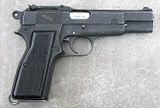
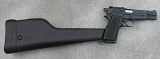
My No. 2 pistol ... (click ...)
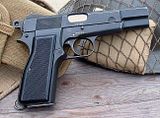
The "JI" stamp on your magazine confirms that it was produced by the
John
Inglis Co.
The crossed flags you have enquired about are a Dominion of Canada Proof mark ... in full form, the intials "D", "C" and "P" appear in the left, right and lower quadrants formed by the crossed flagstaffs, with a crown in the upper quadrant ....
The crossed flags mark was electropenciled in simplified form on Inglis pistol barrels .... I believe because the metal composition or degree of hardness precluded stamping. Here are close-ups of the markings on the above two pistols. Note the "C-Broadarrow" stamp on each. (These stamps are often not cleanly and completely struck, as you may have noticed.)