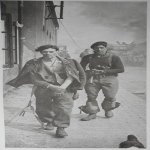
My dad was in the British Army from 1939 to 1946, he did mention that he and his friends would acquire German hand guns , he wasn’t very forthcoming about how he acquired them, either by a battlefield pickup, Prisoners, or from piles of surrendered enemy weapons , he did say they did shoot them at targets ,tin cans etc, but didn’t carry them in a holster around his waist and I’m wondering what the policy was in the Canadian Army with carrying a German handgun , I did see a photo of a Canadian sniper wearing a P38 pistol in a holster ,













































You are using an out of date browser. It may not display this or other websites correctly.
You should upgrade or use an alternative browser.
You should upgrade or use an alternative browser.
Policy of carrying enemy small arms in Canadian Army,
- Thread starter x westie
- Start date

Brutus
CGN Ultra frequent flyer
Probably no such officious policy existed. Wartime is survival of the fittest. During the Korean War lots of M1 carbines, Thompson's and various MMGs were sourced trading with US military units. Mostly in trade for Canadian whiskey. This unofficial firepower was very welcome by our bolt action rifle equipped infantry.
Upon leaving these were often handed over to a relieving unit or dumped off the nearest pier.
Of course some pistols and rifles made it home declared as personal war trophies or otherwise. Some folks caught with Ak-47s in 1974 avoided prosecution by donating them to the regimental museum.
Upon leaving these were often handed over to a relieving unit or dumped off the nearest pier.
Of course some pistols and rifles made it home declared as personal war trophies or otherwise. Some folks caught with Ak-47s in 1974 avoided prosecution by donating them to the regimental museum.
IIRC this is referred to in one of Mark Zuehlke's books: Canadians in Italy were commonly carrying German small arms in one phase of the campaign, but this has to be banned after it caused combat fratricide issues, or threatened to. It makes sense: if it's a life-and-death issue to throw a grenade at the sound of a Schmeisser burst nearby, you're going to do it and ask questions later.

maple_leaf_eh
CGN Ultra frequent flyer
Handguns are status firearms. In Bosnia, the irregulars would look at the platoons of Canadians and only want to speak to the guys wearing pistols. In their context, handguns were only issued to officers. Well, them and a dozen other people whose jobs were hands were full of bigger gear or needed to more dexterity. In Afghanistan a lot of troops in KAF were issued Brownings, even Cpls. A lot depended on rank, ie Sgt and above, or what job or other equipment they had to manage. In WW1, troops did their best to avoid getting killed but because of the numbers of soldiers, sometimes needed to prove that they'd been at the Front. What better souvenir, than a German helmet or pickelhaub, a bayonette, an Iron Cross, or a pistol?
As for foreign firearms in combat, there have been many heated discussions in the reenactor communities. Some people say, well there are photos of guys carrying Lugers/P38s/MP40s etc. Therefore it was something that was done. The other side counter that once a soldier learns what the enemy's small arms sound like, they are trained to attack the source of the sound. STENs have a slow rate of fire compared to an MP40; therefore, shoot there. Friendly forces employing captured weapons could be killed. Secondly, His Majesty the King issued each man exactly what he needed, and made him sign for it. Woe betide Rifleman Snuffy who couldn't account for every line item on his charge. Quartermasters have always kept records, and there have always been administrative procedures to recover lost or damaged personal issue items. Not only Quartermaster staff, but section Cpls and Sgts. They exacted obedience forcefully - because a trained and discipline soldier isn't going to tolerate subordinates who can't follow orders. Orders like, no souvenirs, or if you want it you'll have to carry it everywhere.
As for foreign firearms in combat, there have been many heated discussions in the reenactor communities. Some people say, well there are photos of guys carrying Lugers/P38s/MP40s etc. Therefore it was something that was done. The other side counter that once a soldier learns what the enemy's small arms sound like, they are trained to attack the source of the sound. STENs have a slow rate of fire compared to an MP40; therefore, shoot there. Friendly forces employing captured weapons could be killed. Secondly, His Majesty the King issued each man exactly what he needed, and made him sign for it. Woe betide Rifleman Snuffy who couldn't account for every line item on his charge. Quartermasters have always kept records, and there have always been administrative procedures to recover lost or damaged personal issue items. Not only Quartermaster staff, but section Cpls and Sgts. They exacted obedience forcefully - because a trained and discipline soldier isn't going to tolerate subordinates who can't follow orders. Orders like, no souvenirs, or if you want it you'll have to carry it everywhere.
Some folks caught with Ak-47s in 1974 avoided prosecution by donating them to the regimental museum.
From Korea? The AK wasn't used in the Korean war. Let alone having captured weapons, it wasn't even known to the CIA until a couple of months before the Korean war ended.

I really doubt there was a policy about carrying enemy weapons. Guarantee it happened a lot because the end result is what mattered. When things really got ugly no one would care how you survived.
For the most part soldiers would carry what they were issued because of ammo supply. The commonwealth is not going to bring you 8mm in instead of 303. Of course soldiers would pick up hand guns cause they are cool and might be helpful later. A mag or two is good enough for a back up gun so no supply lines to worry about.
For the most part soldiers would carry what they were issued because of ammo supply. The commonwealth is not going to bring you 8mm in instead of 303. Of course soldiers would pick up hand guns cause they are cool and might be helpful later. A mag or two is good enough for a back up gun so no supply lines to worry about.

IIRC this is referred to in one of Mark Zuehlke's books: Canadians in Italy were commonly carrying German small arms in one phase of the campaign, but this has to be banned after it caused combat fratricide issues, or threatened to. It makes sense: if it's a life-and-death issue to throw a grenade at the sound of a Schmeisser burst nearby, you're going to do it and ask questions later.
I was lucky enough to have boxed as a youth under the tutelage of Evult Nieman. He commanded a squad of tanks on the European front.
He recalled having one man in his squad who had an Erma ( don't worry, he called it a Schmiesser too ) submachine gun. To ward off unintended friendly fire ( the distinctive sound ), the armourer cut off some of the bolt spring to slow the rate of fire. Ev said it worked well as far as he could recollect.
Brutus
CGN Ultra frequent flyer
From Korea? The AK wasn't used in the Korean war. Let alone having captured weapons, it wasn't even known to the CIA until a couple of months before the Korean war ended.
You don't know Canadian military history do you? During the Turkish invasion of Cyprus 1974, Canadian troops were present since 1964. We ended participation Operation Snow Goose in 1993. UNIFCYP mission.
Most people would not need a prompt with the important year of 1974 mentioned.
Yes it was supposed to be only a peacekeeping mission. Yet our soldiers caught in the midst of a shooting war.
Last edited:
From Korea? The AK wasn't used in the Korean war. Let alone having captured weapons, it wasn't even known to the CIA until a couple of months before the Korean war ended.
Well the date mentioned was 1974 and Canadian combat involvement in Korea was 1950-53.
There's another dimension to this for the frontline troops; get taken POW in possession of the other side's weapon or equipment and the presumption will be that you killed one of theirs to aquire it. That brings a possibility that the captor would react more harshly than otherwise.
There's another dimension to this for the frontline troops; get taken POW in possession of the other side's weapon or equipment and the presumption will be that you killed one of theirs to aquire it. That brings a possibility that the captor would react more harshly than otherwise.
My uncle fought through North Africa and Italy. They were allowed to familiarize themselves with captured enemy equipment but they weren't allowed to carry them. They also weren't allowed to pick souvenirs from prisoners or bodies.
In his own words, "IT HAPPENED" Handguns were preferred, because they were small and easily concealed in their kit. They were mostly novelties and they could be traded to REMFs for all sorts of good things, like whiskey, food, boots and the real prize new socks. He brought home a bayonet and scabbard. This stuff was all over the place. Sometimes in piles beside the road but most often relieved in one manner or another from someone no longer needing it. He picked up the bayonet because it was a handy tool he had a lot of use for in the field when it was filed sharp.
When I queried him about "upgrading to better equipment" he said there was so little difference that it wasn't worth the effort. They regarded the weapons as TOOLS needed for survival and of course trade goods. The only reason they would even consider using a captured weapon is if there wasn't one of their own available. The weight carried with them constantly made it foolish to pick up and carry another couple of pounds they couldn't drink or eat.
I can tell you from personal experience, there were times when I would have traded much more than a pistol for a canteen full of water or food.
He was very careful to tell me they often didn't have enough water to drink or enough food to replace what they were burning up during marches, digging in etc. I'm sure Purple and many others on this site can relate to this.
TURF THE LIBERALS IN 2019
Liberals really like POOR people, they're making more of them every day
If you can't vote CPC, stay at home in protest
Bearhunter got it correct from his uncle. In the Second World War Canadian soldiers below sergeant in rank were not generally issued pistols , so if a private could snag one it was a novelty and could provide bragging rights and great trading stock. Some units wouldn't allow carry, some unofficially did. Not allowed to bring them back to Canada. Yeah, right.
You don't know Canadian military history do you? During the Turkish invasion of Cyprus 1974, Canadian troops were present since 1964. We ended participation Operation Snow Goose in 1993. UNIFCYP mission.
Most people would not need a prompt with the important year of 1974 mentioned.
Yes it was supposed to be only a peacekeeping mission. Yet our soldiers caught in the midst of a shooting war.
Oh. No kidding. Hadn't heard of that one.
When you write an entire paragraph about Korea, then suddenly switch in the last sentence to talking about Cyprus, yes, it needs clarification. Your poor writing skills are no reason to get so stroppy - try going for a walk, or taking a deep breath and doing some grounding exercises instead.
PS it's UNFICYP.
PPS Op SNOWGOOSE is still ongoing. It most certainly didn't end in 1993. You may be thinking of the dates we sent battalions and regiments over, but the end of deploying them wasn't the end of SNOWGOOSE.
http://www.forces.gc.ca/en/operations-abroad-current/op-snowgoose.page
If you want to sound pompous, try to be right. You don't know Canadian military history, do you?
Last edited:
Well the date mentioned was 1974 and Canadian combat involvement in Korea was 1950-53.
No, it wasn't actually. Canadian combat involvement started in 1951 for the Army. 2 PPCLI had just gotten off the boat in Dec 50 and wasn't in action until early 1951. Quite famously so actually, after their CO demanded more training time, which delayed their deployment. The RCN arrived in late 1950, and also didn't see combat until the Inchon landings in 1951. Again, if you wanna explain stuff, please be sure you know the basic facts first.
I personally knew two vets, one from WW2 and one from Korea, who were caught with unregistered battlefield captured weapons in the 1990s. I know of a few more that haven't been.
So yeah, smart guy, it being 1974 only tells you which conflicts it happened after, not which conflict they were captured in.
Last edited:
I ran into a WW2 vet at a small AB town in a McDonalds and we got to talking. He also carried German guns,in particular used a MG34 but as you stated ended up cutting the bolt spring to lessen the rate of fire as he was attracting friendly fire as it was much faster than the Bren.I have seen M1 Garands re-barrelled into 8mm sporting rifles in Germany as trophies peep sight removed and mauser style open sight dovetailed into the barrel.I was lucky enough to have boxed as a youth under the tutelage of Evult Nieman. He commanded a squad of tanks on the European front.
He recalled having one man in his squad who had an Erma ( don't worry, he called it a Schmiesser too ) submachine gun. To ward off unintended friendly fire ( the distinctive sound ), the armourer cut off some of the bolt spring to slow the rate of fire. Ev said it worked well as far as he could recollect.

TommyGunWop
CGN Regular
- Location
- GTA golden horseshoe, Ontario
in those situations i think grab and carry what you can when in the field of fire
but were not able to keep them when they came is a crime in itself. they should have been granted a form of grandfathering
after all it was their lives that were risked
welcome to CaNada
"we stand on guard for thee"
but were not able to keep them when they came is a crime in itself. they should have been granted a form of grandfathering
after all it was their lives that were risked
welcome to CaNada
"we stand on guard for thee"
Brutus
CGN Ultra frequent flyer
Oh. No kidding. Hadn't heard of that one.
When you write an entire paragraph about Korea, then suddenly switch in the last sentence to talking about Cyprus, yes, it needs clarification. Your poor writing skills are no reason to get so stroppy - try going for a walk, or taking a deep breath and doing some grounding exercises instead.
PS it's UNFICYP.
PPS Op SNOWGOOSE is still ongoing. It most certainly didn't end in 1993. You may be thinking of the dates we sent battalions and regiments over, but the end of deploying them wasn't the end of SNOWGOOSE.
http://www.forces.gc.ca/en/operations-abroad-current/op-snowgoose.page
If you want to sound pompous, try to be right. You don't know Canadian military history, do you?
1974 Einstein.
Eaglelord17
CGN Ultra frequent flyer
- Location
- Sault Ste. Marie
Official policy, it was forbidden. What actually happened was soldiers when they had the chance would pick up pistols, bayonets and other small trinkets. Reasons being souvenirs, to have a side arm, trading for goods, and small in size well being easy to conceal.
This is also why we have a ton of matching Lugers and P38s here in Canada, many were concealed and brought home by returning soldiers. You couldn't get away with bringing a rifle or MG back, but a pistol is pretty easy to hide.
This is also why we have a ton of matching Lugers and P38s here in Canada, many were concealed and brought home by returning soldiers. You couldn't get away with bringing a rifle or MG back, but a pistol is pretty easy to hide.

I don't have any first hand combat experience but have heard a few stories . two of my uncles were in the Canadian Navy and my one uncle told me he depth charged a U boat somewhere off the coast of Nova Scotia that had sunk his Brothers boat . when it came to the surface my Uncle Larry was one of the guys who had to go on board the U boats that didn't sink . he gave me a knife that he took out of the U boat Captain's quarters and his wallet also . one of my cousins stole the Iron cross out of the wallet and all the other contents .
on the deck of my Uncles ship he took the Captain's pistol off him and I was told it was a Pearl handled Luger . it went missing after the war . and in another story a Buddy's Dad who I used to go hunting with told me one of the first times he got into the thick of things during WW2 he threw away his Lee Enfield and picked up a Tommy Gun off as he said a Dead Yank . those were the words he used . Thomas told me he loved the Tommy Gun . he said it was reliable . he told me about shooting an enemy soldier who was about to shoot his way and let him have it and it made the guy bowel over backwards .
on the deck of my Uncles ship he took the Captain's pistol off him and I was told it was a Pearl handled Luger . it went missing after the war . and in another story a Buddy's Dad who I used to go hunting with told me one of the first times he got into the thick of things during WW2 he threw away his Lee Enfield and picked up a Tommy Gun off as he said a Dead Yank . those were the words he used . Thomas told me he loved the Tommy Gun . he said it was reliable . he told me about shooting an enemy soldier who was about to shoot his way and let him have it and it made the guy bowel over backwards .