Policy of carrying enemy small arms in Canadian Army,

Thanks for the memories!

Garrison Commandant when I was there was Col. Strome Galloway, a WWII vet who wrote about his time in Italy as a "D-Day Dodger". Had a copy of his book once .....

Speaking of things "shotgun", we used to shoot Skeet at CFB Churchill on the bay shore as late as midnight as it never really got dark during the summer! That is until the club got a letter from the Commandant suggesting that perhaps 11pm would be late enough. I said, "Well, he didn't order us to stop ....". The response I got was - "When a Col. makes a 'suggestion', you can regard it as carved in stone." We ceased fire at 11pm thereafter.

And as far as who is really in command, the Commandant is a figure head, a father figure. I used to enjoy speaking to Col.'s and Brigadiers as they genuinely seemed to appreciate hearing from a common soldier instead of a bunch of toadying Officers. Any soldier would prefer to stand before God rather than the RSM. Why? Because God would have mercy!

There is no doubt in any soldiers mind as to who runs the Army!

503e1eea-d524-4474-baa4-c76a83a12384


I provided this photo (oops photo didn’t show - I will find the original and repost) of Strome to Esprit de Corp when Galloway died. It was one of my fathers many photos and I thought it would be appreciated by Strome - it certainly captures him from my brief recollections. Dad had joined the RCR as a private and CFR’d in UK after they came back from Brest. He was capt instructing at OCTU when Husky was planned and he reverted to Lt in order to command a Pl (and briefly A/Coy comdr) when they landed at Pachino ..... he was (along with MANY others) involved with the RCR resupply of the Hasty P’s at Assoro which I only mention because shortly after that he was made back to substantive Captain and made the RCR RQ ... suffice to say he knew Strome very well. Very well. Dad stayed with the Regiment right up until Operation Goldflake when he was pulled out to be OIC of an LCT that took some HQ, support and armour elements as well as some RCR from Leghorn to Marseilles and then up into Belgium etc. ( not long ago I came across the written orders he had received for this operation - very interesting - and kept very hush hush etc) Galloway mentions, at the end of one of his books, that at completion of the Italian campaign most of the officers returned to Canada or England .... except one: that was my father who continued with the unit into Holland and served with them till wars end... then transferred to Occupational Forces ... as far as anyone can determine he is the only officer that served in every action the RCR participated in WWII ... including Ortona at the ‘crossroads’ .... this Christmas marks 75 years since that event!
 
Long ago and faraway I was chatting with our RSM about various weapons when he mentioned that the No4 Mk 1* was fairly rare. I was going to say that most of the Long Branch No4s were the * models, but I decided not to. Mere Captains didn't correct the RSM, esp when he'd used one to kill Chinese in Korea.:rey2

I have seen Officers change their route so as not to encounter the RSM as he approached.
 
503e1eea-d524-4474-baa4-c76a83a12384


ly of the Hasty P’s at Assoro which I only mention because shortly after that he was made back to substantive Captain and made the RCR RQ ... suffice to say he knew Strome very well. Very well. Dad stayed with the Regiment right up until Operation Goldflake when he was pulled out to be OIC of an LCT that took some HQ, support and armour elements as well as some RCR from Leghorn to Marseilles and then up into Belgium etc. ( not long ago I came across the written orders he had received for this operation - very interesting - and kept very hush hush etc) Galloway mentions, at the end of one of his books, that at completion of the Italian campaign most of the officers returned to Canada or England .... except one: that was my father who continued with the unit into Holland and served with them till wars end... then transferred to Occupational Forces
... as far as anyone can determine he is the only officer that served in every action the RCR participated in WWII ... including Ortona at the ‘crossroads’ .... this Christmas marks 75 years since that event![/QUOTE]

When I got out of Regular Army, I served two years with the Seaforths. I remember the Ortona Xmas dinners very well. We all got an orange and a bag of candy, like the troops before they went back into the line. At that time, there were several Ortona vets still around.
 
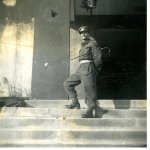
Here's the pic of Galloway in Italy (courtesy of my father)
Strome - Copy.jpg


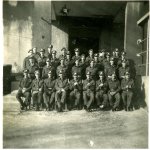
and a photo of the RCR officers and (I presume) some Sr Nco's taken in Italy --- Strome is sitting to the right of the CO (ie CO's left) ... my father is front row sitting at the far left... All the officers wore a mustache.

RCR Italy - Copy.jpg


So to quote from https://canadiansoldiers.com/history/campaigns/italiancampaign/sangromoro.htm and https://www.canadiansoldiers.com/history/battlehonours/italiancampaign/gully.htm

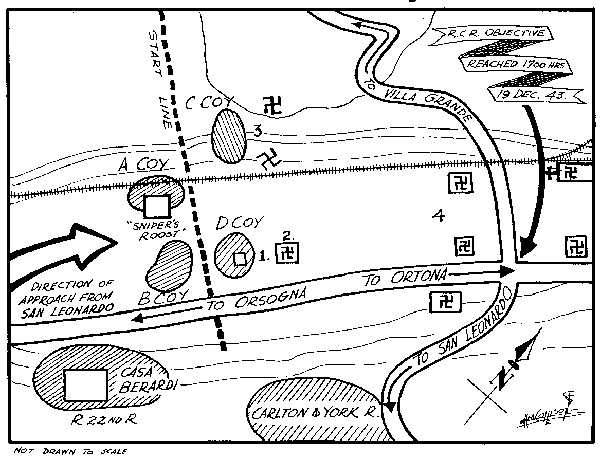
75 years ago today ... Dec 19th 1943 -- here is what the RCR were up to at Ortona

ORANGE BLOSSOM (which was the RCR operation at the Crossroads at Ortona ) began on receiving the success signal from the 48th, and at 11:45hrs, the guns of 5th Corps opened up. Two companies of the RCR moved astride the railway track from their forming up places near the junction of Lager track and the lateral road. The Carleton and York, to the right, sent an urgent message that shells were falling on their forward positions, even though they had pulled back 300 yards from the edge of the Gully. The 48th Highlanders were now reporting that mopping-up companies were coming under friendly fire as well. Allied artillery had been unable to carry out registration by observed fire for this second phase, and were dependent on the faulty maps to find targets in the treacherous ground, marked by embankments, deep gullies and uneven terrain. The Commander, Royal Artillery of the division, Brigadier Matthews, lifted the barrage 400 yards and cancelled the right-hand "wall" of protective fire.
The effects were immediate and disastrous. The advancing R.C.R. suddenly found themselves face to face with a strong group of paratroopers whom the lifting of the barrage had left unscathed. From these and from the east side of the Gully, where the modification of the artillery plan had also given the enemy unexpected freedom of action, a murderous cross-fire laced the Canadians. Men dropped like flies. The two leading companies were smashed to pieces, all officers becoming casualties. "Never before", wrote a surviving officer, "during either the Sicilian or Italian campaign had the Regiment run into such a death trap." After an hour of bitter and confused fighting, Major Mathers, himself wounded, decided that since the barrage had been lost it would be futile to commit his reserves, and ordered a consolidation. Two artillery officers who had gone forward with the infantry brought back the remnants of the assault companies-a dozen or fifteen men each. These carried on the fight from some buildings 100 yards ahead of the start line.
Throughout the ensuing night The Royal Canadian Regiment, its strength reduced to 19 officers and 159 other ranks, held its position under mortar fire and sniping, and prepared to return to the attack. Fully aware of the predicament of his own battalion, Spry had ordered that for the sake of morale as well as from tactical considerations the R.C.R. must make another effort to take its objective. Every man that could be spared from the Support and Headquarters Companies came forward, and with these and the remnants of the rifle companies, three companies were organized of 65 men each.
The attack started at 2:15 p.m. on 19 December, after a shortage of petrol and ammunition for the tanks had caused a delay of four hours. This time all went well. Communications were excellent, and "A" and "B" Companies with their accompanying tanks advanced unwaveringly behind an intense barrage. The relatively light enemy resistance in contrast to the deadly opposition of the previous day indicated that Heidrich* had accepted the loss of the Gully. Shortly before nightfall "Cider" crossroads, which had remained the objective of the 1st Division during two weeks of bitter fighting, was captured with surprising ease. In the final advance to their goal the R.C.R. had suffered only three casualties. With "Cider" in Canadian hands, the Carleton and Yorks crossed the Gully and spent an unpleasant night mopping up enemy pockets among the bodies and booby traps which littered the area of the fateful road junction.[SUP]32[/SUP]

ORANGE BLOSSOM suffered from being done not with pre-registered artillery fire, as MORNING GLORY (a previous assault) had been, but from predicted fire, shooting from maps with a 500-yard error in the grid. Canadian shells rained down on Canadian infantry just before noon and German machine guns added to the carnage in the lead companies, which lost every officer, including Mitch Sterlin. With no time for rest, the RCR went into the attack again the next morning, this time behind pre-registered fire, and on 19 December CIDER was taken by The Royal Canadian Regiment with tanks of The Three Rivers Regiment.[SUP]11


I know my father was struck twice by mortar fire in action but have no idea where or when this actually occurred


[/SUP]
 

Attachments

  • Strome - Copy.jpg
    Strome - Copy.jpg
    91 KB · Views: 232
  • RCR Italy - Copy.jpg
    RCR Italy - Copy.jpg
    112.9 KB · Views: 234
Last edited:
Last edited:
I seen this same picture years ago in a coffee table history book. Yes you are right. This gentleman was identified as a resistance fighter with STG 44 and what appears to be Wehrmacht webbing. Two loaded magazines stuffed in his belt the live ammo plainly visible in the magazine platform. Cheers

He's wearing a standard '37 pattern belt. The suspenders are pants suspenders... same ones still issued today. I can spy three mags stuffed in his belt also.
 
Vickers K .303 machine guns became liberated from Avro Anson crashed training bombers on Canadian prairies WW2 via the British Commonwealth Air Training Plan. Hidden away in barns and farm sheds.

I was just at a scrap metal dealer nearby, picking up some lead, and I borrowed their washroom... there leaning in a corner was a rusty old aircraft wing mount Browning 1919. It was dropped off as scrap by some old duffer. Didn't look deactivated to me either, no welds anywhere, but the action was seized shut by rust
 
My grandad kept a day to day journal during the invasion of Sicily and as they headed north through through Italy (seaforth highlanders). While in ortona he wrote about he and his section getting cut off from the rest of the platoon for a while, and being forced to use German weapons. He indicated that they ended up drawing fire from both sides as the Germans returned fire, and their own guys fired at the sounds their “borrowed” firearms were making
 
.. including Ortona at the ‘crossroads’ .... this Christmas marks 75 years since that event!
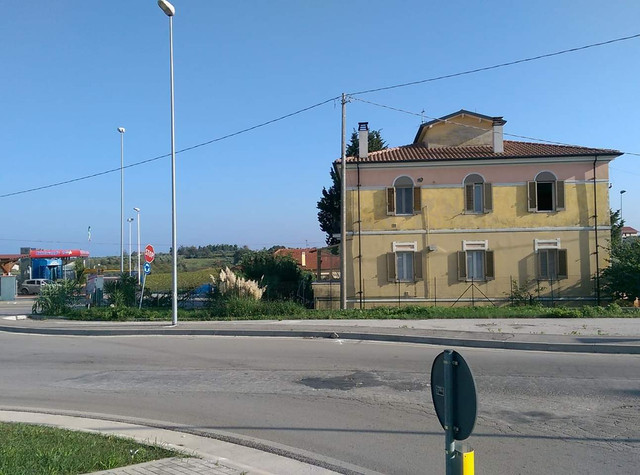
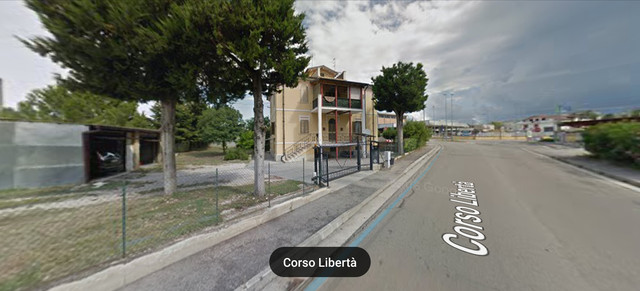
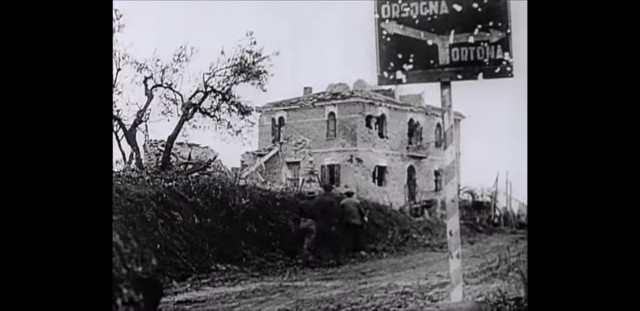
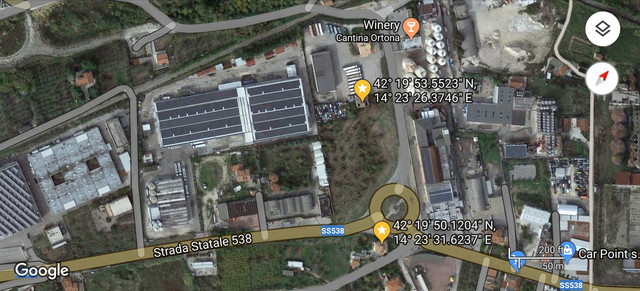
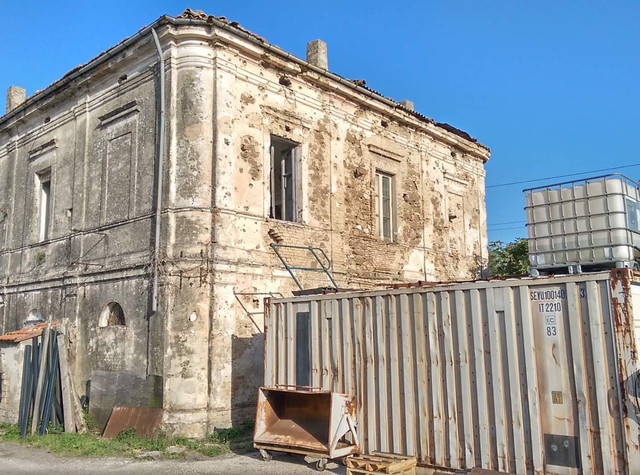
I visited the CIDER crossroads a few years ago. I'm as positive as I can be that this building is the farm house the china mugs for the toast came from. I spent a fair bit of time inspecting the other surviving buildings and talking to locals who were there for the events, and comparing with the period sketches and photos. The locals said this was the "farm house" at the time. I may be wrong, it's probably impossible to say now, but that's the best I could narrow it down.


If you go to 8:27 in the video you can see the same building. It's a damn shame that road sign didn't make it back as a souvenir... or maybe it's in an attic somewhere?


That house is the one marked with the swastika at the south corner of the crossroads in the sketch below.


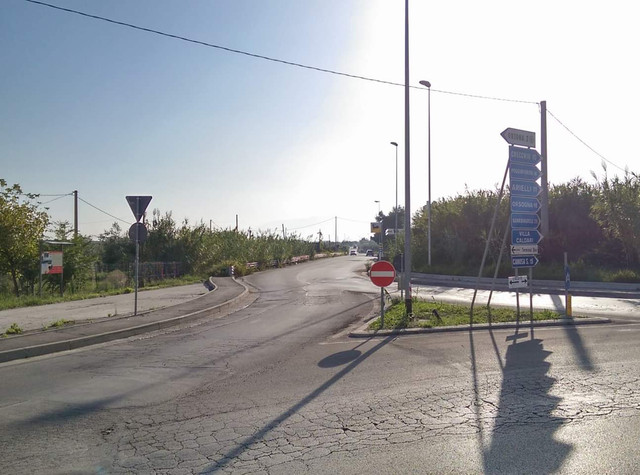
This is looking SW down the Ortona - Orsogna road in the direction the Canadians came from. The house above is just out of view to the left.


This building is just to the right of the above photo - the back side facing the Canadian advance is still all shot to rat fuch... you can clearly see the difference between the two sides. It's the one that's just above the "4" in the sketch, beside the train tracks. The building in the sketch to the south of it is gone now.


I was attached to 1 RCR in Dec 06 and had the privilege of drinking the toast the only other time since the first one that was done in contact with the enemy.

https://www.theglobeandmail.com/amp...oast-for-first-time-since-1942/article733449/
 
Last edited:
My grandad kept a day to day journal during the invasion of Sicily and as they headed north through through Italy (seaforth highlanders). While in ortona he wrote about he and his section getting cut off from the rest of the platoon for a while, and being forced to use German weapons. He indicated that they ended up drawing fire from both sides as the Germans returned fire, and their own guys fired at the sounds their “borrowed” firearms were making

Amazing. Did he mention the Christmas dinner in his diary?

What a treasure to have.
 
Amazing. Did he mention the Christmas dinner in his diary?

What a treasure to have.
absolutely!! It’s definitely a Canadian treasure.

Flashman2 .... thanks for those photos and the stories.... they are excellent! The other RCR tradition was the bowl of spaghetti served to veterans of the Pachino landing...

 
He did! It is an absolute treasure (my cousin has the original) and an amazing read

I don't want to impose, but would it be possible to scan or take pics and post some of the entries? What did he say about the dinner? I'm assuming the Seaforth museum has a copy?
 
absolutely!! It’s definitely a Canadian treasure.

Flashman2 .... thanks for those photos and the stories.... they are excellent! The other RCR tradition was the bowl of spaghetti served to veterans of the Pachino landing...

Hm. And it's the 21st tomorrow. Might just have to have a toast to those chicken chasing rock painters, on the occasion of the 75th anniversary since the first Ortona toast, the 135th anniversary of their founding, and 12 years since the last time it was done in combat. Mind you, I didn't have to pay for the rum last time. It was a LOT harder to source plain china mugs though.
 
I have seen Officers change their route so as not to encounter the RSM as he approached.

And a good RSM will have officers cross the street to speak with them. All the crappy RSMs I knew were the ones to be avoided - the bullies and incompetent blowhards. The good ones - including CWO Bob Girouard, RIP, - you'd go out of your way to say good morning to. As a new officer I still remember meeting my first RSM, how professional he was, and the impact he had on me. We're friends to this day. I remember meeting others later who obviously had nothing but bluster to offer... A good RSM doesn't need to rely on intimidation. Although I was in no way accountable to him, my biggest worry would have been failing or disappointing CWO Girouard - not incurring his wrath, which would have been of no consequence to me. That's the difference between a good leader and a bully.
 
When I was a private a RSM took pride in harassing two corporals. He was equality minded, one a woman and one a guy. Both actually cried in frustration after the encounters. Sad. He tried working it on me. Without thinking I said something fairly brash and stupid, "Yeah, you and what army?" I kind of sweat thinking about it, but he laughed and never bothered me again.

Bully.
 
Here's the pic of Galloway in Italy (courtesy of my father)
View attachment 231162


and a photo of the RCR officers and (I presume) some Sr Nco's taken in Italy --- Strome is sitting to the right of the CO (ie CO's left) ... my father is front row sitting at the far left... All the officers wore a mustache.

View attachment 231165


So to quote from https://canadiansoldiers.com/history/campaigns/italiancampaign/sangromoro.htm and https://www.canadiansoldiers.com/history/battlehonours/italiancampaign/gully.htm

75 years ago today ... Dec 19th 1943 -- here is what the RCR were up to at Ortona

ORANGE BLOSSOM (which was the RCR operation at the Crossroads at Ortona ) began on receiving the success signal from the 48th, and at 11:45hrs, the guns of 5th Corps opened up. Two companies of the RCR moved astride the railway track from their forming up places near the junction of Lager track and the lateral road. The Carleton and York, to the right, sent an urgent message that shells were falling on their forward positions, even though they had pulled back 300 yards from the edge of the Gully. The 48th Highlanders were now reporting that mopping-up companies were coming under friendly fire as well. Allied artillery had been unable to carry out registration by observed fire for this second phase, and were dependent on the faulty maps to find targets in the treacherous ground, marked by embankments, deep gullies and uneven terrain. The Commander, Royal Artillery of the division, Brigadier Matthews, lifted the barrage 400 yards and cancelled the right-hand "wall" of protective fire.
The effects were immediate and disastrous. The advancing R.C.R. suddenly found themselves face to face with a strong group of paratroopers whom the lifting of the barrage had left unscathed. From these and from the east side of the Gully, where the modification of the artillery plan had also given the enemy unexpected freedom of action, a murderous cross-fire laced the Canadians. Men dropped like flies. The two leading companies were smashed to pieces, all officers becoming casualties. "Never before", wrote a surviving officer, "during either the Sicilian or Italian campaign had the Regiment run into such a death trap." After an hour of bitter and confused fighting, Major Mathers, himself wounded, decided that since the barrage had been lost it would be futile to commit his reserves, and ordered a consolidation. Two artillery officers who had gone forward with the infantry brought back the remnants of the assault companies-a dozen or fifteen men each. These carried on the fight from some buildings 100 yards ahead of the start line.
Throughout the ensuing night The Royal Canadian Regiment, its strength reduced to 19 officers and 159 other ranks, held its position under mortar fire and sniping, and prepared to return to the attack. Fully aware of the predicament of his own battalion, Spry had ordered that for the sake of morale as well as from tactical considerations the R.C.R. must make another effort to take its objective. Every man that could be spared from the Support and Headquarters Companies came forward, and with these and the remnants of the rifle companies, three companies were organized of 65 men each.
The attack started at 2:15 p.m. on 19 December, after a shortage of petrol and ammunition for the tanks had caused a delay of four hours. This time all went well. Communications were excellent, and "A" and "B" Companies with their accompanying tanks advanced unwaveringly behind an intense barrage. The relatively light enemy resistance in contrast to the deadly opposition of the previous day indicated that Heidrich* had accepted the loss of the Gully. Shortly before nightfall "Cider" crossroads, which had remained the objective of the 1st Division during two weeks of bitter fighting, was captured with surprising ease. In the final advance to their goal the R.C.R. had suffered only three casualties. With "Cider" in Canadian hands, the Carleton and Yorks crossed the Gully and spent an unpleasant night mopping up enemy pockets among the bodies and booby traps which littered the area of the fateful road junction.[SUP]32[/SUP]

ORANGE BLOSSOM suffered from being done not with pre-registered artillery fire, as MORNING GLORY (a previous assault) had been, but from predicted fire, shooting from maps with a 500-yard error in the grid. Canadian shells rained down on Canadian infantry just before noon and German machine guns added to the carnage in the lead companies, which lost every officer, including Mitch Sterlin. With no time for rest, the RCR went into the attack again the next morning, this time behind pre-registered fire, and on 19 December CIDER was taken by The Royal Canadian Regiment with tanks of The Three Rivers Regiment.[SUP]11


I know my father was struck twice by mortar fire in action but have no idea where or when this actually occurred


[/SUP]

Col. Strome Galloway looked the same in Churchill, 'stache and cane, of course. You could tell his mood by the way he swung his cane. It was a signal to his staff. If he swung it in a circle as he walked, things were good. If he strutted with it, someone's ass was grass.
 
Back
Top Bottom