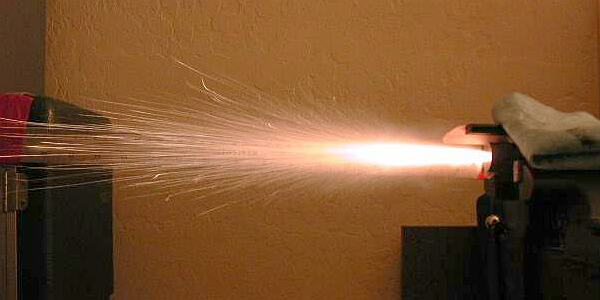
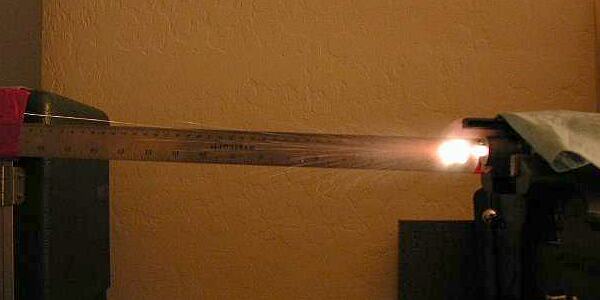
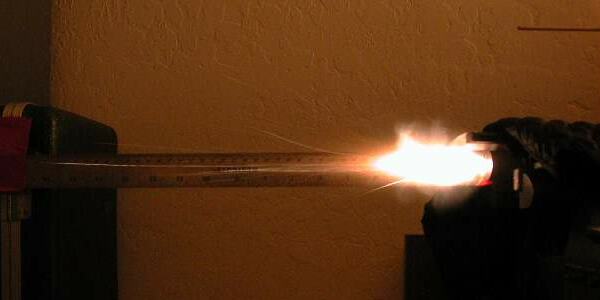
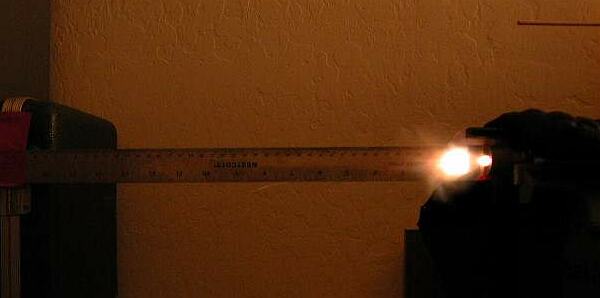
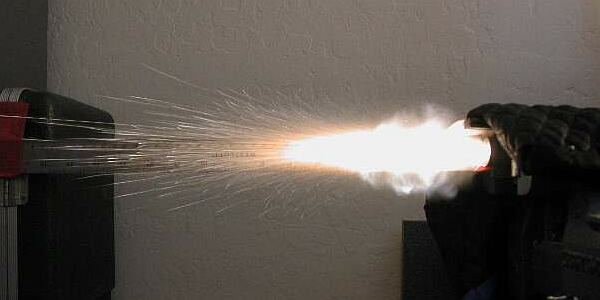
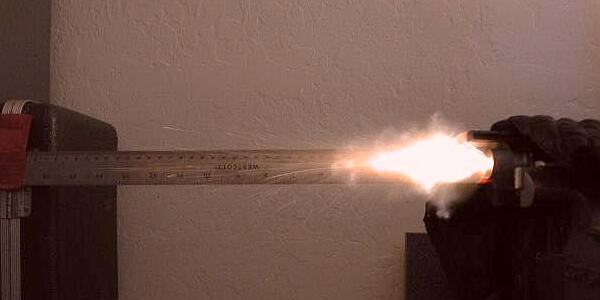
Kelly, I hear you talking, but it was me who riled up a bunch on here a few years ago by stating, from my experience, a magnum primer was not needed in anything at any time! This resulted in helping Boomer set up our test of powder and bullets, which was fairly extensive, very accurately done by Boomer, who lives in one of the coldest places in northern Canada, done during a cold spell in the dead of winter. This test showed that with several types of primers and powder with various cartridges of great difference, they all shot, very close to each other, hot or cold.
Because after all, smokeless powder had been in use for about 60 years before some company coined the name, magnum, for their primers and Winchester had been making their ball powder for thirty years, before the advent of the magnum primer.
However, this is not to say that previously the primers didn't have the fire power to ignite the powders in use. As was pointed out, Winchester, of course, would certainly make primers good enough to be 100% reliable in all conditions, for their ball powders they developed in 1933 and commonly used in Alaska, but they just didn't have the title of magnum on them.
There are so many variables involved, not the least of which I pointed out from a lab test I had seen, where the power of the strike of the firing pin had more effect on the fire power of the primer than did the type of primer being used.
I grew up in a very cold area at a time when the settlers killed game all year, sometimes in temperatures as low as 45 and 50 degrees below zero. They all knew they had to clean every speck of oil from the actions lf their rifles with kerosene, then their rifles would work well all winter with our CIL, Dominion ammunition, or a US brand, if they happened to have any.
I am going to edit this piece, on the date of Feb 16, 2018.
There are just too many variables for anyone to think they have the properties of primers and powders figured out. We see too many changes that are contrary to what we thought we figured out.
We take too much for granted and presume too much, about anything to do with primers and powder.
For example, We believe firmly, that if all else is equal, more powder will give more velocity to the bullet, in all normal circumstances, where a safe load is at least 15 grains of H110. I dug up an old book of my reloading a S&W, 357 Magnum with 6 1/2 half inch barrel. The date was Nov. 23, 1990 and the temperature was 40 degrees F. I was loading Keith bullets that weighed 168 grains with H110 powder. 12 grains gave 1124 fps, 13 grains gave 1152, 14 grains of H110 gave an av. of 1329 and six shots had an es of only 17, best yet.
So I loaded up three rounds, everything the same, except I put in 15 grains of H110.
I fired two of them and got 1088 from one and 1101 from the other.
Thinking something was wrong, I pulled the bullets of the remaining two and confirmed, yes they held 15 grains of H110.
I went home in disgust and dug out my bottle of Jack Daniels.